
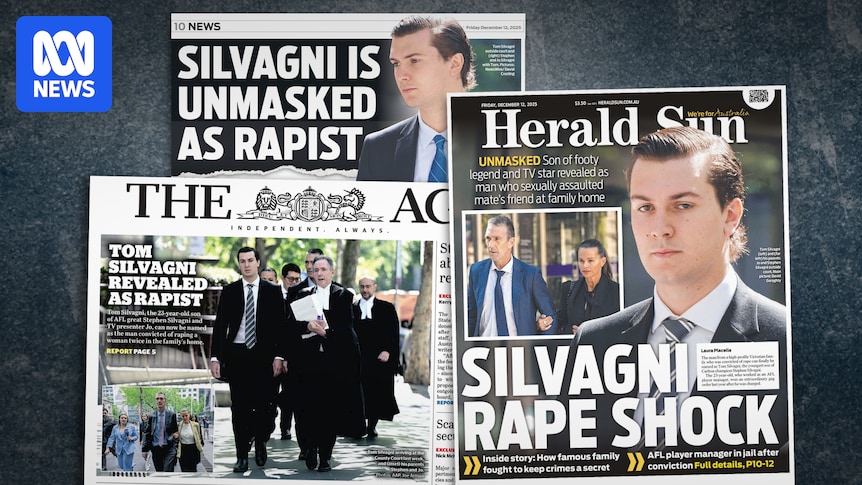
Even before convicted rapist Tom Silvagni’s name was splashed across the front pages of Melbourne’s two major newspapers last week, his identity was already a poorly kept secret.
Warning: This story contains details of rape that may distress some audience members.
For most of the past 18-months, a suppression order had stopped media outlets from using the 23-year-old’s name during the reporting of rape charges and his subsequent trial.
The absence of clear information about the perpetrator in media reports fuelled social media speculation — even a County Court judge acknowledged his identity was common knowledge within parts of the community.
Earlier this month, a jury found Silvagni guilty of digitally raping a woman — his friend — twice, in a dark bedroom in his family’s home in January 2024.
Once while pretending to be her boyfriend. Then a second time while restraining her.
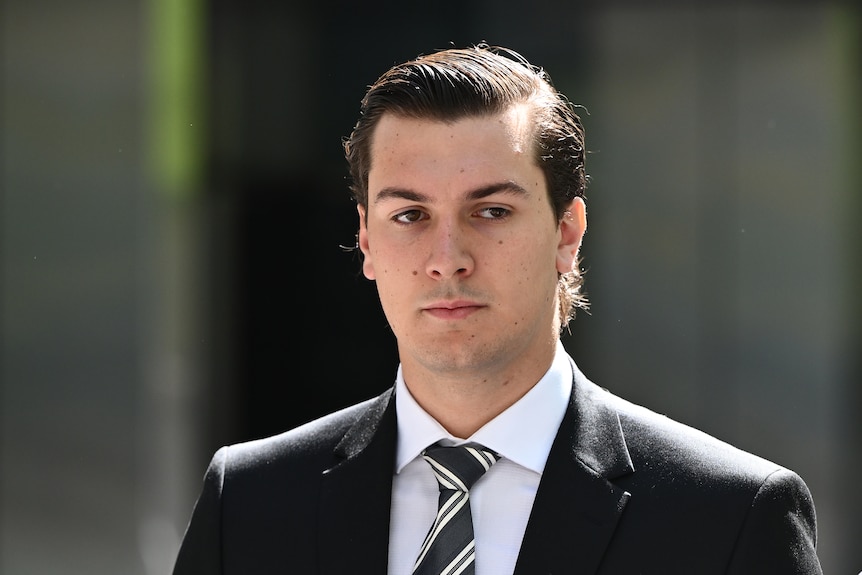
Tom Silvagni will serve a minimum of three years and three months behind bars. (AAP: Joel Carrett)
Nearly a week after the jury’s guilty verdict, the gag order was lifted, allowing Silvagni’s name — plus details of the extensive legal battle to keep it secret — to be reported in connection with the rape.
The lifting of the order last Thursday also meant tearful testimony from the rape survivor that directly named the 23-year-old could be reported.
“Tom Silvagni, you raped me. Not once, but twice,” she told the County Court last week.
“You know this, I know this, and now so does everyone else.”
If this story raises issues for you:
Yesterday, Silvagni was sentenced to six years and two months in prison, with a non-parole period of three years and three months.
While the 23-year-old is now in jail — his family have indicated they will consider a possible appeal — the revelation of the extended secrecy order on his case has sparked public questions around the use of suppression orders in Victoria.
Victoria’s opposition leader Jess Wilson has indicated the Liberals would review if the laws were working as intended.
“Suppression orders should not be used as a mechanism for offenders to hide from victims, the community or taking responsibility for their actions,” she said last week.
Silvagni order granted on mental health grounds
Under Victorian law, media outlets can report on most cases in the court system and name the alleged offenders involved, which is considered an important principle of the court system known as ‘open justice.’
Judges can make orders to prevent the publication of court proceedings in only a handful of circumstances: to protect a fair trial, prevent distress to a victim, witness or child, for national security purposes or to protect the safety “of any person”.
After Tom Silvagni was charged with two counts of rape in mid-2024, his lawyers argued for a suppression order on the basis that their client, who was on bail, had a “substantial and imminent risk of psychiatric harm, including suicide”.
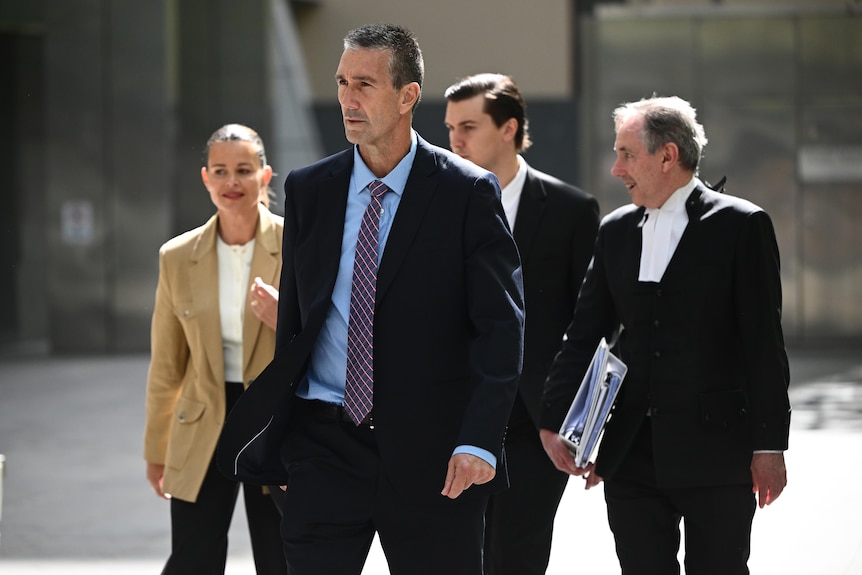
Tom Silvagni is the son of television personality Jo Silvagni (left) and AFL great Stephen Silvagni (second from left). (AAP: Joel Carrett.)
Despite a persistent legal challenge from media outlets, the order was granted and maintained by various judges.
The media could still report on the case, but not by name.
The orders also restricted the publication of the names of his family members or their links with the AFL or media — the ABC took to referring to Silvagni as a “man from a high-profile Victorian family.”
Silvagni is the son of AFL great Stephen Silvagni, a star player for the Carlton Football Club, the brother of current St Kilda player Jack Silvagni and the grandson of two-time Blues premiership player Sergio.
His mother, Jo Silvagni, is a TV personality.
Suppression orders won by those who can afford to fight for them
Media lawyer and partner at Thomson Geer lawyers Justin Quill said the suppression order fight in the Silvagni case spanned about a dozen hearings across four courts: the Magistrates, County and Supreme Courts and eventually, the Court of Appeal.
Mr Quill represented various media organisations contesting the suppression orders in this case, including the ABC.
He said the extent to which Silvagni fought to keep his name out of the spotlight was unusual — and would have been expensive.
“Unlike any other person I’ve seen before, he has had a barrister team for his criminal case and a separate barrister team for the suppression order fight,” Mr Quill said.
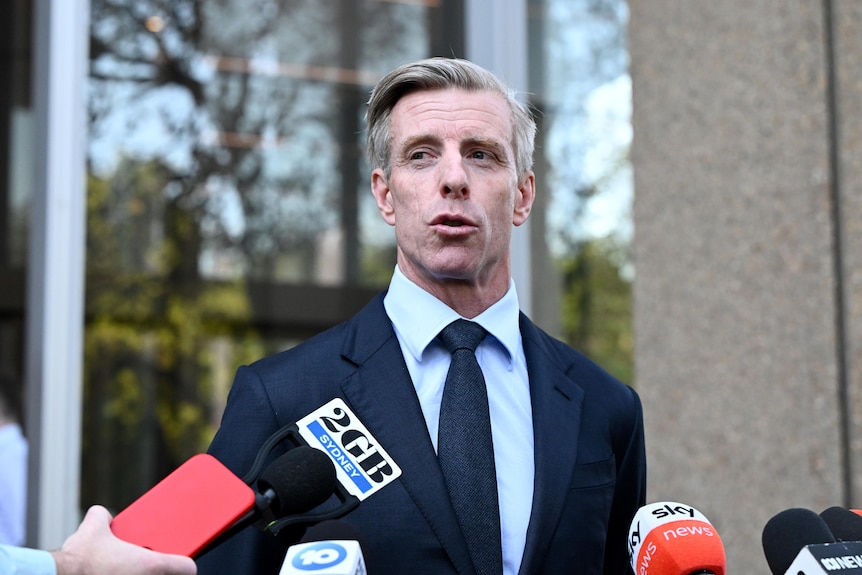
Justin Quill represented several media outlets in their attempts to have the suppression order lifted. (AAP: Bianca De Marchi)
University of Melbourne Associate law professor Jason Bosland said the legal representation and expert evidence — like psychiatric reports — required to apply for such an order were expensive to access.
“There’s a reality … where these orders are sought to protect the identity of an accused, they really do favour those who have got financial means,” he said.
“There’s no doubt if you have more money, you are more likely to get a suppression order,” Mr Quill said.
Increase in suppression orders on mental health grounds, lawyer says
Mr Quill also said the Silvagni case was just one example of this process in action but there had been a “massive upsurge” in the number of suppression orders for alleged offenders on mental health grounds in Victoria, which was difficult to challenge in court.
“We have an open court system and people shouldn’t get suppression orders except in the most extreme and rare of circumstances,” he said.
Mr Quill said the ability to apply for suppression orders on mental health grounds should be scrapped and that cultural change was required within Victoria, which in his experience, was more impacted by suppression orders then other states.
He said he relies on data collected by News Corp which says Victorian courts issued more than 487 suppression orders this year alone, backing up his own experience of having to deal with more suppression orders in Victoria than in other jurisdictions.
In a statement, Victoria’s Attorney- General Sonya Kilkenny said the government “closely monitors the use of suppression orders” and will continue to do so.
Melbourne Law School’s Mr Bosland said there were genuine circumstances where the use of a suppression order to protect mental safety would be justified, but agreed it was important to ensure that process was not being abused by applicants.
Mental health concerns or ‘accountability’ shock
Sexual Assault Services Victoria CEO Kathleen Maltzahn said it was difficult to distinguish when mental health concerns of perpetrators was a proportionate reaction to the justice process and “the shock of being held accountable.”
“We have to be very careful that we are not shielding people from the consequences of their behaviour and mistaking that as concern for mental health,” she said.
She said it was important the efforts of the rape survivor to pursue justice weren’t forgotten amongst interest about “the suppression orders and the fact that [the offender’s] from a celebrity family.”
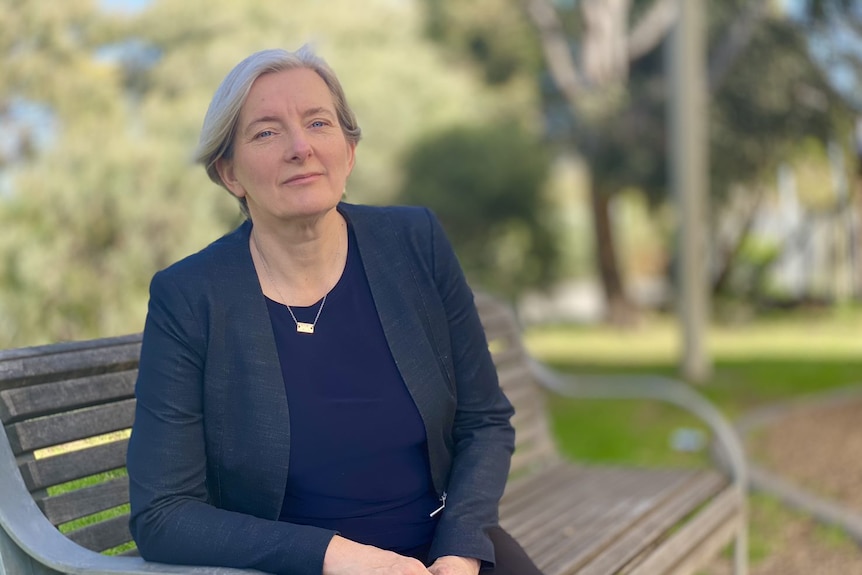
Kathleen Maltzahn says a balance needs to be struck between mental health concerns and accountability. (Rudy De Santis)
“We mustn’t lose sight that although the process was clearly very hard for the survivor, she was vindicated and the rapes have been recognised in law,” Ms Maltzahn said.
In sentencing Silvagni on Wednesday, a County Court judge acknowledged the integrity and courage the victim showed by coming forward.
“It is clear that she has found her own voice,” he said.