
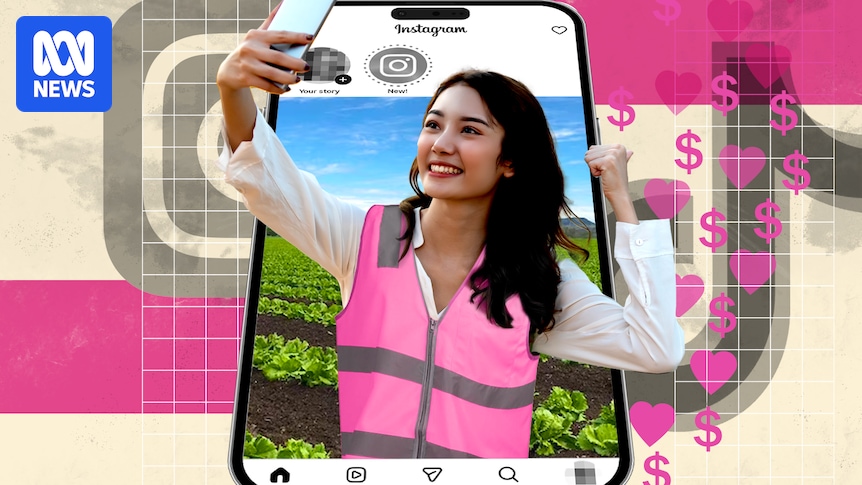
Catherine was working as a pharmacist in Indonesia when she came across what seemed like an amazing opportunity to make loads of money in Australia.
She had seen posts on TikTok and Instagram about how life could be if she were able to obtain a Work and Holiday Visa (WHV).
“It looked so easy, and people were saying they could earn a billion rupiah ($90,100) in a year,” she said.
“I thought, ‘Wow, I’d have to work for years to make that amount in Indonesia.'”
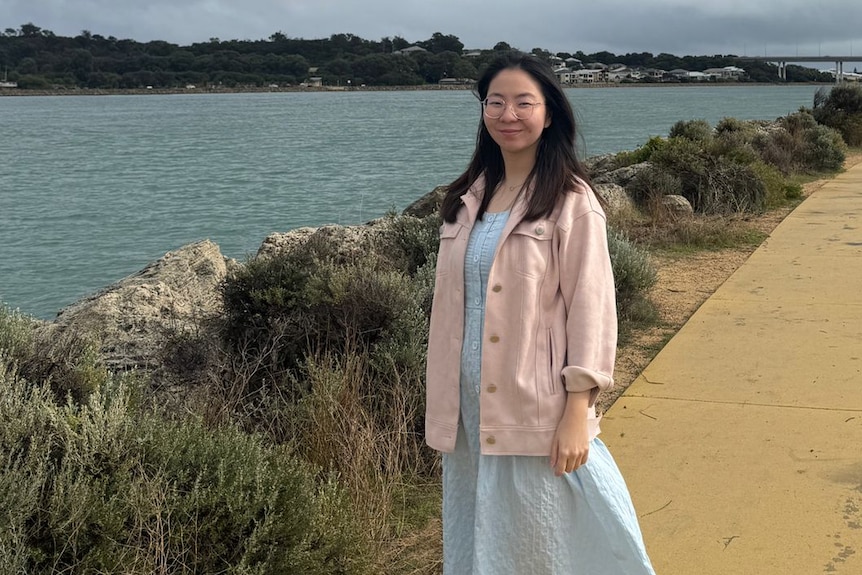
Catherine had high hopes about working in Australia from viewing social media content. (Supplied)
Catherine decided to come to Australia on a WHV to improve her finances and experience life overseas.
She had high hopes.
But her picture of life in Australia had been shaped by Indonesian influencers on social media, and it changed completely after she landed in Perth in early 2025.
Catherine started out as a cleaner, and later took on two jobs — working in housekeeping and retail.
Even that was not as lucrative as she had been led to believe and she found juggling two jobs to be physically and mentally exhausting.
“Is it possible to earn 1 billion rupiah? Yes, it’s possible, but there are many sacrifices you have to make,” she said.
“You would need to work multiple jobs, and while you can earn that much, our bodies naturally need rest, right?”
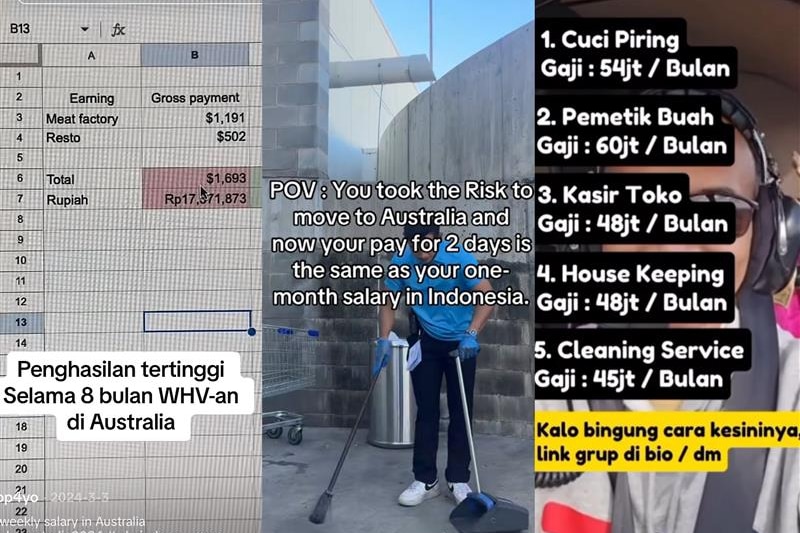
Most content created by Indonesian WHV influencers mentions the money that can be earned working in Australia. (Supplied)
Like Catherine, many Indonesians have been lured by influencers pushing a false promise of easy money and a better life.
Many of the WHV influencers have painted an amazing picture of life in Australia.
Some have filmed themselves working on farms or in abattoirs and supermarkets with text saying jobs were easy and people didn’t need to understand English to find work.
But many of those inspired to chase the version of life in Australia pushed in the content only discover the demanding workload and high cost of living after they arrive.
WHV holders are also often employed in dangerous jobs, and have been injured while working in critical sectors, including abattoirs.
The ABC has also found that in recent years at least nine Indonesians on WHVs have died while on the road to and from work.
Dodgy content and shady deals
Misleading social media content has made some people take extreme measures, which has left them in difficult situations.
Like Catherine, Anwar Ibrahim became eager to work in Australia after seeing posts about the amount of money that could be made on a WHV.
Mr Ibrahim wanted to improve his family’s finances and save for the future.
“I wanted to go after seeing influencers in Australia showing off the beauty of life there and the promise of high wages,” he said.
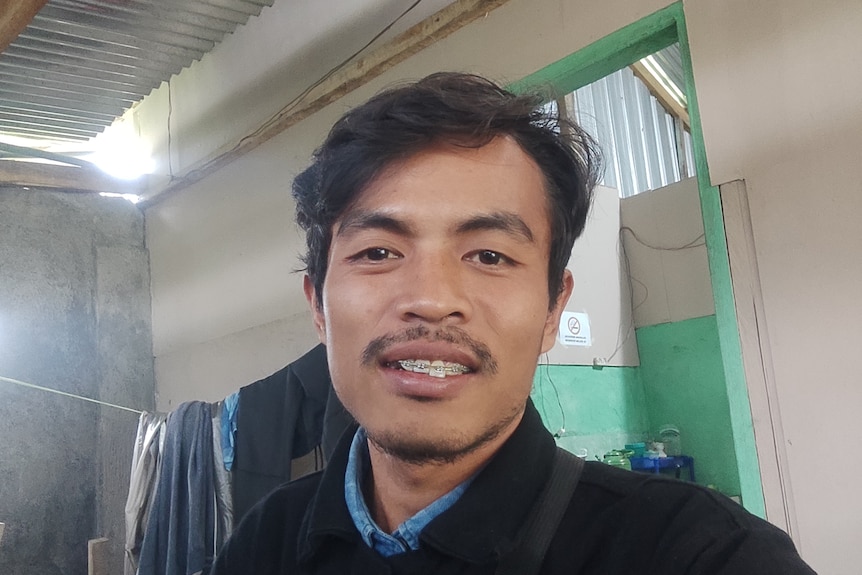
Anwar Ibrahim was eager to work in Australia with a WHV but ended up being scammed. (Supplied)
To get a WHV, he needed a letter of support from the Indonesian government.
He tried to obtain one on his own, but failed.
WHV conditions for Indonesians applicantsBe 18 to 30 years oldHave a tertiary qualification – degree, graduate certificate or diploma – or have studied at university for two yearsHave evidence of English language proficiencyLetter of support (SDUWHV)Passport valid for at least 12 monthsNo dependent children coming withProof of at least $5,000 in the bankMeet health and character requirementsNot had visa cancelled or application refusedSign the Australian values statement
Source: Home Affairs department
Out of desperation, he turned to someone who claimed to have a link to Indonesia’s immigration office and could get the letter for him for $4,500.
Mr Ibrahim borrowed money from his parents who sold their rice fields to help him chase his dreams.
He later found out he had been scammed and sent a fake document.
Because he had used the bogus letter in his visa application, it was rejected and he now faces an uphill battle to move to Australia.
“It’s hard to save up enough money to buy back the rice fields, and borrowing from other people is probably also difficult,” he said.
Yopan Pakendek first learned about working in Australia in 2018 through videos that showcased the lives of WHV participants working as fruit pickers.
From that moment, he began dreaming of building a life in Australia.
“I felt Australia was a good place to start a career, beginning with a WHV,” Mr Pakendek said.
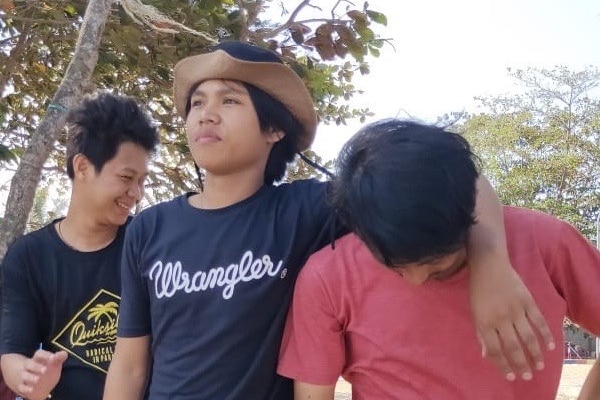
Yopan Pakendek went to someone who shares content about WHV for help. (Supplied)
But his journey was far from smooth.
Mr Pakendek tried and failed four times to get the recommendation letter needed to secure a WHV.
He became “frustrated” with repeated setbacks and turned to a woman named Sufiya, who posts content about the WHV on social media and manages a “WHV consultation group” on WhatsApp.
He said Sufiya said she had connections to “people from inside the immigration office” who could help.
The ABC has seen a written agreement outlining payment and refund terms signed by both Mr Pakendek and Sufiya.
“I paid 25 million rupiah up front, but later she said the insider could not help because they were being watched by the ombudsman,” he said.
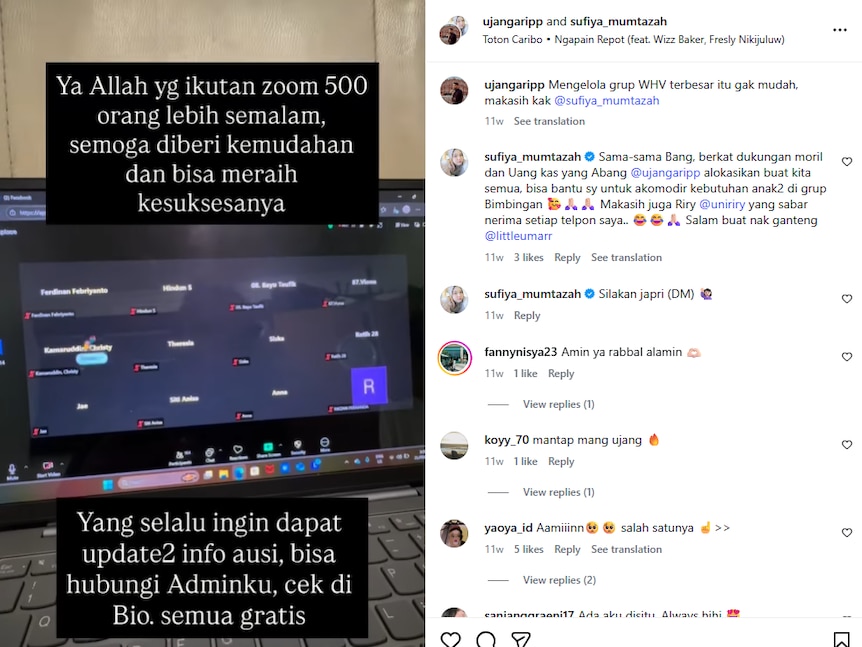
Sufiya used her social media presence to let people know they could contact her for more information about the Australian visa process. (Instagram: @sufiya_mumtazah)
Mr Pakendek said Sufiya eventually gave him back 20 million rupiah ($2,000), but kept 5 million ($500).
He said she told him that was to pay for a hacker, who she had hired when her insider was unable to help, to access the immigration computer system.
Sufiya told the ABC the allegations were “not entirely true” but confirmed there had been a payment agreement between her and Mr Pakendek.
“They [the applicants] asked me for help, and I only assisted because I’m familiar with some agencies that handle visas,” she said.
“I’m not a broker … I never used hackers,” she said.
Crooked operators rig working visas
According to Sufiya, her price, ranging from 30 to 40 million rupiah, included access to high-speed internet cafes, IT staff for troubleshooting and visa lodgement fees.
She said she had refunded money for those who had failed to get the recommendation letter, minus “operational costs”.
Mr Pakendek disputed this, adding he also travelled to a different city to access an internet cafe recommended by Sufiya — at his own expense.
He has warned others not to fall for similar schemes.
“I don’t want her to keep scamming people who want WHV in the future,” he told the ABC.
“I really want her to stop completely, stop talking about WHV and handling any WHV related matters.”
Misleading clickbait for monetisation
While there are plenty of influencers chasing clicks by pushing over-glamorised content about life in Australia, there are some doing what they can to inform people of the reality.
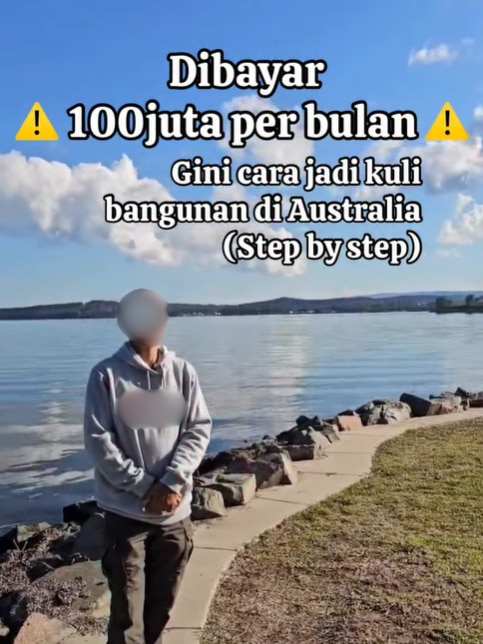
An Indonesian influencer shares a guide on how to become a construction labourer and earn $10,000 per month. (Supplied: Instagram)
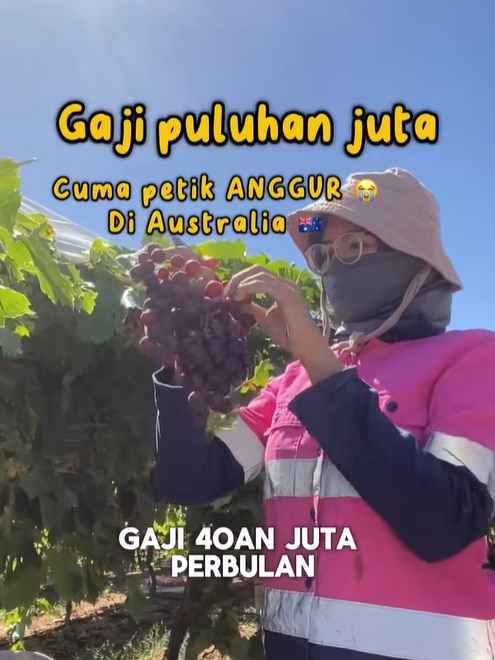
An Indonesian influencer says people can earn $4,000 per month by working as a grape picker in Australia. (Supplied: TikTok)
WHV content creator Mekarisa Asharina said it was sad that many Indonesian influencers tended to focus on “money-oriented” content.
“Most of the people watching this content are in Indonesia where annual incomes are much lower,” she said.
“So it’s no surprise that many end up trying paths they shouldn’t take just to come to Australia.”
Mekarisa, who was on a WHV and does not create social content for income, said it was “a shame” that many influencers resorted to clickbait for monetisation.
“They hope their content will go viral, stay on the For You Page, and use clickbait to get more views,” she said.
“Clickbait content often leads to misunderstandings and conflicts.”
Mekarisa said that having fewer followers and less exposure compared to top influencers with hundreds of thousands of followers did not stop her from taking action.
“If I see misleading information, I feel responsible to speak up against it through my content,” she said.
“I would rather have one or two people receive accurate information and act on it than stay silent.”
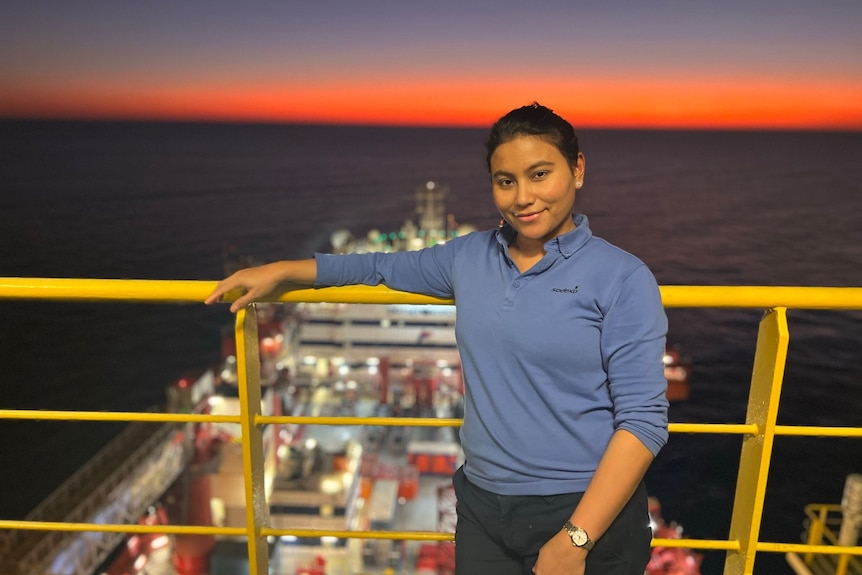
Mekarisa Asharina says it is unfortunate that so many influencers rely on clickbait as a means of monetisation. (Supplied)
Influencers should show both sides
Back in Perth, Catherine said influencers had failed to mention things like long working hours, language and cultural barriers, and the loneliness of life in Australia.
“I’m sure the people who create this content have their ups and downs,” she said.
“Maybe try to show the other side, another perspective … that it’s OK if you’re a WHV holder and you don’t earn 1 billion rupiah.”
Monika Winarnita, who researches digital media and Indonesian migrants and labour at the University of Melbourne’s Asia Institute, said a responsible influencer should be telling all sides of the story.
“Particularly about job and visa insecurity, underpayment, the long working hours, and sometimes the work could be quite physically exhausting,” she said.
“Some influencers do not provide context of life in Australia on a minimum wage.”
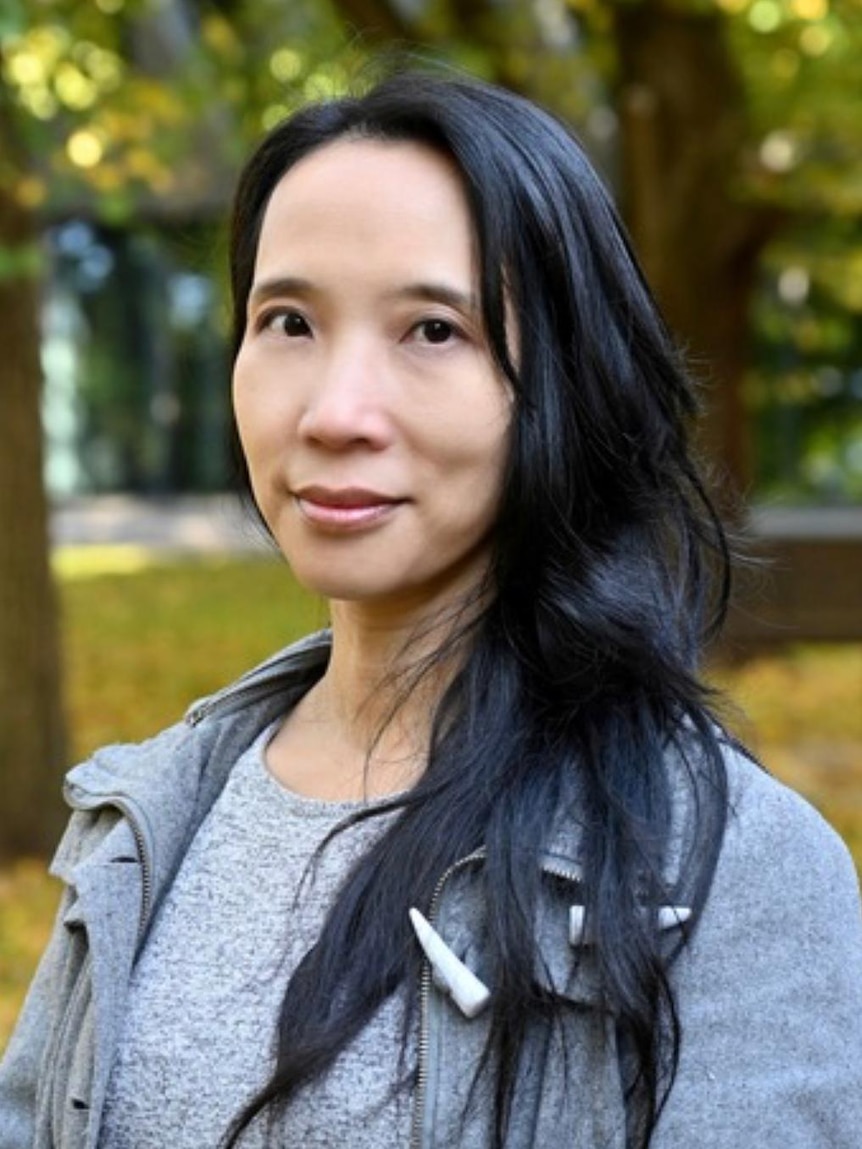
Dr Winarnita says some influencers fail to show the other side of life in Australia on a Work and Holiday Visa. (Supplied)
Dr Winarnita said regulation around influencers in Indonesia was “a very grey area”, but said both the Australian and Indonesian governments needed to ensure better education.
“They should provide [information about] … your rights, the context of Australia’s economic living wage, the pressure of rental, and things like that,” she said.
A spokesperson for Australia’s Department of Home Affairs said Work and Holiday visa holders had the same rights and protections at work as Australian citizens, and “allegations of worker exploitation” were taken seriously.
It is recommended that WHV holders use reputable services such as the Tourism Australia website when researching employment in Australia.
A spokesperson for the Indonesian Communication and Digital Affairs Ministry told the ABC they were aware of the “proliferation of social media content glorifying working in Australia”.
“This type of content, if not accompanied by comprehensive and balanced information, will potentially mislead the public,” said Alexander Sabar, the head of the ministry’s digital space supervision department.
Mr Sabar urged the public to “remain vigilant and cautious of content that is excessively glorifying and creates perceptions that are not in line with reality”.
He said the ministry was actively monitoring the content according to relevant laws and regulations.
“These regulations prohibit false or misleading information or hoaxes from spreading, oblige digital platforms to moderate content, follow up on reports, and ensure that there is no dissemination of content that is detrimental to the public, including false, misleading, or potentially fraudulent information,” he said.