
Toughened federal hate speech laws that Labor held up as evidence it had acted on antisemitism have been used four times, as the government vows to rework the legislation less than year after it passed.
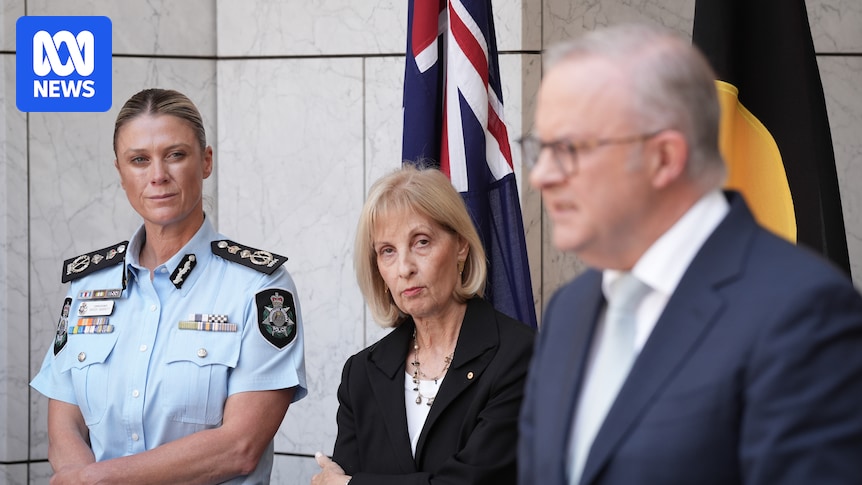
Prime Minister Anthony Albanese unveiled a tranche of reforms to tackle hate speech on Thursday, four days after two gunmen opened fire on a Hanukkah celebration at Bondi Beach killing 15 people including a 10-year-old girl.
Among the proposed changes are new federal offences for “aggravated hate speech”, aimed at preachers that promote violence, and “serious vilification” based on race and/or racial supremacy, as well as increased penalties.
The announcement came 10 months after the government strengthened federal hate speech legislation in a bid to curb growing antisemitic and Islamophobic sentiment, making it a federal crime to recklessly urge force or violence against designated groups, including those distinguished by race or religion.
Loading…
At the time they considered going beyond threats of violence to outlaw the promotion of hate against groups, as called for by antisemitism envoy Jillian Segal and some crossbenchers, but opted against it because the government said it would have delayed reform.
This week Home Affairs Minister Tony Burke conceded the earlier reform, which the government regularly pointed to in the wake of the attack as an area where they had acted, had struggled to contain hate speech that fell “just below the legal threshold”.
“There have been individuals who … have gone right to the limits of language that is clearly dehumanising, unacceptable, having no place in Australia, but have not quite crossed the threshold to violence,” Mr Burke said.
“We all know the gateway to violence that sort of language provides.
“They haven’t met the legal threshold to date in many occasions, notwithstanding the work that the commissioner and the Australian Federal Police continue to do.”
Read more on the Bondi Beach shooting:
Just four people have been charged under the updated federal legislation since it was strengthened in February, the ABC understands.
That includes one charge of advocating force or violence against groups, one charge of threatening force or violence against groups, and one charge of threatening force or violence against members of groups or close associates, and one case where the exact offence is not clear.
The ABC has not been able to verify the details of the allegations, the dates of the charges, or the status of the investigations.
Asked why the government had not acted sooner to lower the threshold given the laws were not working, Mr Albanese said the reforms would “require complex legal work”.
“We are the first government to legislate on hate speech. We did that. We’ve outlawed Nazi symbols. What we know is that there’s more that we can do,” he said.
Labor previously decided not to outlaw promoting hatred
Former attorney-general Mark Dreyfus, who is one of the few Jewish politicians in federal parliament, previously described the legislation as the “toughest laws Australia has ever had against hate crimes” and a response to “the increasing prevalence of hate speech and hateful conduct in our society”.
This week he suggested more needed to be done.
The February changes lowered the bar for existing hate speech laws, criminalising the act of “recklessly” urging or threatening violence against a group, its members or associates, in addition to situations where there is clear intent.
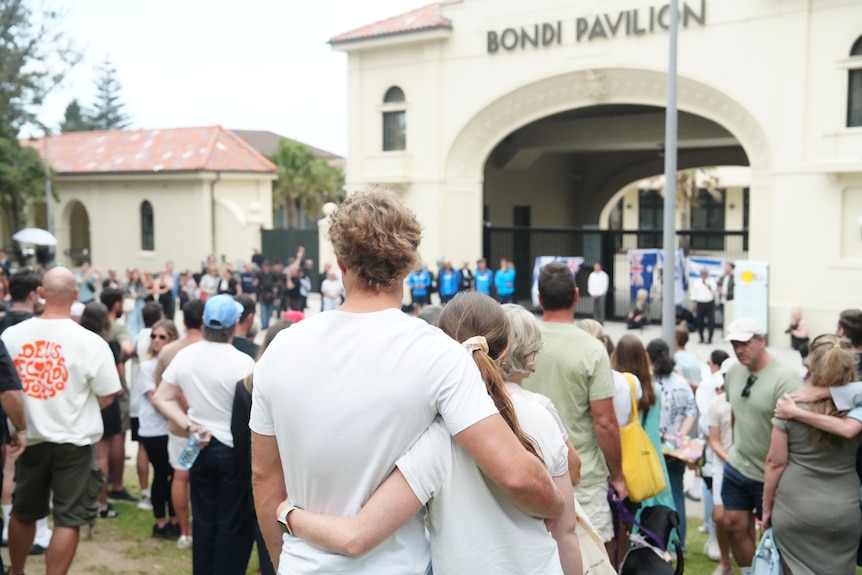
People have gathered at Bondi Beach day after day to mourn the 15 people killed in Sunday’s attack. (ABC News: Jack Fisher)
Independent Allegra Spender — whose electorate includes Bondi Beach — moved an amendment at the time that would have established a new offence for the promotion of hatred, inspired by elements of Western Australia’s laws that outlaws conduct “intended” or “likely” to incite racial animosity.
Mr Burke said this week that the government had indicated at the time that it was willing to look at the amendment but did not go down that route because it would have complicated the drafting process and delayed the passage of the legislation.
“When that amendment was proposed directly on the floor I was the person who responded to it and referred to the willingness for the government to look at it, but the fact that the drafting, as it was put, was not something that we were going to be able to accept,” he said.
“And we certainly were not going to do anything to delay the legislation that was in front of us right then.”
In the months after the laws passed, until Thursday, the government had not moved to introduce laws targeting the promotion of hatred.
Mr Albanese this week said he would consider recalling parliament to push through the new laws, but not before drafting the bill and securing broad parliamentary support.
Opposition says existing laws aren’t being enforced
The Coalition supported February’s legislation after the government caved to the opposition’s demands to include mandatory minimum jail sentences for terror crimes and the display of hate symbols.
It now argues the issue isn’t necessarily with the laws themselves, but the fact they have not been enforced.
“When you’ve got a [Harbour Bridge] of people protesting and calling for ‘from the river to the sea, Palestine will be free’, where you’ve got people carrying flags of listed terrorist organisations, this is absolutely unacceptable,” shadow attorney-general Andrew Wallace said earlier this week.
“Those people should have been arrested and prosecuted under existing laws.”
Opposition Leader Sussan Ley on Thursday called on the home affairs minister to instruct the Australian Federal Police commissioner to adopt a “stronger policing posture” in relation to those who spread violent extremism and antisemitic hate.
Families remember Bondi victims
States and territories have their own hate speech laws, both criminal and civil, which vary widely from each other and the federal legislation.
Professor Katherine Gelber, an expert in freedom of speech from the University of Queensland, said the current laws would not necessarily cover the use of protest slogans like “from the river to the sea, Palestine will be free” or the term “intifada”, both of which have regularly been invoked as evidence of rising antisemitism.
“The meaning of these phrases is disputed and what we’ve tended to do, what everyone in Australia has tended to do, for the last two years is look at when someone uses that phrase [and consider] what is the context?” she said.
“And does the context suggest that they’re advocating violence, for example?
“It’s been very, very complicated and people have been trying to walk these lines between what is permitted and what is not permitted and what people mean by the phrases.
“The law in Australia won’t automatically stop people using the phrase ‘river to the sea’ or the word ‘intifada’. It depends on the broader context whether or not it crosses a line.”
This week police forces in England announced they would arrest protesters chanting “globalise the intifada” or holding signs with the phrase, according to The Guardian.
Mr Wallace previously said he was open to working with the government if there was a “glaring omission” in the web of hate crime laws, but noted that “just simply adding another piece of legislation to the statute books is not going to solve the problem”.
“The laws are already in place to protect Australians from the hatred we are seeing. The question is are they being enforced?” he said.
“Are police sufficiently trained to be able to identify what is a hate symbol, like a Hezbollah flag, for example? That’s always going to be an issue.”