
The APL appointed a new CEO this week. Good luck.
Spinning off the A-Leagues from Football Australia’s ownership and control was intended to be a watershed moment for the clubs’ self-determination. It was, but for the wrong reasons. Only the rusted-ons know it still exists.
The damage inflicted on the game in Australia and New Zealand is magnificent and sad.
And finally, and for good measure, whether Racing NSW’s attempts to sack the whole board of the Australian Turf Club to install an “administrator” are proper steps taken by a statutory regulator, or matters relating to some other type of conniving, is at least questionable.
The ATC’s publicly accessible audited accounts for the period ending July 31, 2025, record that the entity has $22 million in the bank and a net asset position of $300 million. I’m a member of the ATC.
Members were this week sent a missive by the club’s chairman, contending among other things that Racing NSW – the statutory regulator, owes it $1.2 million, with three-quarters of the amount overdue by more than 120 days. The ATC should sue Racing NSW for that money, immediately.
Statutory regulators should do the regulating; they shouldn’t also be commercial operators that, in a sense, compete with race clubs. You have to wonder whether the sale of Rosehill racecourse will rise again if Racing NSW gets its way.
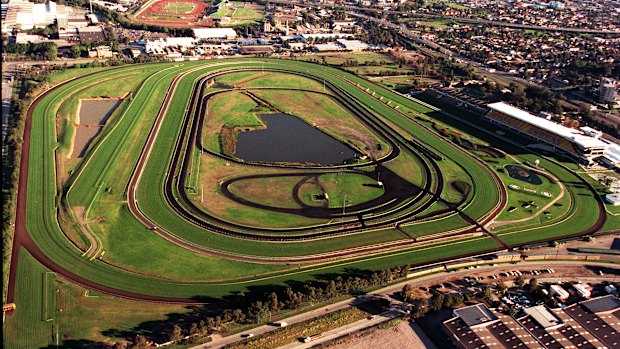
Could Rosehill racecourse go up for sale one day?Credit: Fairfax Media
One way or another, these examples are all symptomatic of the same problem: governance models incapable of self-policing, when commercial self-interest clashes with the best interests of the sport and its fans.
The caveat to that is the extant review of the Thoroughbred Racing Act being conducted by the NSW government. What comes of that might, for the better, affect how Racing NSW operates, but more than likely it won’t.
In the United Kingdom, the introduction of the Independent Football Regulator earlier this year represents a seismic shift in how the game is regulated in that jurisdiction. The step of statutory and regulatory intervention in the UK gives an opportunity to at least pause for thought, to seriously consider an equivalent. For otherwise, who will guard the guards themselves?
The IFR was born out of repeated disasters where football is perhaps the one thing that unifies the UK at the societal level: historic English clubs collapsing and reckless owners gambling with futures and treating clubs as disposable playthings, rendering supporters powerless as storied institutions
founded in the 19th century vanished, or were irrevocably bastardised.

Richard Monks, chief executive of the Independent Football Regulator.Credit: Bloomberg
The IFR’s most important innovation isn’t punishment, but regulation with a rationale of prevention.
It operates a licensing system: the 116 clubs under its jurisdiction must meet minimum standards of
financial sustainability, governance and transparency to compete in the top five tiers of English football, from the Premier League down. This idea alone is transformative.
Instead of waiting for clubs to crumble, the independent regulator can identify risk early and require corrective action.
Second, the regulator applies a strengthened test for owners and directors. This isn’t a box-ticking exercise. It scrutinises suitability, financial capacity, conflicts of interest and conduct – before control of a club changes hands.
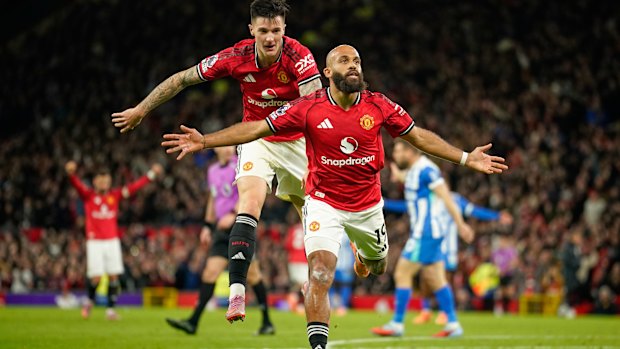
The IFR has regulatory oversight of all clubs participating in the Premier League and below, including Manchester United. Credit: AP
The game in the UK has learned the hard way that once a nefarious owner with pretend money is in, it is usually too late.
Third, the IFR has enforcement powers with jagged teeth. It can impose conditions on club licences, mandate governance reforms, impose sanctions and, in extreme cases, prevent a club from participating in competitions that would threaten the integrity or sustainability of the sport.
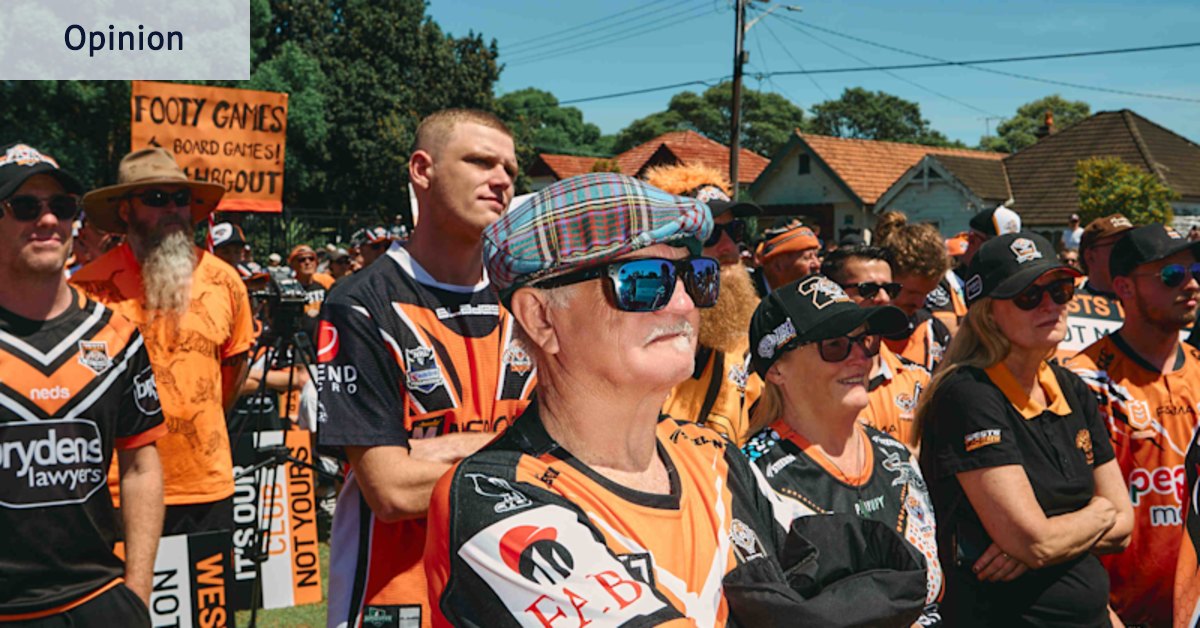
Fourth, the regulatory regime recognises something administrators and owners (and those who control the likes of the Wests Tigers) often forget: clubs are cultural assets. The regulator protects club heritage, requiring consultation before changes to name, colours or identity, and strengthening
the voice of supporters in major decisions.
Consider those powers in the context of the Wests Tigers debacle of the last three weeks – it’s hard to decipher where, if at all, due consideration was given to the broader cultural significance of the joint venture or the two foundation clubs that form the union.

Credit: Letch
Yes, the NRL’s licence to the joint venture is dependent on it being a “Wests Tigers” venture, and it’s fanciful to say the magpie will fly again, but the ill-informed conjecture about the possibility is equally as damaging.
An Australian sports regulator can’t be a carbon copy of the UK model. Our legal system is federal, our leagues operate across multiple codes, and our clubs are structured in wildly different ways.
But the core principles translate remarkably well.
Loading
Start with licensing
Any club competing in the top tier of the NRL, AFL or A-League should hold a statutory licence to do so. That licence would require audited accounts, minimum governance standards, independent directors, integrity frameworks and transparent reporting.
Licences would be reviewed annually, with the ability to impose conditions mid-season if risks emerge. This alone would modify behaviour.
Strengthen owners’ and directors’ tests
Australian sport already screens owners, but largely through the leagues themselves.
An independent regulator could apply a more rigorous, defensible process, coordinated with existing state bodies that already monitor gambling, criminality and financial misconduct. The aim is not to deter investment, but to ensure those entrusted with clubs are fit to hold that power.
Monitor financial sustainability
Early warnings of financial oversight — cash-flow stress, related-party transactions, excessive debt — would allow intervention before crises erupt. Clubs should not be allowed to drift toward insolvency simply because the league hopes it will all work out.
Protect fans and identity
Australian clubs trade heavily on history and community loyalty. A regulator should require genuine consultation before major identity changes and mandate supporter engagement mechanisms. Fans aren’t just customers; they’re stakeholders.
Create an enforcement matrix
Most breaches should result in remedial directions, not banner headlines. But in serious cases, the regulator must be able to impose sanctions, suspend licences or appoint independent administrators. Without credible consequences, regulation is pantomime.
Resistance is inevitable. Codes and leagues will contend with some force that sport shouldn’t be run by cardigan-wearers. Clubs will warn of costs, bureaucracy and the end of autonomy.
Politicians will fear being blamed for interfering when all politicians really want is to be loved enough to be re-elected.
Loading
The UK didn’t establish its Independent Football Regulator because everything was working. It did so because too many institutions collapsed before anyone acted.
Australia has not yet suffered a catastrophe of that scale – although professional clubs have hit the financial wall – but we have had enough near-misses to know the risk is material.
An Australian sports regulator couldn’t fix every problem. Egos, ambition and conflict can’t be avoided. But it would provide something our biggest games lack: an independent, consistent safeguard for sustainability, integrity and the long-term interests of fans.