
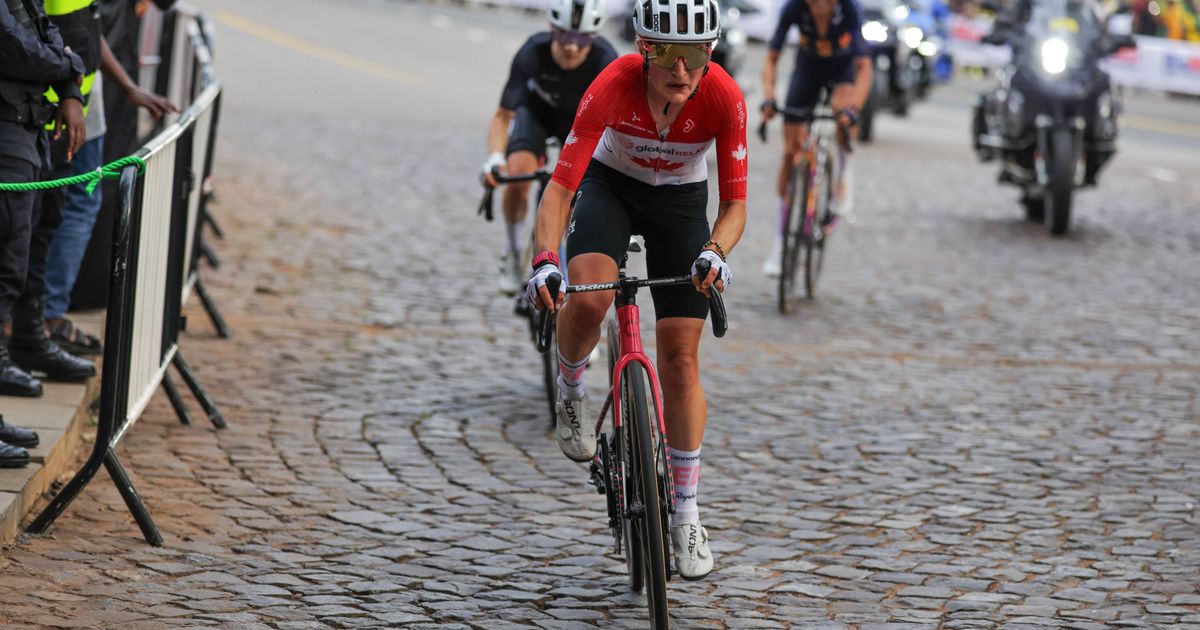
That situation was largely caused by an unnamed coach. “He told us we were fat, that we would be better off if we were lighter. He blackmailed us with food, saying that if we ate certain things, we’d have to run behind the team car,” Vallieres explains. “When someone grabs your stomach every morning to show you that you’re fat, it eventually gets into your head.”
That led to an unhealthy obsession with food: “I restricted myself; he said we weren’t allowed to eat sugar, even though we actually needed it. I ate more salad than anything else; it didn’t do me any good, it only made me feel worse,” she says.
Her transfer to EF might have come just in time to save the career of Vallieres. Under more professional guidance, the Canadian gradually built herself back to her best level while once again feeling comfortable in her own body.
“It took a year before I had a healthy mindset around nutrition again. Anna, the team’s nutritionist, told me that getting my period back was becoming a priority – and that was also what I wanted, because I knew it wasn’t normal,” Vallieres explains. Of course nutrition remains an important aspect of cycling, but eating no longer comes with unease and feeling of guilt for Vallieres thanks to her new team.
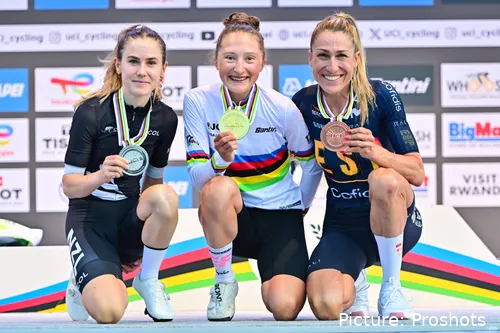
Magdeleine Vallieres on the Kigali podium
And how did she reward herself for a World Championship title? “I celebrated by buying myself a small cake, and my teammates came to congratulate me. Anna kept telling me how much stronger I was going to become,” she recalls.
Lesson to take away
Finally, Vallieres wants to appeal to the future generations that while pushing their bodies to the limit in races is not a bad thing, doing so off the bike can have consequences that far transcend cycling. And when your body is being stretched in an unhealthy manner, it’s bound hit back like a wrecking ball.
“Being thin to win is not a good example for the next generation. It’s not right. My experience has taught me that being healthy is the best way to perform,” Vallieres concludes.