
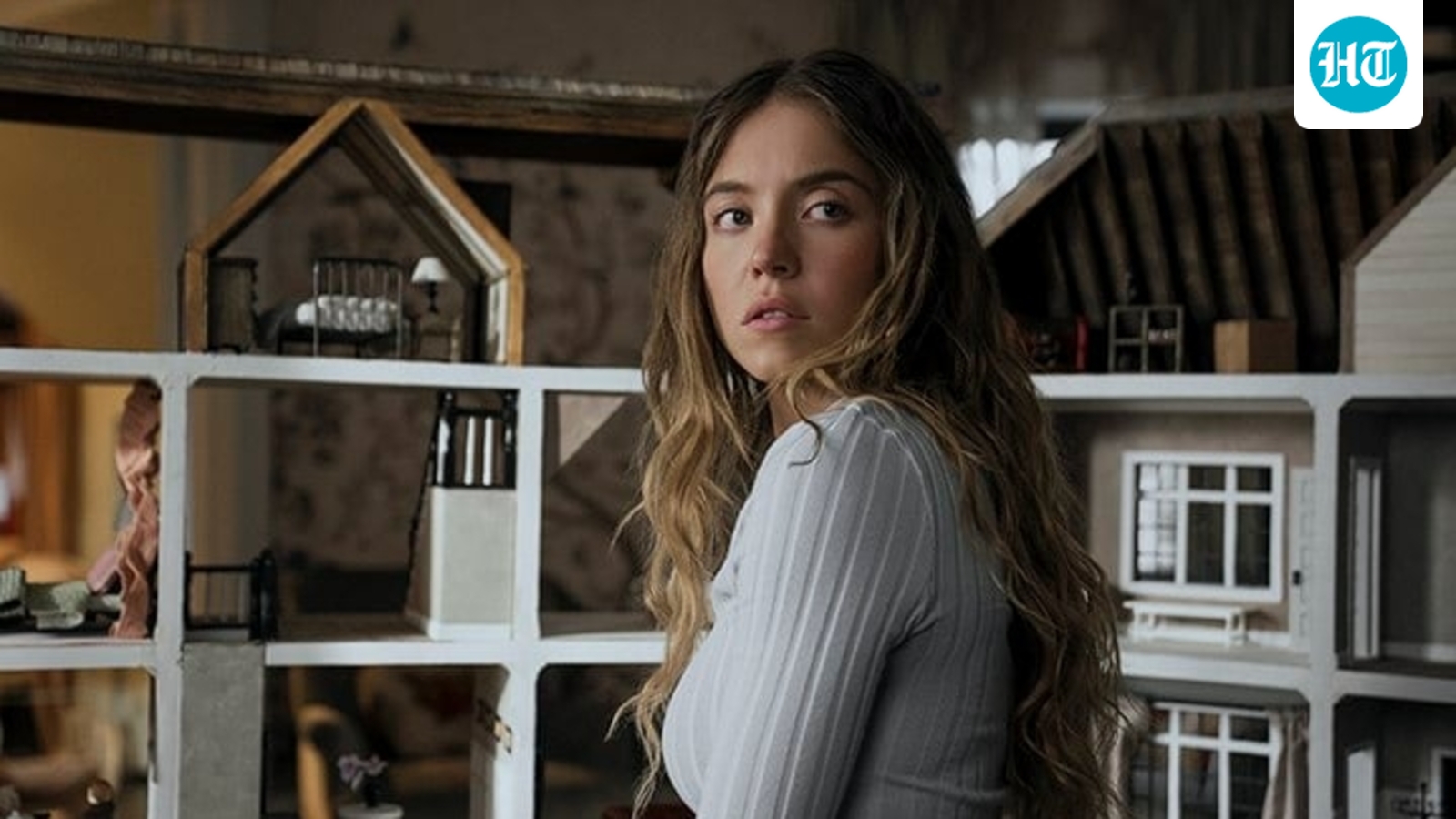
Things seem a teensy bit off in the opulent Long Island manor to which we are introduced at the start of “The Housemaid.” The lady in charge of this suburban palace, Nina (Amanda Seyfried), explains to her prospective employee, Millie (Sydney Sweeney), that the home’s long spiral staircase is so dangerous that she might as well get a chalk outline of herself drawn at the bottom right now. The new employee is meant to stay in an attic whose door tends to get stuck, and can be locked from outside.
 PREMIUM Sydney Sweeney in ‘The Housemaid.’
As for the man of the house, Andrew (Brandon Sklenar), he’s an oaken hunk of brawn who wants nothing more than to retreat to his fulsomely designed man-cave to watch . . . Stanley Kubrick’s 18th-century picaresque “Barry Lyndon.” Not “GoodFellas” or “The Godfather”? The choice is odd. But it will have a certain resonance when we catch a few glimpses of it late in the movie.
Which is diabolically entertaining. Based on the novel by the pseudonymous Freida McFadden, “The Housemaid” is a delightful hall of mirrors in which reality turns out to be subject to infinite modification. For Ms. Sweeney and Ms. Seyfried it provides an endless variety of opportunities to run through the soap-opera playbook of screaming, cowering, deceiving and attacking depending on the circumstances, which grow increasingly horrifying. These two ladies seem far too alike not to arrive at a contretemps, which they quickly do.
Adapted for the screen by Rebecca Sonnenshine and directed by comedy specialist Paul Feig (“Bridesmaids,” “The Heat”), “The Housemaid” contains more twists than a box of rotini, so I’ll limit myself to describing the setup. It’s a role-reversed “The Hand That Rocks the Cradle,” with the vulnerable mom of a young child hiring a stranger to help out in the most intimate corners of her life, only this time the mother instead of the domestic exhibits increasingly disturbing habits.
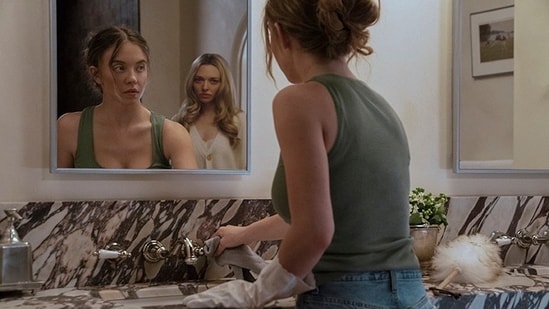 Ms. Sweeney and Amanda Seyfried
The film plays in much the same space—beautiful people in gorgeous surroundings with violence lurking just under the surface—as last year’s screen version of the Colleen Hoover novel “It Ends With Us.” “The Housemaid” is far crazier and more amusing, though, with a plot that keeps veering off sharply in unexpected directions without harping on any redeeming social value to compare to Ms. Hoover’s implicit plea for silent sufferers of domestic violence to speak out. As for the camp factor, many massive understatements in the script will trigger appreciative howls of laughter.
Mr. Feig’s film also has the advantage when it comes to male leads. The mild-mannered yet imposingly masculine Andrew is quietly appealing as he deals with his erratic wife’s sudden tantrums and plate-shattering outbursts. He comes across as a long-suffering victim of psychological domestic abuse, unwilling or unable to let anyone know how much he is forced to endure, despite a physique that would earn a nod of approval from the Incredible Hulk or Superman. He and Nina, who live in a particularly upscale quadrant of Long Island’s Nassau County, have a luxury lifestyle that they enjoy presenting to the world on Instagram, but as the tabloids never tire of reminding us, plutocrats can be just as unhappy as the rest of us.
Or more so. Among the sources of stress for both spouses is the imperious gaze of Andrew’s regally demanding mother, Mrs. Winchester (Elizabeth Perkins), who exerts considerable financial influence over them. Nina is also under social pressure to keep up with her fellow wealthy housewives’ habits, such as giving speeches to the PTA. Behind her back, the other matrons make snarky remarks about her while sipping her tea; we learn all this because we share Millie’s point of view and the moms speak freely in front of her. Mere staffers are invisible to them.
As for Millie, she’s young but troubled, and circumstances that darkened her past have made her desperate to hang on to this new job, no matter how disturbing things may get. The hardworking Ms. Sweeney—this is the fourth feature she has starred in since June—successfully conveys the character’s eagerness and naïveté, though as has been true in some of her past work she has a slight tendency to swallow her dialogue rather than enunciate.
Ms. Seyfried, who has a rare opportunity to show off her range this month by also starring as an 18th-century religious leader in “The Testament of Ann Lee,” is even better than Ms. Sweeney, making the most of a demanding part. And Mr. Sklenar, who was in “It Ends with Us” but is a relatively fresh face at the movies, smartly underplays his increasingly pivotal role, from which he slowly peels back the layers. By the end you may even understand why he likes “Barry Lyndon.”