
Published on 19/12/2025 – 15:00 GMT+1
•Updated
14:52
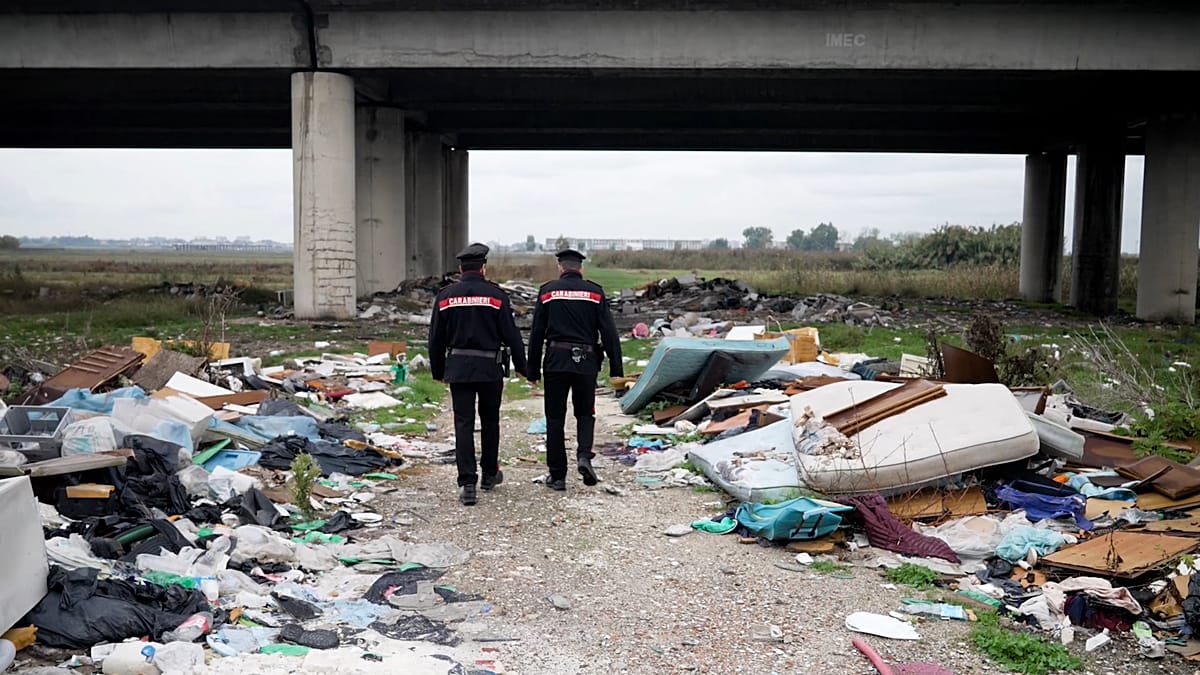
Between Naples and Caserta lies a grimly infamous area: the Land of Fires, also known as the Triangle of Death. In this territory of nearly three million inhabitants, cancer rates are among the highest in Italy.
For decades, toxic waste — industrial, chemical, and sometimes radioactive — was buried, burned, or illegally dumped here. Behind this massive trafficking is the Camorra, the local mafia, aided by economic and institutional networks.
“The State sold itself to the Camorra, to corrupt businessmen, to corrupt magistrates. That is how the Land of Fires was born,” says investigative journalist Marilena Natale, who lives under police protection after receiving death threats from the mafia.
While large trafficking routes have shifted, illegal dumps continue to proliferate across the region, and fires set by clandestine companies regularly release toxic fumes. With devastating sanitary effects.
A health emergency
“In Italy, a general practitioner with 1,500 patients sees an average of nine cancer cases a year. I already have fifteen,” says Luigi Costanzo, a family doctor in Frattamaggiore, at the heart of the Land of Fires.
The contamination of soil, water, and air has also led to record cases of respiratory and degenerative diseases, infertility, and congenital malformations.
The health impact of this criminal pollution was officially recognized by Italian authorities only in 2021.
“My son was silently murdered by a State that knew,” says Marzia Cacciopoli. Her son Antonio died in 2014, at nine and a half, from a brain tumor. She is among the families who, as early as 2013, took the case to the European Court of Human Rights.
In January this year, the Court condemned Italy for prolonged inaction and putting residents’ lives at risk. It ordered the government to implement an environmental action plan, including independent monitoring and a public information platform.
Pollution cleanup: disputed promises
Appointed in February, a special commissioner now coordinates the cleanup and securing of hundreds of contaminated sites. But announced timelines — up to ten years — and funding widely seen as insufficient continue to fuel public anger.
In response to this slow progress, residents and activists remain mobilized within numerous collectives. The association Le Mamme di Miriam is named after the daughter of one of its members, a survivor of a rare nervous system cancer. Together with other women, her mother, Antonietta Moccia, patrols the territory to document illegal dumping and prompt authorities to step up action. “I no longer trust the institutions that abandoned us,” she says. Anna Lo Mele, president of the association, echoes: “They let us die — and they continue to let us die. This is an ecocide,”.