
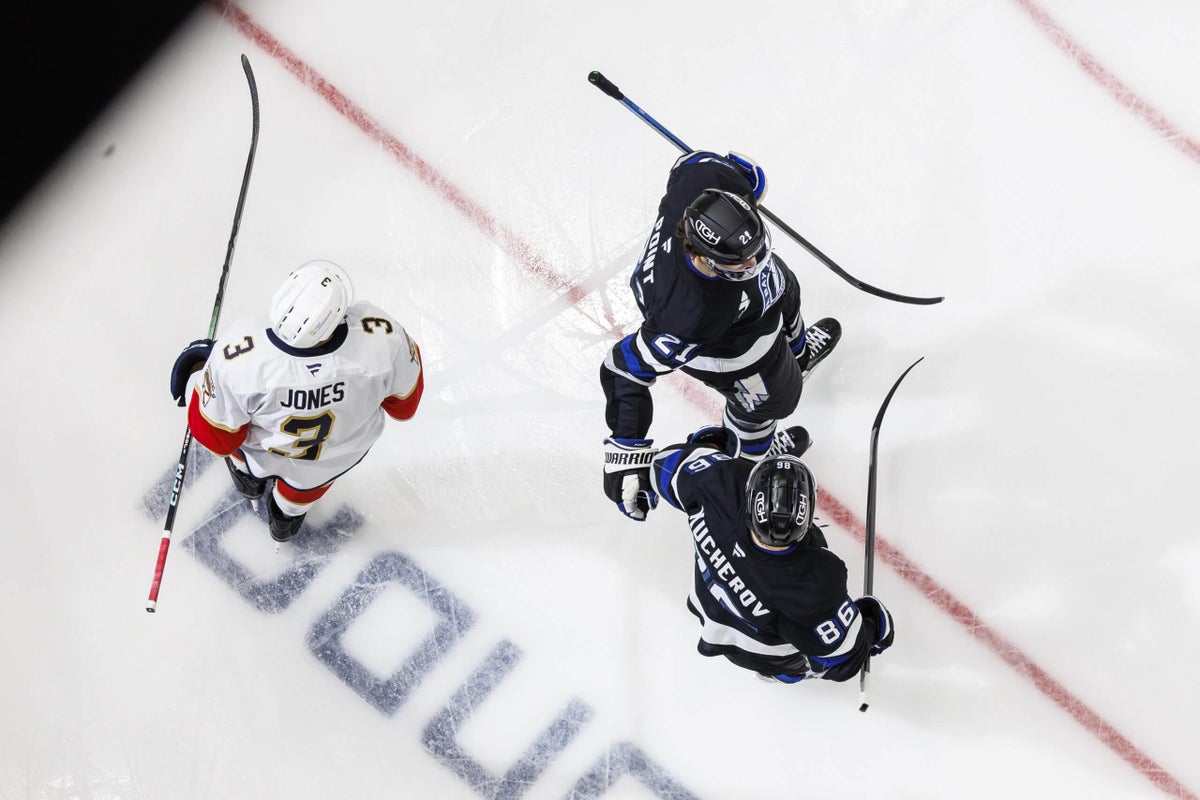
Playing for Team USA in the 2025 World Championship was a career-changing experience for NHL journeyman Mikey Eyssimont, and not just because of the gold medal he brought back Stateside after the championship game win in Stockholm.
Part of what makes the tournament unique is its patchwork rosters. Team USA, for example, had youth (Will Smith, 20 years old) and experience (Conor Garland, 29), 4 Nations Face-Off participants (Zach Werenski) and undrafted players (Drew O’Connor).
It’s a great opportunity to connect with players across the league — and see what’s working for them.
One topic of interest for Eyssimont was the curves of players’ stick blades. As you would expect, all kinds were at hand.
“It’s fun to nerd out with all these guys you’re meeting about what sticks they use, what they’ve tried and what they’re doing,” he says.
After much study and conversation at the event, Eyssimont was convinced to swap the curve he’d been using on his Warrior sticks, a “Brayden Point” — mid-point curve, pronounced toe hook, flat on the top and bottom of the blade — to something new. After trying several samples, including one with Tage Thompson’s specifications, Eyssimont put Nikita Kucherov’s curve and a square shaft to the test on a stickhandling board.
He could not believe the results.
“My hands feel so good now,” says the Boston Bruins wing, who had six goals in 33 games through Friday, on pace for a career-high 15 goals at age 29. “I was doing it with the Pointer curve. Then when I got my new sticks with the shaft and the blade, it was like, ‘Wow.’”
Every part of an NHL stick is customized, from flex to lie to kick point to shaft shape to grip. But when a player possesses the puck, it spends all of its time on the blade.
You could make the case, then, that when it comes to customization, the curve of the blade is the most critical feature a player wants to get right.
“You’ve got to have something that feels good,” says Eyssimont’s Bruins teammate Mason Lohrei. “If it’s a good curve, I can stickhandle with it. I’ve got a good feel for the puck.”
One of the perks of being an NHL player is the freedom to dial in an ideal curve without great personal expense. Every NHLer, from Olympian to healthy scratch, can undergo a trial-and-error process to arrive at a customized curve that aligns with his preferences and responsibilities.
The curve of a defensive-minded fourth-line wing may be much different than that of a No. 1 center. But both players share the specificity with which they can design their curves.
“Every player at this level is always looking for any edge — anything to increase their performance,” says Justin Bonitatibus, Bauer Hockey elite athlete services and marketing manager. “They’re always curious to see what can make them better. That’s what drives them to get to this level. So if they want to try a curve and they think that helps, whether that makes them a hair more accurate or shoot the puck a hair harder and they feel that, then they’re open to making the change.”
Each manufacturer has its own designations. Most of Bauer’s curves, for example, are variants of a P28 (toe, more aligned toward shooting) and P92 (mid-toe, more of an all-around blade). CCM (P28, P29), Warrior (W28, W03), Sherwood (PP28, PP92) and True (T28, T92) have similar offerings.
Some players with specific modifications are part of the curve lexicon. You can buy a stick with a curve named after Kucherov, Point, Nicklas Backstrom, Jamie Benn, Sidney Crosby or Patrick Kane.
Which curves do NHLers use, and why do they like them? The Athletic asked a sampling of players. Their job descriptions go a long way in explaining their curve preferences.
Max Domi, Maple Leafs
Curve: P92
Role: Bottom-six playmaking center
Domi estimated he’s been using his P92 for about seven years. Its all-around design suits his game.
“I’m more of a pass-first kind of guy. I just like how it feels when you’re stickhandling. You can make a forehand or backhand pass.”
Domi has experimented with modifications. But he always returns to the P92.
“I still mess around with curves all the time. I love that stuff. Still a kid at heart. I love changing. I’ll try new things. But I always end up coming back to the old faithful. It’s a comfort thing.”
Would he try an entirely new curve?
“I’m getting old, man. I’m 30 now. We’ll see. It’s brought me pretty far, so I’ll probably stick with it.”
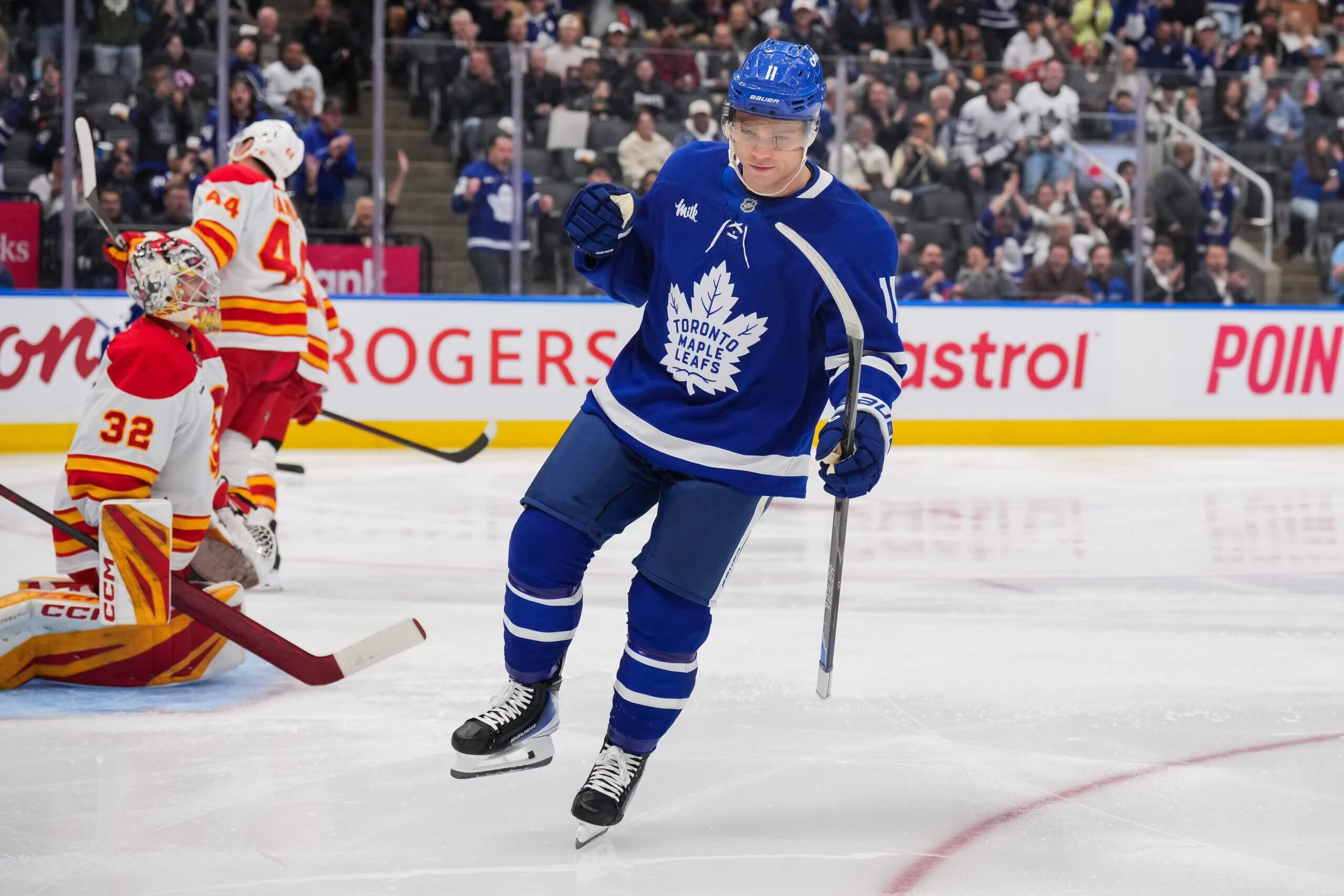
Max Domi calls the P92 curve “old faithful.” (Chris Tanouye / Getty Images)
Mikey Eyssimont, Bruins
Curve: Nikita Kucherov
Role: Bottom-six wing
Eyssimont is primarily a fourth-line wing. But he likes how the Kucherov curve makes him an offensive threat.
“I feel like I have unreal puck control. I haven’t had any breakaways this season. But I feel the quick hands. The puck doesn’t get away from me. I’ve worked on my hands a lot. I’ve always felt like I have good hands. Just trying to remember that and improve on that.”
Like everyone, Eyssimont thinks about his shot when determining his curve. But his priority is puck control.
“Everything on the heel. Everything. Obviously if you’re snapping a shot, it’s coming from the toe. But mostly everything starts from the heel, from handling passes to everything. It’s something I’ve learned from the people I’ve been around the past few summers. So I really focus on watching the puck touch my heel, touch my heel, touch my heel. Every pass in practice. Then it comes more naturally in the game.”
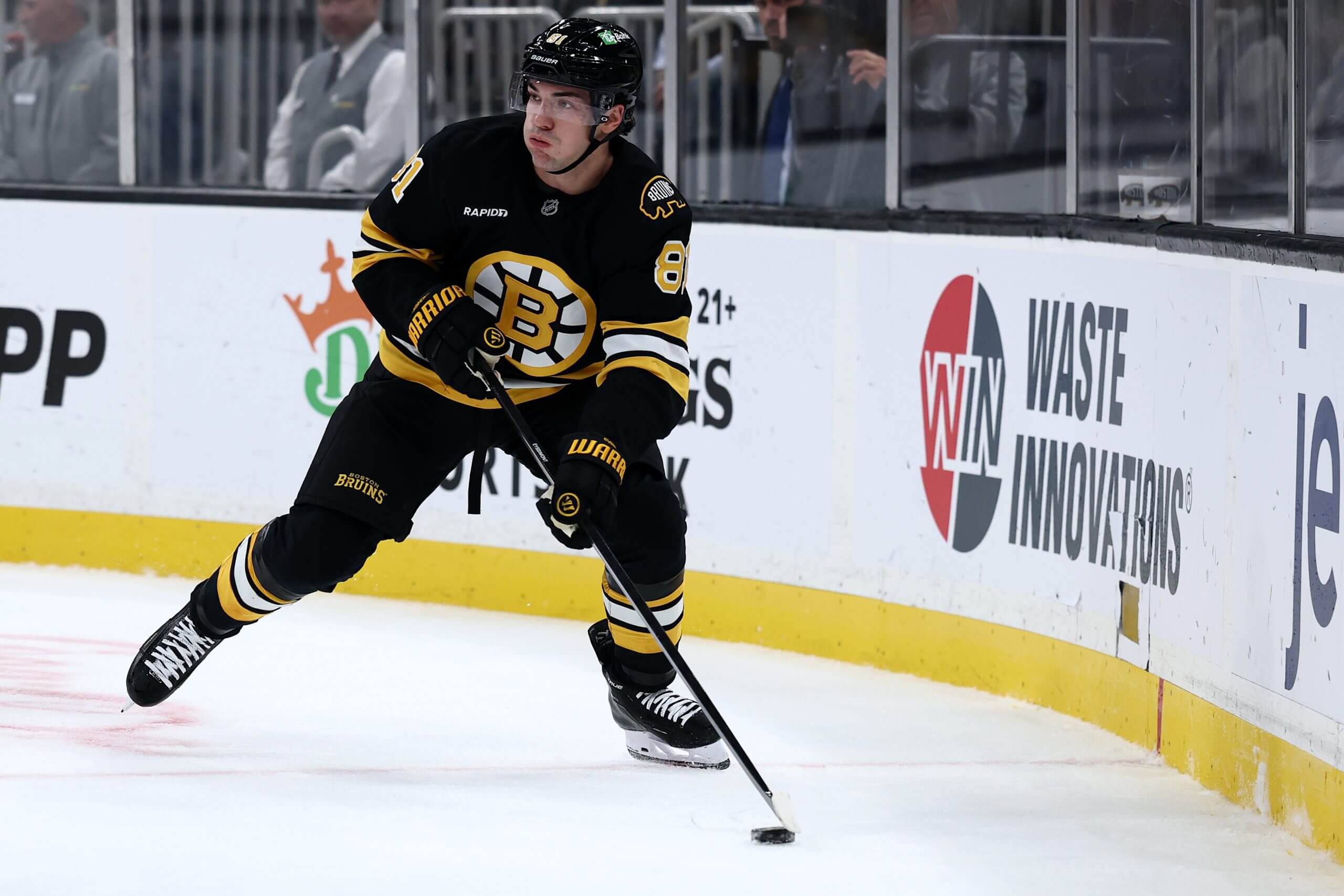
Mikey Eyssimont says his new Kucherov curve has improved his puck control. (Maddie Meyer / Getty Images)
Nick Jensen, Senators
Curve: P90
Role: Defensive defenseman
The 35-year-old is a creature of habit. He has used the P90 since he played at St. Cloud State.
“Some people talk about positional curves — forwards with more curve, D with less curve. I don’t really think that’s a thing for me. I want something that’s comfortable. I want something I can throw a flat pass with. Then work your way up from there. Be able to stickhandle. Then shooting after that. I prioritize handling the puck as No. 1. You’ve got to have the curve that feels comfortable, the right height, the right lie.
Jensen’s career high is five goals. So you can see why he does not have his shot top of mind when picking his curve.
“If you can’t handle the puck, you’re not going to get your shot off. D-men, maybe it is a little positional and a little different. But I think it would be the same thing for a forward. You’ve got to be able to handle the puck probably better than a D-man. So I would still prioritize that if I were a forward.”
At this stage, Jensen is unlikely to try a new curve.
“Kind of cemented in. I’m not going to talk to my stick guy and order a bunch of different samples, different lies, then have to work through that midseason while I’m trying to play games and practice. We already don’t practice enough. That would have to be a summer thing.”
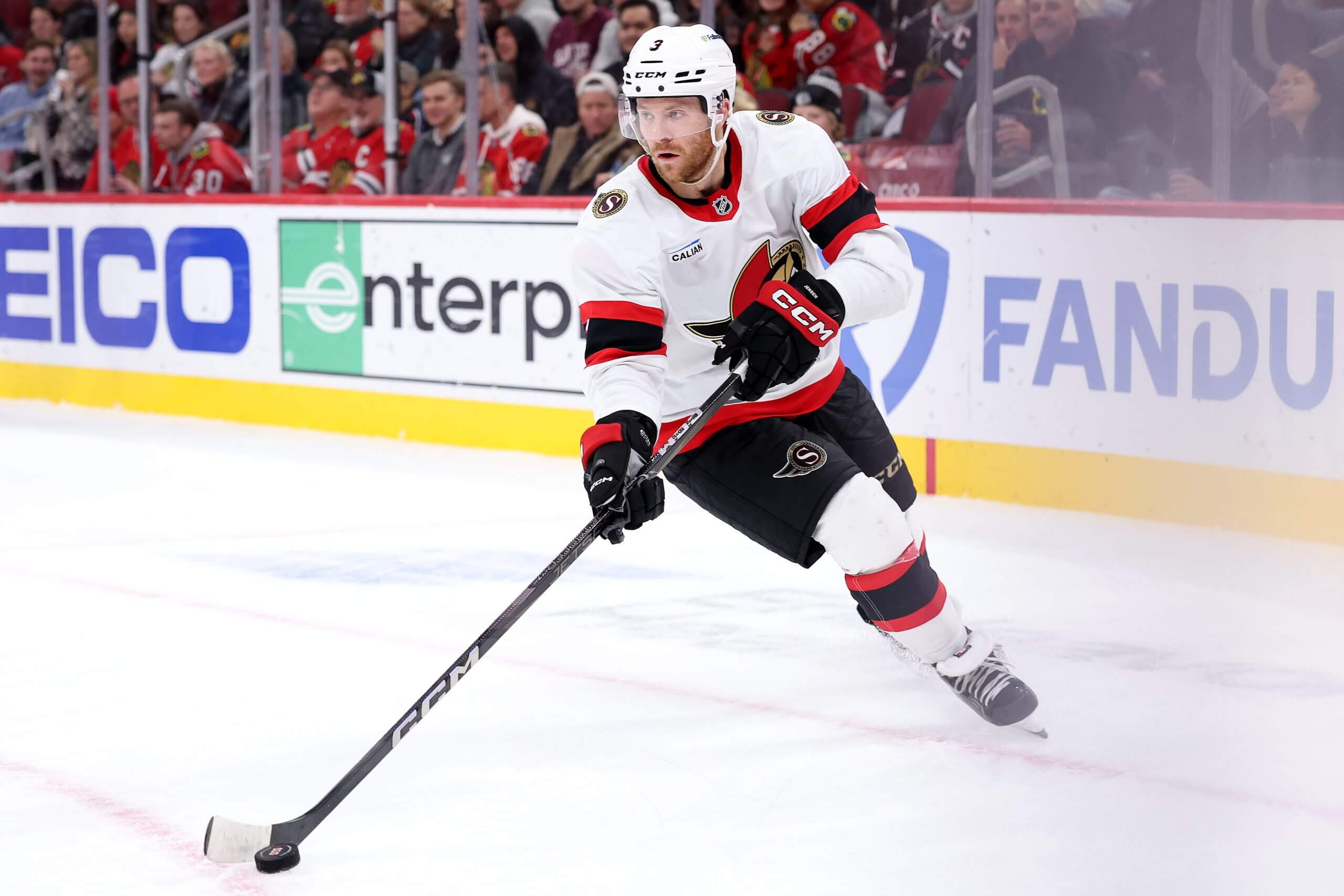
Stickhandling and passing are Nick Jensen’s priority with his curve. (Michael Reaves / Getty Images)
Mason Lohrei, Bruins
Curve: P92
Role: Offensive defenseman
Lohrei, 24, has used the P92 since Ohio State. He does not intend to change anytime soon.
“I’ve been using it for so long. I haven’t tried anything else. So I don’t know if it would affect my game.”
For Lohrei, who works the point on the second power-play unit, shooting is part of his portfolio. Even though Lohrei usually likes the puck on his toe to shoot, he isn’t sure a wider curve would suit him well.
“With bigger ones, I feel like it’s harder to hit the net. So maybe some D would use flatter curves. You’re shooting from further out. If you have a bigger curve, it’s harder to keep it low. For me, even with my curve, sometimes that’s something I’ll struggle with. The puck starts rising.”
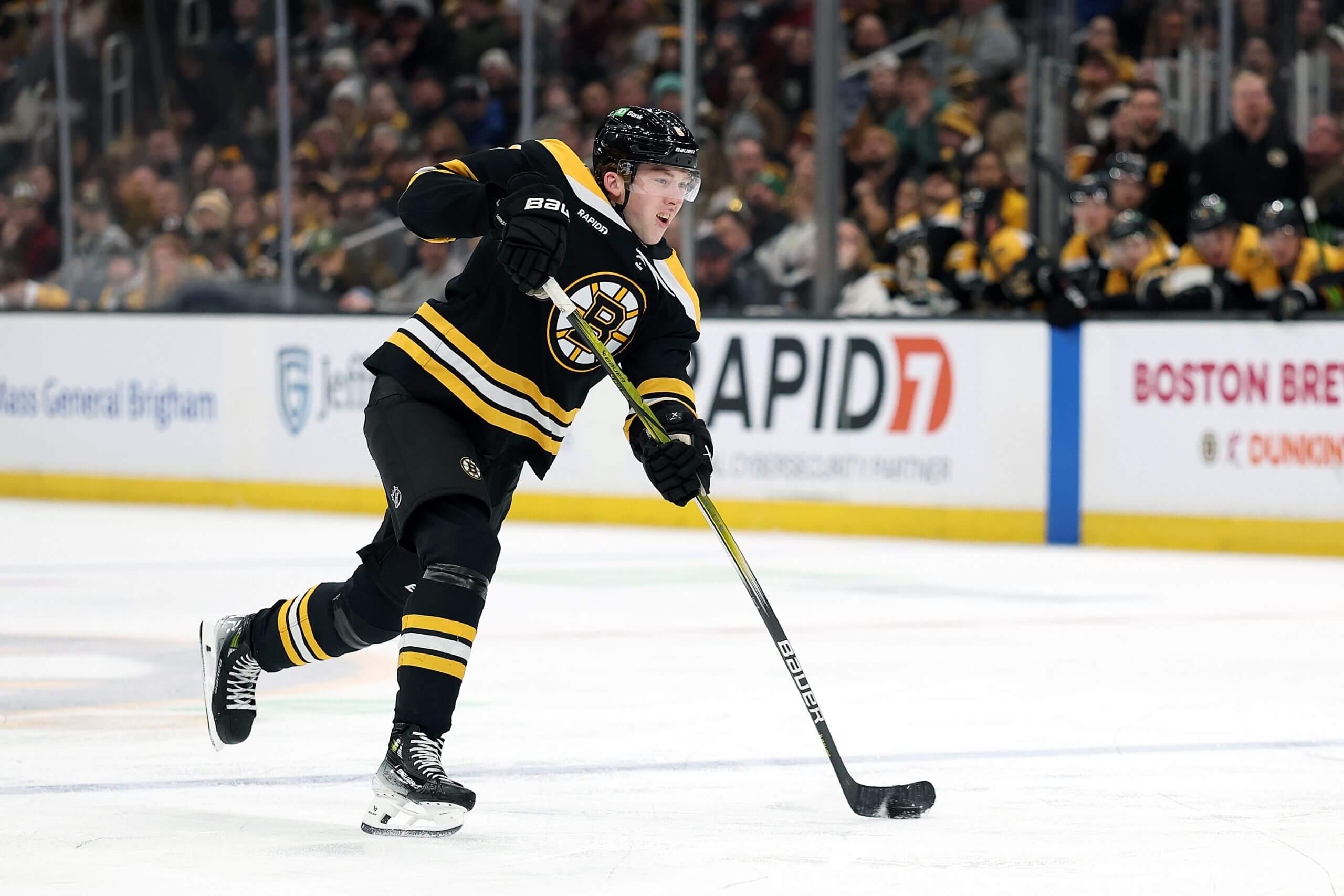
Mason Lohrei finds that his shot rises too much if he has a bigger curve. (Maddie Meyer / Getty Images)
Casey Mittelstadt, Bruins
Curve: Adam Oates
Role: Playmaking top-six wing/center
Mittelstadt has hired Adam Oates for offseason skills work. So when Oates suggested his curve — a modification of the P92 with a thin blade and flat heel — Mittelstadt took his advice. He regularly makes plays off his backhand, which aligns with the Oates curve.
“I used a straight stick for most of my life. So I feel like it’s a good in-between of having a curve but also a little bit of the straight feel too. The first half of it is pretty straight. So overall, you get a pretty straight backhand use on the heel. That’s one of the things that’s worked for me, especially using a straight curve my whole life. I feel like you really use your backhand with a straight curve. So I’m not losing that. But also having some toe to be able to cup it, stickhandle and shoot.
“I’ve messed around with a little more toe before. But I feel like you lose some of that straight. I use my backhand as much as my forehand. So it’s very important. And taking pucks off the wall and having that backhand is very important.”
Mittelstadt is a pass-first player. In 2022-23, when he scored a career-high 59 points, he had 135 shots. In comparison, then-teammate Tage Thompson had 295. So even if shooting is not his priority, the Oates gives him a satisfactory degree of toe.
“That’s where the toe of this curve comes in. It has enough. I’m not going to blow it by anyone necessarily. I’m more worried about it coming off where I want it to come off and where I want it to go. Some of that comes with reps. But it’s also about being comfortable with the angle of the blade and how much the toe is cupping the puck. Especially with the way I like to shoot and where I like to shoot. I like to shoot a little lower. I feel like this curve has been very good for me.”
The 27-year-old admitted to being envious of David Pastrnak’s shot. Pastrnak uses a P28, which he uses to load up his snap shot.
“He just holds it back there forever. Of course I’ll always be looking for something that makes me a better player. But for now, I’m happy. If I can find something a little bigger with the same straightness in the backhand and same feel, I would look into it. But I haven’t found it yet.”
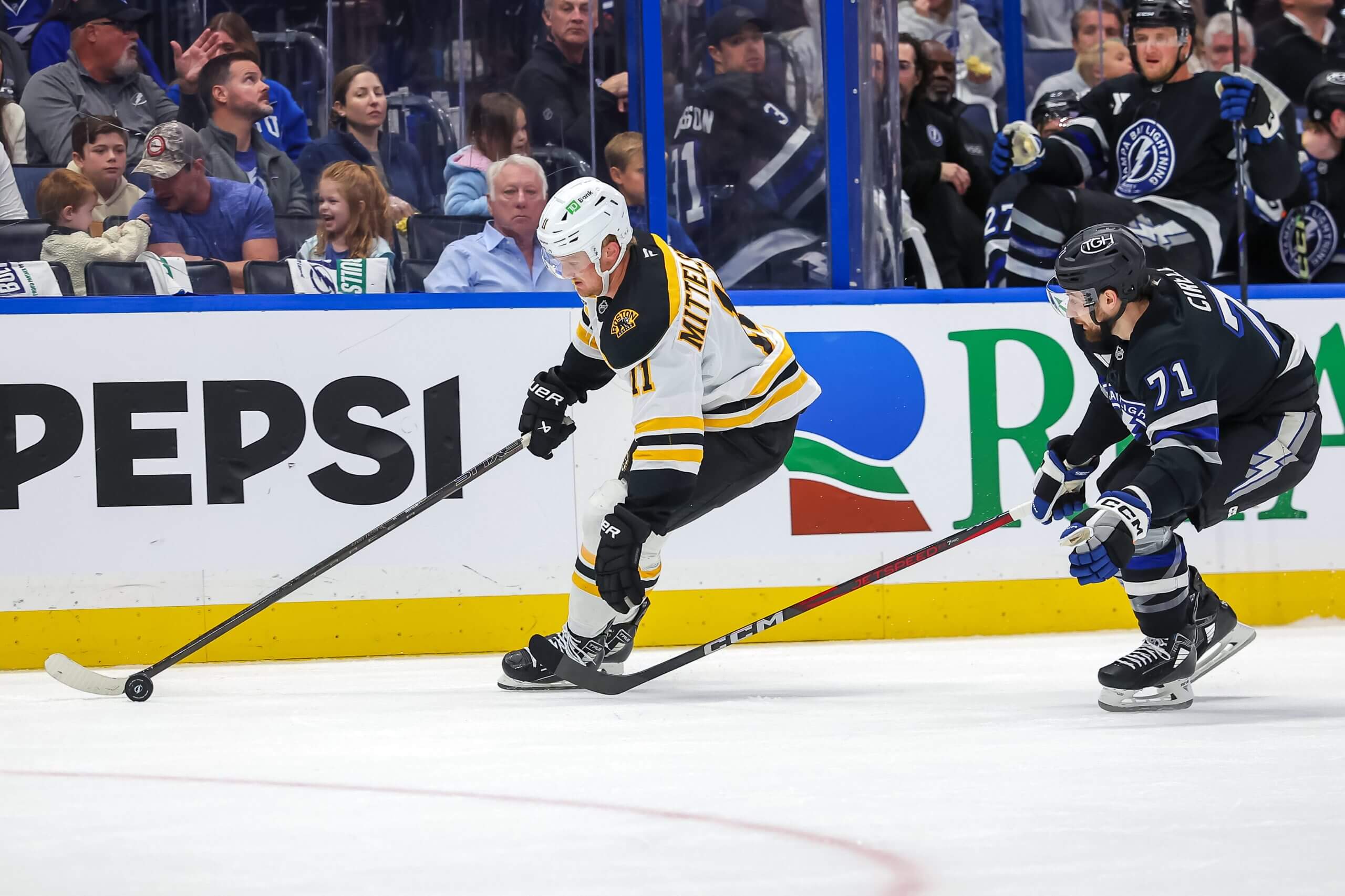
Casey Mittelstadt regularly makes plays off his backhand, which goes into his curve selection. (Mike Carlson / Getty Images)
Jake Neighbours, Blues
Curve: P92
Role: High-energy top-six wing
Neighbours has modified the P92 to tailor his game. The 23-year-old spends a lot of time on the boards, in front of the net and in close-quarters situations.
“Added toe, straighter heel and a bit of a fat blade. I tip a lot of pucks. It’s easier winning battles, wall play. A little more blade to work with. It’s all preference. If you’re getting more shot looks, more passing, whatever it is, your stick has to tailor to who you are as a player. So I’ve made little subtle changes to mine.”
Troy Terry, Ducks
Curve: P28
Role: Playmaking and shooting wing, penalty killer
Terry started his career as a scorer. In 2021-22, he led the Ducks with 37 goals. He has incorporated more passing into his game, but he still uses the P28 because he thinks about his shot.
“More of a toe curve. That’s kind of how I shoot. It’s like a sling out of the toe.”
Terry has used the P28 since he played at the University of Denver. He always comes back to it after trying different curves.
“Some of them feel better in certain areas, like backhands. But I’ve just gotten so accustomed to shooting with that curve. Because I put it in the cradle of the toe and kind of sling it. It’s just hard to switch away from it at this point. I thought of myself as a passer. But then in college, I started scoring more. I think it just makes my shot a little more deceptive, just coming out of the toe in a sling. I’m never going to have as hard of a wrist shot as (Alex) Ovechkin and some of these guys. So just being able to kind of hide it and sling it, that’s how I’ve found success.”
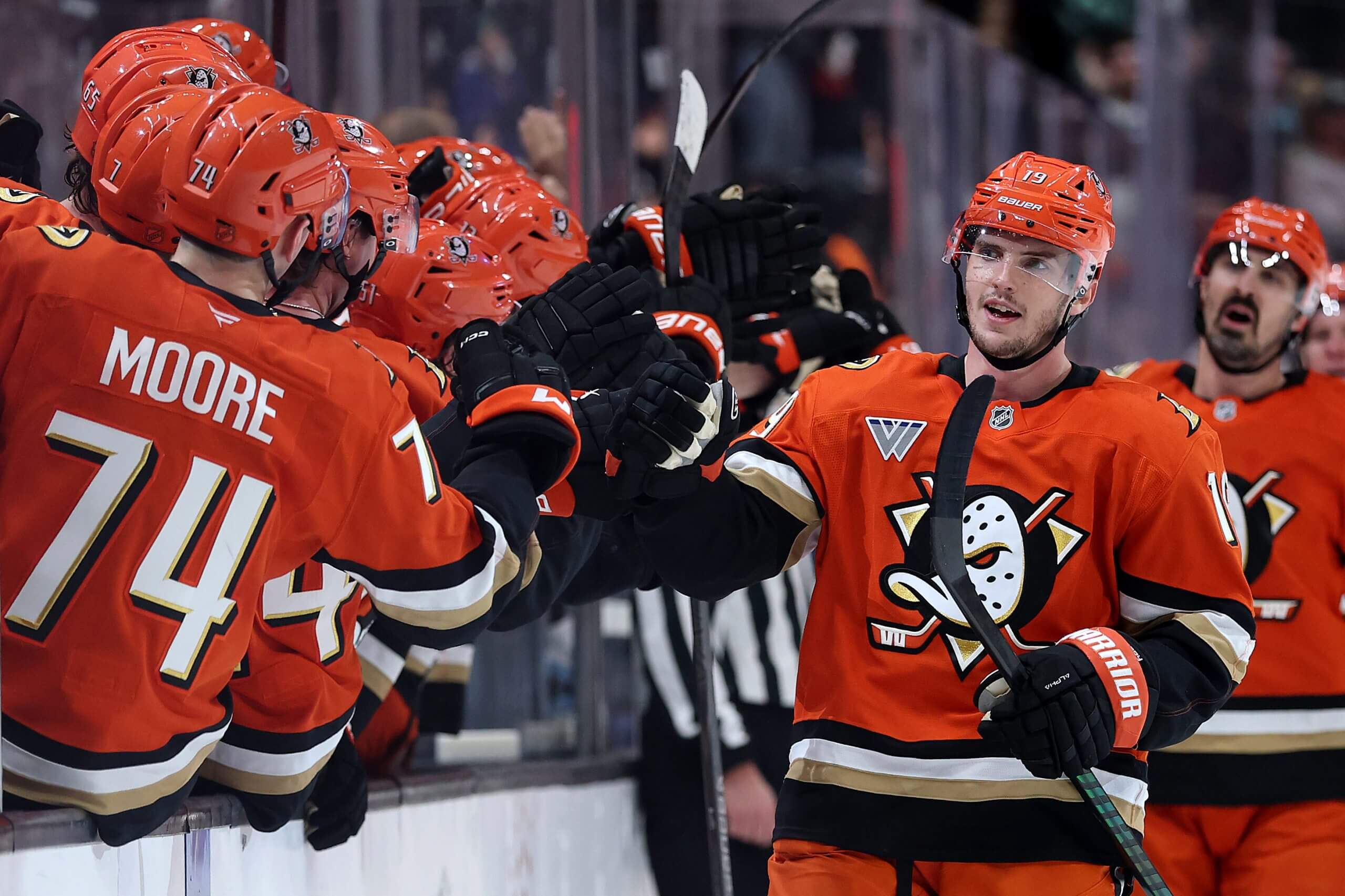
Troy Terry likes a P28 curve because it helps him “sling” shots off the toe of the blade. (Sean M. Haffey / Getty Images)
Nick Robertson, Maple Leafs
Curve: P90
Role: Middle-of-the-lineup shooting wing
Robertson is 24 years old. Aside from instance, he has always used the P90, which is a hybrid of the toe and mid-toe curves.
“Maybe one other curve when I was a little kid. More sharper, rounder, a little more curve to it. I probably used that for a weekend. But this is pretty much the curve I like. I like the puck on my stick. It’s good on shooting accuracy. But it’s also good on stickhandling and playmaking. I think this curve is the best of both worlds. I feel like once you dive into other curves, it’s a good shooting curve, but not good stickhandling and vice versa. This is a good in-between.”