
Amid the horror of the Bondi Beach mass shooting, the displays of heroism from ordinary people provided a glimmer of hope.
From a mother shielding a stranger’s child with her body to bystanders rushing to provide first aid to the victims.
Some shouted warnings or helped people find cover. Others confronted the shooters directly.
One of these acts of selflessness was caught on video and went viral.
Loading…
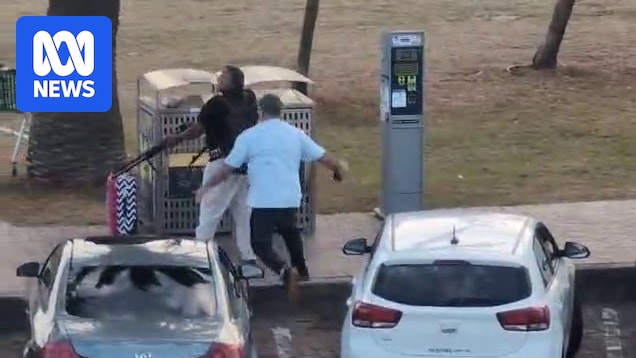
Ahmed Al Ahmed, a 43-year-old father of two daughters aged three and six, launched himself unarmed at one of the gunmen and, after a brief struggle, wrestled away his gun.
The Syrian immigrant and Muslim had just been walking by to get a coffee.
“He saw they were dying, people were losing their lives, and when that guy ran out of ammo, he took [the gun] from him, but he was hit,” his mother Malakeh Hasan Al Ahmed said.
Mr Ahmed’s intervention forced the shooter to retreat further away from the Chanukah by the Sea festival, back to the footbridge where he and the other gunman were then shot by police.
How two men in a silver car brought terror to Bondi Beach
Fifteen innocent people were killed and dozens were injured during the attack.
The toll would have likely been much higher if not for Mr Ahmed and the other heroes’ bravery.
The stories of heroism also prompted many to ask: “What would I do in that situation?”
The official advice in Australia says people should prioritise their own safety during mass violence events.
But experts say more bystanders than you might think are often willing to put their lives on the line — and in so doing can make a big difference in reducing death tolls.
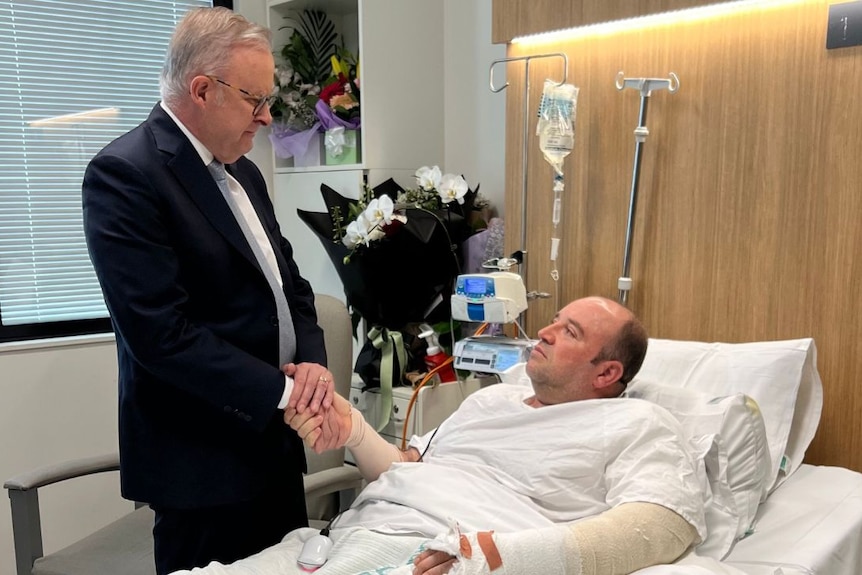
Anthony Albanese visited Ahmed Al Ahmed in hospital. (Supplied)
‘A real-life hero’
Mr Ahmed’s bravery has received praise from all over the world.
“We in the village of Al Nayrab are proud of the act of heroism,” said childhood friend Abed el Rahman el Mohamad back in his hometown in Syria.
Wellwishers left flowers and notes of gratitude at Mr Ahmed’s Sutherland tobacco shop.
Prominent figures from the Governor-General of Australia, Sam Mostyn, to champion boxer and football player Anthony Mundine lined up to visit his bedside.
Pride in Bondi hero’s hometown
NSW Premier Chris Minns called him a “real-life hero”, and Prime Minister Anthony Albanese said he “represents the best of our country”.
Even US President Donald Trump had a kind word for him at the White House, saying he was a “very brave person” who “saved a lot of lives”.
“So, great respect to that man that did that,” he said.
An online campaign set up to “show our gratitude and support for someone who demonstrated incredible courage when it mattered most” has so far topped more than $2.5 million, with more than 43,000 people from all over the world donating.
A video posted on social media showed influencer Zachery Dereniowski presenting Mr Ahmed, still in a hospital bed, with an oversized novelty cheque.
“When I do save the people, I do it from the heart,” Mr Ahmed said in the video.
“Because it was a nice day, everyone enjoying, celebrating with their kids, woman, man, teenager.
“Everyone was happy and they deserve to enjoy and it’s their right.
“This country, best country in the world. The best country in the world, but we’re not going to stand and keep watching. Enough is enough.”
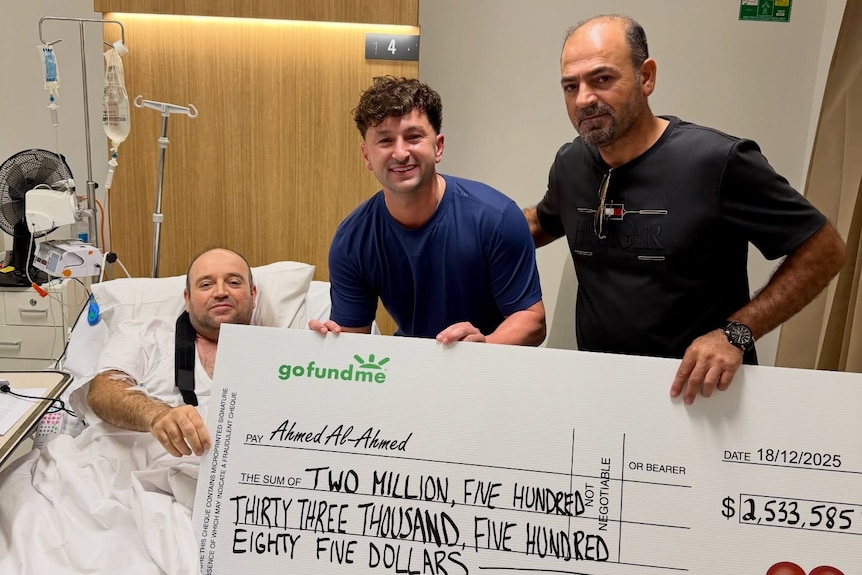
A GoFundMe fundraiser collected more than $2.5 million for Ahmed Al Ahmed. (Supplied: GoFundMe/mdmotivator)
Such bravery ‘not unheard of’
Milad Haghani, an expert in urban safety and security at the University of Melbourne, said on first watching the video of Mr Ahmed he was “very touched by his bravery”.
“But from an analytical and data perspective, it is oftentimes the case, and it’s not unheard of, that some people in the cases of extreme emergencies and public risk such as this would even jeopardise their own life … in order to help other people,” said the associate professor of Urban Resilience.
Dr Haghani pointed to the example of French national Damien Guerot, who last year risked his life by confronting a knife-wielding attacker at Bondi Junction shopping centre, slowing him down and likely saving a number of lives.
‘Bollard man’ who fought off attacker offered permanent visa, lawyer says
“In the case of the recent attack, we have seen the actions of Mr Ahmed, but we have seen also the intervention of multiple other bystanders that stepped in and even got hurt and lost their lives,” he said.
“This is a typical pattern.”
Dr Haghani said the “bystander effect” — in which people in groups or crowds avoid taking action because they expect someone else to take responsibility — was weaker in life-threatening emergencies.
“Recent research has shown that when the risk to life is so clear and the situation is completely unambiguously risky to the public, this psychological effect weakens, the diffusion of responsibility weakens, and some individuals basically decide to take the matter in their own hands,” he said.
Bystander intervention saves lives
Dr Haghani said research had also shown that when people step in during the “most acute cases of emergency”, the number of total casualties “significantly reduces”.
“An analysis of more than 100 terror attacks in Israel, for example, showed that in the attacks where there has been an active bystander intervention, the number of casualties has been significantly lower compared to the ones that nobody has intervened,” he said.
“However, it has also often been the case that the person who has intervened has either lost their lives or has been significantly harmed.”
Many of those who died or were injured during the Bondi attack had deliberately put themselves in harm’s way.
Dashcam footage from a passing car showed Boris Gurman, 69, trying to disarm one of the gunmen before the shooting had even begun.
Tragically, Mr Gurman and his wife Sofia Gurman, 61, were later found dead.
Also among the casualties was Reuven Morrison, 61, who was identified as the man throwing a brick at one of the gunmen in the same video of Mr Ahmed.
Mr Morrison’s daughter said his efforts allowed a woman and her baby to flee the scene to safety.
Dr Haghani said other forms of bystander intervention that might often receive less notice also reduced the number of casualties from public violence attacks.
“Some actions pose less degrees of risk, such as those who provide shelter or first aid, but they all contribute to mitigating the impact of these violent attacks within those first few minutes where the authorities are not on the scene,” he said.
“Within those minutes, these actions can really make a significant difference.”
Escape, hide, tell
The key message from the Australia-New Zealand Counter-Terrorism Committee about what to do during an armed attack is summed up in the “Escape. Hide. Tell” campaign.
The campaign was first launched in 2019 and updated with new accessible material in October.
Escape — move quickly and quietly away from danger, but only if it is safe to do so.Hide — stay out of sight and silence your mobile phone.Tell — call the police by dialling Triple Zero (000) when it is safe.
“Research shows that while many people instinctively know to move away from danger, fewer are aware of other critical actions, such as silencing their phone or calling Triple Zero (000) when safe,” according to a campaign statement.
Loading…
Dr Haghani said the advice was slightly different to US public safety messaging.
He said the FBI’s “Run. Hide. Fight” guidance included a “fight” step, but only as a last-resort option when escape and hiding were not possible and life was in immediate danger.
Dr Haghani said there was a big difference between what officials could advise in campaigns and what happened in reality.
He said he did not believe the Australian government would ever encourage people to put themselves at risk in a mainstream public awareness campaign.
“It is very hard morally to formulate advice around that, knowing that they are basically advising people to get harmed — despite the fact that it will save probably more lives,” he said.
“But I don’t see these two things as being mutually exclusive. I think these two things can co-exist.”
He said bravery, sacrifice and acts of courage in public emergencies could be valued at the same time that official advice applying to most people was to ensure their own safety first.
“I think that’s a good differentiation,” he said.
He said that if most people followed the guidance of “escape, hide, tell” that would help reduce the impact of public violence.
“I believe that’s not mutually exclusive from valuing the display of bravery — both of them are things that would save lives,” he said.
A Department of Home Affairs spokesperson said the Bondi shooting was still under investigation.
“We will look at whatever is necessary out of that investigation,” the spokesperson said.
“The Escape. Hide. Tell. public advice has been created for Australians and our unique context, although we have considered the experience of other countries in developing them.”
The spokesperson said the department would “continue to assess whether the ‘Escape. Hide. Tell.’ materials are fit for purpose and update as required”.
Hesitation increases risk
So what should people do in situations like the Bondi shooting?
Dr Haghanai said people should move away from the danger as quickly and safely as possible, as hesitation increased the risk of harm.
They should be “agile in their decision-making” and continue to adjust their movement as situations evolve.
“This means continuously scanning your surroundings and adjusting direction as new information becomes apparent, rather than stopping to reassess,” he said.
He also recommended moving in “single-file formation” in a line rather than holding hands side by side to reduce congestion and improve flow.
Loading
Dr Haghani said his team last year surveyed more than 1,000 Australians to gauge their level of preparedness for terror attacks in crowded spaces.
“One of the things that we realised was that in terms of knowledge of best strategies for survival, people did not score very high,” he said.
“Most people, in fact, have not heard of these public campaigns and messaging such as ‘escape, hide and tell’ or things of equivalent nature and I think that is a gap.”
He said if education about what to do during a violent incident was more mainstream, then more people could be equipped with survival strategies.
He said a good start would be to roll-out some education programs in schools.
“Within a few generations we could have a society that is naturally equipped and public safety savvy … and they can survive better,” he said.