
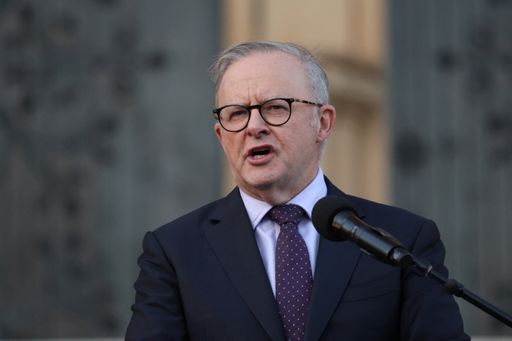
Albanese said there were “real issues” with the country’s intelligence service in the aftermath of the mass shooting.
“We need to examine exactly the way that systems work. We need to look back at what happened in 2019 when this person was looked at, the assessment that was made,” he told national broadcaster ABC.
Asked in a separate interview about the alleged gunmen’s stay at a hotel in the southern Philippines island of Mindanao, Albanese said their radicalisation was under investigation.
“But it is also the case that they were not seen to be persons of interest, and that is why this is such a shocking event,” he said.
‘Very, very unusual’
The staff of Davao City’s GV Hotel have told AFP that the two men stayed holed up in their small room for most of their 28-day stay.
They would usually leave their rooms only for two or three hours, with the longest excursion lasting eight hours, the Philippines national security service said.
Regional police, who have trawled through CCTV images to retrace the pair’s steps and discover who they met, said the father had visited a gun shop.
Clarke Jones, an Australian National University criminologist, said it was “very, very unusual” to have a father and son as suspected perpetrators.
Once in the Philippines, the pair could have easily travelled to Mindanao without raising any flags, he told AFP.
Jones, who has worked with violent offenders in the Philippines, said the alleged gunmen’s radicalisation had apparently gone “under the radar” for years after the Australian intelligence probe.
“I think we would really need to look at what happened, and whether that kid, when he was first detected, should have been put through some sort of support programme to prevent this potential thing happening,” he said.