
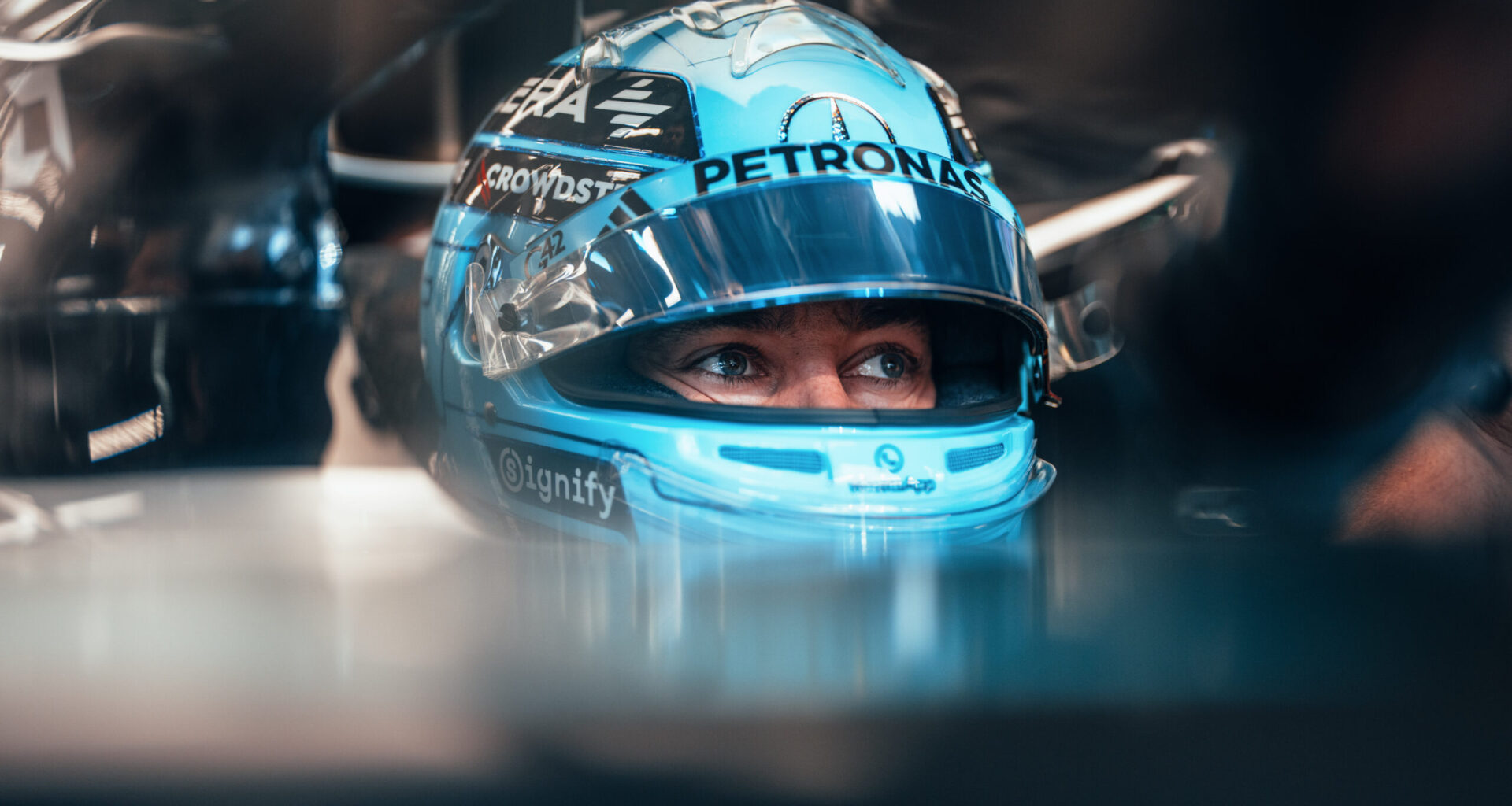
Ideally, teams prefer to go under the radar during the winter break. There is little to gain from the spotlight before the season begins – especially amidst such a substantial regulation change.
Mercedes, however, have often been at the centre of headlines discussing 2026. The German team is widely expected to produce the best engine, and by extension a potentially race-winning package.
Of course, the Silver Arrows are eager to dismiss this narrative. Specifically, Head of Trackside Engineering Andrew Shovlin argues Mercedes are one of the teams on the defensive.
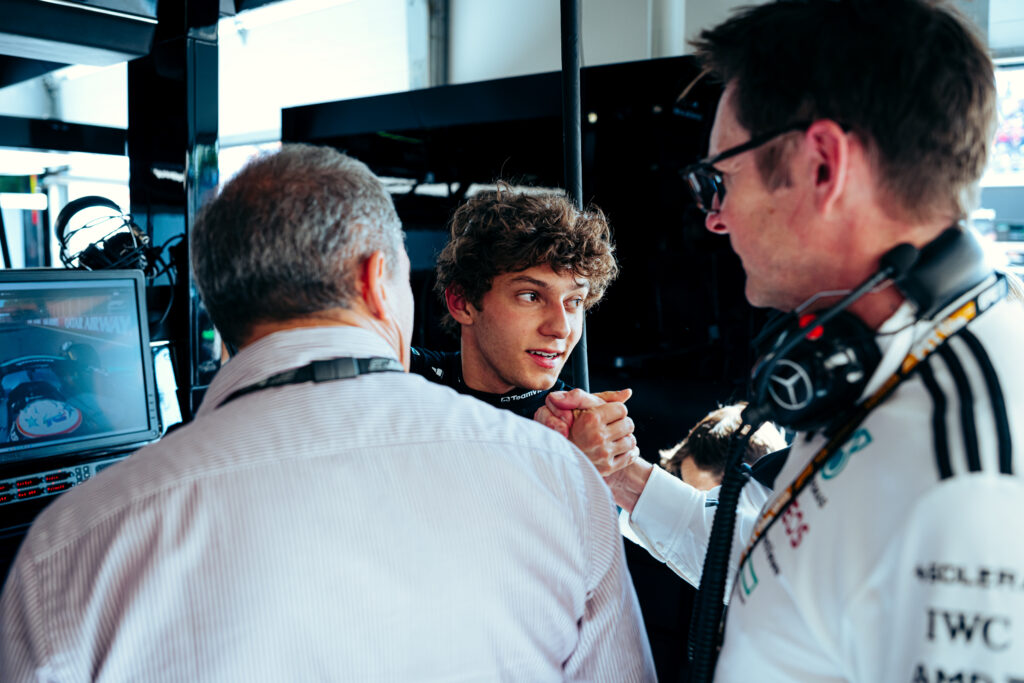 Kimi Antonelli, Andrew Shovlin, Canadian Grand Prix (Sebastian Kawka).
Mercedes assess the field ahead of 2026
Historically, the rich have gotten richer in Formula 1. Winning constructors traditionally dominate the sport in lengthy spells. Ferrari, Red Bull and Mercedes have essentially taken turns in securing Championships throughout the 21st century.
With that said, F1’s landscape is rapidly evolving. Midfield teams are more capable than ever, both from a human and technological perspective.
Moreover, squads further down the standings are allocated substantially more wind tunnel hours than those at the front. In combination with certain teams aggressively prioritising 2026 development, Mercedes have identified threats throughout the grid.
According to Andrew Shovlin, several teams will be playing catch-up in 2026.
The Head Trackside Engineer argues that certain outfits have worked to ensure they start on the front-foot. Others, meanwhile, are late to the party:
“There is a lot of work left to do. It is a bit less scary than it was perhaps a month ago,” he told Racingnews365.
“But you’re always conscious that everyone has got the same resources these days.
“The cost cap has meant you just can’t bludgeon your way through to success with more cash than anyone else, and teams down the grid have got more wind tunnel time than we’ve got. So that puts you on the back foot.
“There is an awful lot of [teams] that have put a great deal of effort into next year – and a few [teams] who seem to be developing late on.
“But there is no shortage of teams that have done very little work on the current cars – it’s important that you start regulations on the front-foot.
“We can see a pathway through to getting something sensible on track in Barcelona. But there are an awful lot of things that will be challenging next year.”
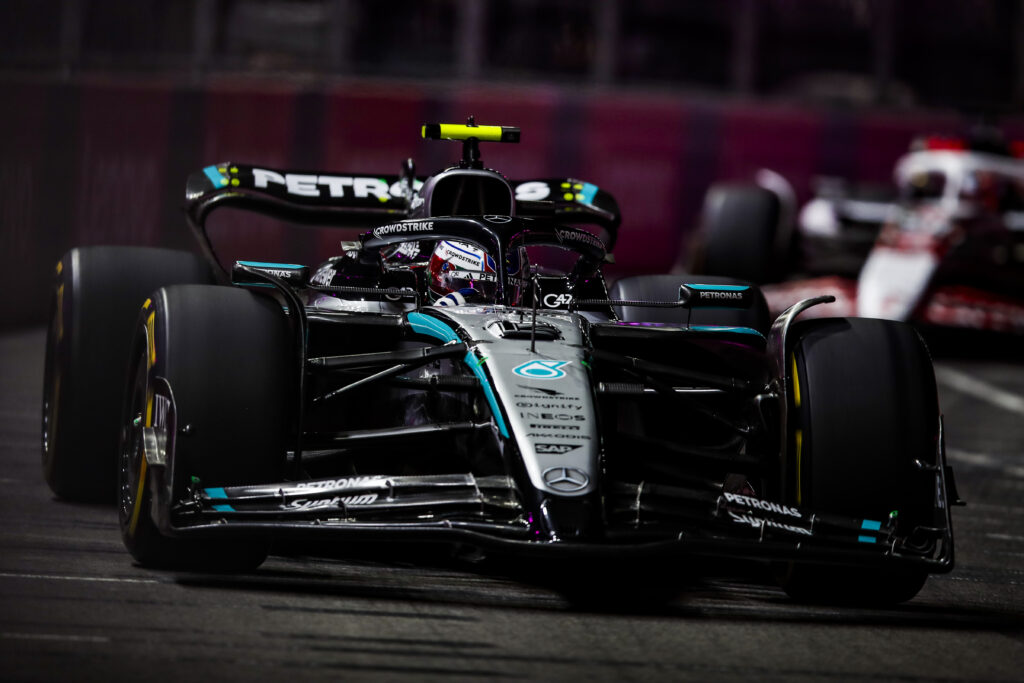 2025 Las Vegas Grand Prix, Thursday, Jiri Krenek
Mercedes downplay suggestions they are favourites
With no actual data to analyse, it cannot be said who will be fastest at round one in Australia. Nevertheless, there are still some established facts about the 2026 development race.
Possibly the most well-known is that Williams started work on 2026 as soon as possible. Since the first day of the year, the new regulations have consumed all of their attention.
The same cannot be said for Mercedes, who brought a fair share of updates to the W16. Then again, Toto Wolff’s team were not the slowest to switch their focus to next year. In fact, they made the switch earlier than some of their immediate rivals.
Red Bull and McLaren, particularly Red Bull, dedicated plenty of wind tunnel hours to their 2025 development.
Of course, it cannot be definitively said these are the teams Andrew Shovlin referenced when describing those to have done “very little work” on next year’s cars. Still, the front-runners were undoubtedly stretched very thin this season.
Shovlin’s modest prediction of a “sensible” Mercedes package to start 2026 could be interpreted as nothing more than expectation management. After all, very few doubt the potential of the new Mercedes power unit.
Regardless, Mercedes will not allow complacency to creep in. Speculation about their power unit is largely based on paddock consensus.
Another manufacturer, especially an established one like Honda or Ferrari, could easily flipthe script. In terms of aerodynamics and concept design, any number of teams – including Mercedes’ customers – could make a breakthrough.
In any case, there is a sizable range in how long teams have worked on their 2026 challengers. This could generate surprises when testing begins in January.
READ MORE: Red Bull look forward to “crazy” journey with 2026 engines
Main photo: Richard Pardon (Mercedes F1 Media Archive)