
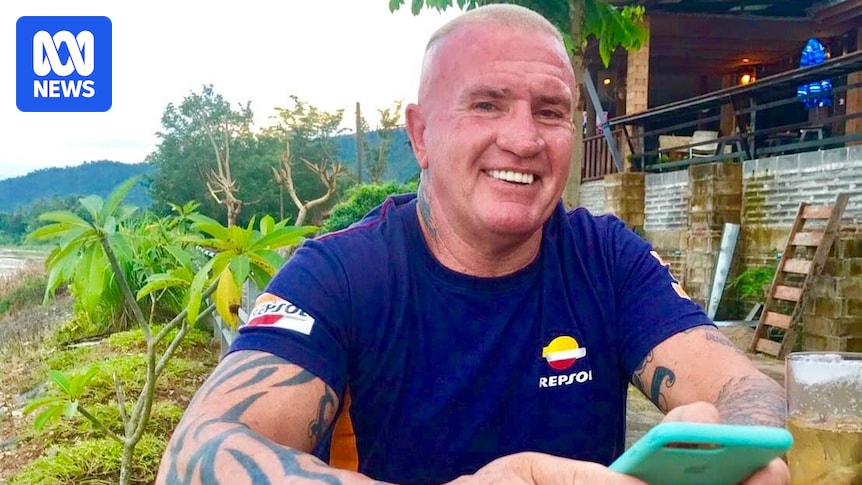
A man has been sentenced to at least six-and-a-half years in prison for unlawfully killing a teenage boy by firebombing a Sydney home in 1998 during an escalating neighbourhood dispute.
Warning: Aboriginal and Torres Strait Islander readers are advised that this story contains the image of a person who has died.
Gregory John Walker threw a molotov cocktail into the yard of the Waterloo home, sparking a blaze that trapped Arthur Haines inside.
The 13-year-old, who happened to be staying there for a sleepover, managed to escape but suffered serious burns and died 11 weeks later.
Walker, who has the words “not guilty” tattooed on the back of his head, was charged with murder in 2022.
The 58-year-old pleaded guilty to the lesser charge of manslaughter just before a Supreme Court trial this year.
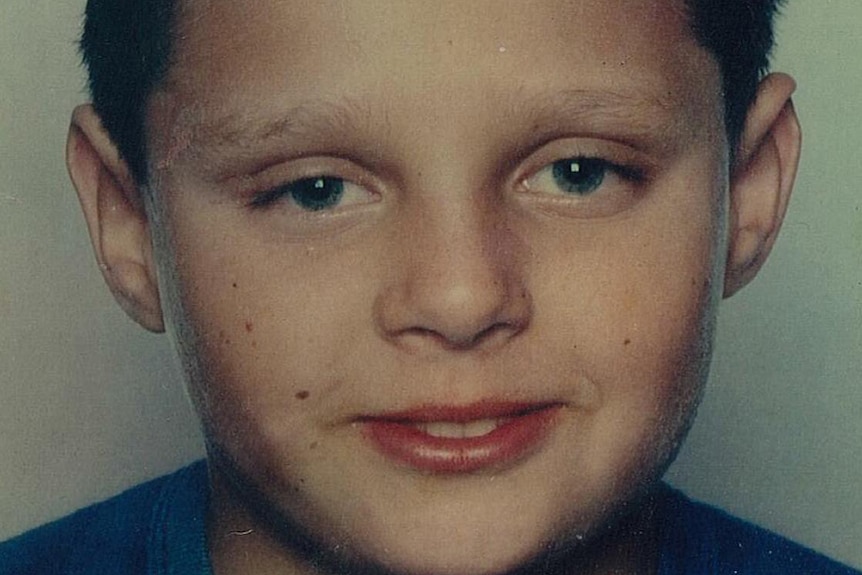
Arthur Haines died from his injuries in hospital 11 weeks after the attack. (NSW Police)
Justice Hament Dhanji on Tuesday handed him a maximum term of 10 years and nine months behind bars, with a non-parole period of six years and six months.
“No sentence that I impose can right the wrong that has been done,” Justice Dhanji said.
“No value can be put on the life of Arthur in terms of years of imprisonment or otherwise.”
Decades of grief
Arthur’s mother, Julie Szabo, told the judge earlier this month that she has felt a “huge emptiness” since her son’s death, describing decades of grief, sadness, anger and frustration at the unanswered questions.
She recalled hugging him goodbye when she dropped him off at his friend’s place, not realising it would be their last embrace.
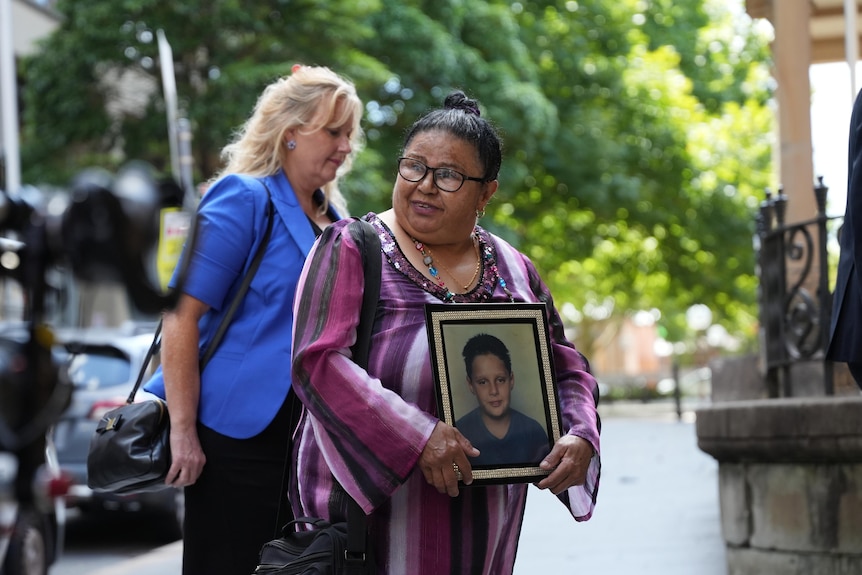
Julie Szabo delivered a “deeply moving” statement outlining her decades of grief. (ABC News: Jamie McKinnell)
Justice Dhanji said Ms Szabo’s victim impact statement was “deeply moving”.
“Every life is precious, and its unlawful taking harms the community in some way,” he said.
“Arthur’s life was precious, and the victim impact statement is illustrative of this.”Community service considered
The judge took into account Walker had an extensive criminal history going as far back as 1984.
But from around 2006 onwards that record was limited.
Walker started a not-for-profit boxing gym on the Gold Coast, aimed at training and mentoring troubled youth.
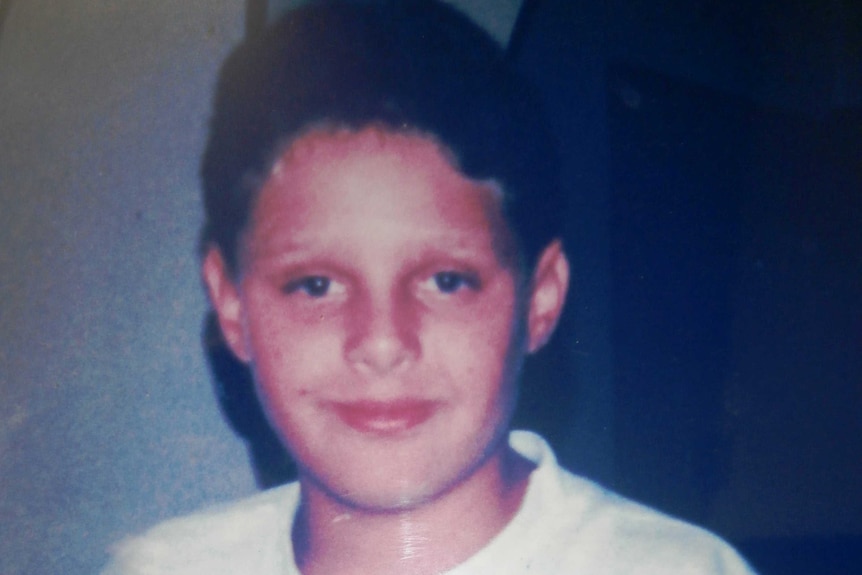
Arthur, 13, was staying overnight at a friend’s house when he was fatally injured in the blaze. (Supplied: NSW Police)
Justice Dhanji accepted he had made a “valuable contribution” to the lives of others.
“It appears he has steered a number of young people away from the path he went down,” he said.
“While the ledger cannot be squared by the good of the offender in more recent times, that contribution must be taken into account and given weight.”
The judge accepted Walker was “at some level” remorseful, but said this was “difficult to reconcile” with his years of silence during which he must have known Arthur’s family questioned whether anyone would be brought to justice.
Justice Dhanji considered the crime to represent a “very serious” case of manslaughter.
“This was an instance of a particularly dangerous act. The results were catastrophic. Arthur was just 13 years old and suffered for over two months before his death,” he said.
“The act risked multiple lives.”
‘Guilt, shame and regret’
In a letter to the judge, Walker apologised to Arthur’s family and the police involved in the case, saying he was filled with “shame and embarrassment” when he considered who he was in 1998.
“There are no words I can say that can ever bring back Arthur and I have been living with guilt, shame and regret over what happened for decades now,” he wrote.
Walker said that in April 1998, the “tensions in the neighbourhood” boiled over when his partner’s car was paint bombed.
He said when he threw the firebomb into the backyard of the person he suspected of being behind the damage, he did not think anyone was home or that it would reach inside of the property.
“It was never my intention to actually hurt anyone that night let alone take someone’s life,” he wrote.
Given he has already been in custody since 2022, Walker will be eligible for parole in February 2029.