
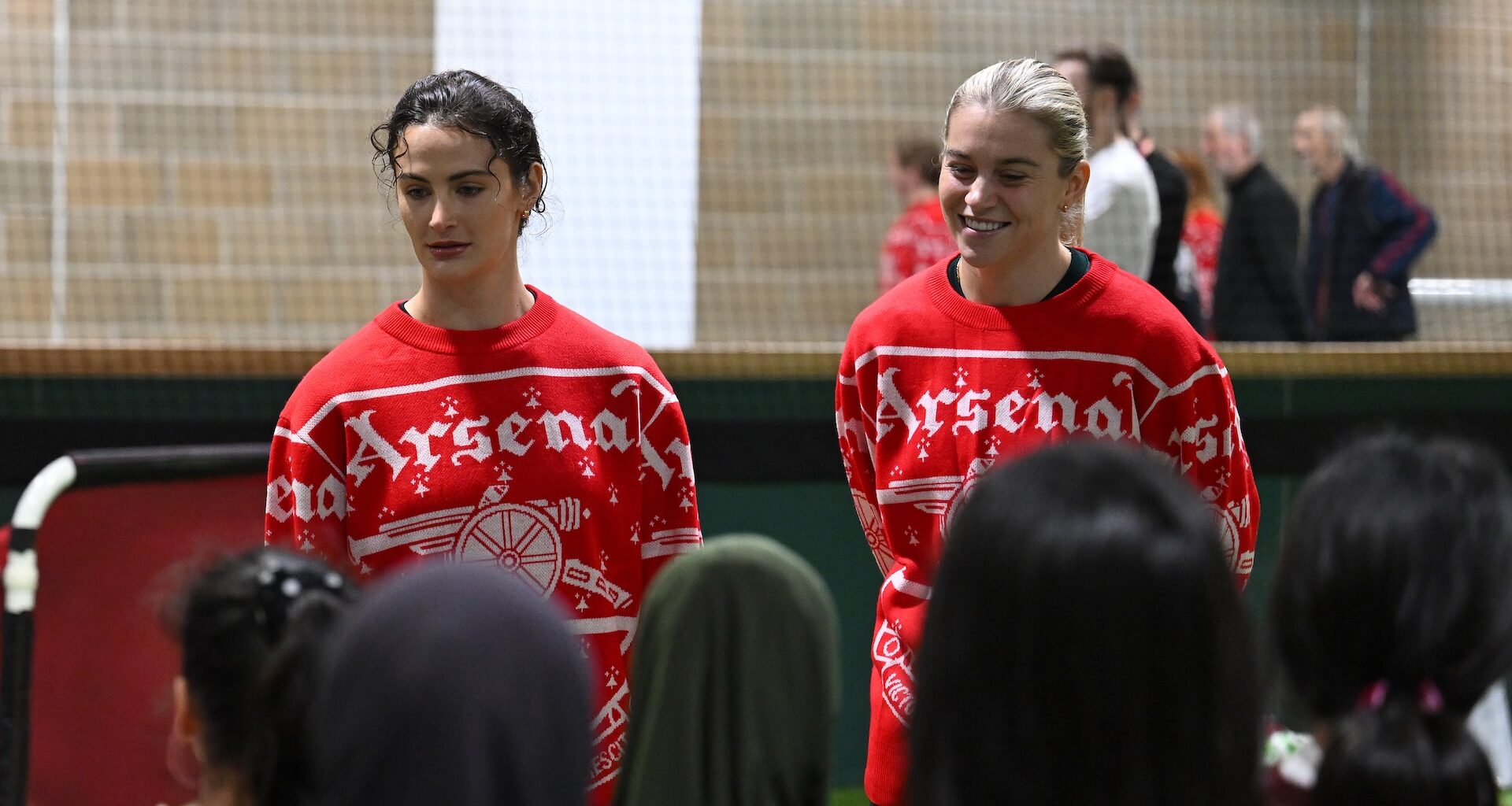
 Arsenal Women on the community visit at the Community Hub at Emirates Stadium. Image: David Price/Arsenal FC via Getty Images
Arsenal’s women’s team grew out of this same grassroots work. In the 1980s, the club began running football sessions for girls at a time when structured opportunities were rare.
The women’s game has come a long way from these early days: a record 16.2 million people watched the Lionesses win the Euros in July, while participation among women and girls rose by more than 50% between 2020 and 2024.
But grassroots sessions remain essential for the game, Fox told Big Issue.
“For me, football is a place of neutrality and openness, and it should be a welcoming environment,” Fox told Big Issue. “I feel lucky that it always has been for me. And so I think being now a player at Arsenal, how can we, and how can the team, encourage girls to be able to pick whatever direction they want to go to and feel confident and find themselves as they go through.”
The recent progress follows decades of exclusion. Women’s football was banned by the FA for 51 years from 1921, and even once the ban was lifted, the game struggled for recognition and resources. Arsenal did not begin paying women players until 2002, and then only through a £100 win bonus rather than a salary.
In the United States, where Fox is from, the women’s game has been popular for longer.
Advertising helps fund Big Issue’s mission to end poverty
“I did feel like I could go into soccer, as you call it back there, and be myself,” she said. “I don’t think I encountered as much sexism as I have seen here in terms of how people stereotype footballers and what that could mean.”
Those stereotypes continue to shape the women’s game. Players regularly face online abuse and dismissive coverage, particularly around major tournaments. Before Euro 2025, a Kick It Out poll of 2,000 British adults found that more than half believe online sexism is putting girls off engaging with football. Research from the Tackling Online Hate in Football project also found that the use of feminine slurs increased by 584% during major women’s tournaments between 2013 and 2022.
Fox questioned the motivations of sexist critics.
“What does women’s football not give to you?” she said, when asked how she would respond to critics.
“Negativity is contagious, and there’s so many positive things. And I think with women’s football, it’s a safe place, and there’s so much good that comes out of it.”
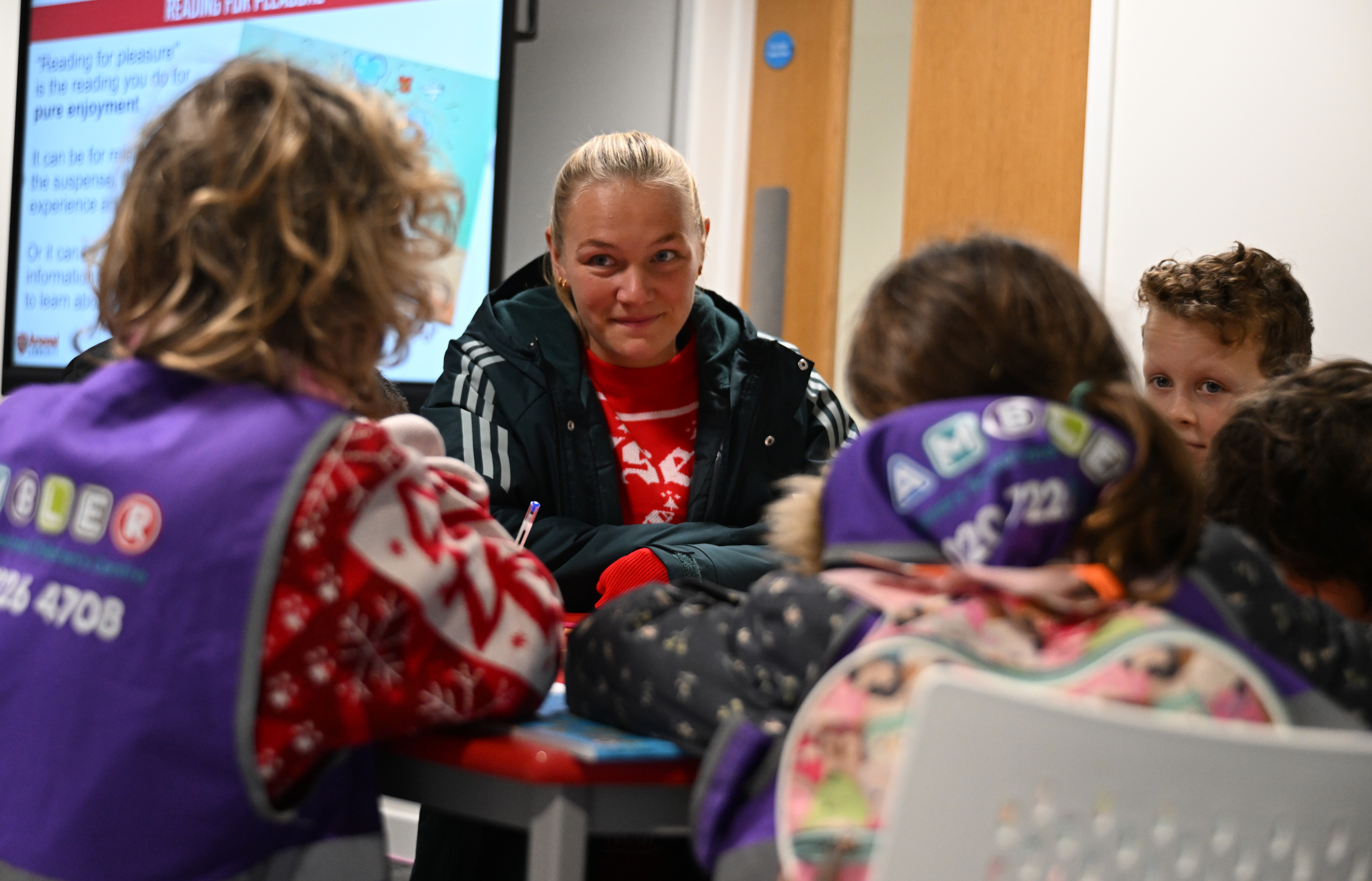 The team met with children and young people at the Arsenal Community Hub. Image: Stuart MacFarlane/Arsenal FC via Getty Images
For Fatmata Koroma, that ‘good’ is close to home. Koroma is a community development coach with Arsenal, supporting primary school children during football sessions. The mum-of-five also works night shifts in an NHS maternity ward alongside her coaching role.
Advertising helps fund Big Issue’s mission to end poverty
Her seven-year-old daughter started playing football around two months ago.
“She’s loving it,” Koroma said. “She goes, ‘Mummy, I want to be a footballer.’ I’m like, yes, you can be a footballer. Why not? Of course, hard work, but we can get there.”
Her daughter now begs to come along to sessions.
“When I go, ‘Oh today we met with…’ She’ll be like, ‘That’s not fair!’ Oh, mummy, that’s not fair. You get to have all the fun.”
As the professional players leave the session, the girls continue the kick-a-bout. Statistically, it’s unlikely that many of them will become professionals – but that’s not what it’s about.
“If you’re going through some things, like outside of football or soccer, like you’re able to kind of relax and be free,” Fox says. “That’s how that’s how I always feel when I’m playing it.”
Advertising helps fund Big Issue’s mission to end poverty
Do you have a story to tell or opinions to share about this? Get in touch and tell us more.
Change a vendor’s life this Christmas.
Buy from your local Big Issue vendor every week – or support online with a vendor support kit or a subscription – and help people work their way out of poverty with dignity.