

Liam Ganter’s life came to a sudden stop earlier this year after a high-speed motorcycle crash on the Sunshine Coast left the 22-year-old with a traumatic brain injury, multiple fractures and weeks in hospital.
Now, with the holiday period underway, Mr Ganter is using his recovery to warn others about the risks of speeding and riding without proper protective gear.
“I was late to work, heavily speeding, wasn’t making the smartest decision,” Mr Ganter said.
“I don’t actually remember it.”
What he does know now comes from police reports and what others later told him.
“A car merged across [the road] and we collided at about 100 kilometres an hour,” Mr Ganter said.
“I hit them.”
Mr Ganter said he was resuscitated at the scene by witnesses.
“Thank God there was people there that knew what to do,” he said.
“It wasn’t pretty.”
His learner-approved motorcycle was destroyed.
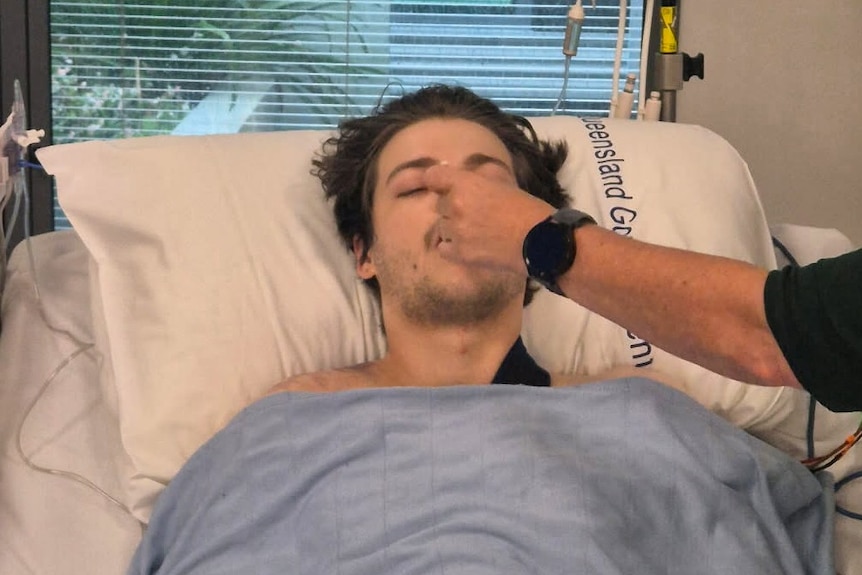
Liam Ganter spent weeks in hospital following the collision. (Supplied: Liam Ganter)
Months of recovery
Mr Ganter spent 25 days in hospital across multiple wards, including close to a week in intensive care.
He suffered fractures to his left hand and wrist, multiple fractures to his right shoulder, deep lacerations, extensive road rash and a traumatic brain injury.
“I’ve got five broken bones and now only one good limb … everything else that comes with all of the brain-injury stuff — the memory issues, cognition problems,” he said.
He experienced post-traumatic amnesia for more than two weeks and months of ongoing cognitive difficulties.
“I couldn’t make new memories for 18 days,” Mr Ganter said.
Doctors have told him the full extent of his recovery remains uncertain.
“I’m not going to be 100 per cent ever again,” he said.
Mr Ganter said a gift of proper riding boots from his grandparents weeks before the crash likely reduced the severity of his injuries.
“If I didn’t have the boots, my leg injuries would be so much worse,” he said.
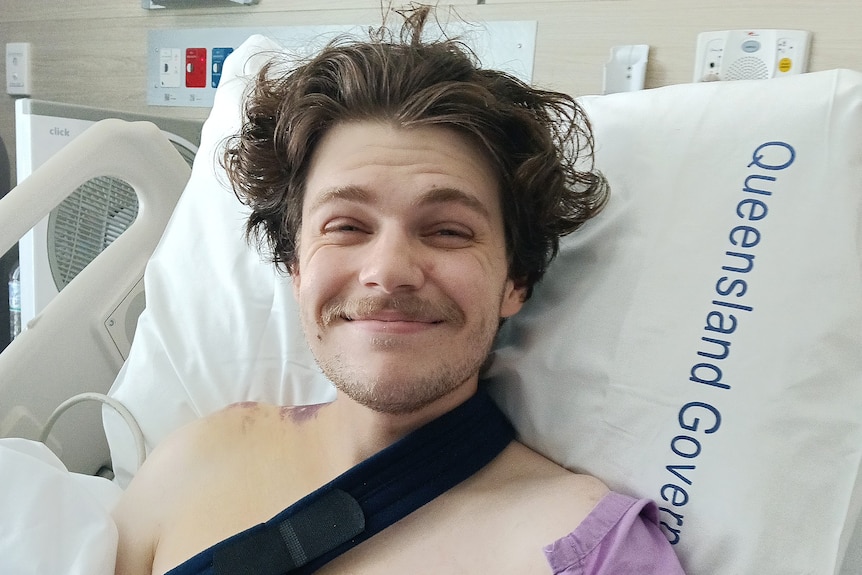
On the road to recovery, Liam Ganter says his attitude has changed. (Supplied: Liam Ganter)
He said his perspective had changed when asked what he would now say to the driver involved in the crash.
“If you’d asked me a couple of months ago, I would have given you a very different answer,” Mr Ganter said.
“Today, I’d probably thank them … it’s given me a chance to completely reinvent myself.”

Liam Ganter’s mother, Stacey McDermott, cared for Liam in hospital. He now lives with her as he continues his rehabilitation. (Supplied: Liam Ganter)
‘The consequences are not equal’
Mr Ganter’s mother, Stacey McDermott, travelled from Hobart to be by his side.
“The biggest impact on her was my memory,” he said.
“She would leave the hospital room for five minutes and come back and it was like it was the first time I’d seen her in months.
“I’m lighting up 12 times a day to see her for the first time.”
Mr Ganter said the psychological impact on his mother had been significant — something he said weighed heavily on him.
“The guilt that’s given me is worse than any of the injuries,” he said.
Despite the injuries and long rehabilitation ahead, Mr Ganter said he “absolutely” planned to ride again.
“I’m still scared … but I want to conquer that fear.”
But his advice to others would be to “just stop and think”.
“It’s so much better to get a little slap on the wrist from your boss for being five minutes late than what I had to go through,” Mr Ganter said.
“The impact on everyone else and the years of rehab I’m going to have to do.
“The consequences are not equal.”
Police echo warning
Queensland Police Chief Superintendent Mark Wheeler said Mr Ganter’s experience and warning came as road deaths continued to climb during the Christmas travel period.
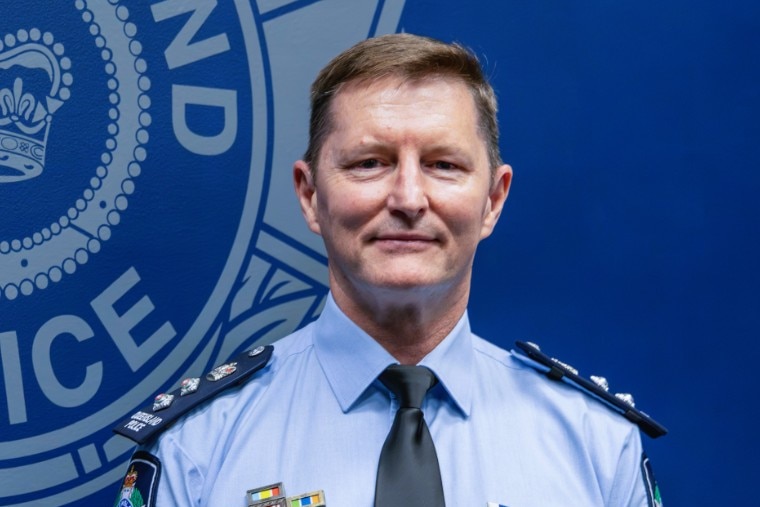
Mark Wheeler says the number of offences this holiday period has been disappointing. (Supplied: Mark Wheeler)
He said motorcyclists remained among the most vulnerable road users, with more than 72 riders and pillion passengers killed in Queensland this year.
Chief Superintendent Wheeler said police strongly encouraged motorcyclists to go beyond the legal minimum and wear as much protective gear as possible.
“Helmets, clothing, boots and gloves will at least give you a chance [of not] suffering a serious injury,” he said.
He said enforcement alone would not solve the road toll.
“It comes back to personal responsibility,” he said.
“It’s about the decisions you make before you get behind the wheel of a car, before you get on a motorcycle, thinking about how your family would feel if something went wrong.”