
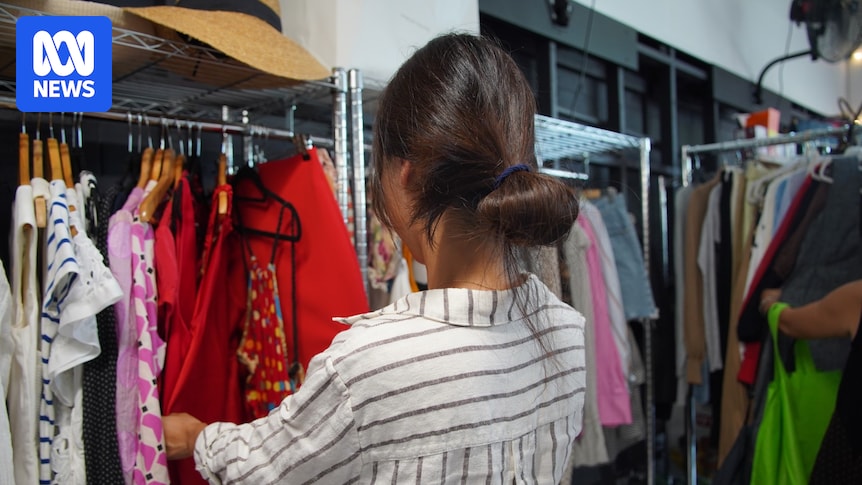
Second-hand shopping has long been promoted as part of the solution to Australia’s waste problem, with many consumers choosing pre-loved items as a more sustainable alternative to traditional retail.
As consumers embrace thrifting and circular fashion, Australia’s second-hand market is now predicted to reach about $1.5 billion by 2032, according to market research platform Credence Research.
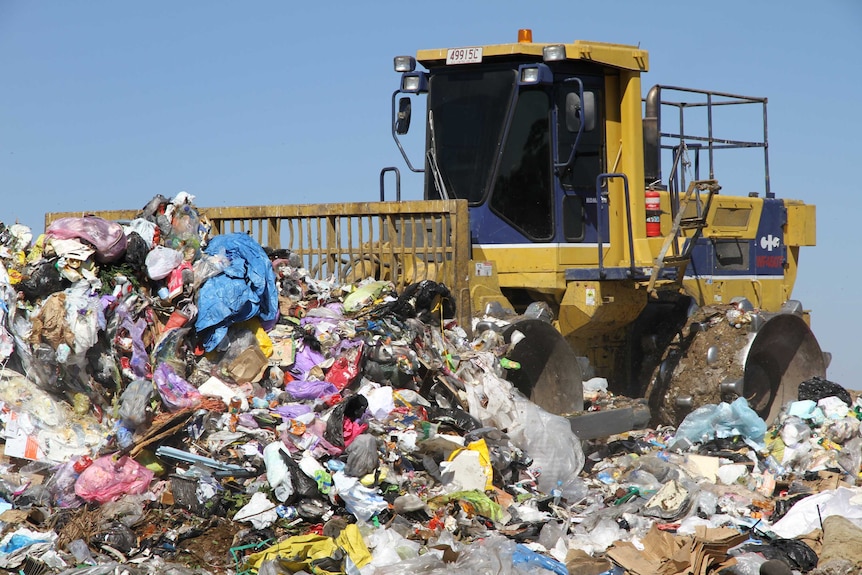
Seamless says 222,000 tons of clothing ended up in Australian landfill last year. (ABC News: Paul Robinson)
But despite this growth, the volume of clothing thrown to waste remains high. According to the clothing stewardship scheme Seamless Australia, more than 220,000 tonnes of clothing were sent to landfill in 2024, a decrease of 1 per cent from the previous year.
It has left some shoppers and sellers questioning whether the thrifting industry is successfully helping Australians reduce consumption.
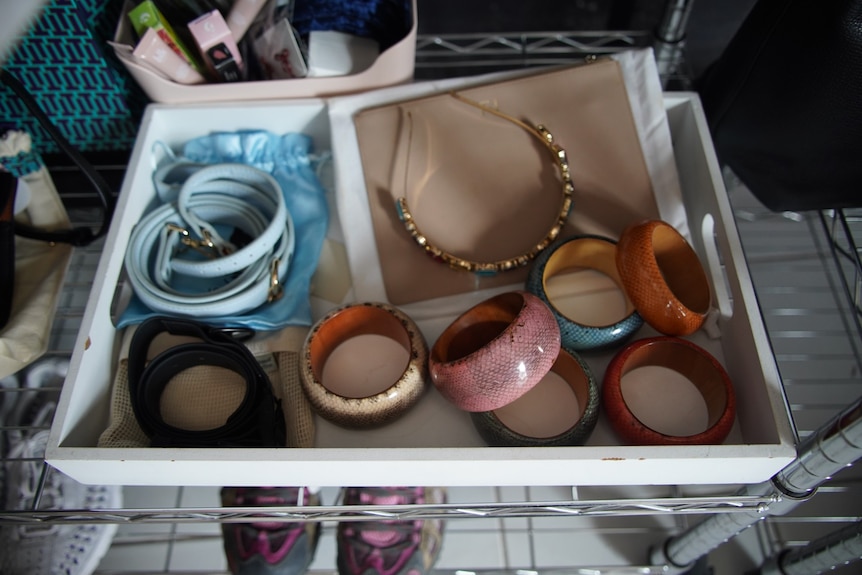
Second-hand jewellery is popular at market stores. (ABC News: Mae Argent)
Spending less does not always mean consuming less
Research released by the Australia Institute in 2024 found Australians buy more clothes per person than any other country, with an average of 56 items.
Associate professor in fashion at Queensland University of Technology, Tiziana Ferrero-Regis, said circularity — giving clothing a longer lifetime — is essential to helping reduce the production of textile waste.
But she said shoppers can fall into a problematic mindset when buying pre-loved clothing.
“Moral licensing, in a very short summary, is ‘I buy second-hand clothing so I can buy more,'” she said.

Tiziana Ferrero-Regis says second-hand shopping does not necessarily reduce consumption. (Supplied)
Dr Ferrero-Regis said for many shoppers, fashion resale apps do not necessarily slow consumption behaviour and the speed of purchases.
“Consumers of second-hand clothing now behave in the same way they buy fast fashion,” she said.
Cost-conscious family embraces the spirit of ‘Thriftmas’
“Second-hand clothing has the potential to reduce consumption, but it’s not a given, it’s not automatic.
“The problem is that online and social media resales can become addictive in the same ways as fast fashion.
“We see the same kind of behaviour [including] compulsive buying.”
Apps driving growth in resale market
The rapid growth of online resale platforms like eBay and Depop is a key driver of the market’s expansion, according to Credence Research.
A Depop spokesperson said sign-ups in Australia have grown “over 100 per cent year-on-year” as more consumers look for second-hand items.
“Resale is becoming a mainstream way to shop,” the spokesperson said.
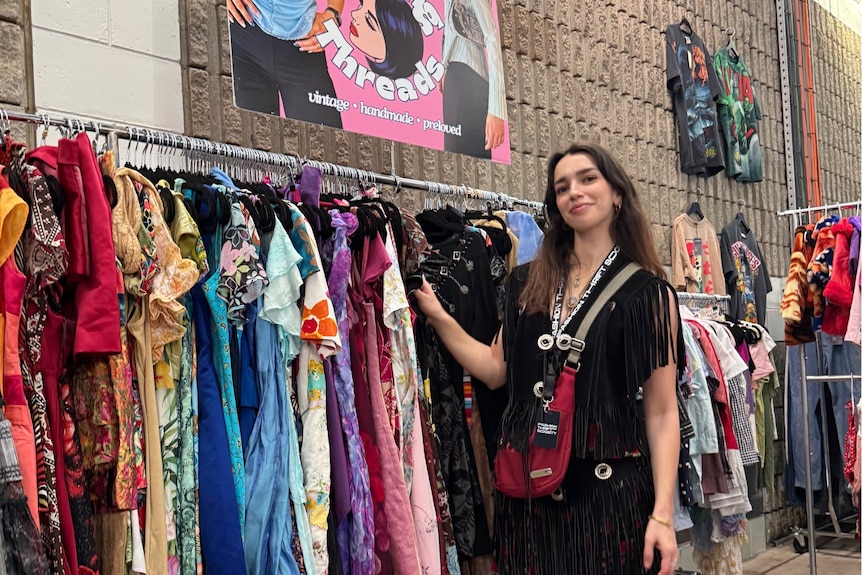
Esta Padillo sells second-hand clothes on Depop. (Supplied)
Esta Padillo, who had been selling clothing on the platform for almost a decade, said the second-hand buying and selling experience had changed significantly over the years.
She said ultra-fast fashion drop-shippers had increasingly bought from sites like Shein and Temu, then resold the items at inflated “vintage” prices.
“Back in the day that didn’t really happen, so I think that’s the main change that’s breaking my heart,” Ms Padillo said.
“This is not what Depop is supposed to be at all.”
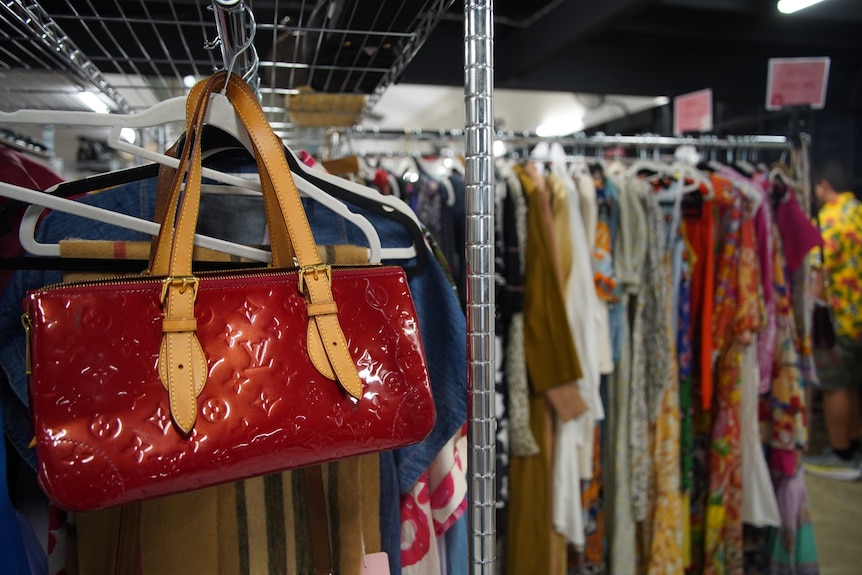
A clothing rack at a second-hand market. (ABC News: Mae Argent)
According to Depop policy, drop-shipped catalogue items are not allowed on the app, and submitting misleading or untrue listings on Depop is against their Terms of Service.
When asked about the sale of fast-fashion items on the app, a Depop spokesperson said the platform did not discriminate based on the type of items sold.
“Every second-hand purchase helps shift behaviour in ways that support a circular economy and reduce the environmental impact of new fashion,” the spokesperson said.
“It is important to us that we showcase an alternative to new fast fashion that’s kinder to people and the planet than buying new … we’ve taken steps to ban less sustainable sourcing practices.”
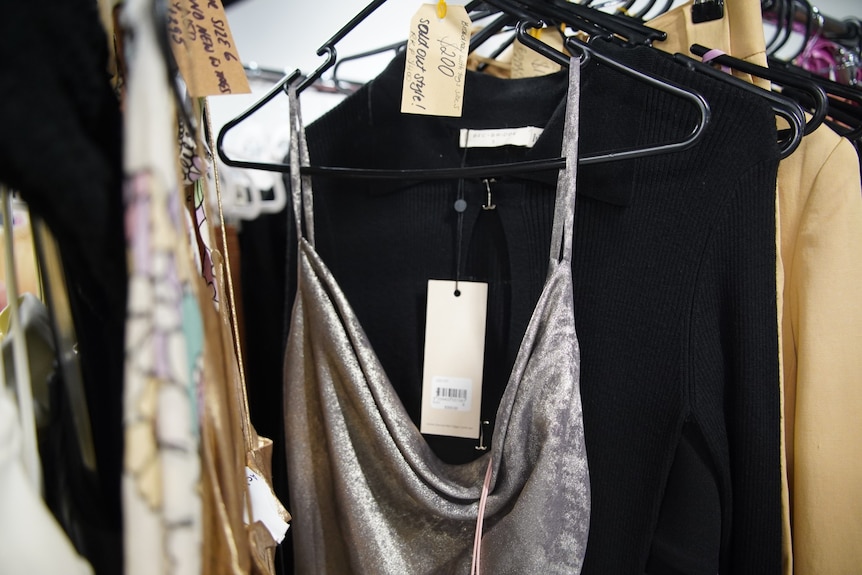
Some people buy clothes from sites like Shein and Temu, then resell the items at inflated “vintage” prices. (ABC News: Mae Argent)
Fast fashion brands surge on resale platforms
Fast fashion brands were increasingly turning up in physical second-hand stores, markets and op-shops.
Isobel Dear founded a second-hand market in 2020 after noticing a lack of pre-loved fashion events, and said digital media had played a critical role in encouraging more people to embrace second-hand shopping.
“Social media and digital platforms have made circular fashion more accessible,” she said.
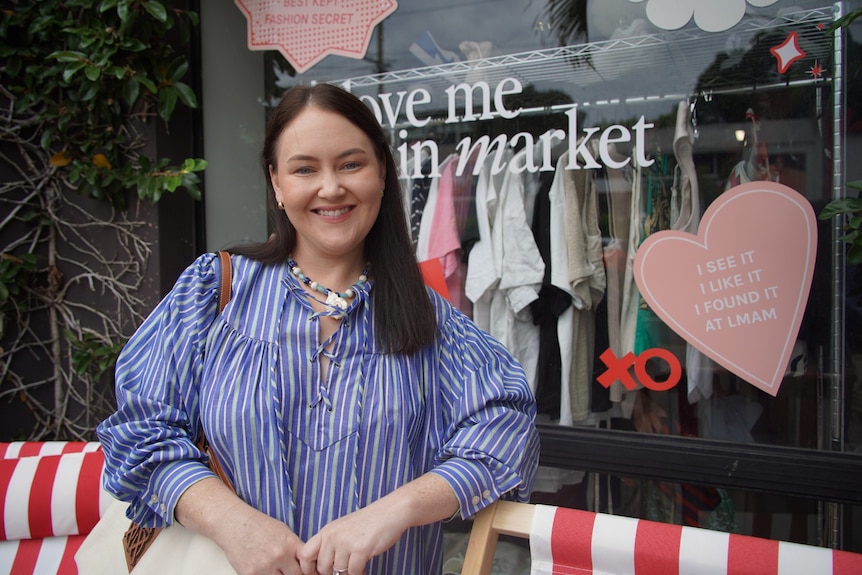
Isobel Dear founded a second-hand market in 2020. (ABC News: Mae Argent)
“I think that digitally just being able to spread the word through those platforms has definitely helped us form this niche community.”
Ms Dear said she does not encourage “those ultra-fast fashion brands that are really low quality” being sold at her market, but sellers often donate items they have been unable to sell.
She said the store receives about five bins of donations each week, many of them fast-fashion items.
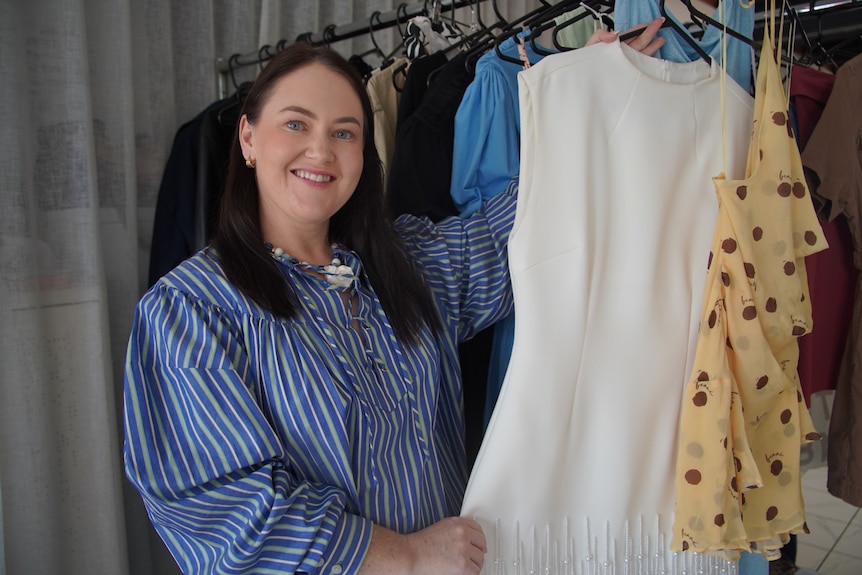
Isobel Dear says digital media plays a critical role in encouraging more people to embrace second-hand shopping. (ABC News: Mae Argent)
Ms Dear said she was trying to support the shopping style and community the market had created, while also encouraging shoppers to avoid fast-fashion items and choose longer-lasting pieces.
“If we can keep those [good quality] pieces in rotation then hopefully those really low-quality items just eventually are not the preference,” she said.
“We can still love fashion for what it does for our personalities, and our style, and the joy that we get from it … if we can just be a little more mindful with it.”