
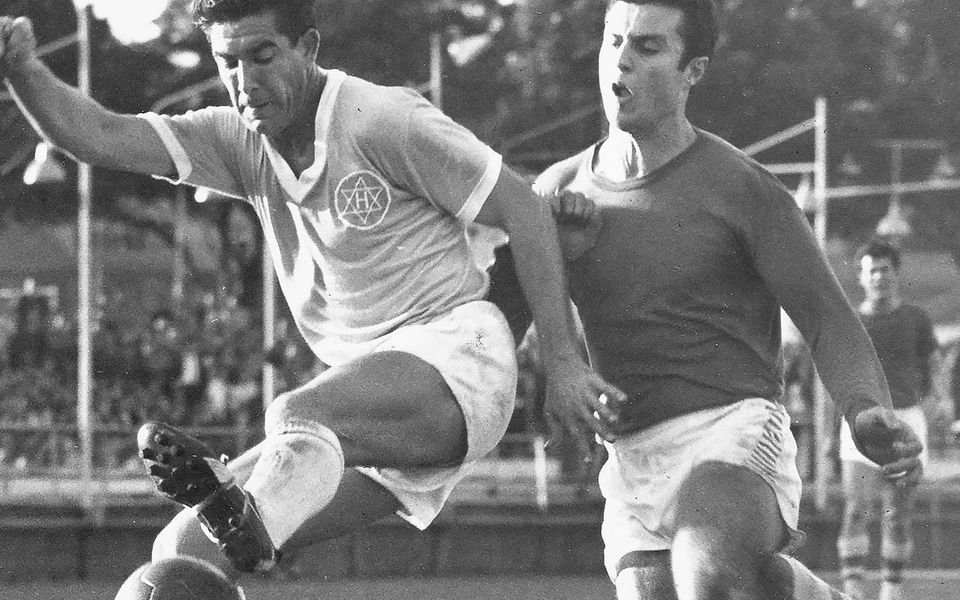
“I am the last of the old members of the club,” John Procopiadis introduces himself, speaking from Australia. He is now in his 90th year. A Procopiadis from Prokopi (modern-day Urgup) in Cappadocia, central Turkey, his parents arrived in Australia in 1922 during the Asia Minor Catastrophe. “I am very proud of my Greek heritage, just as I am very proud of my Australian citizenship,” he says, setting the tone for our conversation.
Despite his age, he recalls the founding of the first Greek diaspora soccer team in Australia as if it were yesterday. “I started with Pan Hellenic alongside my late brother-in-law, who later became the club’s vice president,” he says, taking us on a journey back to the era when Pan Hellenic was established to ease the sorrow of being far from home – what Greeks call “xenitia.”
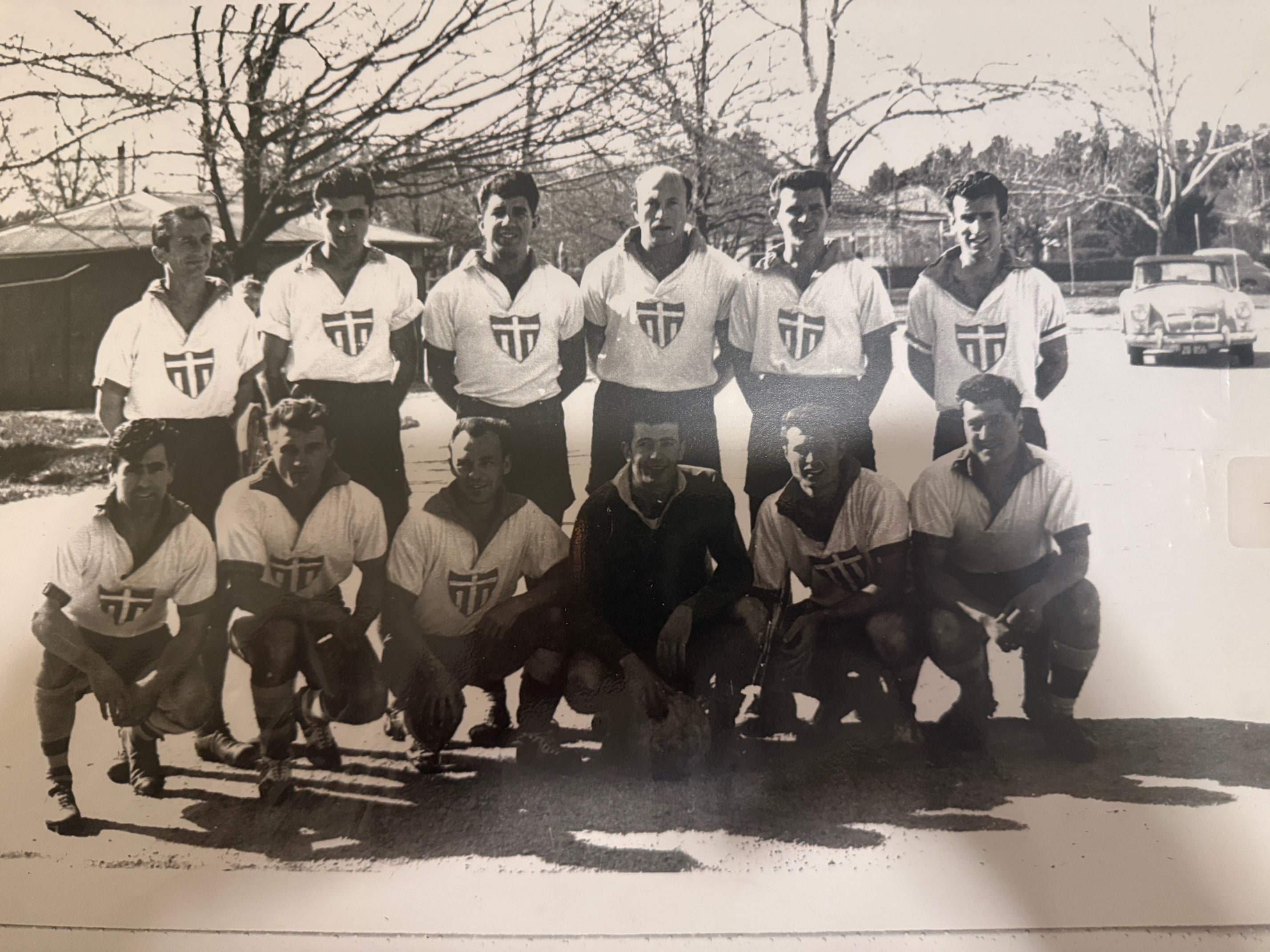
With Sydney Olympic – as the club is known today – competing in Football Australia’s second division, Procopiadis hopes for better days for the Greek club that has left a lasting mark on Hellenism in Australia, having endured trials and triumphs alike. “Despite the defeats, I remember only the good moments,” he says optimistically. “I’ll go through my archive, find the photos, and ask my grandson, Manolis, to send them to you,” he assures us. “I have four grandchildren, and they are all supporters of Sydney Olympic,” he adds proudly. Night has fallen in Sydney, and before going to bed, Procopiadis recounts the club’s story.
The union
“It was November 25, 1957, 68 years ago, when the first meeting was held at the home of Christos Yiannakoulias in Alexandria, a suburb of Sydney. Present were Elias Michalopoulos, Giorgos Lagoudakos, Emmanuel Karras, Dimitri Vlahos, Steve Papageorgiou, and many others. At that time, several Greek soccer teams existed in Sydney – Astro, Atlas, Pansamiakos, Taxiarchis – each suburb had its own team,” he recalls nostalgically.
Procopiadis explains how the decision was made to unite all the teams into one and join the newly established New South Wales Federation of Soccer Clubs. “At that meeting, they agreed to adopt the name Pan Hellenic, to wear blue and white vertical stripes, and to be a representative club for all Greeks in Sydney. Blue and white, like the Greek flag, so the team would not be seen as aligning with the name or colors of any Greek athletic club, any political faction, or any specific Greek region.
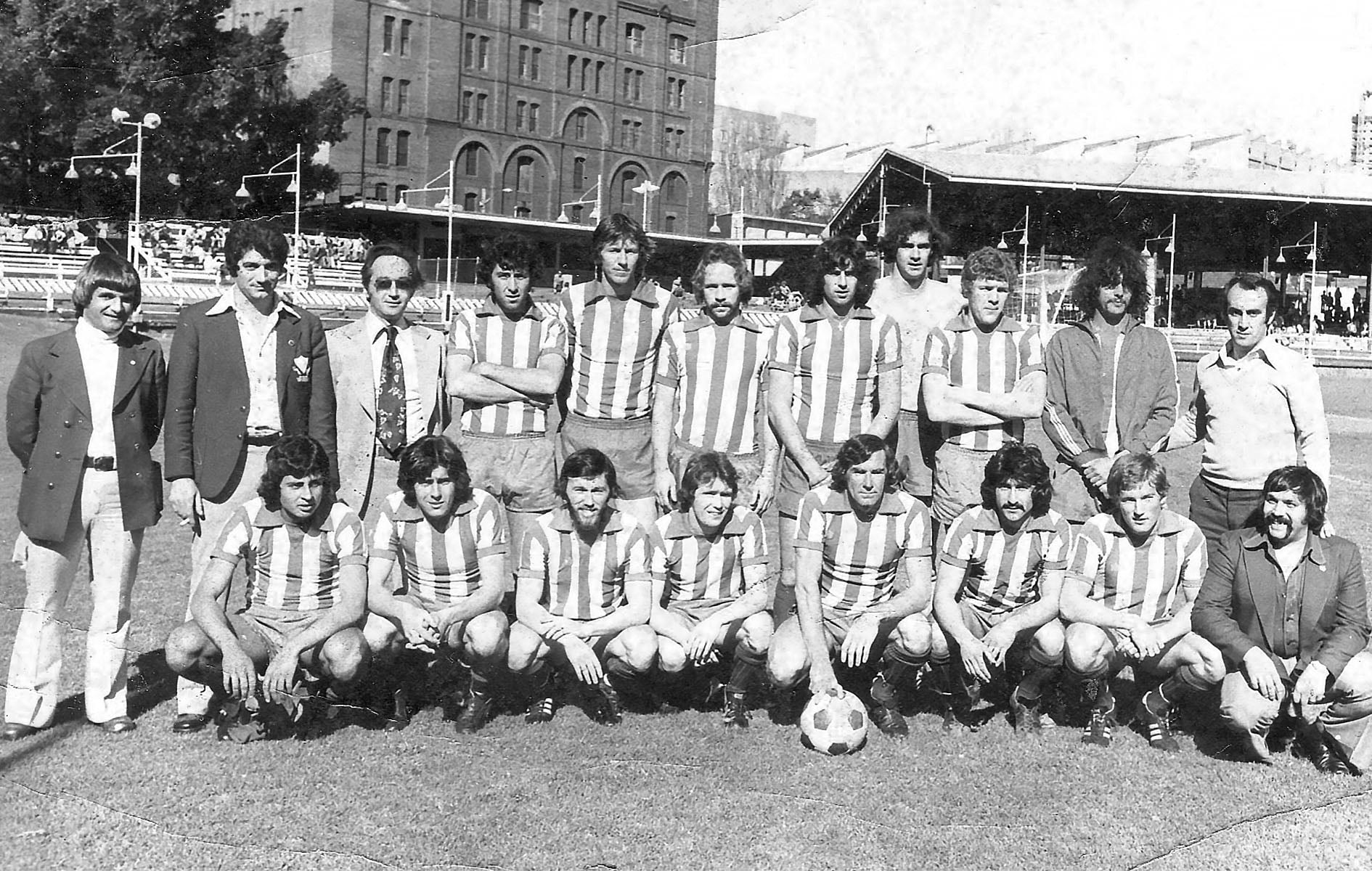
The name Pan Hellenic was chosen to embrace all Greeks – immigrants from Greece or Cyprus, Greeks born in Sydney, and those who came from Egypt, Romania, Bulgaria, Yugoslavia, southern Albania, Istanbul, Asia Minor, or the Black Sea region. “From the beginning, everyone was welcome,” Procopiadis says. “It was a place where strangers became lifelong friends, where husbands met their wives, and where grandfathers brought their grandchildren. We experienced years of triumph, but also devastating moments – times when we wondered if this was the end of the road,” he adds, with a tinge of sorrow.
Every Sunday
“In Sydney, even the Samians had a team,” recalls Constantine (Costa) Vertzayias, son of Dionysios (Dioni) Vertzayias, a historic member of the club with roots in Egypt. His father, as he tells Kathimerini, was a sailor in the British fleet. “When they docked in Australia, he quarreled with the captain and decided to stay. He intended to go to Egypt but ended up in Sydney. Friends even told him they could find him a wife here – and that’s exactly what happened. They found my mother, who was from Kastellorizo island. My father even sold his house for the club – he loved it that much. He was on the board from the very beginning, in 1957. Every Sunday, he was at the field. Greeks worked from Monday to Friday and could hardly wait for Sunday to watch Pan Hellenic. It was his god,” Vertzayias recalls one afternoon from his Sydney home.
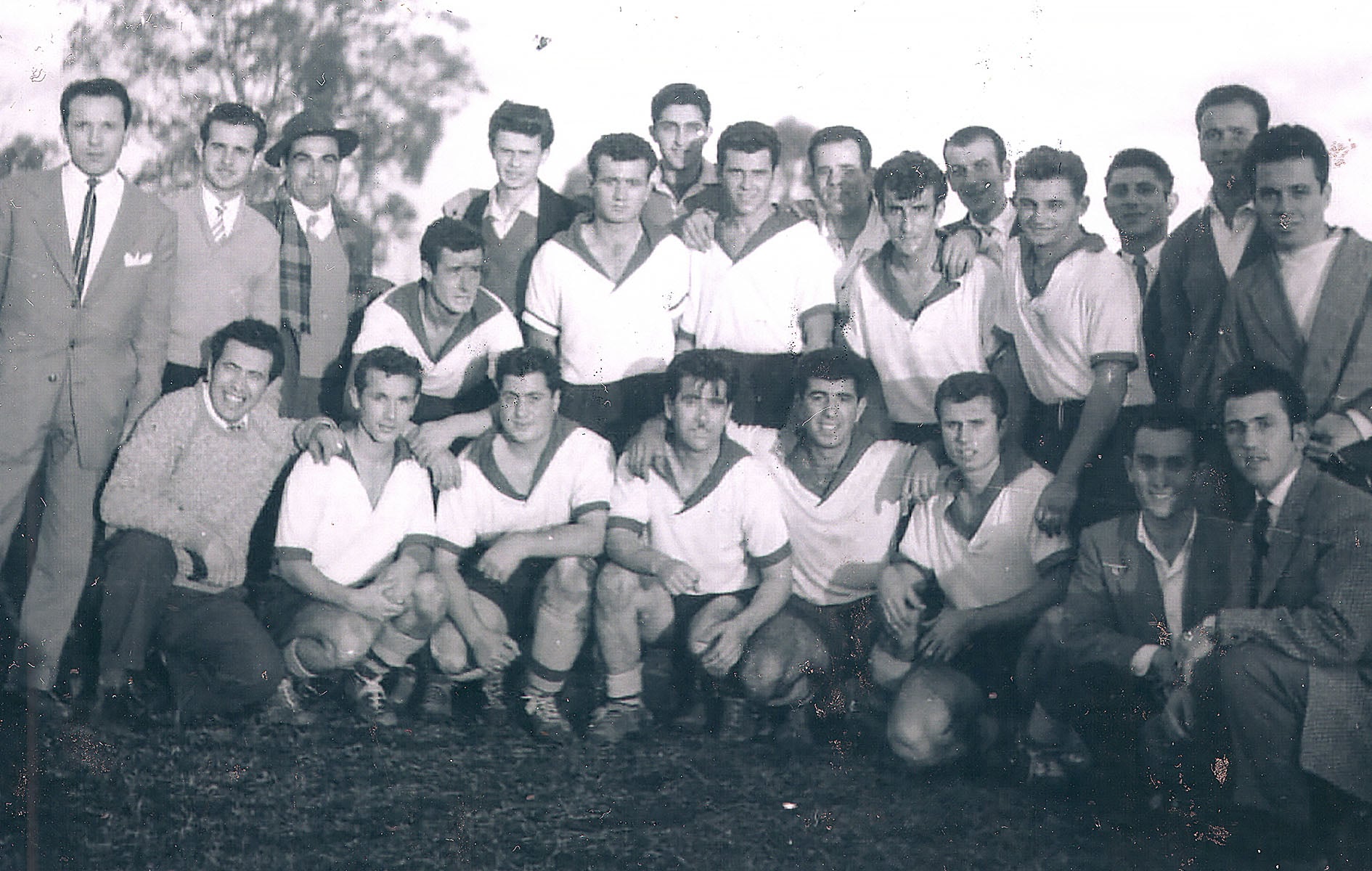
National rivalries were part of the game. “When the Italians played the Greeks, they could draw 15,000 to 16,000 spectators. That was a record in Australia at the time, because the national sport there is rugby, not soccer. But Australians went crazy for soccer,” he reminisces.
Vertzayias grew up on the field. Every Sunday, he went with his father and collected the balls during matches. He remembers how Greek fans would erupt when the referee made calls against Pan Hellenic. “In one game, the referee made a call they didn’t like, and the fans stormed the pitch. It was chaos – a bad image for the club. One reason we eventually changed the name to Sydney Olympic was because of tensions between different ethnic groups at the time – the Serbs with the Croats, the Slav-Macedonians with us. That’s when the Australian government stepped in and required clubs to change their ethnic names,” he explains.
Sleeping giant
“The Greek club went through its cycles,” Greek-Australian writer Vasilis Vasilas, who studies Australia’s Greek diaspora, tells Kathimerini. “The giant never woke up,” he emphasizes, describing the sorrow of a team that never reached its full potential. This phrase also inspired his book, “The Giant Who Never Awoke: History and Oral Stories of Pan Hellenic SC: 1957-1976,” which chronicles the club’s history.
“The first cycle was the immigrants,” he continues. “The immigrants created Pan Hellenic as an expression of Hellenism. They found themselves on the other side of the world and wanted comfort. They had, so to speak, the bouzoukia, the church, the cinema and soccer. It was the late 1950s, and there wasn’t much variety to find anything Greek. Pan Hellenic was the flag of our community.”
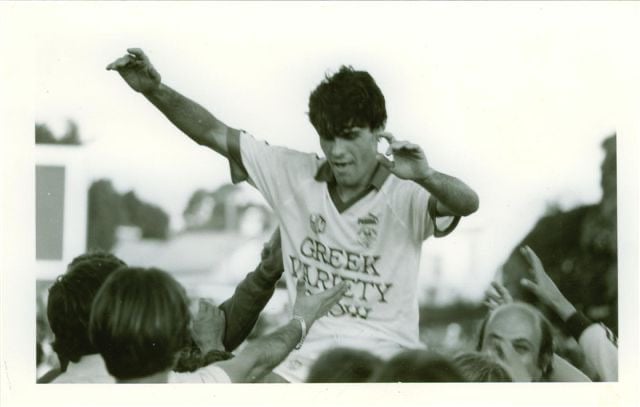
In the late 1950s and early 1960s, Pan Hellenic navigated the NSW 2nd Division, repeatedly coming close to promotion before finally earning a spot in the NSW 1st Division in 1961, marking the club’s rise to top-tier state soccer. “To raise the level of soccer, they brought in players without restrictions, and Pan Hellenic imported players from Greece. Similarly, the Italians imported players from Italy. It was like having a World Cup in Sydney. Every ethnic group had its own team with players from their homeland. There was huge excitement whenever a new player arrived from Greece. At that time, our anthem – before the club had its own – was ‘Ta Paidia Tou Pirea’ by Manos Hadjidakis. One very successful signing was Sotiris ‘Soto’ Patrinos, who played for about 10 years. Or Angelo Mavropoulos. But later, limits were imposed on foreign players, changing the landscape. It became cheaper and easier to bring in English players,” Vasilas says, referring to the club’s decline.
Alongside the restriction on Greek players, internal conflicts began, leading to a major split. “Things changed; the team was no longer performing well. In 1976, the club went bankrupt. The old founders lost elections and control, while newcomers sought to professionalize the club and bring in investors. When Soccer Australia was replaced by the National Soccer League (NSL) in 1977, the local football paper Soccerworld ranked all clubs by wins and losses. Pan Hellenic ranked fifth – and did not enter the league, effectively being relegated.”
The birth of a new club
In 1976, the solution to Pan Hellenic’s debts came in the form of Sydney Olympic. With the creation of the new team, all debts and potential legal matters were set aside for a fresh start, and the club joined the new NSL in 1977. “The transition from the generation of Greek immigrants to their Australian-born children reflected the collapse of Pan Hellenic and the birth of a new club,” Vasilas explains. “With the name Sydney Olympic, older fans could still identify with their Greek heritage, while younger fans could connect with the geographic significance of their birthplace – Sydney.”
Looking back and forward
Veteran soccer player and current board member Peter Katholos recalls the 1980s, when he was still young and playing for Sydney Olympic. “We came here. Poverty. My father worked in a battery factory. I’ve played football since I was a kid. For a while, I even played in Greece, in Larissa. The new generation doesn’t follow the team the way we did. It dropped to the second division, and people lost interest. Nevertheless, every Sunday, all Greeks still want to see the team’s score. We’re trying to be reborn. We got promoted. As a board member, I want to help preserve our identity. We need to find players, bring in Greek kids, and connect with the new generations. We want to believe the team will rise again to the heights it once reached,” he says.
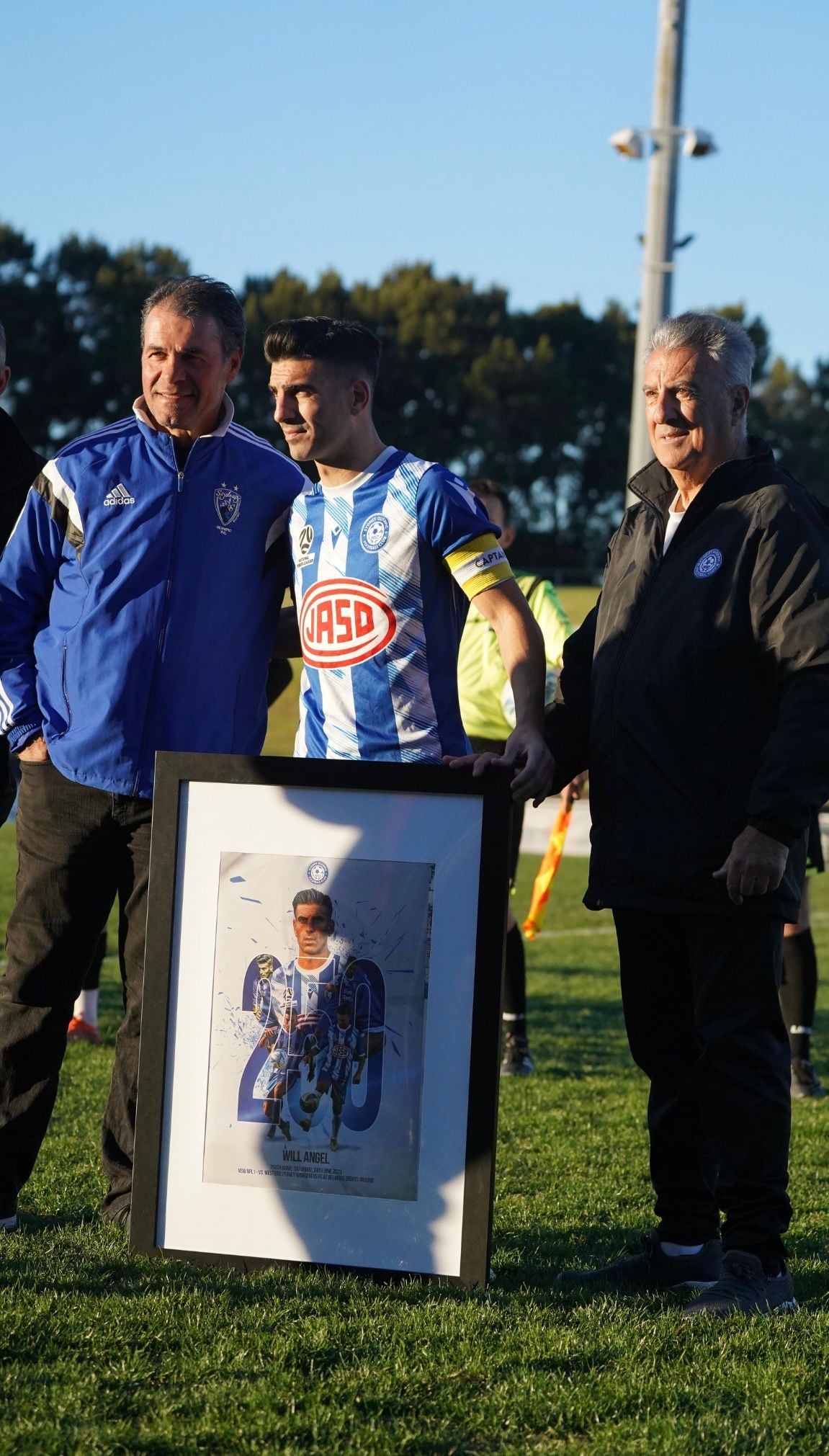
A member of a younger generation is former player Will Angel, also known as Vasilis Papangelopoulos, who played 258 games before retiring in 2023. Angel, who has been playing football since he was 11, still remembers his grandfather Leonidas, who arrived in Australia in the early 1930s. “He was born in 1901 and served in World War II. His name was Papangelopoulos, but he had to shorten it to Angel. My maternal grandparents came later, but they were also from the Peloponnese,” he explains, tracing his family roots.
“All Greeks supported Sydney Olympic. I, in a way, followed the family tradition – my father, my grandparents. It’s quite emotional for us, the children and grandchildren,” he says, though he admits they no longer follow Greek traditions as strictly. “However, soccer is soccer; it doesn’t change. Sydney Olympic is our team. It was, and it will be,” he adds with a laugh.
Eyes on the top tier
The present is reflected in the words of the current club president, Damon Hanlin, with roots on the island of Kalymnos. “I try as hard as I can to ensure the club represents the Greek community. There are definitely elements of the club that still do this, even in our logos and kits,” he tells Kathimerini, emphasizing the club’s Greek identity and history. “Many fans are of Greek descent, and I am as well. Greece is in our blood. My father, Nick Hatzimanolis, taught me many things. One of them was sponge diving – I don’t know why he taught me that, but apparently it ran in his blood.

“However, in recent years I’ve also been promoting a more international profile for the club. We need to broaden our horizons because many of our older Greek supporters are no longer around, and others can’t make it to the stadium anymore,” he stresses, underlining the importance of renewing the club to ensure its survival. “So we have a different demographic watching the games, and we are working to attract a larger fan base.
“For the past 20 years, the club was simply surviving, but recently we were promoted to a new level [the National Second Tier competition]. It wasn’t through on-field victories; it was based on a series of evaluations by Football Australia. We were one of eight teams selected. And that’s exciting. After years, we are back in the league, back in the game. As soccer continues to gain popularity in Australia, the club now has a second chance. This is our second chance,” he says, optimistically.
Editor’s note: Football Australia, based in Sydney, is the governing body for soccer in Australia. Established in 1961 as the Australian Soccer Federation, it was reorganized in 2003 as the Australian Soccer Association, renamed Football Federation Australia in 2005, and became Football Australia in 2020.