
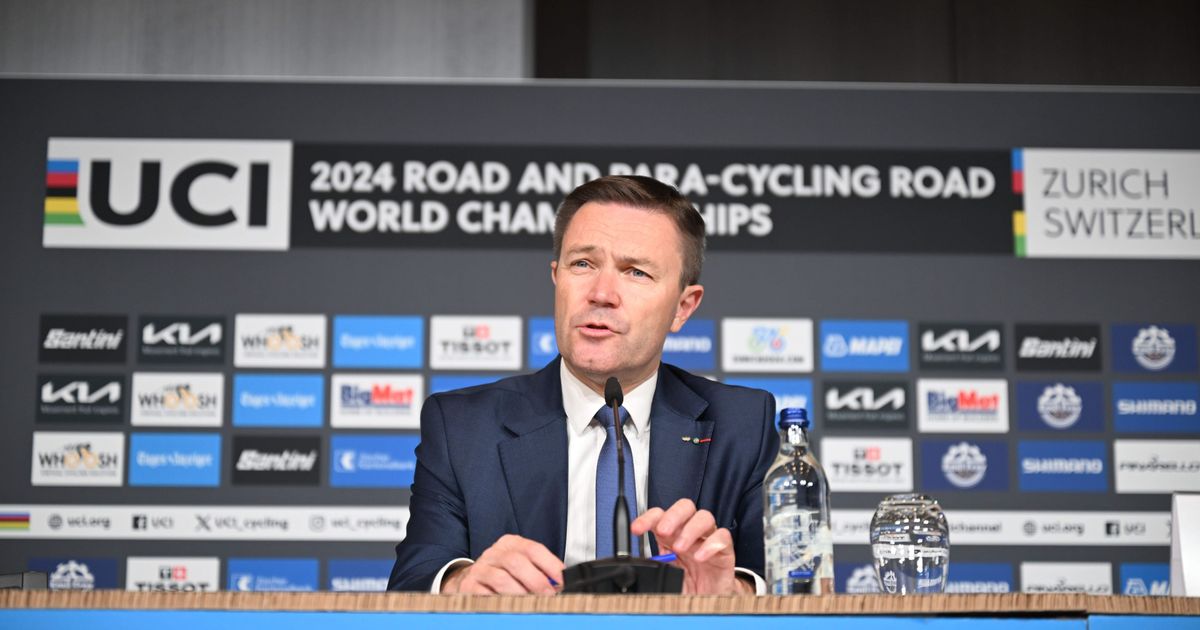
One theme stood out in particular. “A topic imposed itself: the politicisation of sport and the impact of geopolitics on our discipline, as we saw with the Vuelta,” he explained. “Our message is clear: we are politically neutral. We are a tool to bring people together, not a tool for sanctions.”
Some people might not agree with that, given that Russian teams were banned entirely by the UCI in 2022 following the Ukraine invasion, and Russian riders must compete under a neutral flag. An unusual step to take by a self-proclaimed politically neutral organization that claims not to be a tool for sanctions.
Safety remained a central concern, as it has been the case the past years. Lappartient pointed to several measures already implemented. “A lot has been done: yellow cards have been introduced, barriers have evolved, standards have changed, obstacles are much better protected, and we are communicating more,” he said.
However, he acknowledged resistance to certain innovations. “Some things work less well, especially when it comes to testing developments like maximum gear ratios or GPS trackers, which still generate a lot of reluctance.”
That reluctance is related to the Tour de Romandie Féminin chaos, in which six teams (Team Visma | Lease a Bike, AG Insurance-Soudal, EF-Oatly-Cannondale, Canyon//SRAM, Team Picnic PostNL, and Lidl-Trek) were disqualified before even starting the first stage.
Teams were told they would have to fit the devices to their bikes themselves and accept liability for any loss or damage during crashes or other race incidents. Those six teams refused to comply, arguing that the measure was imposed without sufficient consultation, clarity on liability, or agreement on how the test would be implemented.
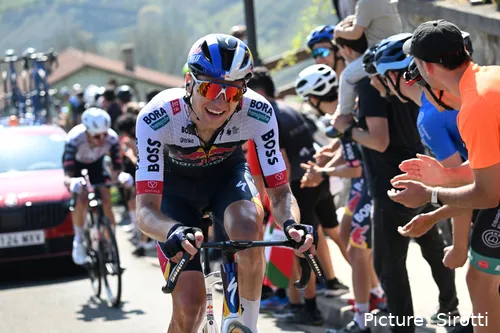
Russian riders like Vlasov have been competing under a neutral flag
Zero tolerance with doping
Other topics of discussion were health and anti-doping efforts. “Athletes, men and women, have sometimes tended to lose a lot of weight to climb better and be more efficient. That raises important questions,” Lappartient noted.
He reaffirmed the obvious UCI’s stance on clean sport. “We have reaffirmed the UCI’s unwavering commitment to fighting doping, staying permanently connected, and reanalysing samples for up to ten years. This year, 300 samples were reanalysed. For us, there is no plan B: we must fight doping as effectively as possible.”
Despite economic fragility among teams, Lappartient highlighted cycling’s growing popularity, which might sound like contradicition. “Sport has never been so popular, which is very positive,” he said. “Budgets are increasing significantly, and riders’ salaries too. In women’s cycling, salaries have been rising by 30 percent per year for the past three years. However, the disappearance of two men’s WorldTour teams shows that team economics remain complex.”