
An invasive pest that hitchhiked into New South Wales on a vehicle travelling from Queensland has been captured, state authorities have confirmed. The toxic cane toad was discovered in Lithgow, around 900 kilometres south of its usual range, prompting swift action from biosecurity officials.
The NSW Department of Primary Industries and Regional Development confirmed to Yahoo News that the animal has now been removed, a little over a week after it was first found.
“The single toxic cane toad that was on the loose in Lithgow has been captured and removed thanks to the actions of the local community,” a spokesperson said.
“After the vigilant Lithgow local saw the cane toad, took a picture and reported it directly to the DPIRD biosecurity officers worked with the local community, distributing flyers and letting them know what to look for and what to do if they saw the offending toad.”
After being originally seen a few blocks from the Great Western Highway and Main Street, the toad was found nearby by another Lithgow local who’d heard about the stowaway.
“This invasive pest poses a serious threat to our native wildlife and ecosystems, and it’s vital to protect what we love with 98 per cent of NSW still cane toad-free,” the spokesperson added.
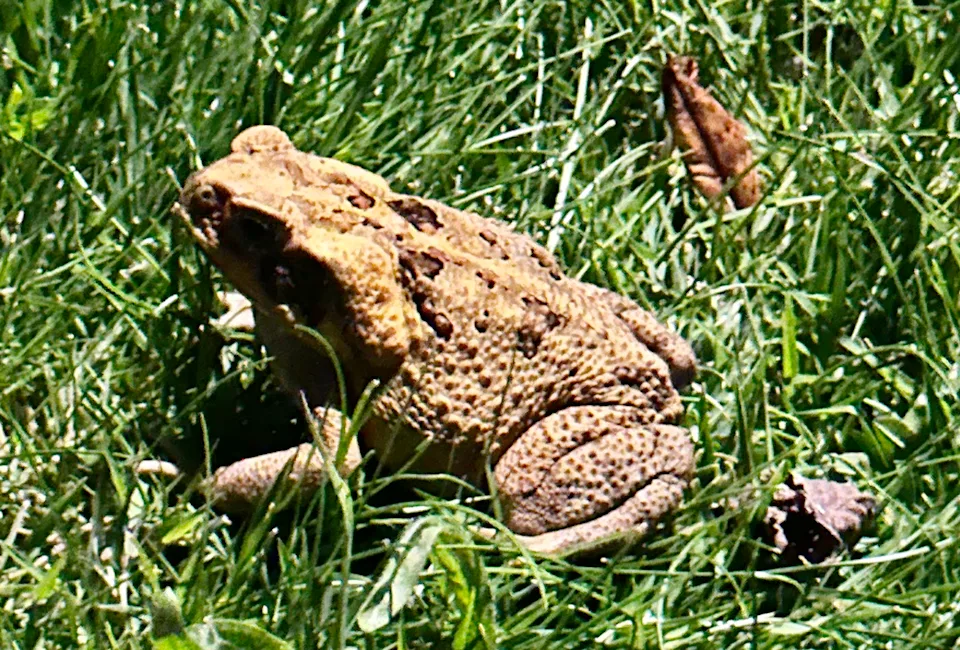
The cane toad in question, pictured here, remains on the loose. Source: David Bennett
Local man David Bennett originally saw the cane toad, took a picture and reported it directly to DPIRD when it was first found earlier in December.
The pest was originally seen a few blocks from the Great Western Highway and Main Street, Lithgow.
“Cane toads are notorious stowaways on vehicles. We think it may have travelled on a vehicle, maybe a truck carrying pot plants or gardening supplies, which came from established cane toad populations in Queensland or Northern NSW,” DPIRD vertebrate pest technical specialist Nathan Cutter said.
Cutter described the invasive pests as “incredibly tough amphibians”, capable of surviving a broad temperature range from cool conditions around five degrees to higher than 40.
“This allows them to inhabit diverse environments from rainforests to arid areas, although they prefer warmer, moist conditions and shelter during extreme heat or cold,” he said.
How did cane toads become established, and what makes them so destructive?
Cane toads were introduced to Australia in 1935 after being brought from Hawaii in a failed attempt to control beetles destroying Queensland’s sugar cane crops.
About 100 toads were released in north Queensland, despite warnings at the time that the species could become invasive.
The toads proved ineffective against the pests they were meant to stop, but adapted quickly to Australian conditions and began spreading rapidly.
Today, cane toads number in the hundreds of millions, with populations stretching across Queensland, the Northern Territory, northern NSW and parts of Western Australia.
They continue to expand their range westward and southward, aided by their high reproduction rate — a single female can lay up to 30,000 eggs at a time — and their ability to survive in harsh conditions.
Cane toads are considered one of Australia’s most destructive invasive species because of the powerful toxins they secrete, which can kill native predators that attempt to eat them, including snakes, goannas, quolls and freshwater crocodiles.
They also compete with native frogs and wildlife for food and habitat, disrupting ecosystems and contributing to the decline of already vulnerable species.
If you see a cane toad, report it on ToadScan or let the NSW Department of Primary Industries and Regional Development know by using the online form.
Do you have a story tip? Email: newsroomau@yahoonews.com.
You can also follow us on Facebook, Instagram, TikTok, Twitter and YouTube.