
jun aoki lands in beijing with a third louis vuitton flagship
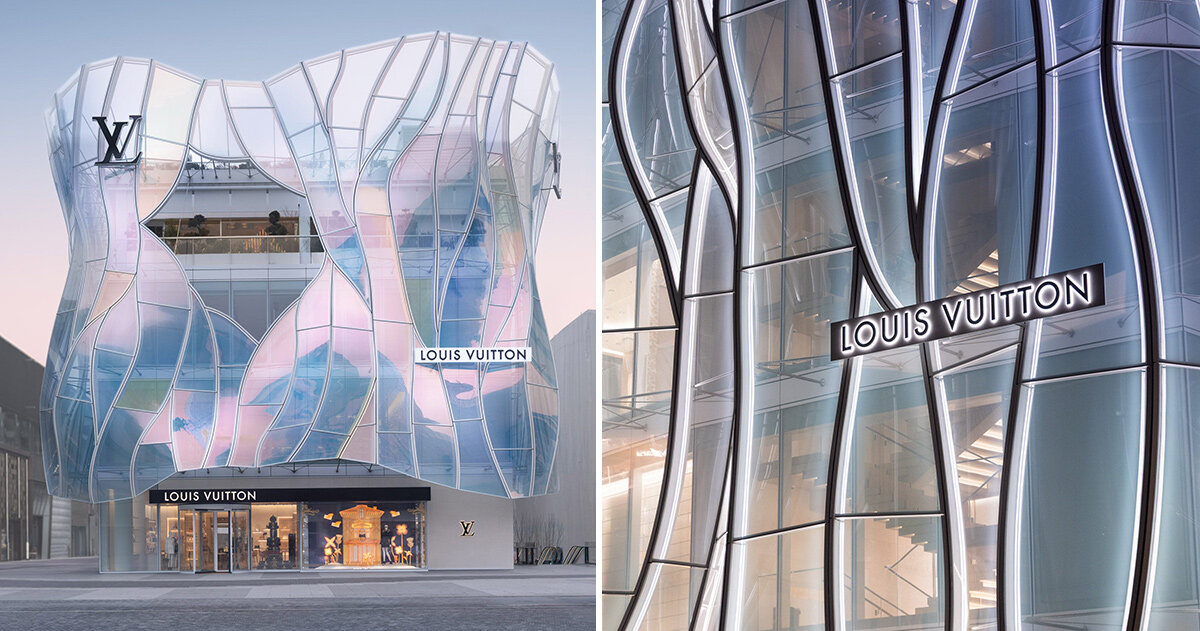
Maison Louis Vuitton Sanlitun opens in Beijing as a new flagship by Louis Vuitton, designed by architect Jun Aoki and located within the Sanlitun district. The building introduces an organic, multi-layered glass facade and a vertically organized interior that brings retail, hospitality, and exhibition spaces into a single building.
The project extends Jun Aoki’s long collaboration with the House, following earlier works in Tokyo and Osaka. In Beijing, the architect applies a refined approach to surface, enclosure, and daylight, responding to the urban intensity of Sanlitun through material density and calibrated transparency.
images courtesy Louis Vuitton
the facade of Hand-Curved Glass
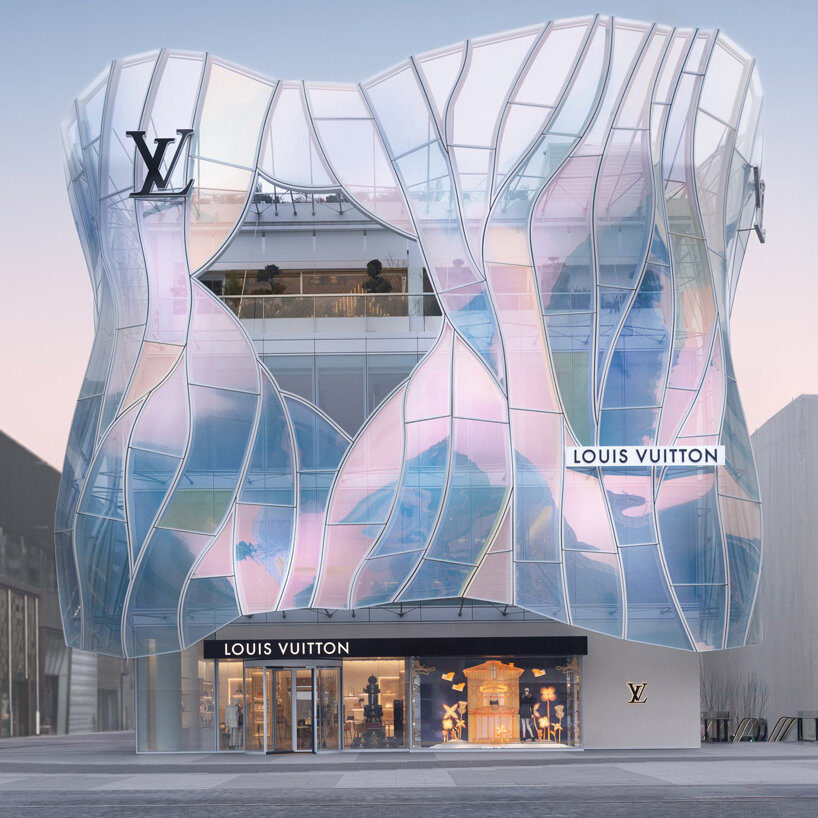
With the facade of Louis Vuitton Sanlitun in Beijing, architect Jun Aoki draws from the physical qualities of Taihu stones, long associated with classical Chinese gardens. Here, the motif is translated into an outer skin of hand-curved glass panels. Each panel carries irregular contours and subtle variations, forming a textured surface that shifts in tone as daylight changes across the streets of Beijing.
Behind this outer layer, a second envelope provides thermal performance and weather protection. The glass elements display translucent and dichroic properties, producing chromatic shifts across the elevation that vary with sun angle and atmospheric conditions. The surface reads differently from street level and from across the Sanlitun block, where reflections compress and stretch along the curvature of the facade.
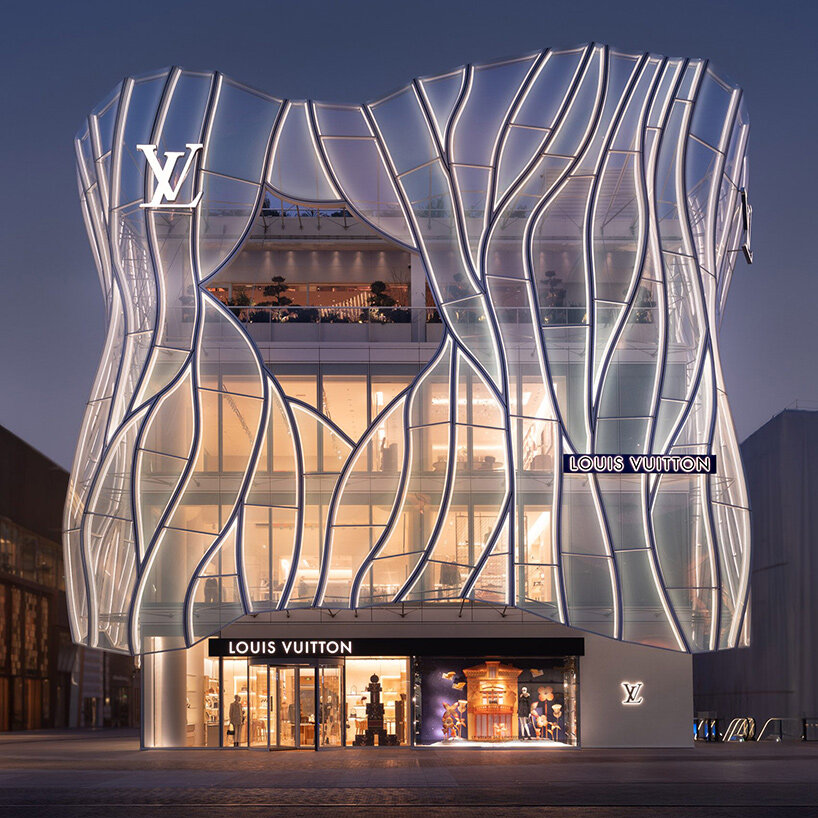
the Jun Aoki-designed Maison Louis Vuitton Sanlitun opens in Beijing
interiors are organized around a Vertical Atrium
Entering the Louis Vuitton Sanlitun from the streets of Beijing, visitors are lead directly into a central atrium that rises through three levels and forms the main spatial organizer for the Women’s collections. The atrium maintains visual contact with the exterior through the glass skin, allowing daylight to reach deep into the plan and register across floors, balustrades, and vertical circulation cores.
Retail programming extend across four levels, housing Women’s and Men’s Leather Goods, Ready-To-Wear, Shoes, Jewelry, Accessories, Perfumes, and Beauty. Circulation remains vertical and legible, with escalators and staircases positioned to preserve sightlines through the atrium and toward the facade. Private client lounges occupy more secluded zones which are defined through material shifts and controlled lighting.
The Home collection, meanwhile, occupies a dedicated area on the third floor. Here, furniture, textiles, and tableware are presented in a quieter spatial register. Displays by designers including Patricia Urquiola and Cristian Mohaded sit within rooms proportioned closer to domestic interiors with softer finishes and lighting.
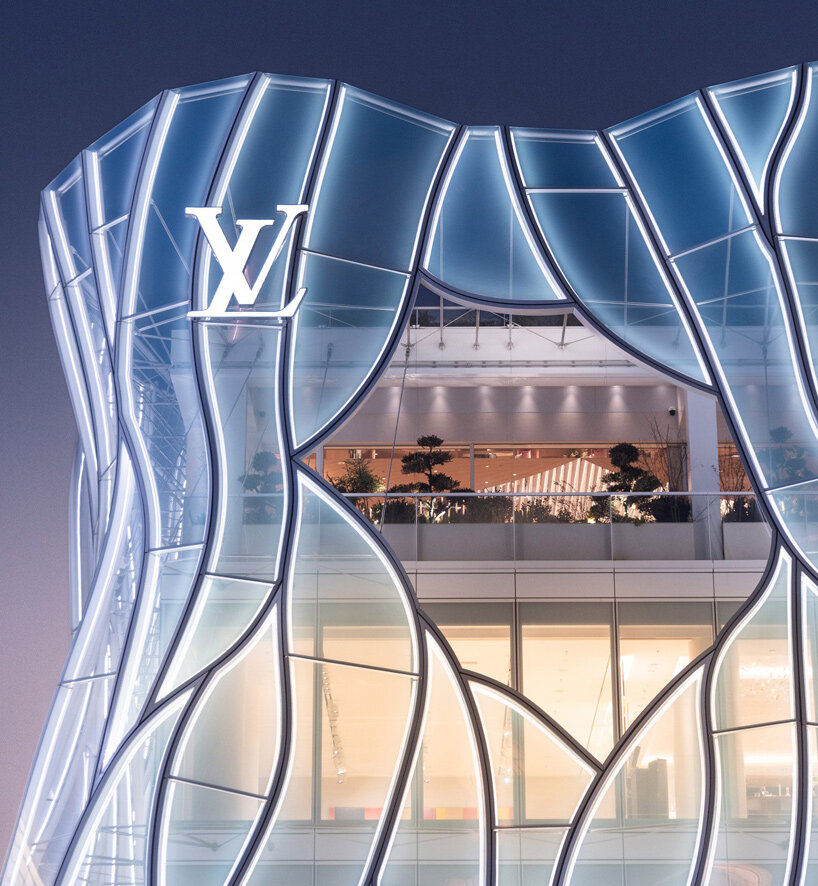
a layered glass facade is composed of hand curved panels
le café louis vuitton overlooks sanlitun streetscape
Le Café Louis Vuitton occupies the fourth floor, marking the first Louis Vuitton café in Beijing. Arrival begins with a compact, mirrored vestibule that multiplies reflections before opening widely onto the main dining area, its entry lined with books and display elements.
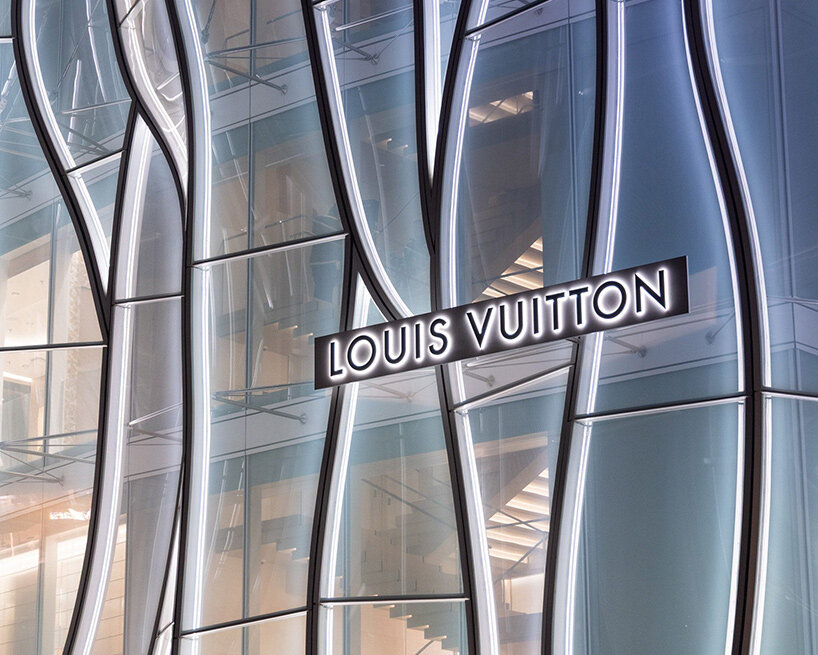
with its irregular contours and depth, the outer skin references Taihu stone
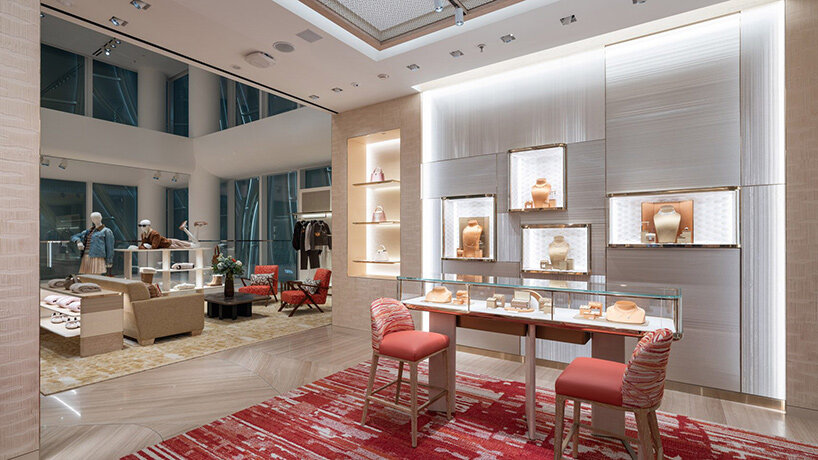
dichroic glass shifts in tone with changes in daylight and weather
The dining room adopts flowing geometries and continuous surfaces, while the bar references the proportions and detailing of Louis Vuitton trunks through layered materials and joinery. A terrace runs along the facade, partially screened by the glass envelope, with views extending across Sanlitun and the surrounding city fabric.