
Well, it’s new year’s Day. 2025 has passed, and not one journalist from a major American news outlet has come over to write an article about how “Gaelic football is having a moment”. So it falls to us … but it never really hits the same when it’s just the likes of me saying it, does it? Our need for external validation will not be sated by the poor ol’ Irish Times.
Nevertheless, 2025 will go down as the year that Gaelic football revived itself. I remember attending Galway against Armagh in Pearse Stadium in the first round of the national football league, with the city and county still reeling from the after-effects of Storm Éowyn, and being struck, even amid the gloom, by the possibilities of this new game.
Now it’s far from perfect, but it has a self-confidence about it that it hasn’t had in nearly a quarter-century. And some other things happened in 2025, not attributable to the new rules but nevertheless in line with a renewed enthusiasm for the sport.
For instance we might have seen the release of the first truly great Gaelic football novel, Fun And Games by John Patrick McHugh, and the first truly great Gaelic football album, The County Star by Kean Kavanagh.
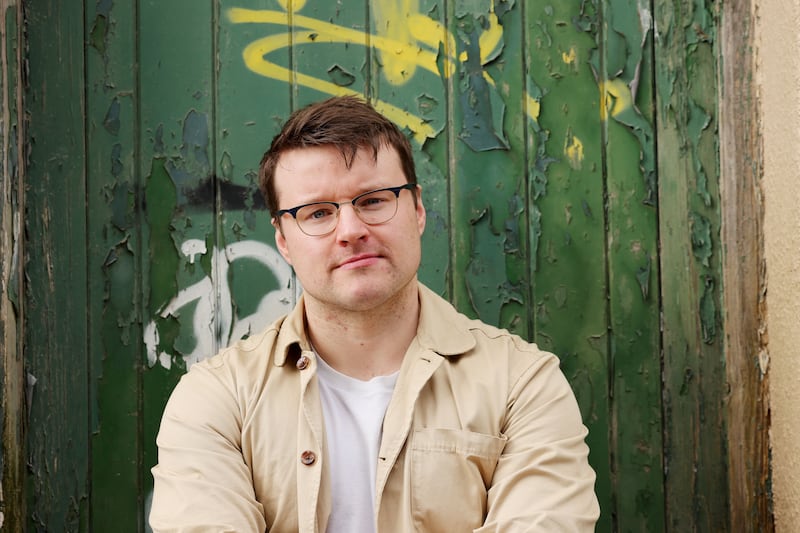 John Patrick McHugh has released “Fun And Games”, a moving debut novel about a teenage boy as he comes of age on the west coast of Ireland. Photograph: Alan Betson
I’ve never had a full, five-senses, reaction to a book like Fun And Games, the story of a teenage boy in Mayo attempting to make his local senior football team while negotiating multiple sexually-fraught personal disasters. As well as being riotously funny, it contains descriptions of the game itself which are so true-to-life and raw that it’s the closest to playing the thing I’ve ever experienced.
McHugh’s grandfather won an All-Ireland medal for Galway in 1956, and he played himself for years for Bearna, and so baked into this book is an understanding of what dressingrooms are like which would be impossible to fake. The power dynamics, the generation gaps … and the nudity, of course.
It’s quite something to spend your life searching for ways to describe what it’s like to play a match, any match, only to have it reproduced for you in a work of art. Kean Kavanagh knows the feeling, because he told this paper a couple of months ago what he felt when he saw Paul Mescal playing Gaelic football in the TV adaptation of Sally Rooney’s Normal People (Rooney is a close friend of JP McHugh’s).
“This is an example of why representation in a broad sense is important. When I saw the football scene, how beautifully they shot it … all the movement … Honestly, I was nearly moved to tears. I’d never seen that represented. It was so beautiful.” That’s a vivid indication of just how low the Gaelic football fan’s self-esteem was. Not having to apologise for the sport is a novel experience.
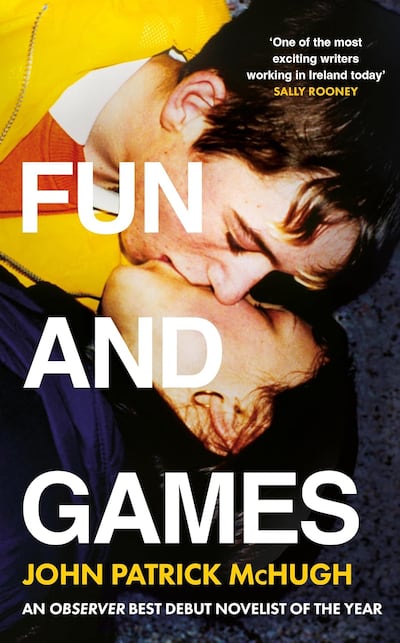 Fun and Games by John Patrick McHugh
We spoke to Kean for our RTÉ Radio show Second Captains Saturday over the Christmas, and got a chance to talk to him a bit before and after as well. He told us he’d stopped playing, but that he put his boots back on last December to have a kickaround with his brother John, and the second he got out onto the pitch, it was like “when they let the cows out into the fields for the first time in spring.”
Never mind playing, he had stopped watching matches altogether because “it was just so dire” before the new rules. Now he’s buzzing to play again next year with his club in London because he’d had such a great time playing in 2025.
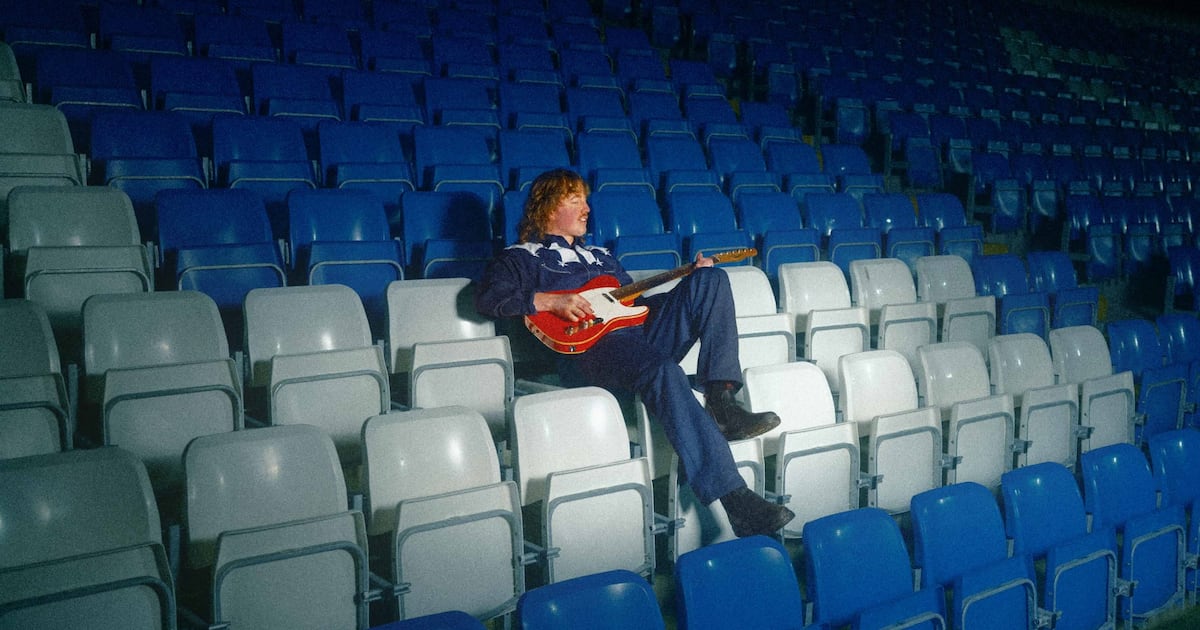
The album cover has him sitting in the stands in O’Moore Park in Portlaoise with his guitar, and the entire collection contains an ethereal, sonic depth and richness that is not present in other, rather more widely-heard GAA anthems of recent times. The late poet Paul Durcan once described hurling as “pure poetry. Pure inspiration. Pure technique … hurling is the father of freedom … the hurler strikes, and man is free.” No one has ever made such claims about Gaelic football. But McHugh and Kavanagh’s heartfelt representations of the game, prominent but obviously not alone amid the many other influences present, were absolutely among my cultural highlights of 2025.
I kept pulling at threads. I saw Éanna Hardwicke’s coruscating performance as Roy Keane in Saipan a week ago, and that was finally the motivation I needed to watch Lakelands, a gorgeous movie from 2022 directed by Robert Higgins and Patrick McGivney, which is still available on the RTÉ Player. Hardwicke is exceptional as Cian, a club footballer who struggles to adapt to a career-ending injury, and Danielle Galligan is superb in it also – their subsequent ascents would have been no surprise had I caught it on its original release.
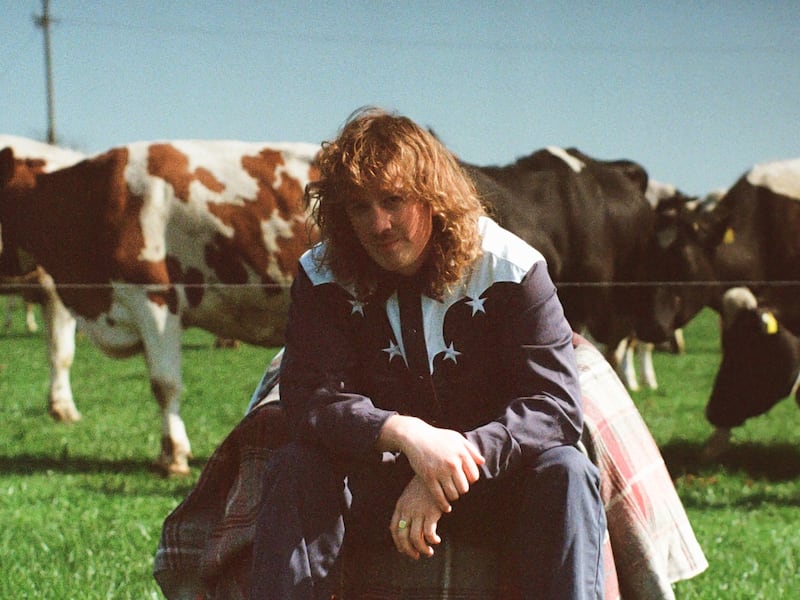 Kean Kavanagh
It would be lovely to have been able to say that this outpouring of cultural representation for Gaelic football came on the back of the on-field rules revolution. The reality says something different.
But maybe it says that the vital ingredient which allowed change to happen (the consensus that it could hardly get any worse) sprang from the fact that Gaelic football was always something that a lot of people felt very deeply about – that it was a vector for artists across a spectrum of media; books, film and music, through which they could talk about their experiences as (in these cases) young men in Ireland in the 21st century. Here’s to more artistic inspiration in 2026.