
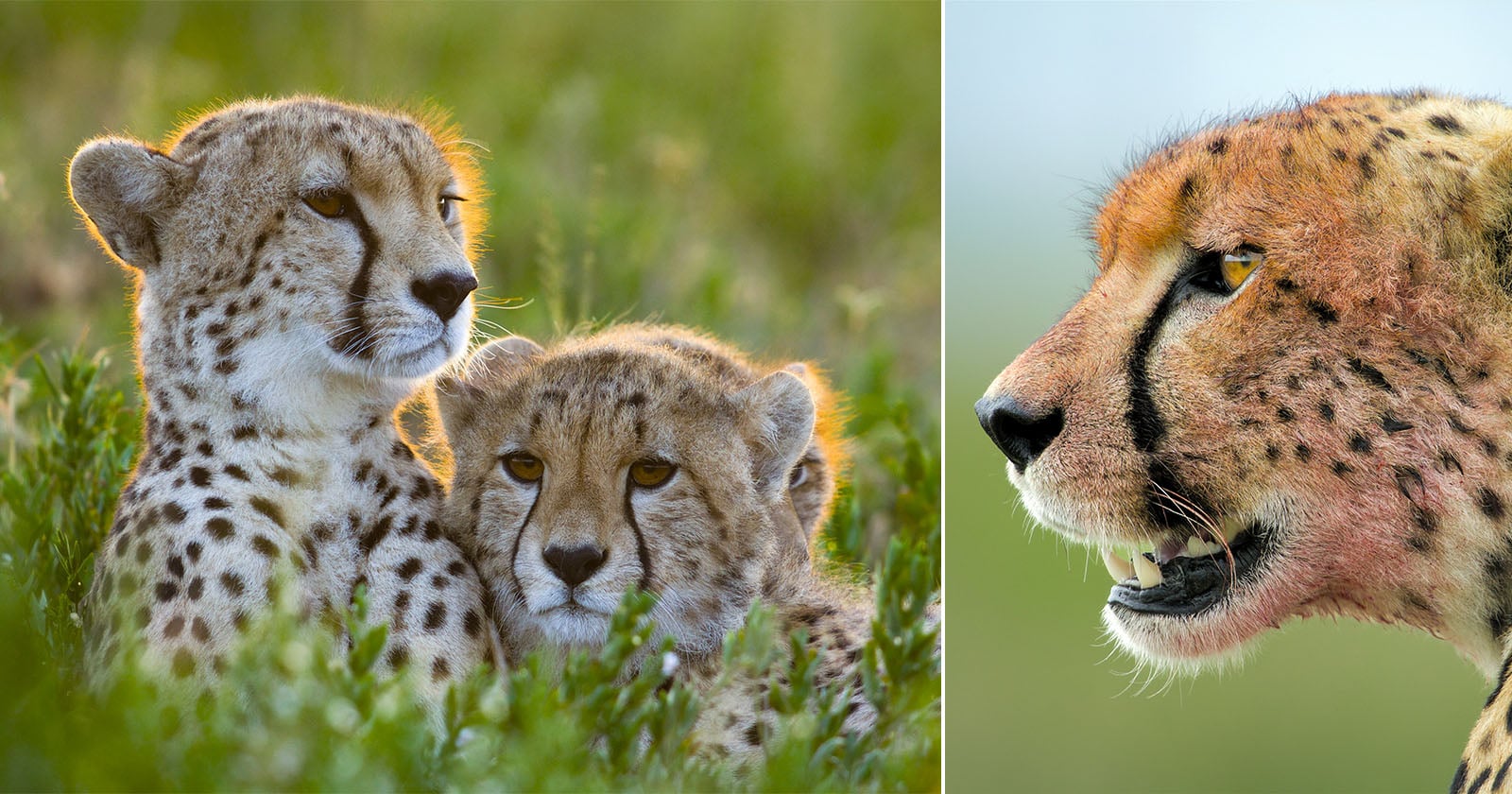
In National Geographic‘s latest documentary, “Cheetahs Up Close,” Emmy Award-winning wildlife photographer and cinematographer Bertie Gregory travels to the Serengeti to capture jaw-dropping close-up footage of cheetahs as they rest, hunt, and of course, run. Gregory and fellow Emmy Award-winning wildlife cinematographer Tom Walker use long lenses, drones, and specialized equipment to capture remarkable shots, ensuring “Cheetahs Up Close” is as beautiful as it is exciting.
PetaPixel sat down with Walker to discuss his latest project, his career, and how challenging it is to use super-tele lenses to capture cheetahs as they chase down prey at speeds over 70 miles per hour (120 kilometers per hour).
From Postman to Emmy Award-Winning Cinematographer
Walker specializes in long-lens gimbal wildlife cinematography, and he’s been at it for about 15 years. Like many exceptional photographers and cinematographers, Walker didn’t attend post-secondary school to develop his craft.
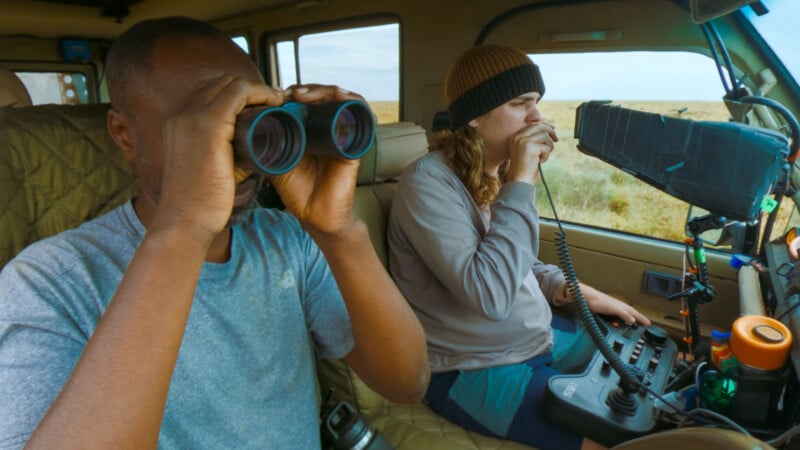 Denis Mollel and Tom Walker sit in a safari jeep looking at wildlife through binoculars (credit: National Geographic/Tom Walker)
“I used to be a postman, I had a normal job. But I was really into photography,” Walker tells PetaPixel. Walker continues to do still photography, and it’s exceptional work. He believes his still photography will always complement his cinematography, and he always wants his motion picture work to have the same quality as a perfect still frame.
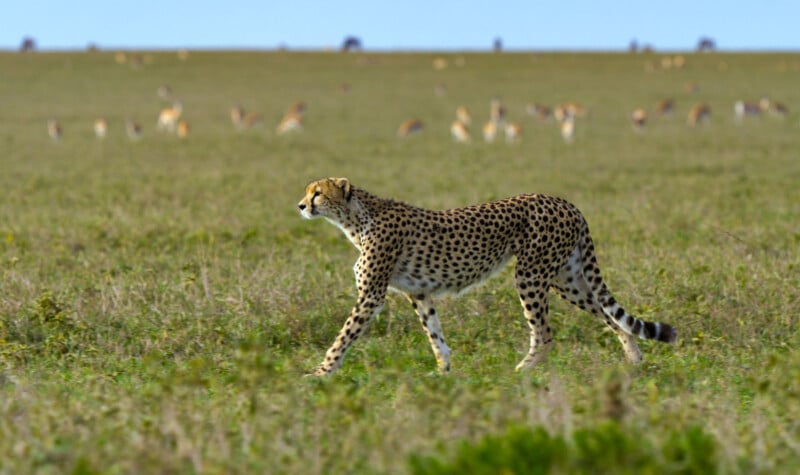 A cheetah strolls through the plains in from of a herd of antelope. (credit: National Geographic/Tom Walker)
“I think everyone who does moving pictures should be ultimately really interested in still photography. It seems a bit strange not to,” Walker says. “I mean, I’m just obsessed with images full stop, regardless of the subject, whether it’s a moving image or a still photography image.”
It was Walker’s love for photography and images that led him to do timelapses, and that was his in for professional work, including documentaries. Walker got involved with some professional projects looking for timelapse work, so he continued to ply his craft in his spare time and got opportunities “here and there.”
“Then it sort of snowballed,” he says.
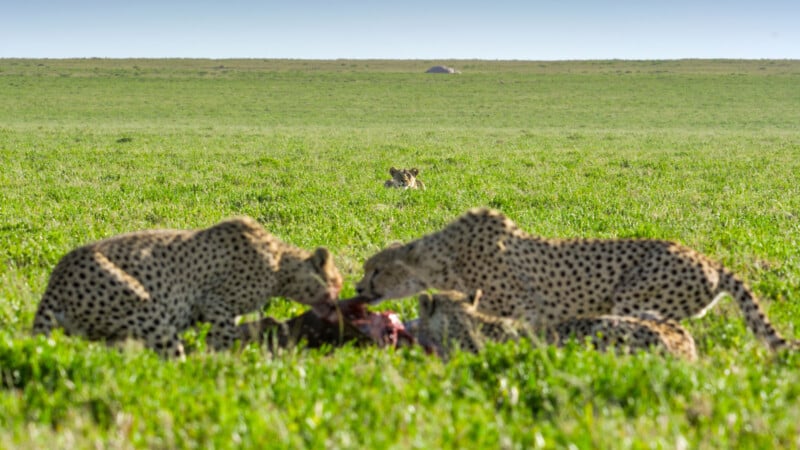 Three cheetahs eat a kill whilst being watched by a lioness. (credit: National Geographic/Tom Walker)
Since then, he has been cinematographer and Director of Photography on a long list of productions for BBC, National Geographic, Netflix, Disney, and more. He has worked on some heavy hitters in the nature documentary field, including “24 Hours on Earth”, “OurPlanet”, and “Planet Earth”, to name just a few. He has also worked with Bertie Gregory numerous times, including with cheetahs before, making “Cheetahs Up Close” a natural fit.
Rain Spinners and Superzooms
“I’ve been filming cheetahs for probably 10 years now, and I’ve always been saying to Bertie it would be good to go and do cheetahs for one of his shows,” Walker remarks. “I’ve known Bertie for 10 years or so. And yeah, it’s always a good shoot and we can crossshoot at the same time. We’ve got very complimentary skillsets and yeah, normally it pays off and delivers something quite interesting.”
Throughout “Cheetahs Up Close,” both Gregory and Walker are shooting, using different rigs and kits and getting multiple angles of the same dynamic sequences.
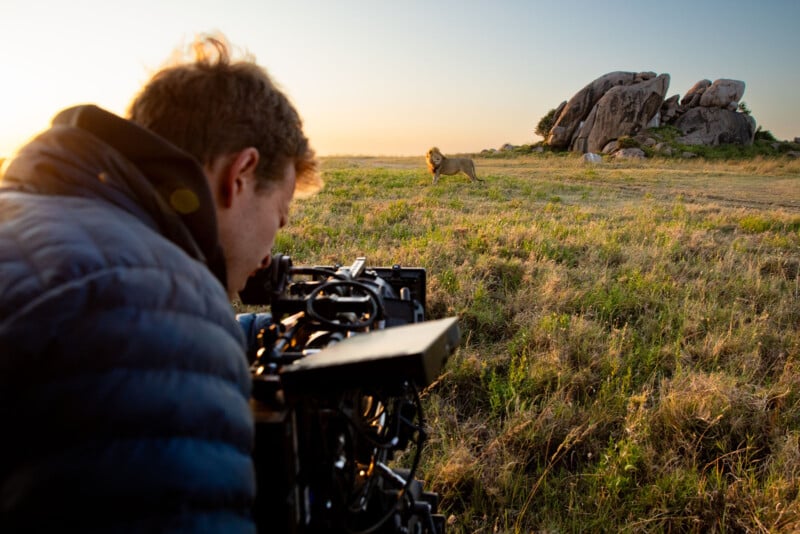 Bertie Gregory looks through his camera viewfinder at a male lion standing in front of a large rock in the early morning light. (credit: National Geographic/Jigar Ganatra)
Anything the duo can do to increase their odds is incredible because cheetahs are very difficult to capture.
“It’s such a technically difficult subject,” Walker says. He always learns something new each time he works with cheetahs, whether it is technical skills or behavioral biology. There are still many mysteries surrounding cheetah behavior, and “Cheetahs Up Close” captured some of the first footage ever showing cheetahs hunting in a rainstorm, which is not just visually spectacular but also scientifically valuable.
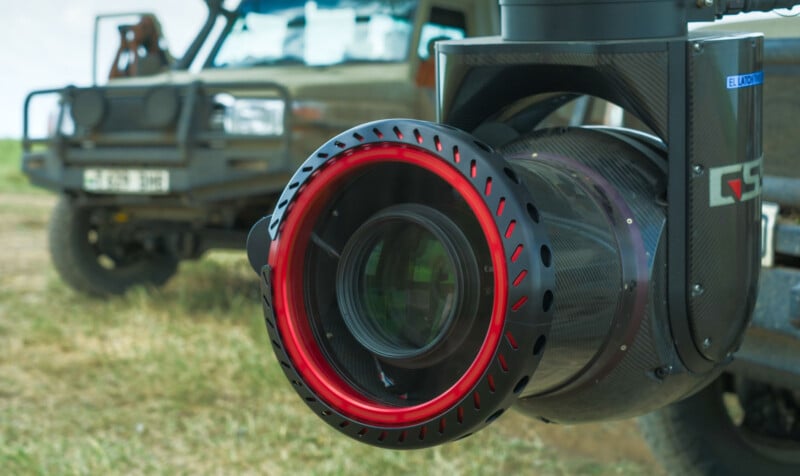 A GSS camera with a rainspinner attachment. (credit: National Geographic/Jigar Ganatra)
 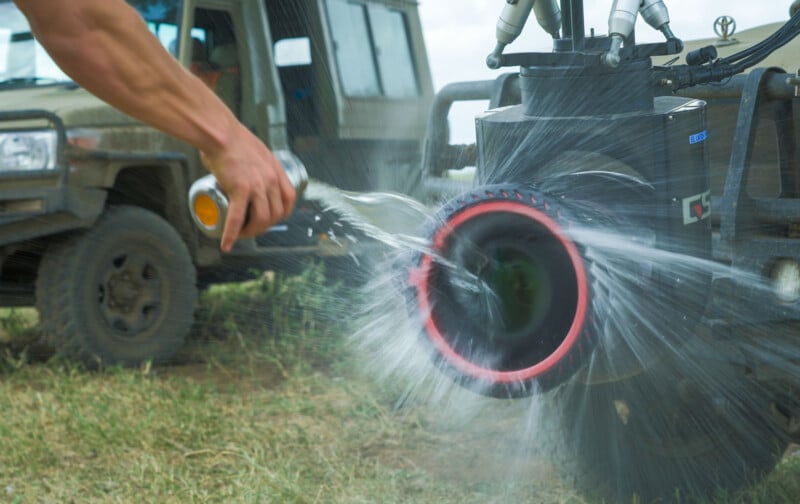 Water pouring onto a GSS camera with a rain spinner attachment to show how it works. (credit: National Geographic/Jigar Ganatra)
 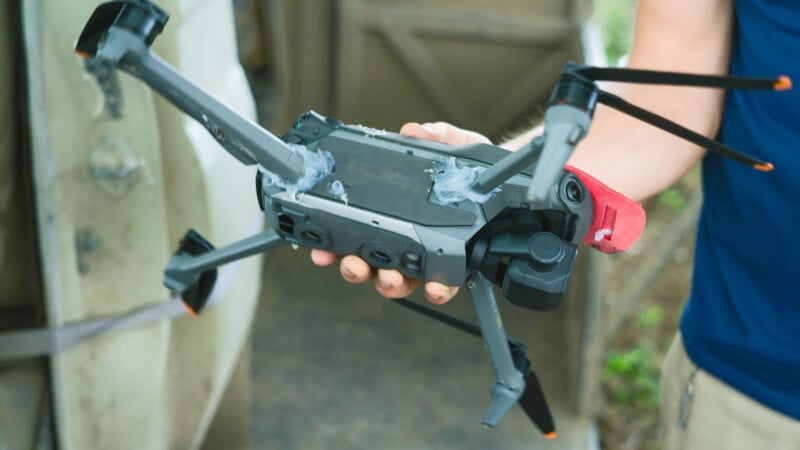 A Mavic drone sealed with glue to improve waterproofing. (credit: National Geographic/Jigar Ganatra)
To nail the rain shots, Walker relied on a rain spinner, which is an attachment that goes on the front of the lens that, as its name suggests, spins very fast to keep water from collecting on the front element.
“It’s an approach that’s not been done very much, if at all, with cheetahs, particularly when they go hunting in the rain. And I’ve been there many years before and never had a rain spinner, so I knew the potential, but it was just normally impossible to capture,” Walker says. “I mean, predators hunt in the rain. They do it a lot more than you imagine. And it makes so much sense when you see all the prey dynamics change, they’re all turning their back into the rain. So that was definitely a key target that we wanted to try and do, but it doesn’t always rain heavily enough to show in the shots and it doesn’t always happen.”
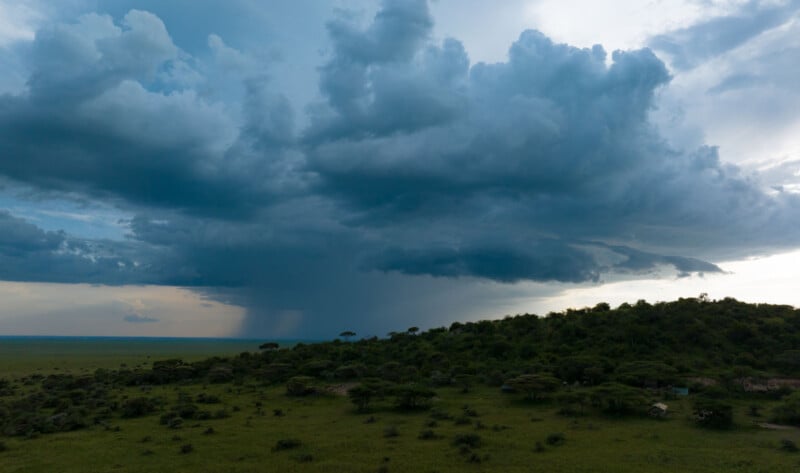 A large rainstorm over the Serengeti. (credit: National Geographic/Will Greenlees)
 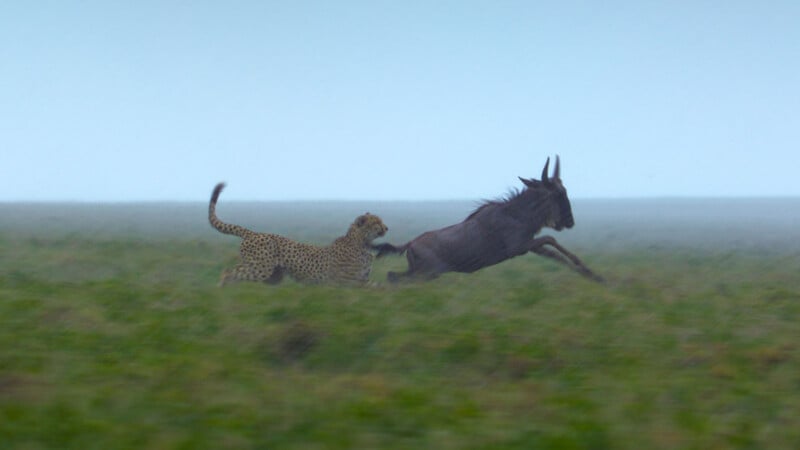 A cheetah catches up with a wildebeest during a hunt in a heavy rainstorm. (credit: National Geographic/Tom Walker)
 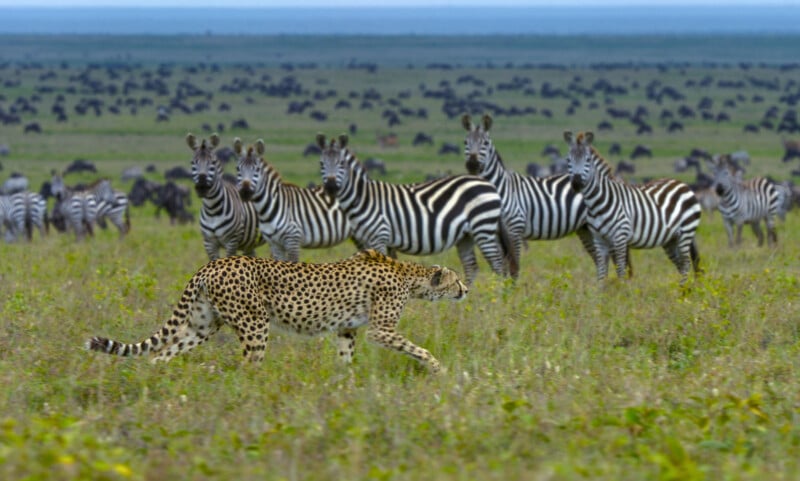 A cheetah stalks in front of a herd of onlooking zebras. (credit: National Geographic/Tom Walker)
As for the rest of the gear Walker used, he worked with a RED Raptor and the “standard wildlife go-to lens,” the $75,000 Canon Cine-Servo 50-1000mm T5-8.9. Using a Super35 RED, which effectively gives Walker 1500mm of reach, which he says is “pretty essential for 80% of what we shoot.”
At those focal lengths, the depth of field is razor-thin, making it tough even when a subject is stationary, let alone when it’s running at full speed.
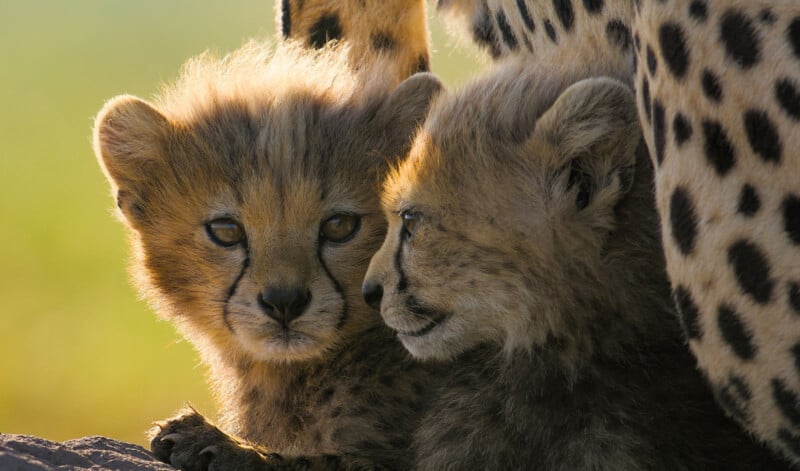 Two baby cheetahs cuddle close to their mother. (credit: National Geographic/Tom Walker)
 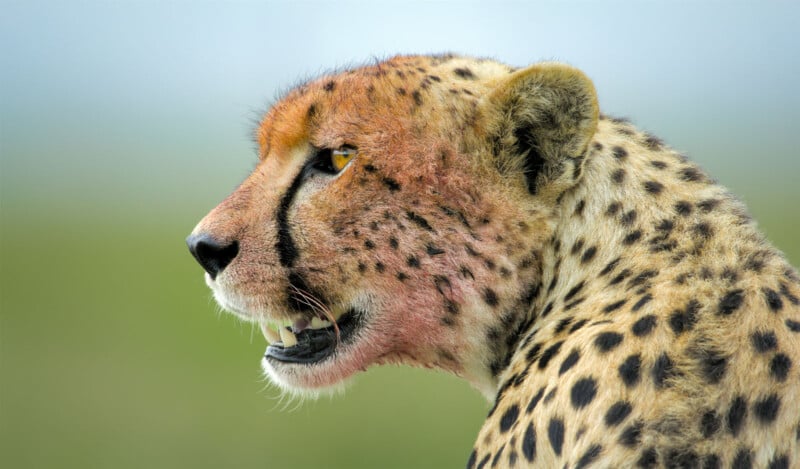 A cheetah’s face is lightly stained with blood after eating a kill. (credit: National Geographic/Tom Walker)
“The follow focus is very difficult,” Walker says. He relies heavily not just on his skills and extensive experience, but also on the driver of the truck from which Walker is shooting.
“There’s the technical side of just making things go along,” Walker says. “There’s the driver communication. I work with an amazing driver guide, Denis Mollel, who is, without question, I think the best in Africa at that kind of driving.”
“And then you’ve got all the light, how you want the image to look aesthetically, then the story. There’s a lot going on in your head all at once. But technically speaking, yeah, the focus is a big challenge for sure once things start moving.”
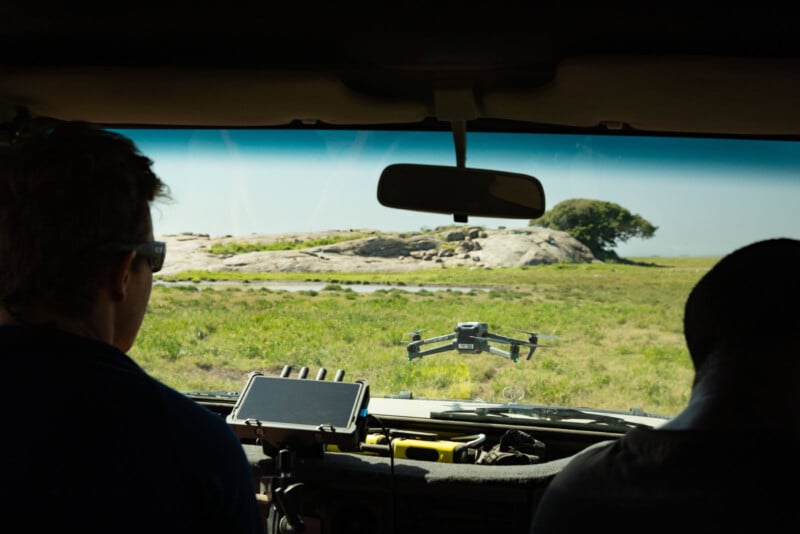 A drone takes off from the front bonnet of a safari Jeep whilst the pilot watches. (credit: National Geographic/Jigar Ganatra)
 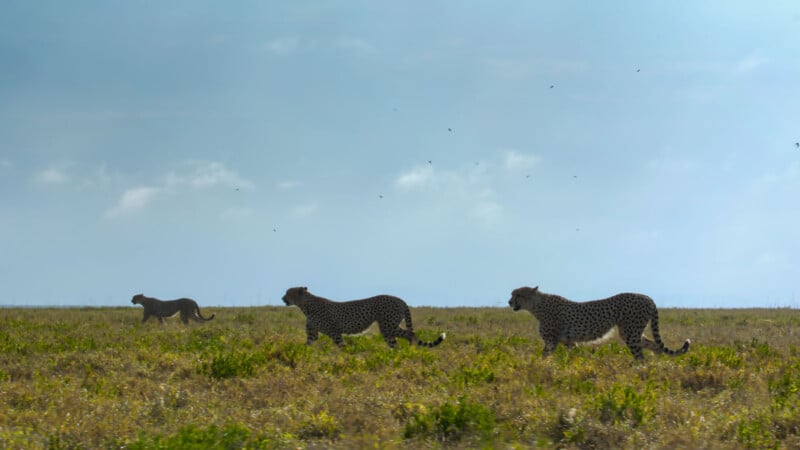 Three adult cheetah walk through the plains of the Serengeti with small birds flying overhead in the blue sky. (credit: National Geographic/Tom Walker)
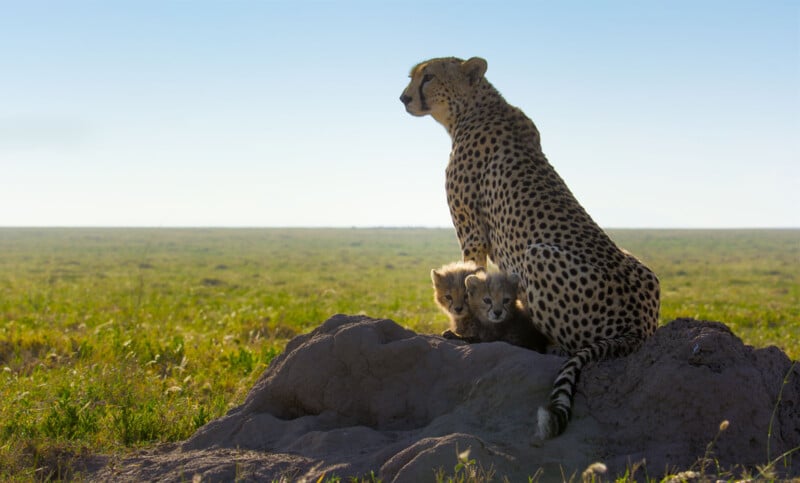 Two baby cheetahs cuddle close to mom on a rock. (credit: National Geographic/Tom Walker) Photographing Cheetahs in Beautiful Light Is Rarely Easy
Speaking of the light, “Cheetahs Up Close” is stunning, with many sequences captured in beautiful light, which is a rarity with cheetahs as they are often most active when the Sun is at its highest and light at its least dynamic.
“We only had about four weeks,” Walker says. “For the length of the show, that’s not very long.”
“Getting nice light is not always easy, and a lot of the time it comes down to your instincts. That’s where Dennis and Baz, the guides in the show, [come in], their instincts and knowledge… is absolutely critical.”
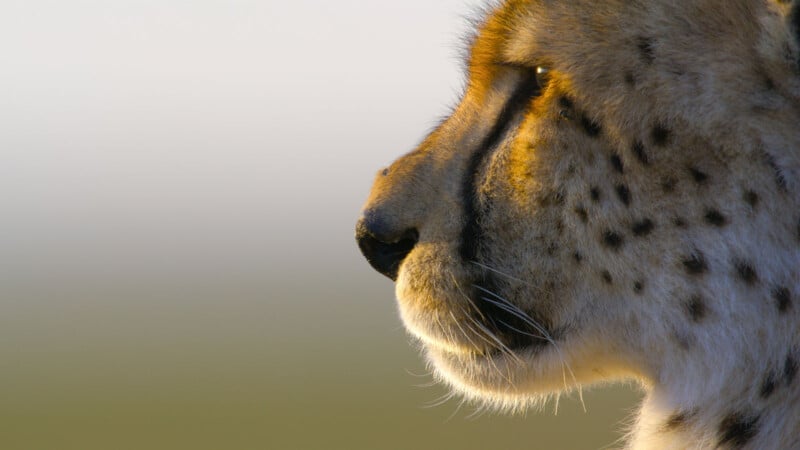 A fluffy cheetah profile. (credit: National Geographic/Tom Walker)
Cheetahs are not easy to find in the early morning hours when light is rich and beautiful, so the team spent a lot of time trying to find the cheetahs and get into position before the Sun got too high.
“It’s a challenge for sure, but it pays off when you get it right,” Walker explains.
For Walker, though, he doesn’t mind spending long hours out in the field with big cats and other predators.
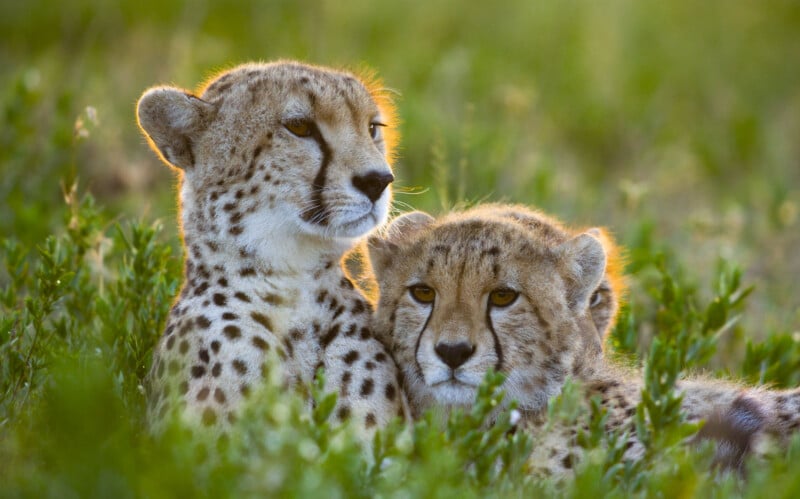 Two cheetahs cuddle together in the grass. (credit: National Geographic/Tom Walker)
“I’ve probably spent more of my adult life with large predators than I have with humans,” he laughs, although not joking. This experience enables Walker to better predict what animals might do, although he is always at the mercy of weather, conditions, and luck to an extent.
“It’s really interesting to go back and see what you think you know and then what actually happens. When you get it right, and you on point with what happens next, that’s really satisfying.”
You’re Never Close to Finishing Cheetahs
Even though Walker has worked with cheetahs essentially every year for the past decade, and has spent a ton of time out in the field with them, including with some of the same cheetahs he shot for “Cheetahs Up Close,” he says the work is never finished.
“I think with cheetahs, because there’s various challenges obviously with any animal, but with cheetahs being definitely on the upper scale in terms of the technical side, you never, ever feel like you’re close to finishing cheetahs. You never feel like you’ve completed a cheetah shoot ever, I don’t think, because there’s always more you could have got, there’s always something you could have tried differently. So in that sense, I’m always just wanting to go back,” says Walker.
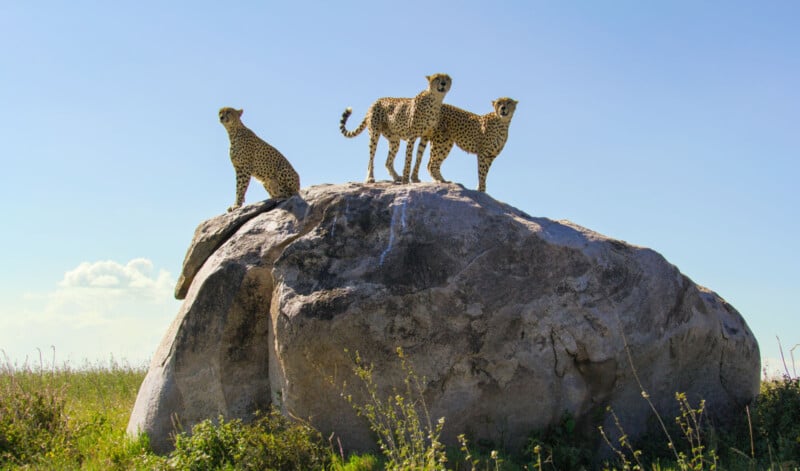 Three cheetahs stand on a large rock looking out at the Serengeti. (credit: National Geographic/Tom Walker)
Three adult cheetah walk through the plains of the Serengeti with small birds flying overhead in the blue sky. (credit: National Geographic/Tom Walker) ‘Cheetahs Up Close’ Premieres This Week
“Cheetahs Up Close” shows cheetahs in a new light, capturing their behavior in exciting, unique ways unlike any show before. They are a complex, sophisticated species and one that never gets tiring to watch. Each cheetah has their own way of doing things, unique approaches to hunting.
“Cheetahs Up Close” premieres on National Geographic on January 1 and on Disney+ and Hulu the following day, January 2.
Image credits: National Geographic. Individual credits are in the image captions.