

Travellers to Spain may be shocked when streetlights turn on in the middle of the day next year.
A total eclipse will briefly plunge parts of Spain into total darkness on August 12, 2026, as the moon passes between Earth and the sun, the Spanish National Observatory reports.
The eclipse will also plunge parts of Iceland and Greenland into darkness.
However, it will provide a magnificent light show for tourists, weather permitting.
The path of the eclipse will sweep from Siberia to eastern Greenland, the west coast of Iceland, northern Spain and the Balearics.

The sun will appear lower in the sky, at a maximum of 26 degrees over the horizon.
Elsewhere in the world there will be a partial eclipse, although it will not be visible in Australia.
The partial eclipse will dim natural light in the UK, Ireland and north Africa as well as Canada and the US states of Alaska, Washington, Montana, North Dakota, Minnesota, Wisconsin, Michigan, New York, and New England.
There the sky will darken as if it were dawn or dusk.
And the skies may shimmer.Power companies in Spain are already bracing for the loss of solar power while zoologists said the blackouts will agitate some animal species by disrupting their circadian rhythms that guide their sleeping, foraging and hunting.
Birds especially, nocturnal types, may be confused.
The eclipse will boost the tourist trade globally with millions seeking the best vantage points to witness what the US National Solar Observatory said will be “an awe-inspiring celestial event creating a dramatic and deeply personal experience with the two largest objects in Earth’s sky”.
Cruise line companies are offering eclipse excursions for astro-curious travellers as the rare light show will be better at sea, away from the coastal city lights.
Stephanie Derammelaere, the executive director of California’s Robert Ferguson Observatory said travellers have every reason to feel excited about what to expect.
“Eclipse travel has become a phenomenon because it combines science, wonder and adventure all in one,” she told reporters.
“Experiencing a total solar eclipse, even once, has a way of changing your perspective on our place in the Universe.”
Shipping companies like Cunard, Seabourn, Virgin Voyages, Holland America and Princess Cruises will carry eclipse explorers from Spanish ports like Barcelona, Ibiza, Alicante, and Bilbao, for prime viewing off the Spanish coast, perhaps as part of a Mediterranean cruise.
The Smithsonian Institution, which is the world’s largest museum, education, and research group, has partnered with Ponant cruise company to provide expert lectures along the way.
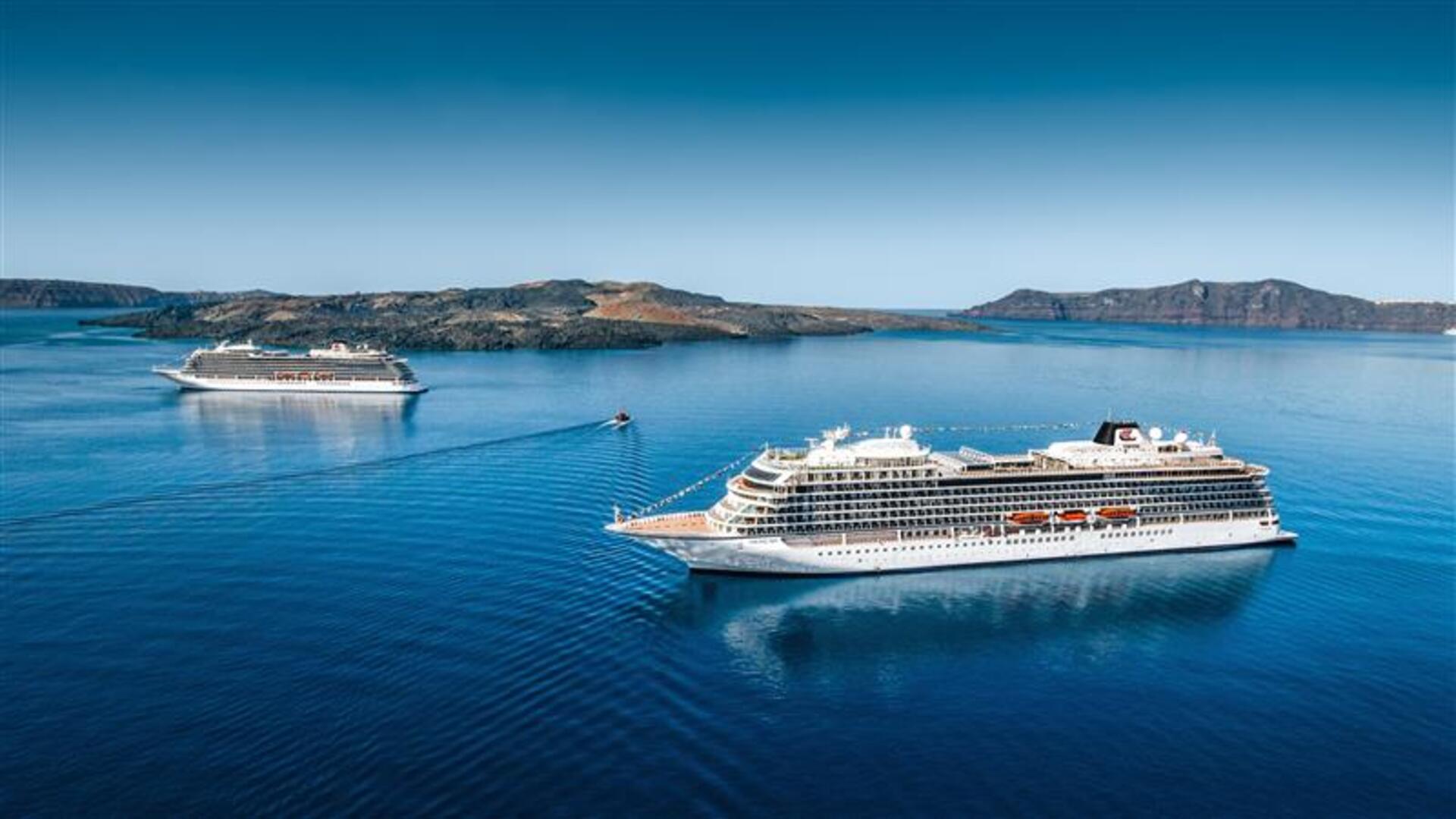
Cruise companies will also visit Iceland, Egypt and North Africa.
Depending on cloud cover, travellers on the path of the eclipse next August will see the Sun’s corona, or outer atmosphere, which is usually obscured by the bright face of the Sun.
Landscapes and oceans may appear to change colour with orange and golden light.
The sun’s magnificent, pearly white outer atmosphere, normally invisible due to the sun’s brightness, may be visible with the naked eye.
An aura of pink, red and crimson colours may be visible.
NASA will track the eclipse. Scientists from the agency said there are two types of eclipses.
A lunar eclipse takes place during the full Moon when the Earth’s shadow blocks the Moon.
A solar eclipse occurs at the new Moon phase when the Moon’s shadow blocks the entire Sun.
Due to the narrow path of totality during a solar eclipse, caused by the Moon’s small shadow, a solar eclipse is visible from a much narrower strip of Earth than a lunar eclipse.