
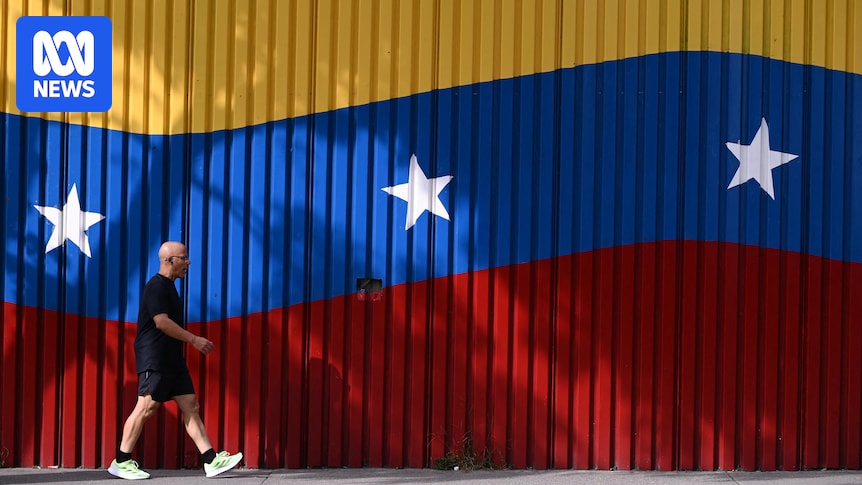
The unfolding situation in Venezuela carries “deep and complex emotions” for Australia’s small but tight-knit Venezuelan community, who are gathering to discuss what is happening in their home country.
According to the 2021 Census, 6,627 Venezuelan-born people live in Australia, including 2,183 people in NSW and 1,572 in Victoria.
The United States says it will temporarily “run” Venezuela after capturing Venezuela’s President Nicolás Maduro during a large-scale military strike overnight.
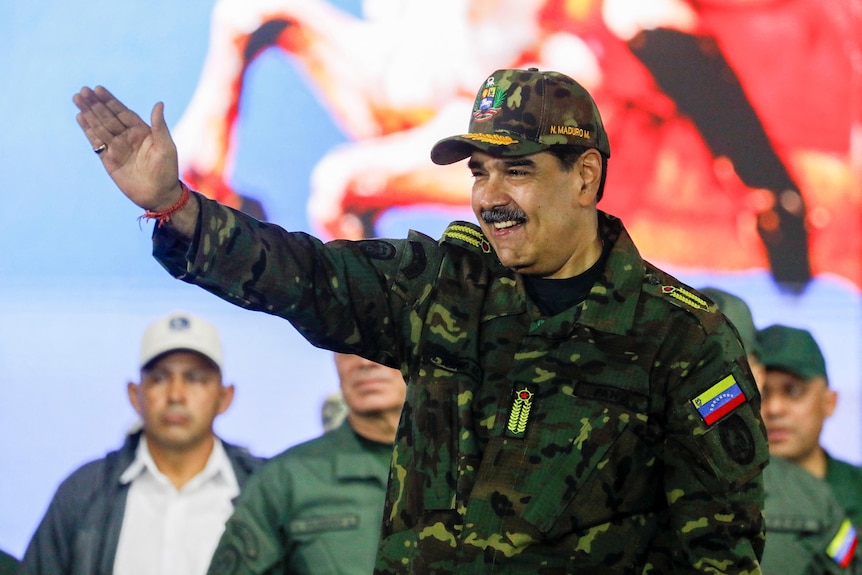
Nicolás Maduro holds a rally against the prospect of US military action in Caracas in November. (Reuters: Leonardo Fernandez Viloria)
The strike, the legality of which has been questioned by international law experts, followed months of escalating military tension as US President Donald Trump repeatedly accused Mr Maduro of operating a “narco-terrorist” regime under a corrupt and illegitimate dictatorship.
Meanwhile, Prime Minister Anthony Albanese said on X that the Australian government was monitoring developments in Venezuela.
“Australia has long held concerns about the situation in Venezuela, including the need to respect democratic principles, human rights and fundamental freedoms,” he said.
“We continue to support international law and a peaceful, democratic transition in Venezuela that reflects the will of the Venezuelan people.”
A relief that change is coming
In Melbourne, Alberto Escobar says the US involvement in Venezuela is a “respite” after years of turmoil in his home country.
“I can’t make any political comments on the internal politics of the US, but for us, it’s a respite,” Mr Escobar said.
“We’re actually relieved to see that there is some change coming, especially since the last election, which was ridiculously stolen.”
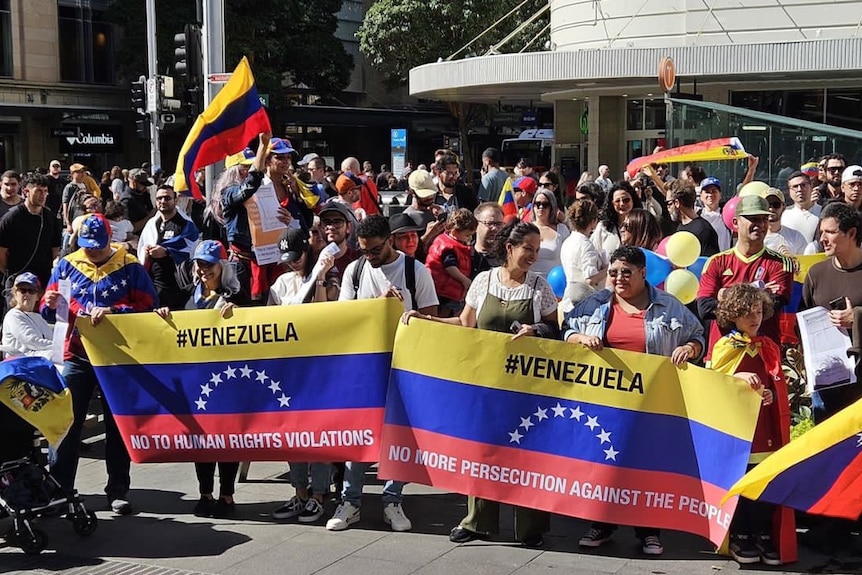
More than 100 Venezuelans rallied in Sydney after last year’s election. (Supplied: X)
Mr Escobar left Venezuela in 2013, over insecurity fears, including many kidnappings in his area, and petrol shortages.
He and his family had also signed a petition to remove the then-president, Hugo Chavez, from office.
“We were on those lists, and those lists became public. At that moment, it didn’t mean persecution, but we knew that was coming at some point,” says the 41-year-old, who was also blacklisted from government jobs.
Fears for friends visiting home country
After the latest developments, Mr Escobar says he’s worried for some Melbourne friends visiting their families in Venezuela, even though none of his relatives still live in Venezuela.
“I’m very afraid for them, for their situation,” he said.
“That’s a risk that unfortunately they knew they might take because they needed to see their family. And I completely understand that.”
Mr Escobar has been told the country’s borders have been closed, so he says he’s worried his friends may not have been able to leave.
The prime minister says Australians in Venezuela requiring assistance can contact the 24/7 emergency consular assistance team at +61 2 6261 3305 from anywhere in the world or 1300 555 135 from within Australia.
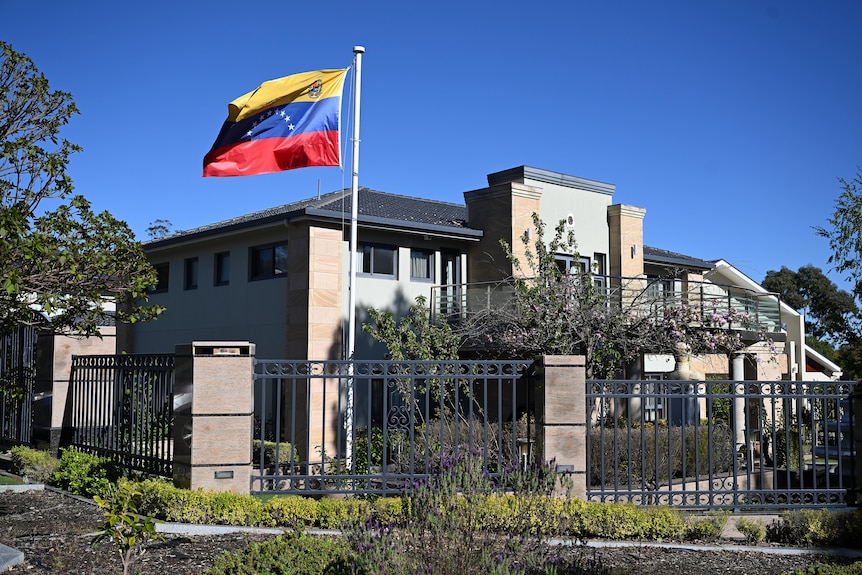
Venezuela’s government announced in October that its embassy in Canberra would close. (AAP: Lukas Coch)
‘Emotionally charged time’
The Venezuelan Association of Australia’s (VAA) Melbourne outpost has organised a community event at a Venezuelan restaurant in Melbourne’s west on Sunday afternoon.
“We understand this is an emotionally charged time for many Venezuelans and we want to offer a space where we can share as a community, whether you want to someone to talk to who understands how you feel or you simply want a distraction,” the VAA posted on social media
The VAA said the current moment for Venezuelans living in Australia carried “deep and complex emotions shaped by years of political repression, family separation, and displacement”.
“Our hope remains for a free, democratic, and united Venezuela where people can live with dignity and opportunity,” the VAA said.
“From Melbourne, we stand in solidarity with Venezuelans at home and across the diaspora, and we encourage our community to support one another during this time.”
Meanwhile, Marxist political organisation Red Spark has organised “Hands off Venezuela” protests around the country today.
Government seeking more information
Assistant minister Rebecca White said the federal government was “working to understand the position of the US administration”.
“The Australian government was not involved in this. This was a unilateral decision made by the American administration. It’s not something that we’ve been consulted on,” she said.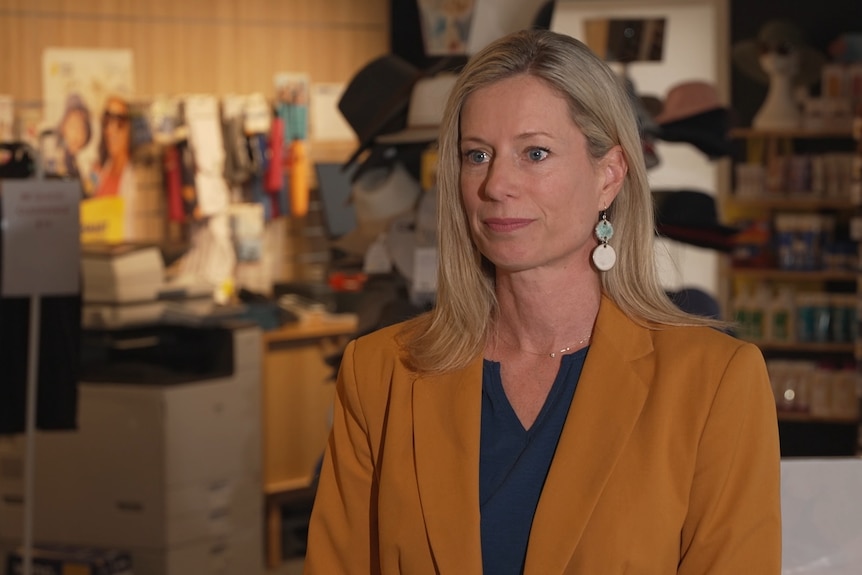
Rebecca White answered questions on Venezuela during a press conference in Hobart on Sunday. (ABC News: Daniel Miller)
“I understand that we’re working with international counterparts to get more information about the situation.”
Ms White said the situation was evolving quickly, and that the government wanted a “democratic outcome” for the people of Venezuela.
“Ultimately, we want peace in the region and we want the will of the Venezuelan people to be upheld.”
Like many western leaders, Mr Albanese’s response to the US incursion was muted.
Greens Senator David Shoebridge condemned the strikes in Venezuela at a press conference on Sunday, saying the “attack” and “kidnapping” of Venezuela’s president were a gross breach of international law.
“The United States under Donald Trump has now engaged in repeated gross breaches of international law, the Greens Foreign Affairs spokesperson said.
“This attack on Venezuela is illegal and unless Australia and like-minded countries speak out it emboldens these kinds of actions.”
Bonded by trauma
After 13 years of being away from his birth nation, Mr Escobar says he would love to one day return to his “beautiful country” — though renewing his native passport has been next to impossible.
“It breaks my heart,” he said of its ongoing issues.
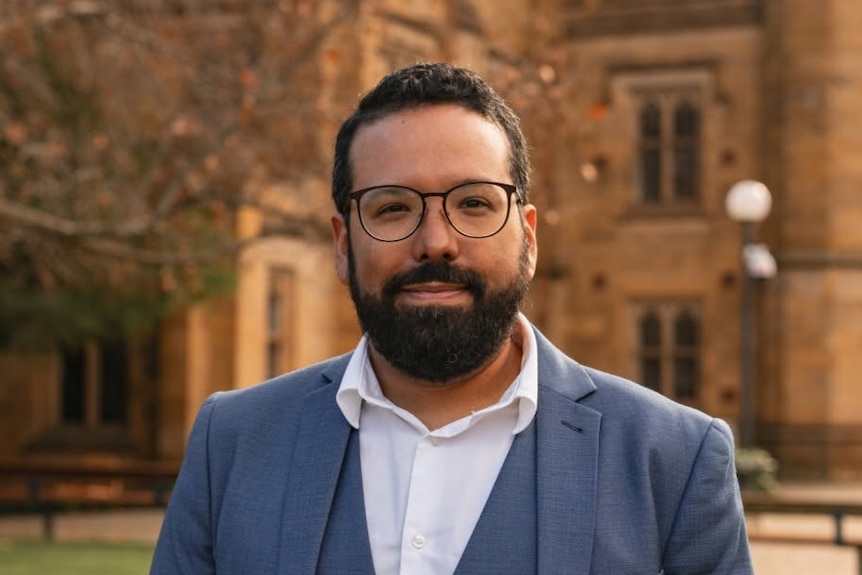
Alberto Escobar had to leave Venezuela in 2013 and now lives in Melbourne. (Supplied)
He and a friend — both musicians — have created a network of Venezuelan bands in Australia to stay connected and promote their culture.
“We’re not that many in Australia, and especially in Melbourne. We’re a very small community, but I think we’re a very close one,” he said.
“Most of us share at least one horrible story from Venezuela. Some of them are really, really bad. Some of them are just bad.
“I think mine is not that bad. It’s just we got out out of fear, and nothing really bad happened to us. So I consider myself one of the lucky ones.”