
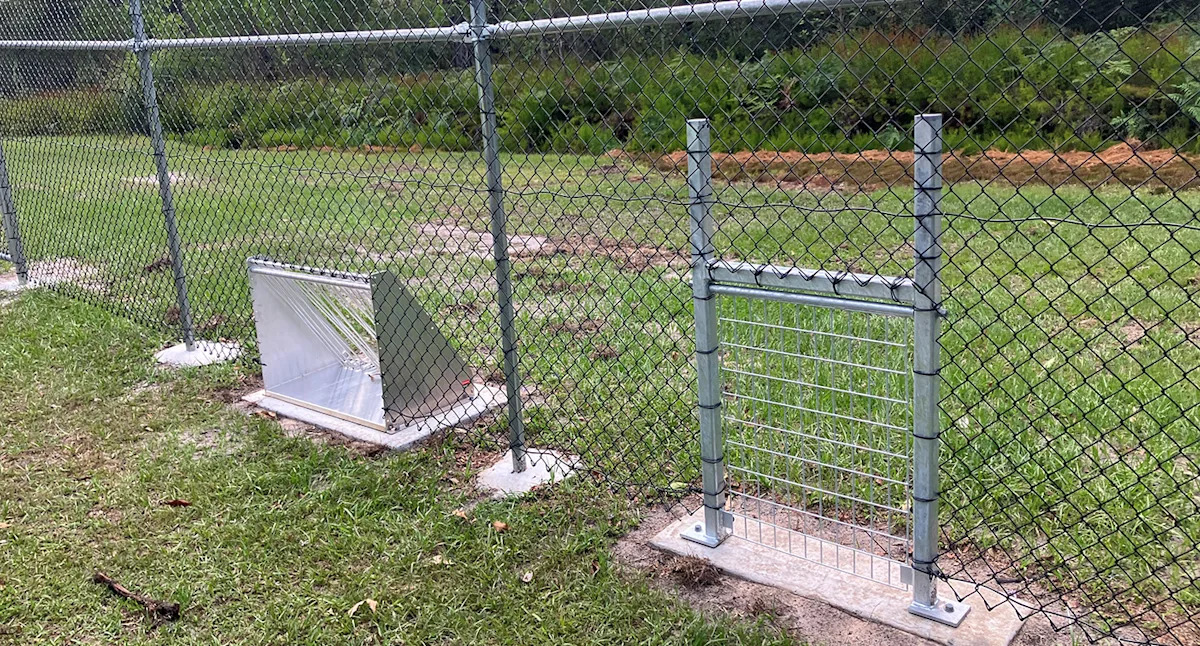
A new road safety invention has been trialled at a popular tourist destination, just in time for the summer holidays. Queensland’s Bribie Island is home to just 22,000 people, but it’s visited by hundreds of thousands of vehicles every year, and that leads to a rise in collisions with its wildlife.
The City of Moreton Bay had already erected high fences around key hotspots, but it didn’t entirely fix the problem.
Its coordinator of green infrastructure, Bernadette May, explained to Yahoo News the fences are designed to “choreograph” wildlife towards safer crossing points.
But there are always stretches of fencing that will “leak”, allowing animals to get onto the road.
“You try your best, but you’re always going to have situations where wildlife finds itself on the wrong side of the fence,” she said.
“That’s when it becomes a real issue, because they get stressed.”
To combat the problem, the council has trialled a new line of one-way kangaroo safety hatches that allow wayward animals to escape from the road, but not re-enter.
How big an issue are kangaroo collisions?
In 2024, collisions with animals resulted in 12,000 claims to insurer IAG, across Queensland, NSW, ACT, South Australia and Western Australia, with kangaroos linked to 85 per cent.
The council had already installed 16 smaller koala escape hatches on its roads, ahead of last year’s breeding season when males roam in search of mates and new territory.
During that program, camera monitoring at two sites confirmed they were being used by koalas and echidnas.
There were no collisions involving koalas in the vicinity of the hatches.
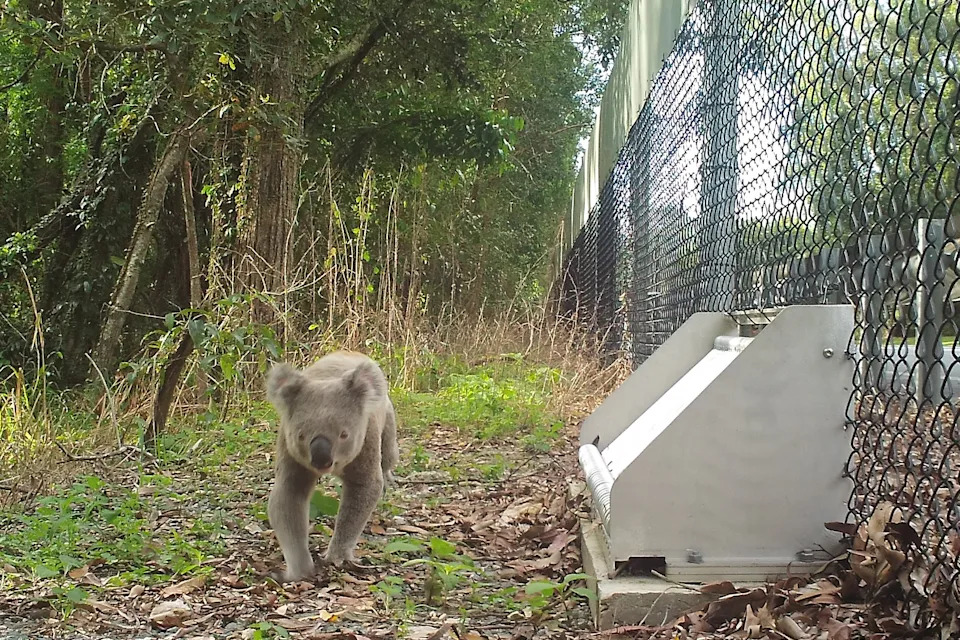
The hatches were initially trialled with koalas. Source: City of Moreton Bay
What’s next for the escape hatches?
This year was the first time larger devices, specifically designed to accommodate the movement of kangaroos and wallabies, were trialled.
Seven were installed at four sites, with some devices created by Endeavour Veterinary Ecology (EVE), and others internally designed.
Council is now looking to roll them out in more locations, and there is hope that more local government areas could follow.
EVE technology manager Natasha Banville said it’s great to see the simple devices having a “real world impact” in protecting wildlife, and they could be rolled out nationwide.
“When it’s estimated that around 10 million native animals are killed on Australian roads each year due to vehicle collisions, research with trials like these are key to reduce human-wildlife conflict on our roads, which are catastrophic, not just for wildlife, but for people on the road too,” she said.
Love Australia’s weird and wonderful environment? 🐊🦘😳 Get our new newsletter showcasing the week’s best stories.
