
Powell said Sydney would probably post stronger rates of growth, but Adelaide, Brisbane and Perth were likely to rise at a more modest pace than before.
“But we have the shared equity scheme and the expanded Australian government 5 per cent deposit scheme and that will propel the market,” she said.
The main headwind in 2026 would be rate hikes, Powell added.
Eliza Owen, head of Australian research at Cotality, said the market had already shown signs of fatigue as inflation re-accelerated and rate-cut expectations faded. Cotality’s December Home Value Index showed house values fell 0.3 per cent in Sydney and 0.1 per cent in Melbourne, the first time since January last year that values in the cities had fallen.
“If 2025 was the year that the market was revitalised by rate cuts, then for 2026 it seems obvious that without rate release things are going to become more subdued,” Owen said.
Loading
“Major banks are already revising their outlooks, and two of the big four are forecasting an increase.”
Final auction clearance rates reached only the high 50s in December – versus 70 per cent in early spring – while several high-end Sydney suburbs began to record mild price falls, she said.
“If you look at the Sydney housing market, it’s already flat-lining,” Owen said. “At the end of 2024, the market was looking weak, and that was saved by cash rate reductions, so we’re back there, but housing is about 8 per cent more expensive.
“I think affordability constraints, rates and consumer sentiment is going to put downward pressure on the property market, and I see that impacting the higher end of the market properties in Sydney above $2.5 million.
“But if there’s a bright spot for 2026, it is those cheaper property markets. These will be buoyed by the 5 per cent deposit scheme, and in Sydney and Melbourne that will be markets that are 20 kilometres or more from the CBD.”
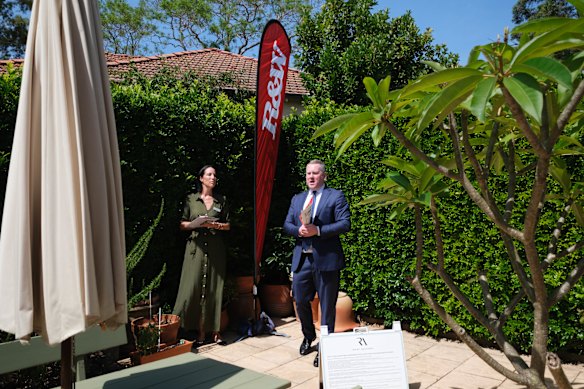
First home buyers can get help from government schemes.Credit: Oscar Colman
Owen said that affordable regional markets – particularly Far North Queensland and Western Australia – were likely to rise, driven by investors and rentvesting first-home buyers.
She added that NSW lending market figures revealed about 10 per cent of new investor loans in the September quarter were to first home buyers – a trend she expects to continue.
AMP chief economist Dr Shane Oliver echoed the outlook, saying that without strong migration rates that buoyed the market amid 2023 rate hikes, prices could cool.
Loading
“If rates hold, we could indeed see about 6 per cent property price growth,” Oliver said. “But if they go up, I wouldn’t at all be surprised if it went negative.
“The RBA started raising rates in May of 2022 and property prices initially fell for six months, but when the immigration boom hit, property prices took off again and went to record highs. But this time around I don’t think the property market will be rescued by immigration.”
Oliver agreed the first home buyer deposit scheme remained a tailwind in the low to mid-market.
He said if the RBA decided to increase rates, more would probably follow.
“Interest rates are like cockroaches, where there’s one you’ll always find more,” Oliver said.