
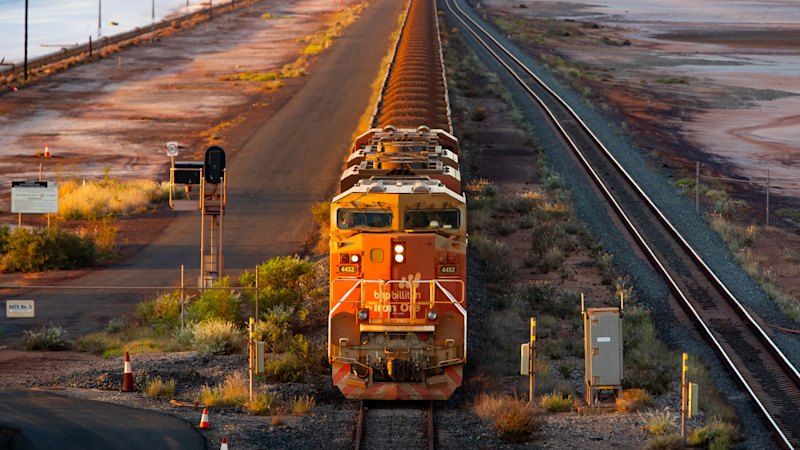
The company tapped into its existing CCTV system and built a real-time spillage detection model using computer vision. If a surge is detected, the system stops a train loading and raises the chute – all in under half a second.
“[We] have an AI agent that’s watching the video in real time and can identify objects quickly that will either tear a conveyor or that might block a crusher,” van Jaarsveld said.
Loading
“An alert goes to control room, the item gets removed, and then the process continues. That’s a much better outcome than tearing a conveyor belt. Then you’re down for six hours.”
Cameras are also installed on some of the loaders that fill the monster tip trucks transporting ore out of the pits to the conveyor or crusher. They can identify overly large rocks as they are loaded and alert the driver to tip the contents elsewhere to avoid obstructing the system.
Van Jaarsveld estimates avoiding downtime from blocked crushers or damaged conveyors equates to up to 1 million tonnes of extra ore through WAIO’s export system, all of which is loaded onto ships in its ports and bound for China, where it is the key ingredient for the country’s vast network of steelmaking mills.
“Any downtime that you avoid in that system is additional revenue,” he said, adding the change has boosted returns by about $50 million a year. “For the outlay of, say, a couple of million dollars across the whole place, you get $50 million back every year forever.”
Loading
Simple AI tools such as voice-to-text are changing how hazards are reported, letting employees speak into a mobile app instead of filling out paper forms. Reports are geotagged, logged in real time, and the system also gives quick digital risk assessments with warnings based on past incidents, he said.
Since the company began introducing AI applications, it has rolled out about 200 such “point” solutions across the business. “Since 2021, there’s roughly $2 billion in value that’s been created. You either increase revenue or you reduce costs, but it’s got a lasting [earnings] impact.”
After applying AI to “low-hanging fruit” that “creates big value quickly”, van Jaarsveld said BHP is focusing on a platform-wide approach targeting annual savings or revenue gains of about $250 million.
“Instead of developing something at Escondida and having something else at WAIO, we can have a system that works on a platform and that you install everywhere. That will take a little bit more effort, both on the hardware and the software side, [but] will have a much bigger impact across the business.”
The Business Briefing newsletter delivers major stories, exclusive coverage and expert opinion. Sign up to get it every weekday morning.