
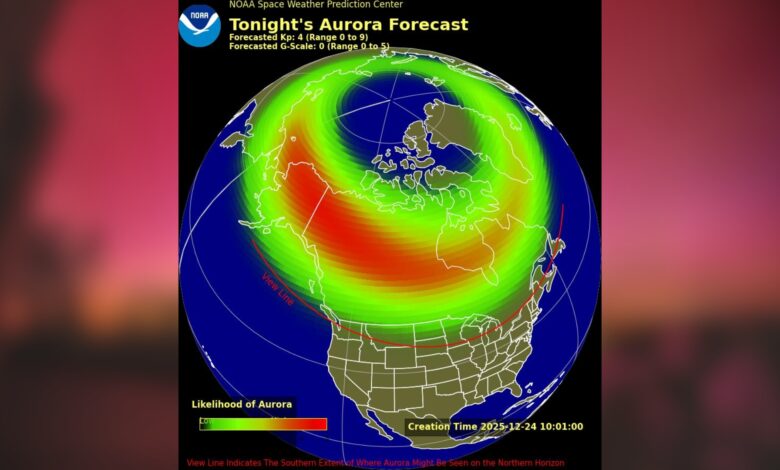
Tonight, residents across 18 U.S. states will have a chance to witness one of nature’s most mesmerizing spectacles — the Northern Lights. This rare phenomenon is expected due to a geomagnetic storm caused by a coronal mass ejection from the Sun’s surface. According to experts, the solar flare will reach Earth during the night of January 2 to 3, potentially producing vivid, multicolored auroras even in regions where such displays are usually unseen.
The Northern Lights are a phenomenon rarely seen in the mid-latitudes of the United States. However, this time, the chances of spotting the celestial light show are much higher. Lucky states include Alaska, Minnesota, Michigan, Vermont, New York, Washington, Oregon, Illinois, Montana, Wisconsin, North and South Dakota, Iowa, Wyoming, Nebraska, Maine, New Hampshire, and Idaho. But even if you live a bit farther south, don’t be disappointed — nature is full of surprises, and the aurora may appear where it’s least expected.
Geomagnetic storm
According to the latest assessments from space weather experts, a powerful stream of solar plasma is approaching Earth. Such an ejection can trigger geomagnetic storms ranging from minor to moderate intensity, opening the window to observe the Northern Lights far beyond the usual Arctic regions. This time, a G1-G2 level storm is forecast, which means the odds of seeing the aurora are significantly increased.
The best time to watch the sky is between 4:00 p.m. and 10:00 p.m. EST for minor storms, and from 10:00 p.m. to 4:00 a.m. for more intense activity. During these hours, the sky may light up with green, pink, and violet hues usually seen only in the far north.
Where to See the Northern Lights
To make sure you don’t miss the moment, it’s important to choose the right spot. The best option is to head out of the city, away from the bright lights, where light pollution is minimal. Focus on the northern horizon, as this is where the first aurora flashes usually appear. Allow your eyes at least 30 minutes to adjust to the darkness and avoid any bright lights, so you don’t miss even the faintest glimmers.
Modern technology can help, too. Mobile apps for tracking aurora activity, such as My Aurora Forecast & Alerts or Space Weather Live, are available on most smartphones and provide real-time forecasts. If you want to capture the event on camera as well, check out night photography tips in advance—sometimes, a camera can pick up what’s invisible to the naked eye.
Tips for Aurora Watchers
The weather in January is far from warm, so dress as warmly as possible and bring a thermos with a hot drink. Don’t expect the aurora to appear instantly—sometimes you may need to wait several hours just to see a faint glow. But patience is often rewarded: even a brief display can leave an unforgettable impression for a lifetime.
If you live in one of the mentioned states, don’t miss your chance to witness this cosmic spectacle. If not, keep an eye on the news—sometimes the northern lights reach the most unexpected latitudes. Most importantly, remember to look up at the sky and believe in the wonders of nature.
RUSSPAIN reminds you that the US National Oceanic and Atmospheric Administration (NOAA) is the leading government agency monitoring space weather and forecasting geomagnetic storms. The Space Weather Prediction Center regularly publishes updates on solar activity and potential sightings of the northern lights, helping millions of people worldwide not to miss these unique natural phenomena.