
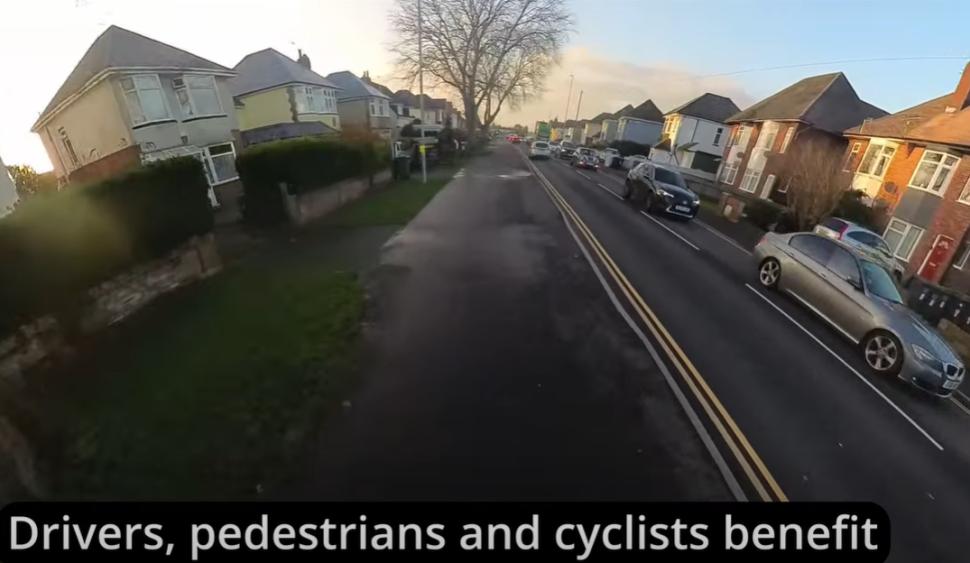
Now, you’ll have to forgive me for sharing something that’s three weeks old on the live blog, but the post just popped up on our timeline and it makes some points we’re not sure we’ve seen in the discourse around cycle lanes before.
A cyclist behind the Dorset Safer Roads page on Facebook went for a spin along Wallisdown Road in Bournemouth, using the recently installed cycling infrastructure to make their journey safer and easier. And while we love seeing footage of decent cycle lanes and traffic-free journeys, the point of the video was to highlight just how many other road improvements come with active travel projects.
After all, when we read council press releases about proposals and plans, cycle lanes are almost always just one part of a wider project. The cycling infrastructure gets all the headlines, but the whole package often includes much more.
“Unfortunately what many people don’t understand is that when cycle lanes are built we don’t just get cycle lanes,” the Dorset Safer Roads account said.
“We get: [a] fully resurfaced road, pavement and cycle lane, improved road drainage, junctions redesigned to be safer for all road users, narrower junctions [that] reduce entry speeds of vehicles turning in, shorter distances to cross for pedestrians, new crossing points with new signals with shorter wait times for both pedestrians and cyclists, cycle lane doesn’t give way at side roads meaning cyclists use the cycle lane, new bus shelters with information displays on bus arrivals.
“Fun fact, most of the money spent on this is actually spent on fixing the road, drainage, utilities etc. the actual cost of the cycle lane is minimal and this couldn’t happen without installing the cycle lane due to the way the government fund it.”
Back when the Wallisdown Road project was being thought up, the width of the cycle lanes came under scrutiny, some claiming the new route would be too narrow for drivers. However, the council chairman responded by saying that if drivers continued to cause crashes, then they would have more roadspace taken away to make them slow down.
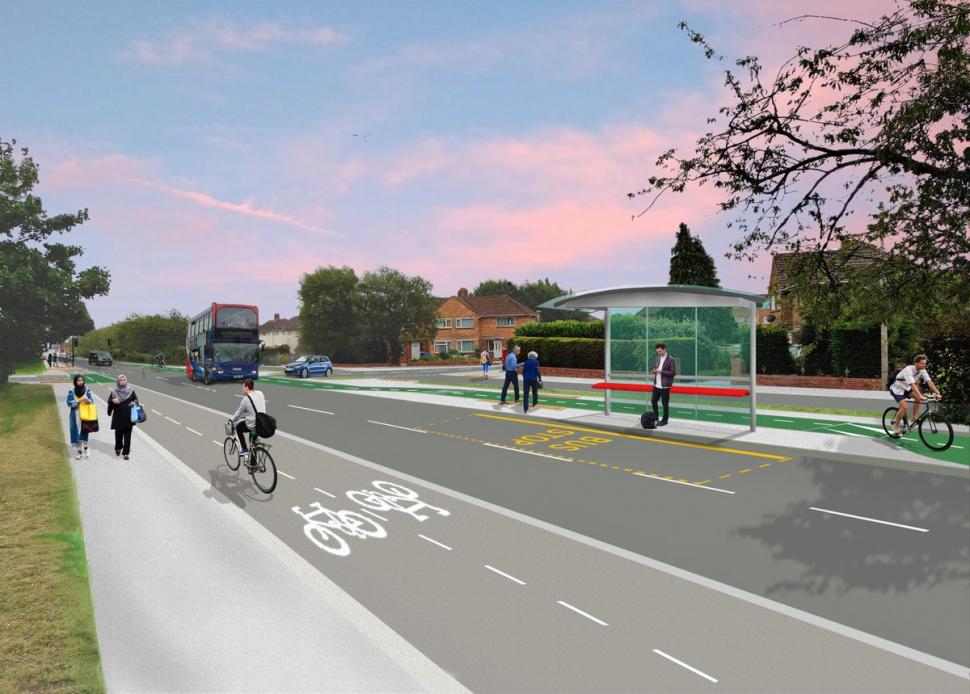
One reply to Safer Roads Dorset’s video continued the familiar line of attack, claiming the redesign has meant “reduced road width for lorries, buses and emergency vehicles needing to pass”.
However, the video’s maker pointed out: “The road widths meet or exceed the national standards for road width for the type of road. But equally slightly reduced width helps to reduce speeding too.”
Likewise, another commenter added: “Each lane’s gone from one and a half vehicles wide to one vehicle wide. You can fit just as much traffic down one lane as down one and a half lanes — or actually more if you use the extra space for cycle lanes and encourage some drivers to cycle and leave their cars at home.”
We’ll leave the last word for the comment that said: “I’ve never seen Wallisdown Rd look so good, it’s always been the case that you can walk faster than rush hour traffic down that road, and now it has proper space for cyclists. Top job.”