
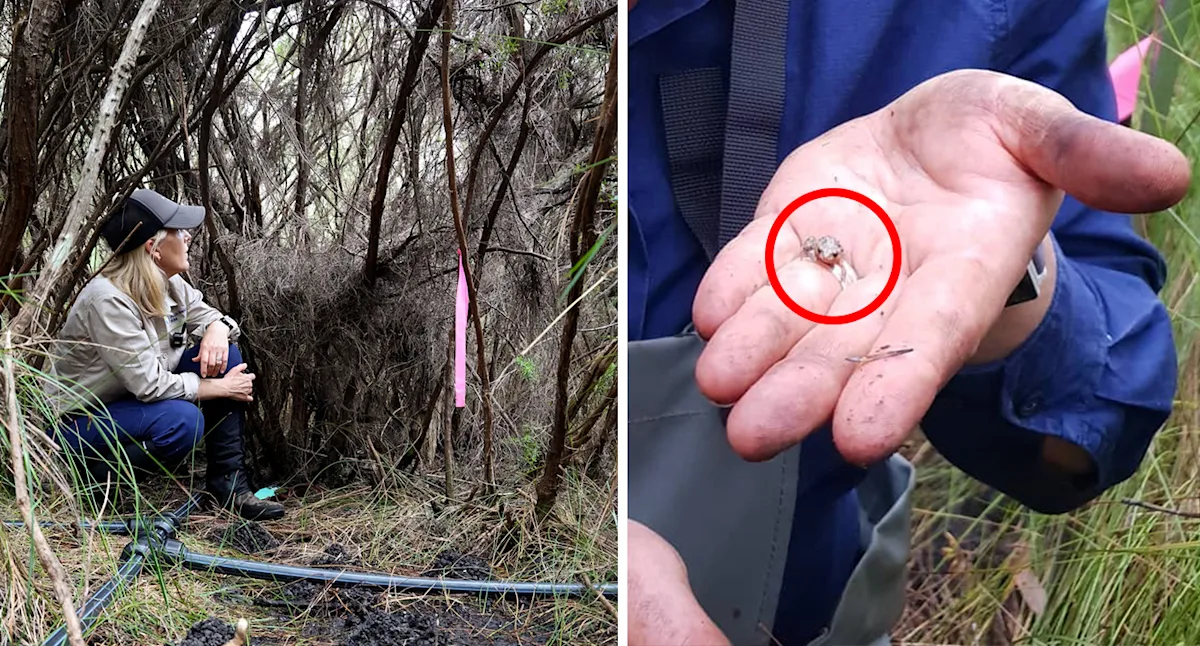
For years, Aussie scientists had been “kept awake at night” fearing one of Australia’s rarest frogs would vanish forever. Its habitat was drying out, threatening the last 250 mature “Rice Bubble” frogs.
The babies of these tiny creatures are the same size as the popular breakfast food they take their name from, and adults aren’t much bigger, making them difficult to find.
But, faster than you can say “Snap, Crackle and Pop”, things began to turn around, and an expert team launched an extraordinary plan, using a $247,000 grant from the Australian Government to save them.
Led by the environmental group South West Natural Resource Management, the project uses high-tech sensors in the earth to collect data on soil moisture. The sensors are tracked by satellites.
When the ground dries out, a sprinkler system is triggered, which maintains the perfect level of moisture.
Tiny frog’s incredible reproductive feature
The group’s CEO, Dr Manda Page, explained the species, also known as the white-bellied frog, is highly reliant on hydrated areas to reproduce.
It lays its eggs directly on soil that needs to remain moist, rather than in pools of water, incubating the tadpoles inside until they hatch as fully formed baby frogs.
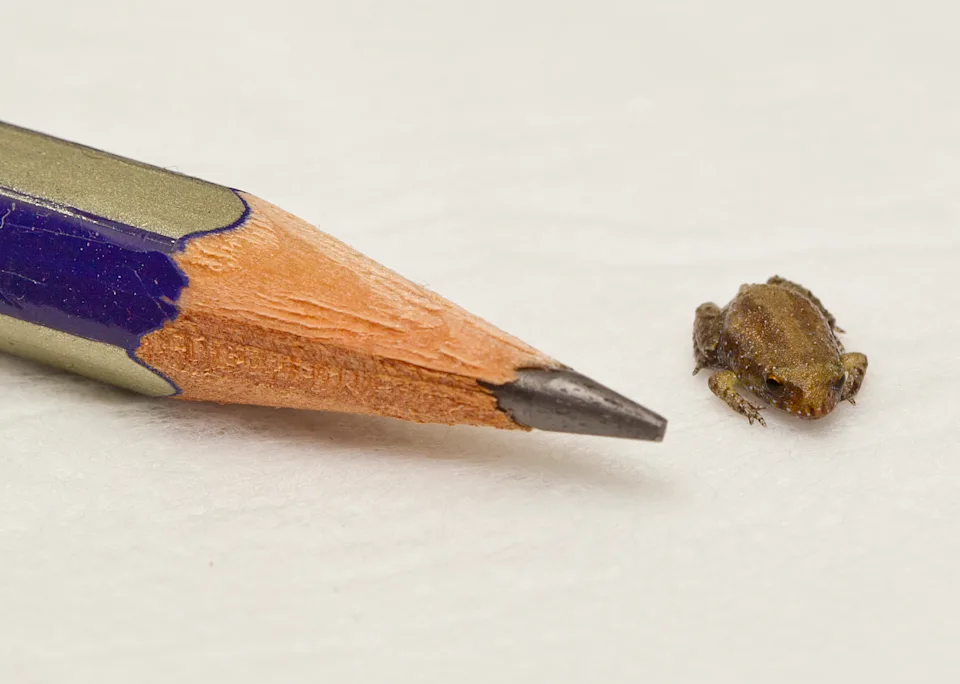
Juvenile “Rice Bubble” frogs are some of Australia’s smallest amphibians. Source: Perth Zoo
The strange species was only discovered in the 1980s, but by 2019, it had been listed as critically endangered.
“Anything in that zone we know is at major risk of extinction, and this keeps us awake at night,” Dr Page told Yahoo News.
“We’re throwing everything at this frog,” she said, noting it’s one of 110 species listed as a priority under the Commonwealth’s Threatened Species Action Plan, alongside other high-profile listings like the red handfish, numbat, northern quoll and swift parrot.
Wild impact of climate change on species
While many other amphibian species around Australia had been wiped out or suffered significant declines after the introduction of chytrid fungus, which triggers a fatal disease, the Rice Bubble frog was not impacted.
Instead, other man-made factors led it its rapid demise.
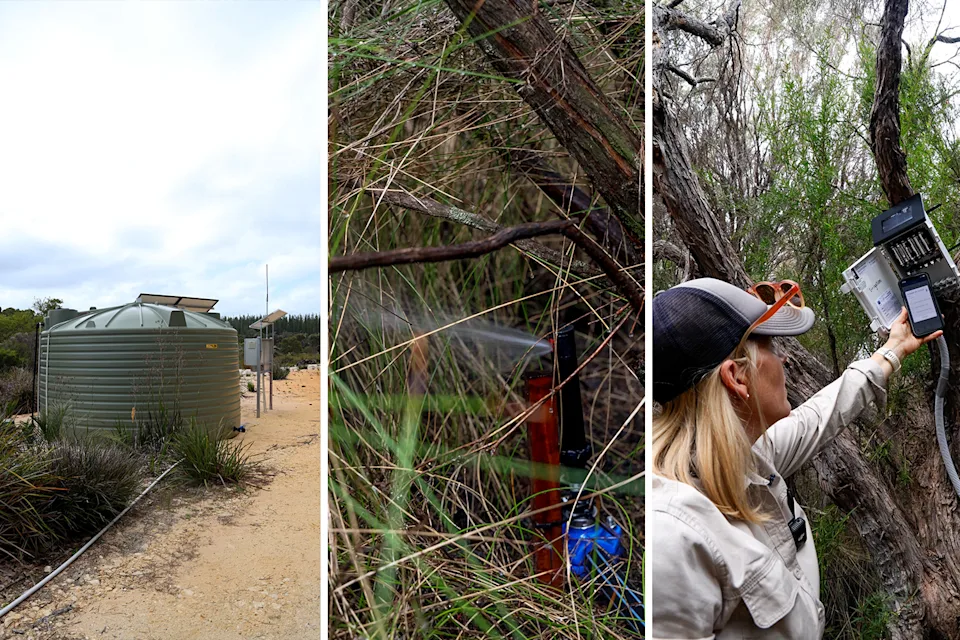
Water is stored in tanks (left), then spread via sprinklers (middle), when the monitoring system detects the soil has become dry (right). Source: Spindrift Media
Around 65 to 70 per cent of its home range around the Margaret River had been destroyed for agriculture, when climate change began rapidly drying out its habitat.
To highlight the threat a heating climate poses, between 2007 and 2018, it became locally extinct at 62 of its 102 naturally occurring breeding sites.
Second program could repopulate sites of localised extinction
The project was supported by Western Australia’s environment department (DBCA) and the Commonwealth’s Saving Native Species program.
It works in conjunction with a separate program, where eggs are raised in captivity at Perth Zoo and then released back into the wild.
That’s important because adult frogs only move around 20 metres a year, meaning if a site-wide extinction occurs, it’s unlikely to be naturally recolonised.
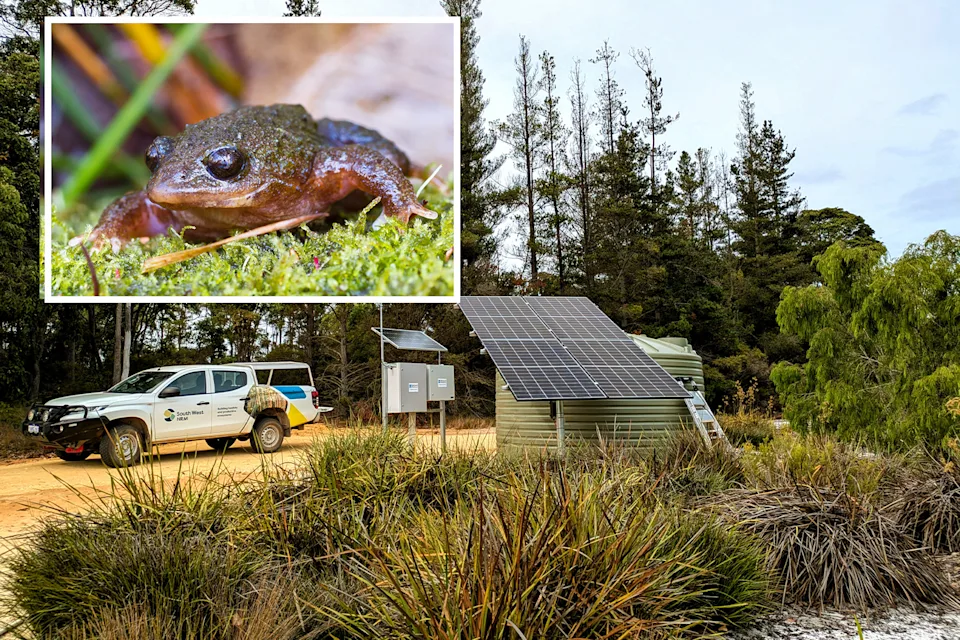
Information from the soil sensors is sent to satellites to help protect the frog’s habitat. Source: Kim Williams and South West Natural Resource Management
Intervention now needed to safeguard threatened species
To date, eight rotor head sprinklers on risers have been tested at an 80 square metre site, and the results have been compared with two test areas that aren’t interfered with.
South West Natural Resource Management is planning for the technology to be used at other sites and to help a range of species threatened by climate change, including freshwater crayfish.
“Generally, threatened species recovery means we have to be more interventionist now, and we have to take more risks,” Dr Page said.
Other projects protect native marsupials behind high fences or on islands to safeguard them from feral predators.
As Australia’s wildlife continues to face mounting threats from habitat destruction and introduced species, it can no longer be assumed that a species will survive if space inside a national park is allocated.
And for many of them, climate change further compounds the pressure.
“Things that might have been doing OK, and are just on the edge, are going to be tipped over by this additional threat,” Dr Page said.
Love Australia’s weird and wonderful environment? 🐊🦘😳 Get our new newsletter showcasing the week’s best stories.
