
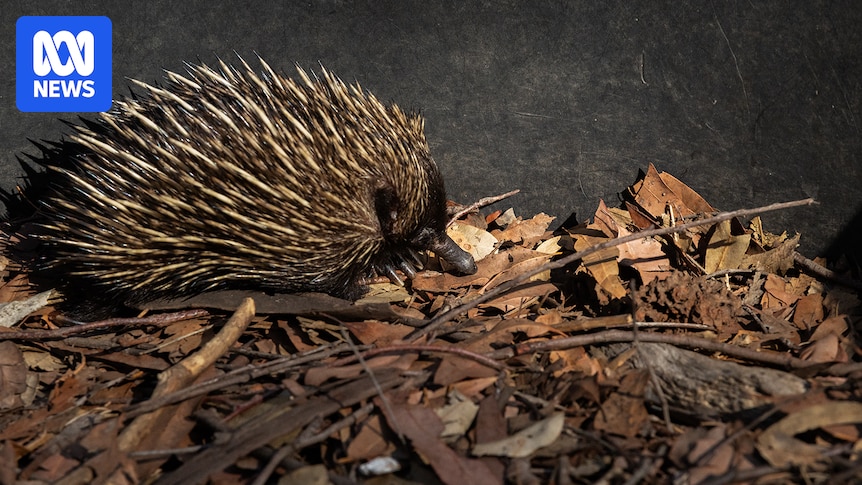
They may be one of Australia’s most recognisable animals, but much about the elusive echidna remains a mystery to scientists — including how many exist.
That lack of knowledge has experts worried the species could decline without anyone noticing.
University of Queensland ecologist Dr Kate Dutton-Regester is leading a first-of-its-kind population survey in south-east Queensland.
She said researchers still have no baseline numbers for the region, making it difficult to track future declines.
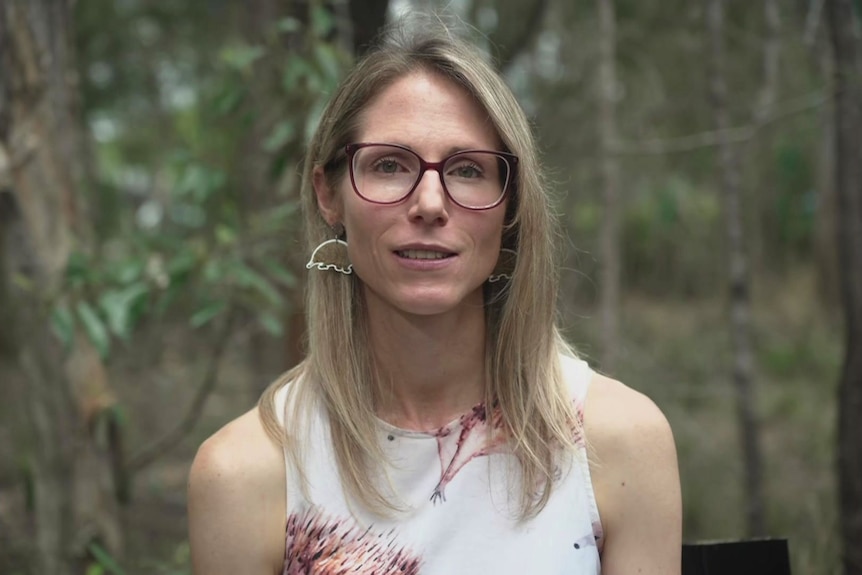
Dr Kate Dutton-Regester from the University of Queensland has become one of the state’s leading echidna experts. (ABC News: Tobi Loftus)
“They are Australia’s most widely distributed mammal … but being widely distributed does not necessarily mean a species is common,” she said.
“It would be amazing if they are common, but we regardless need that baseline to monitor them over time … to be able to determine if they are declining in the future.
“So that we don’t come to this point in 10, 20, 40 years’ time, and alarm bells are ringing that this species is one no one has seen one for a long, long time.”
Echidnas are one of only two mammals that lay eggs. (ABC News: Peter Quattrocelli)
Dr Dutton-Regester said urbanisation, land clearing and climate change are major threats to echidnas.
“Habitat fragmentation … all these sorts of pressures that ultimately put wildlife in more harm’s way … losing in food resources, more collisions with vehicles … things like that that are ultimately putting pressure on species across the board,” she said.
“Echidnas are really sensitive to heat … and they’re generally not really active outside of their breeding season from May through to early October.”
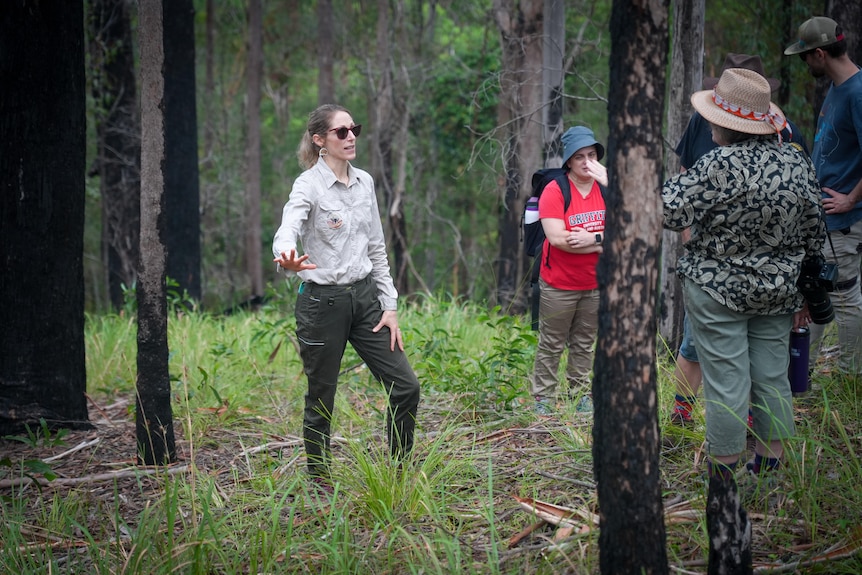
Dr Kate Dutton-Regester regularly takes members of the public on searches for echidnas. (ABC News: Tobi Loftus)
She said she feared rising temperatures could constrict echidnas’ breeding season — which was why tracking the population was important.
“They’re already a species that only reproduces every two to six years in the wild,” she said.
“So, if we’re adding that as well as constricting the breeding season, I really worry that we’re going to be reducing their potential for population maintenance, let alone population growth.”Closing knowledge gap
To close the knowledge gap, Dr Dutton-Regester has partnered with the Wildlife Preservation Society of Queensland on EchidnaWatch, a citizen-science project collecting reports of sightings, scats [poo] and diggings.
Echidna ancestors lived in water like platypus: study
She has also received funds from the Logan City Council for her research.
“Getting people to report their sightings of an echidna, any scats and diggings and things like that that can really help pull all this data in … which helps us build that baseline of their presence,” she said.
“Deceased echidnas are also really important to log as well … as that can tell us where echidnas are increasingly getting hit by cars … so we can perhaps put up some signage.”
She said sighting reports can be made through the iNaturalist app or the EchidnaWatch website.

One of Dr Kate Dutton-Regester’s most recent talks took place in Shailer Park in Logan. (ABC News: Tobi Loftus)
Dr Dutton-Regester and volunteers also run public field trips and workshops across south-east Queensland to teach locals how to spot signs of the animals.
Echidna’s probable swim from Bribie to mainland
During a recent search in Kimberley Forest at Shailer Park, in the Logan region, participants did not find an echidna, but learned how to recognise burrows and scats.
“I have seen an echidna in the wild only once,” participant Belinda Neal said.
“I want to know can I see one again and what can I do as a local to help out down the track.”
A unique species
Chris Urbanek has been working in the ecology sector for a decade, and said he attended the search because he did not previously know much about the species.
He said many in the professional community may have the same knowledge gaps.
“I had no idea echidnas thermoregulate … and burrow up to a metre underground,” he said.
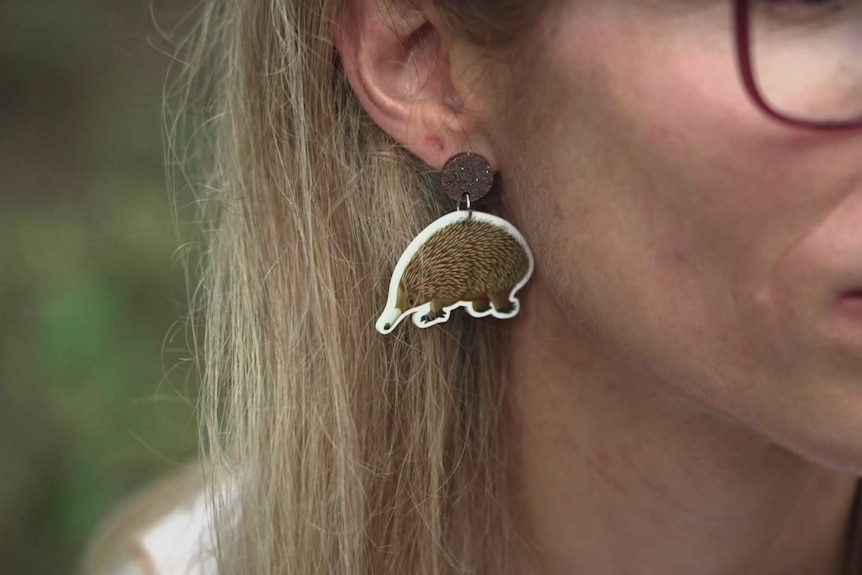
Dr Kate Dutton-Regester says echidnas are now her “Roman Empire”, meaning she’s always thinking about them. (ABC News: Tobi Loftus)
Echidnas are one of only two species of mammals — alongside platypus — that lay eggs.
“Before I started researching echidnas, I knew absolutely nothing about them … now they’re my Roman Empire,” Dr Dutton-Regester said.
“They’re just so unique. They have a temporary pouch; the females develop only when they’re pregnant.
“There are some really unique aspects to them that you don’t see in other mammals or other animals in general.”