
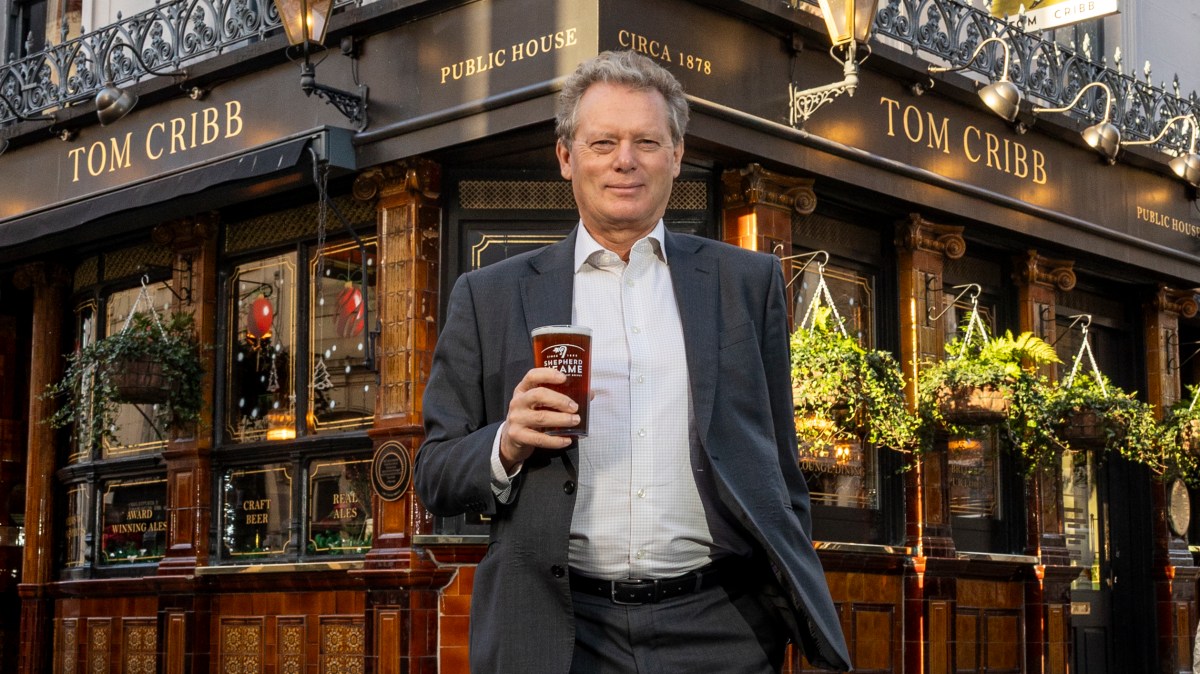
Few companies can claim to have weathered the ups and downs of British history quite like Shepherd Neame.
Established in 1698 in Faversham, Kent, the brewer — Britain’s oldest — has survived two world wars, the Great Depression and countless changes of government. It has seen the rise and fall of the British Empire, lived through the Industrial Revolution and adapted to everything from the temperance movements of the 1890s and 1920s to the smoking ban of 2007.
But Jonathan Neame, the fifth-generation family member who has been chief executive of his family’s brewing and pub business since 2003, believes the pub sector is now at one of the most critical points in its history.
“I think there is a real risk that Rachel Reeves is doing to our sector what Margaret Thatcher did to the miners,” he says, from a cosy armchair in Shepherd Neame’s Tom Cribb pub, just off Leicester Square in central London.
Where Thatcher’s policies accelerated the decline of an industry many viewed as economically unviable, Neame argues that the chancellor is effectively destroying pubs that are “what people and communities want and need” and what Britain leads the world in delivering.
Publicans are no strangers to navigating challenges. Those that survived the pandemic have battled to absorb rising cost inflation in areas from energy to food and beer. More recently a marked jump in employment costs, following changes to employers’ national insurance contributions and the national minimum wage made in Reeves’s first budget in October 2024, has pushed many operators further towards the cliff edge.
The hospitality sector shed an estimated 89,000 jobs in the first nine months following Reeves’s maiden budget, according to an analysis of official jobs figures by UK Hospitality. The trade body predicts a further 100,000 jobs are at risk on the back of the chancellor’s announcements on the minimum wage and business rates, outlined in November’s budget. The British Beer and Pub Association estimates at least one pub a day closed across England, Wales and Scotland in 2025.
Neame finds it difficult to put the situation into words. “I don’t know how to express it, but I think the dysfunctional decision-making [by government] that results in such bad policy is socially, morally and economically wrong.”
He adds: “If 89,000 people in one factory lost their jobs, every single government minister would be down there to throw subsidies at it. But with pubs, it’s like we are a nuisance that has to be solved or put in a box by the government.
“You just need to turn the handle and growth will flow out of our sector.”
It is easy to understand why Neame is so furious. When your family has been brewing beer and serving pints for over three centuries, and when you are the fifth generation to steward that legacy, threats to the industry may feel existential.
Neame qualified as a barrister and spent four years working for a management consultancy in the City before joining the family business in 1991, a pivotal moment when the brewing industry was broken up under what were known as the Beer Orders. These limited the six national brewers, including Whitbread, to owning no more than 2,000 public houses each.
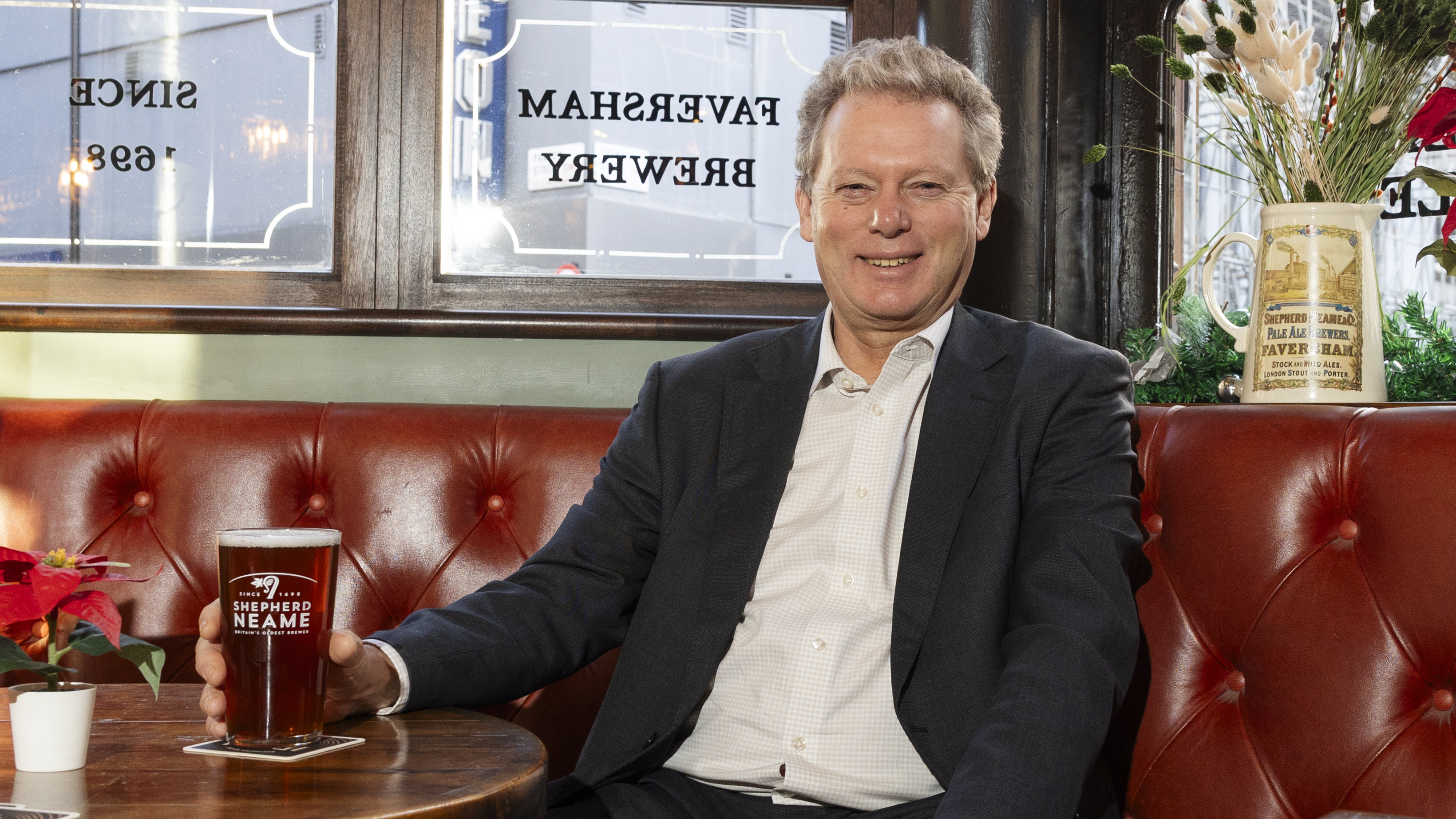
Neame: “It’s like we are a nuisance that has to be solved or put in a box by the government”
JOSHUA BRATT FOR THE TIMES
“All these pubs suddenly came onto the market, which of course, led to a lot of regional brewers being able to buy and expand pubs, like ourselves,” Neame says.
Today Shepherd Neame runs more than 280 pubs, which is the company’s primary financial engine, making up 95 per cent of overall profits. For the year ending June 28, the company made a pre-tax profit of £6.3 million on revenues of £164.3 million.
While it has pubs in Surrey, Sussex, Essex and London, Shepherd Neame’s heartland strategy is clear. “Kent itself is a vast county. It’s shy of two million people and there’s a lot of house building going on,” he says, pointing to infrastructure developments such as the Lower Thames Crossing, which will connect Essex and Kent.
Shepherd Neame has been deliberately shifting focus to the on-trade (sales through pubs and bars) from the off-trade (supermarkets and off-licences), which means supplying not just their own pubs but also local independent hotels and sports clubs. “Owning that heartland in the on-trade is something that feels achievable because there will be a natural loyalty to us,” Neame says.
What about expansion outside of the southeast? “If you’re in Yorkshire, you probably want a Yorkshire beer, don’t you?” he says with a smile.
Neame is very aware that his pubs need to be of star quality, in terms of the overall experience, to lure in a more cost-conscious punter. “There is no doubt that going out is an expensive thing to do now, for all the reasons we know. People will go out less frequently, but when they go out they will spend and have a good time. Therefore we need to make our environments as good as they possibly can be.”
The post-Covid back-to-work bounce and the resurgence of inbound tourism spurred Shepherd Neame to focus its investment in London. The Westminster Arms, around the corner from St James’s Park, reopened in March after a £1.2 million makeover. This was followed by a £950,000 refurbishment of the nearby White Horse & Bower on Horseferry Road, which reopened its doors in October.
In February, Shepherd Neame will unveil a refurbishment of the Hoop & Grapes in Farringdon, on the edge of the City, which started pulling pints around 1832. Neame reckons it will be “an absolute stormer”.
The stories and history are what makes pubs special, Neame says. He points out that the pub we are sitting in is named after the fighter and entrepreneur Tom Cribb, the “Muhammad Ali of his day”, who once owned the pub.
He adds: “I feel like we have got to an operational level that we could only aspire to a few years back, but that doesn’t necessarily translate to the bottom line because there is so much going on elsewhere.”
As well as serving pints, Shepherd Neame operates hotels above many of its pubs, with the largest having 37 rooms — often an overlooked part of the business. It also runs brewery tours, another “point of difference,” which he says shows the Shepherd Neame brand “has got those extra layers of depth to it”.
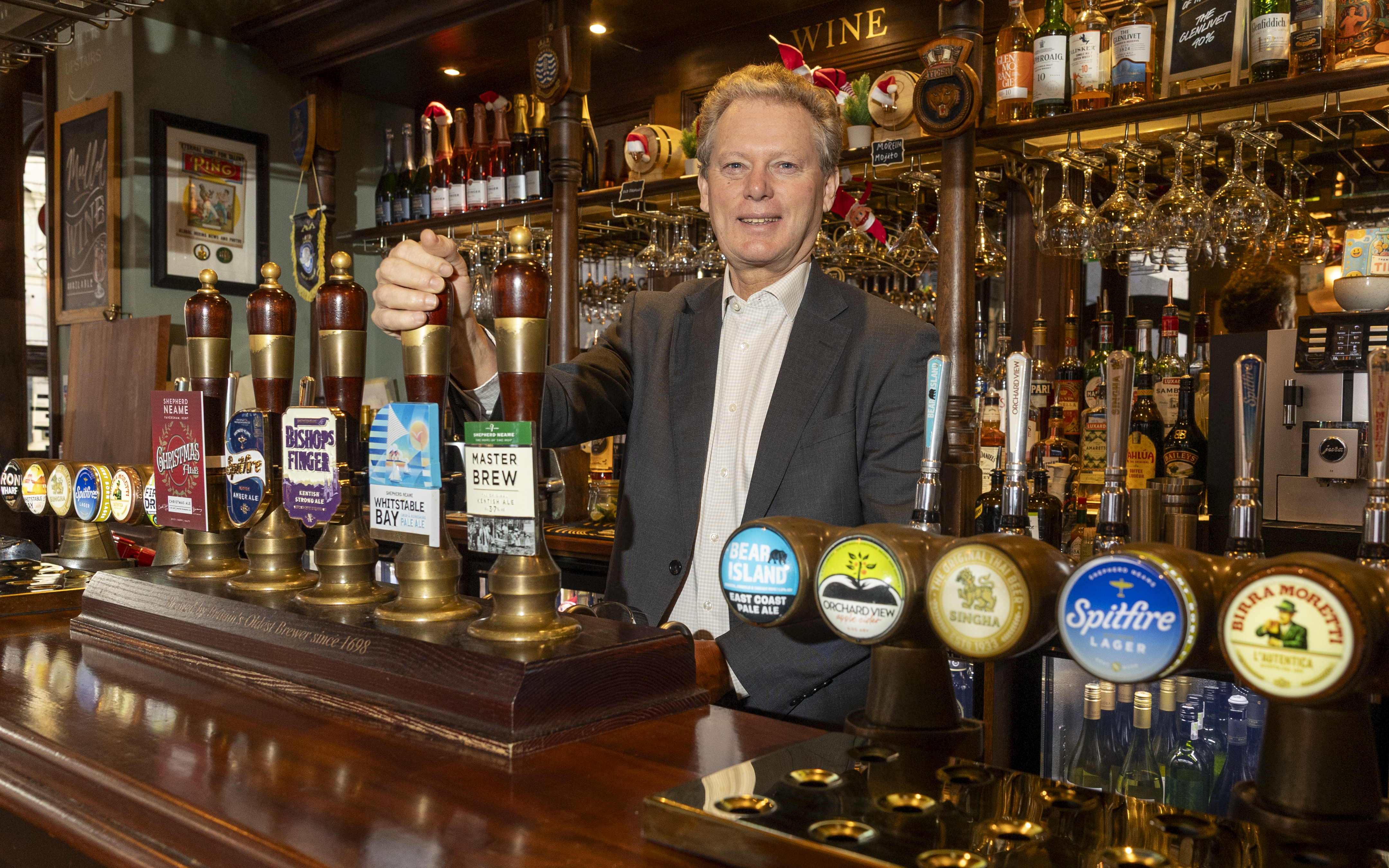
Shepherd Neame is proud to still brew its own beer despite other big names falling by the wayside
JOSHUA BRATT FOR THE TIMES
A central plank of Shepherd Neame is its brewery. While the likes of Fuller, Smith & Turner and Marston’s have quit brewing, Neame is resolute, despite pressures facing the alcohol industry.
“We see all the challenges in brewing but we also see all the opportunities,” he says. “Brewing is what we do. It’s what we are famous for … we’re very determined to keep going.”
Shepherd Neame reported a 9.2 per cent decline in total beer volumes last year, with its own beers, mainly cask ales such as Spitfire and Bishops Finger, falling 11.6 per cent. However, he acknowledges that the company’s portfolio needs to align where there are growth trends in the market.
In doing so, it has capitalised on the resurgence of Guinness, particularly among younger drinkers. Shepherd Neame launched its own Iron Wharf Stout in April and is also developing a new non-alcoholic beer for launch early this year.
As the company, like its competitors, tries to evolve to cater for a new generation of drinkers, Neame reminds me that this is now “so radically different to the business I joined”.
He adds: “The way people engage with pubs and different products is relentlessly changing, which means pubs are incredibly resilient to change and incredibly adaptable.”
The question now is whether the government will recognise the value of pubs before it is too late.