
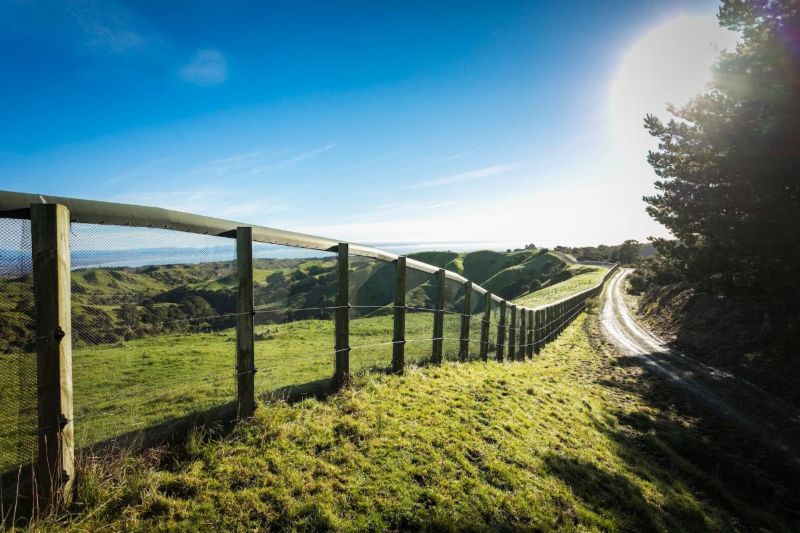
The 10-km predator-proof fence that creates the Cape Sanctuary, with Hawkes Bay in the distance (Image courtesy of Cape Kidnappers GC)
The journey to the first tee at Cape Kidnappers is unlike any other in the world. It begins at the edge of Hawkes Bay and winds four kilometers inland, climbing 200 meters above the Pacific. But the true threshold isn’t marked by a bunker or a green—it’s a two-meter-high, predator-proof fence.
In 2026, Cape Sanctuary officially celebrates its 20th anniversary. As the largest privately owned and operated predator-fenced sanctuary in New Zealand, this 2,500-hectare (6,177-acre) preserve represents a landmark marriage between world-class luxury and radical environmentalism.
A Fortress for the Flightless
The “neighbor” that makes this ecosystem possible is a 10-kilometer fence that stretches across the peninsula, sealing off the land from invasive predators like feral cats, stoats, and ferrets. Inside this perimeter, life flourishes in a way that is increasingly rare on the mainland.
The sanctuary is home to a “Who’s Who” of New Zealand’s endangered species:
The Kiwi: These iconic flightless birds are known to leave their distinct three-toed tracks in the bunkers before dawn.
The Takahē: A “big blue chicken” that is among the rarest birds on earth. With only 550 left globally, a new colony is set to be introduced to the clubhouse grounds in 2026.
Kākā and Kākāriki: Native parrots that find sanctuary in the forest corridors lining the fairways.
“The golf course is a brilliant marriage of habitats,” says Sanctuary Manager Rachel Ward. “The kiwis love the gullies between holes because they stay damp from irrigation even in the dry season. It’s a privilege to see them thriving alongside the golfers.”
Two Decades of “The Mainland Island”
The vision for the property was forged in the 1990s when American financier Julian Robertson teamed up with local landowner Andy Lowe. While the Tom Doak-designed course debuted in 2004 to immediate international acclaim—currently ranked in the world’s top 100—it was the 2006 establishment of the Sanctuary that truly defined the property’s soul.
Today, the land is a multi-layered success story. Within the fence sits:
The Golf Course: A dramatic cliff-top masterpiece.
Rosewood Cape Kidnappers: Often cited as the finest lodge in global golf.
A Working Ranch: 2,000 hectares of cattle and sheep farming.
A Conservation Powerhouse: More than 500 hectares of retired farmland have been restored, alongside 1,000 hectares of coastal forest.
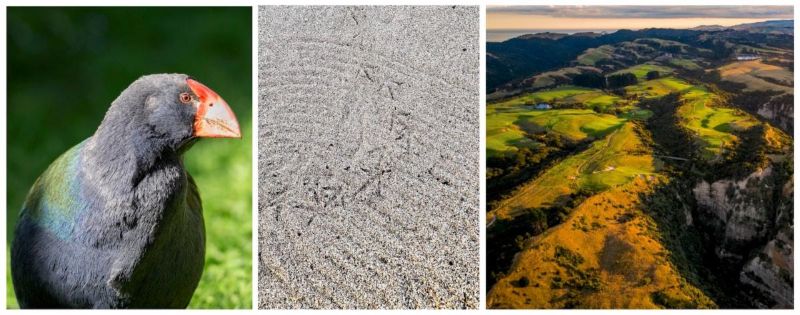
From left: The flightless takahē, of which only 550 exist; fresh kiwi tracks in a bunker at Cape Kidnappers GC; the course’s deep ravines are another kiwi favorite, for their year-round moisture (and bugs). (Credit: SocialImage.co.nz for the bird shot; Nick Wall/AirSwing for the aerial; all others courtesy of Cape Kidnappers GC.)
The Perfect Partner
For Course Superintendent Brad Sim, managing a top-tier course inside a wildlife preserve offers unique rewards.
“The wildlife seems to love the golf course and we love the sightings,” Sim says. “The takahē will be a great addition to the family because they are so visible to our guests. After 20 years, it’s a great time to reflect on the team effort that has produced these results.”
As Cape Sanctuary enters its third decade, the mission is expanding. With plans to increase the takahē population and continue restoring locally extinct species, Cape Kidnappers is proving that the “mainland island” model isn’t just an experiment—it’s the future of sustainable luxury.
To celebrate two decades of this extraordinary “mainland island,” Cape Sanctuary and Rosewood Cape Kidnappers have curated a series of events and guides for 2026. Whether you are a golfer, a birdwatcher, or a luxury traveler, there are several ways to engage with the 20th-anniversary milestone.
2026 Anniversary Events & Initiatives
The 20th anniversary is being marked by several “next-level” conservation expansions and exclusive guest experiences:
The Takahē Clubhouse Introduction: The headline event for 2026 is the establishment of a resident group of takahē (large, flightless blue birds) specifically around the golf clubhouse and lodge grounds. Because they are “charismatic and curious,” they are being positioned as the sanctuary’s primary ambassadors for visitors.
The “Cape Sanctuary Experience” Anniversary Tour: A newly enhanced 3-hour guided journey that explores the Ocean Beach Wilderness Area. This tour highlights the transformation from “blank hillsides in 2005” to the lush coastal forests of today.
Legacy Reforestation Project: As part of the anniversary, the sanctuary is pushing to complete the restoration of nearly 1,000 hectares of remnant coastal forest and dune systems, a massive scaling up from their initial projects.
Collaboration Renovations: In a nod to the golf course’s 20th year, architect Tom Doak has collaborated with the club on sensitive course renovations that ensure the playing surfaces remain world-class while respecting the sanctuary’s boundaries.
A Golfer’s Guide to Sanctuary Wildlife
If you’re playing a round at Cape Kidnappers in 2026, keep your eyes peeled for these “locals” who share the fairways:
Species
Where to Spot Them
Fun Fact
Kiwi
Bunkers and roughs (pre-dawn)
You’ll likely see their “cute little tracks” in the sand if you’re the first group off.
Takahē
Clubhouse lawns and 1st tee
Once thought extinct, they look like “big blue chickens” and have zero fear of golfers.
Kākā
Mature trees and forest corridors
These large, cheeky parrots are often heard screeching from the gum trees and macrocarpas.
Kākāriki
Shrubby edges and “bush” rough
Small, vibrant green parrots with a red crown. They love the manuka and kanuka trees.
Gannets
The cliffs (holes 12–16)
Home to the world’s largest mainland colony, look for them diving into the Pacific from 500 feet up.