
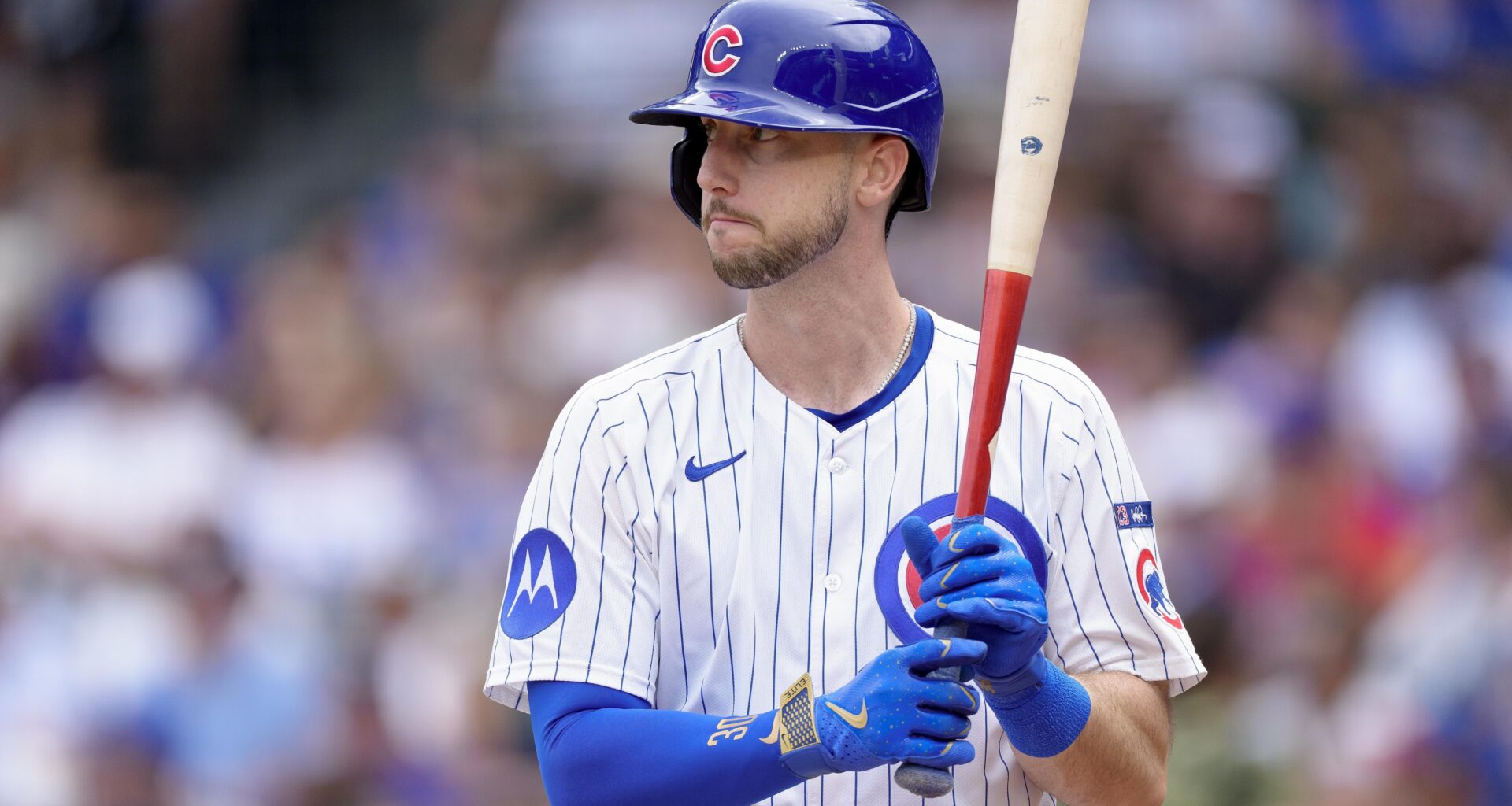
For weeks now, the best way to summarize the latest on the MLB free-agent market is simple: There is no latest.
There was plenty of excitement between the opening of the market on November 6 and the conclusion of the winter meetings on December 11, highlighted by six multi-year deals worth over $50 million:
Dylan Cease, Toronto Blue Jays: 7 years, $210 millionPete Alonso, Baltimore Orioles: 5 years, $155 millionKyle Schwarber, Philadelphia Phillies: 5 years, $150 millionJosh Naylor, Seattle Mariners: 5 years, $92.5 millionEdwin Díaz, Los Angeles Dodgers: 3 years, $69 millionDevin Williams, New York Mets: 3 years, $51 million
It sure looked like the last market before looming labor strife was running hot, but not anymore. Multi-year deals are still happening, but only Michael King, Kazuma Okamoto and Tatsuya Imai have cleared $50 million. That was a major disappointment for Imai, though he at least did better than his Japanese compatriot, Munetaka Murakami.

Houston Astros/Getty Images
The question now is whether the chilliness will sting anyone else. Kyle Tucker, Alex Bregman, Bo Bichette, Cody Bellinger, Framber Valdez and Ranger Suárez should be shoo-ins for long-term megadeals, but whispers to the contrary have begun to emerge.
Ken Rosenthal and Will Sammon of The Athletic are openly pondering whether the Dodgers could get Tucker on a four-year deal. That would be a win for them, but not for Tucker after he was projected by MLB Trade Rumors for an 11-year, $400 million contract.
Why Does Free Agency Take Forever Now?
It used to be a special occasion when a top free agent lingered on the market past New Year’s. And even when it happened, the wait wouldn’t last much longer.
Want to know how many nine-figure deals happened after New Year’s between 2005 and 2014? Just four: Carlos Beltrán in 2005, Mark Teixeira in 2009, Matt Holliday in 2010 and Prince Fielder in 2012. Of those, only Fielder’s deal came after January 20.
Over the past decade, from 2015 to 2025, there have been 18 such deals. Of those, only four occurred before January 20.
This is an apples-to-oranges comparison in the sense that nine-figure deals are more common than they used to be. Yet free agency clearly moves at a different, much more glacial pace than it used to, and it isn’t by accident.
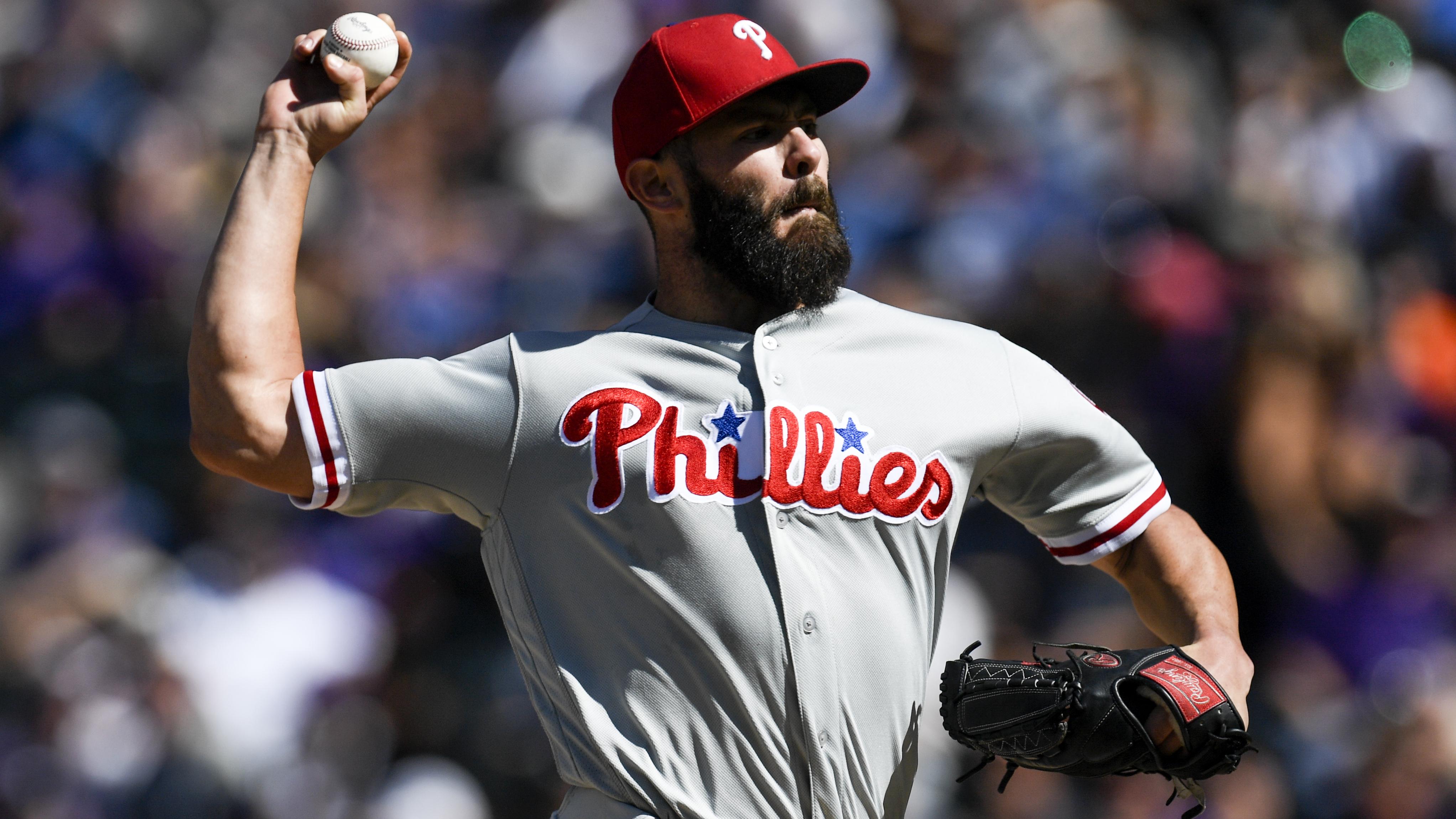
Jake Arrieta’s free-agent odyssey in 2017 and 2018—which began with dreams of nine figures and ended with a three-year, $75 million contract—was perhaps the clearest sign that the way teams value free agents had changed. On the one hand, he was a Cy Young Award winner; on the other, he was a 32-year-old with increasingly shaky peripheral stats.
AAron Ontiveroz/The Denver Post via Getty Images
Almost a decade later, not much has changed. Save for rare exceptions, free agents over 30 tend to be kept at arm’s length, and it’s not as if the data teams have to pick players apart has shrunk.
“In my opinion, executives really struggle as far as decision-making now,” one agent told Bob Nightengale of USA Today. “They just collect so much more information, and then figure out how to utilize it.”
In the face of such intense risk-aversion, players have calculated that patience is a virtue. And sometimes it is, as 13 players have found nine-figure deals in February or March since 2018.
Yet it’s just as easy to point to the misses. We’re only two years out from the calamity of the “Boras 4,” a group that included Jordan Montgomery, Blake Snell, Matt Chapman and Bellinger. And just last year, Pete Alonso and Bregman each had a $200 million dream turn into a nightmare.
MLB and the MLBPA Must See This as a Problem to Fix
It’s hard to say MLB free agency is broken, and for one good reason. Well, really two: Shohei Ohtani and Juan Soto each scored a $700 million deal in free agency just within the last two years.
That said, something about the way things are now just feels unhealthy.
It’s hardly ideal for players, whose families have to wait along with them if their time in free agency lasts beyond New Year’s. Otherwise, both players and teams should fear a truncated spring training. That was an issue for the “Boras 4,” and none more so than Montgomery, whose career hasn’t recovered.
You’re also not going to hear anyone say a slow-moving market is a good thing for Major League Baseball’s news cycle. It’s not suspenseful. It’s boring. And when it leads to smaller than expected contracts like those of the “Boras 4,” the payoff just isn’t worth it.
As to potential fixes, a defined signing window akin to those of the NBA and NFL has been kicked around and even has the support of MLB commissioner Rob Manfred. Yet as he said in 2024, the Players Association is a no:
A signing window remains appealing precisely because it might reduce risk aversion and replace it with a healthy dose of irrationality. To paraphrase that famous quote from Andrew Friedman, irrationality is often what it takes to close deals.
Where the MLBPA is concerned, maybe the worry is that a firm deadline on free agency could do more harm than good. Imai and Murakami are good case studies, as they waited until the very end of their posting windows to sign and didn’t even get a third of their projected guarantees.
Then again, maybe there’s a trade to be made when it comes time to get deep into CBA negotiations. If the union really doesn’t want a salary cap—and it doesn’t—a free-agent signing period could be part of a trade.
Instead of a two-week stretch in December, even better would be the entire month of January. That way, teams could split the offseason in two, focusing on trades before pivoting to free agency. It could be a means to turn the hot stove season into a proper three-month extravaganza. At the least, it could become a slow burn leading to an explosive finish.
The last thing either side should want is for free agency to keep its status quo. That would be a vote that the status quo is actually good, and nobody believes that.