
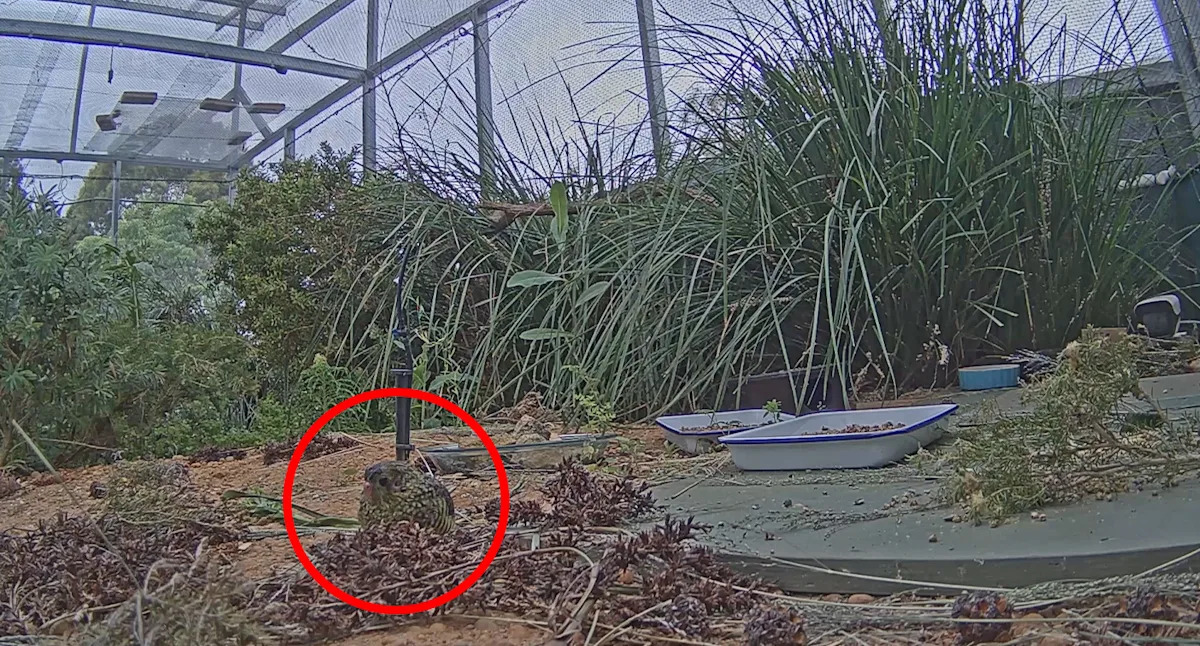
In a world-first, a team of specialised keepers at an Australian zoo have successfully bred one of the nation’s rarest birds. Fewer than 150 western ground parrots remain in the wild, and the race is on to prevent their extinction.
The well-camouflaged, ground-dwelling birds were once widespread across coastal heathlands from Geraldton, north of Perth, to Israelite Bay, east of Esperance. But feral predators, habitat destruction and changed fire regimes resulted in a rapid decline in numbers.
It’s a sad problem that’s impacted dozens of small Australian parrot species, including the orange-bellied parrot, the regent parrot, the regent parrot, and the night parrot.
Frustratingly, previous efforts elsewhere had failed, with the birds hatching but not advancing to the stage of leaving the nest.
Perth Zoo’s Australian fauna supervisor Matt Ricci told Yahoo News the first sign of their looming success was a sudden change in the behaviour of the breeding pair.
“The female was doing the incubating, and only getting off the nest one time a day to stretch her legs and pass fecal matter,” he said.
“The male does everything for her, he feeds her and tends to the nest.”
Two more signs the western ground parrots had successfully bred
Watching them through dedicated CCTV so as not to disturb the pair, his team noticed an increase in the number of times the male visited the nest.
Because captive western ground parrots had never successfully fledged before, they relied upon the limited knowledge of their cousins, the eastern ground parrot, to predict how the parents would respond next.
As the chicks are born fluffy, there is less of a reason for the mother to sit on the nest after her chicks hatch.
And on day 10, just as they hoped, the female began leaving the nest at night and then returning in the morning.
“There was no reason for her to do that unless there was a chick present that she was tending to,” Ricci said.
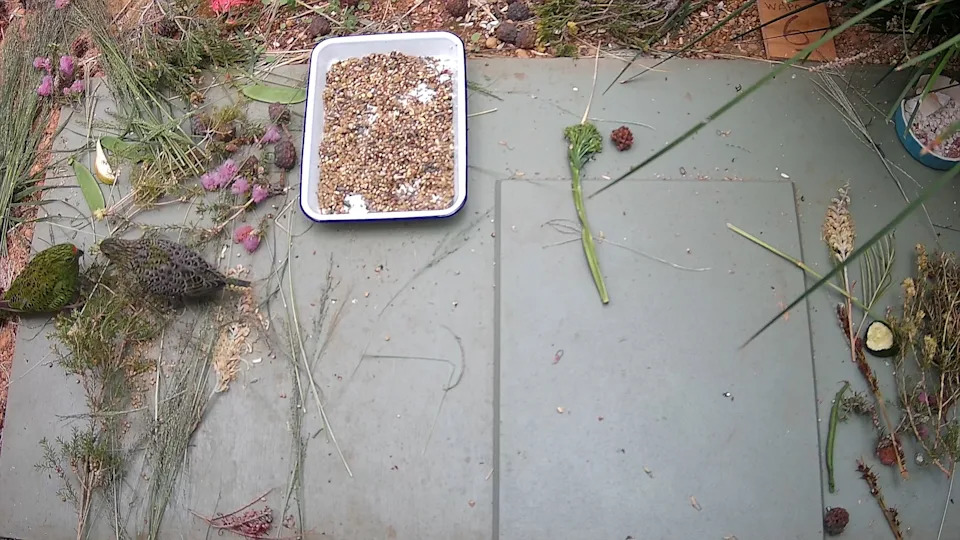
Dietary and housing changes are thought to have contributed to the zoo’s breeding success. Source: Perth Zoo
They assumed the next milestone would occur around 10 days later, and the chick would be seen leaving the nest.
And as that day approached, Ricci said the team was “holding their breath”.
“On day 20, the little chick just wandered out of the nest and began walking around the aviary,” Ricci added.
Simple changes that led to chick fledging nest
Because of the species’ rarity, the seven captive birds are kept in a quarantine zone, with heavily regulated biosecurity measures.
Three core dedicated staff are focused entirely on the western ground parrots to ensure disease isn’t spread to them.
The remaining wild birds live around the remote coastal heathlands of Cape Arid National Park and Nuytsland Nature Reserve in southern Western Australia.
Perth Zoo began studying the species in 2014 to broaden scientific understanding and help safeguard them from extinction.
Over this time, they’ve made small changes to their husbandry practices, including changes to housing and feed, which are thought to be linked to the breeding success.
“It’s been a long wait, but one that we anticipated would happen at some point,” Ricci said.
“All of us are still buzzing.”
Love Australia’s weird and wonderful environment? 🐊🦘😳 Get our new newsletter showcasing the week’s best stories.
