

The country is overrun with invasive species, from feral pigs to carp, rabbits and foxes; there are so many here it’s hard to imagine a time before these invaders unwittingly made Australia home. And while the list is long, few have had the same impact as cane toads.
Introduced to Australia in the 1800s in a batch of just 100 — in a failed bid to target insects decimating sugar cane crops — it’s now expected cane toads exist in populations exceeding 200 million.
Though the picture may seem bleak, dedicated conservationists aren’t giving up hope.
Australian farm owner Carly Clark, based in Bundaberg, is determined to remove as many of the pests from her surroundings as possible.
The Queenslander, who owns the boutique farm stay and caravan park Splitters, runs an annual “cane toad challenge” in which guests get together on Boxing Day to collect as many of the pests as possible from the farm and its surroundings.
In an interview with Yahoo News, she said that each year, the hauls being brought in by visitors continue to swell significantly in size.
This is in part, she suspects, due to the overwhelming number of cane toads in the region.
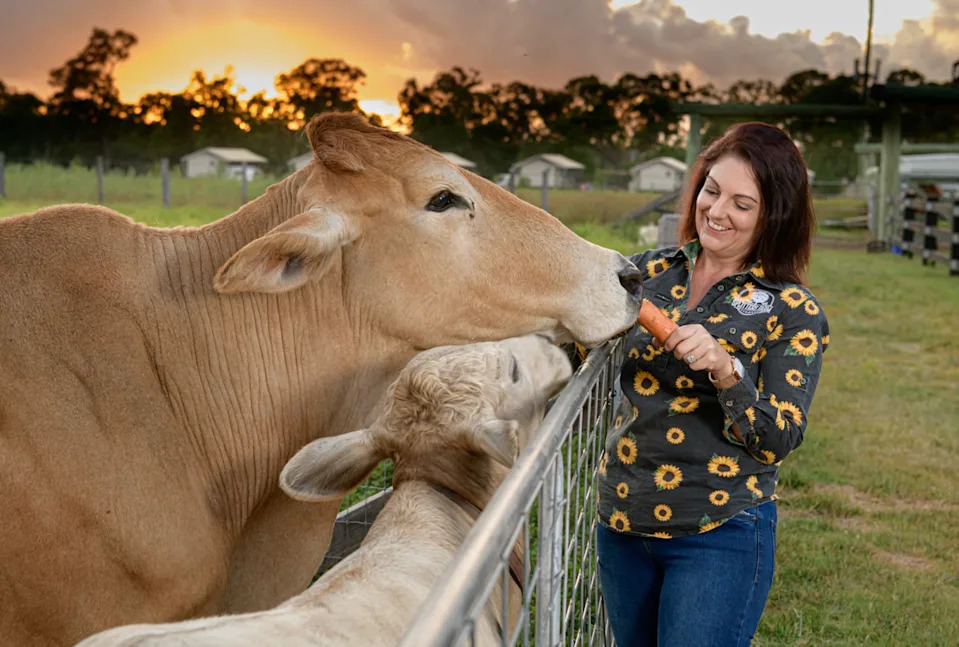
Carly Clark holds an annual cane toad catching competition for visitors to her farm stay Splitter’s Farm. Source: Queensland Agriculture.
The winning entrant’s bag this year weighed in at over 25 kilograms, and collectively, the entire group caught an astonishing 96kg worth of cane toads in just a couple of hours.
“It’s free entry, and we give them a firewood bag, and basically whoever catches the most cane toads by weight wins their camping trip next year free of charge,” Carly said.
“The turnout is always full. It’s family groups who team up on the night.
“They’ve got two hours to catch as many toads as they can, and then we do our weigh-in at nine o’clock.”
Across 160 acres, Splitters is also an established rescue animal farm.
Cane toad populations ‘blow up’ in Bundaberg
With so much land, Carly knows firsthand about the destruction cane toads can cause and how they can infest ecosystems with extreme ease.
“When we first moved here, there were about half the numbers we’ve got now,” she said.
“It’s just blown up.
“Every year, we get more and more cane toads by weight. This year’s event beat all records.”

Collectively, guests collected almost 100 kilograms of cane toads. Source: Splitters Farm
Toxic pests are responsible for the decline of countless species
Carly said she’s noticed that, in particular, native frog populations, including green tree frogs, are declining due to cane toad activity.
“Goanna populations and even freshwater crocodile populations further north are declining too, because they eat them,” she said.
Goannas are among the most severely affected species because they are active hunters that frequently eat frogs and lizards.
In some regions, goanna populations, particularly the yellow-spotted monitor, have plummeted by as much as 90 to 95 per cent.
While acknowledging the pests must be removed, Carly said she takes care to make sure guests do so humanely.
“Freezing puts them to sleep in the most humane way we can. We don’t go into the animals’ paddocks — this is around the farm and campsite — but it’s shocking to see how many are still in areas we can’t access,” she said.
Carly added that she’s even been approached by the broader community to run larger-scale events.
“It’s something we’re seriously considering,” she said.
Why are cane toads so destructive, and where are they found?
Cane toads exist in plague proportions across Australia.
They suffocate Queensland and have moved into neighbouring states, including the Northern Territory and New South Wales.
As of recently, they’ve also been detected in Western Australia.
Cane toads were introduced to Australia in 1935 after being brought from Hawaii in a failed attempt to control beetles destroying Queensland’s sugar cane crops.
About 100 toads were released in north Queensland, despite warnings at the time that the species could become invasive.
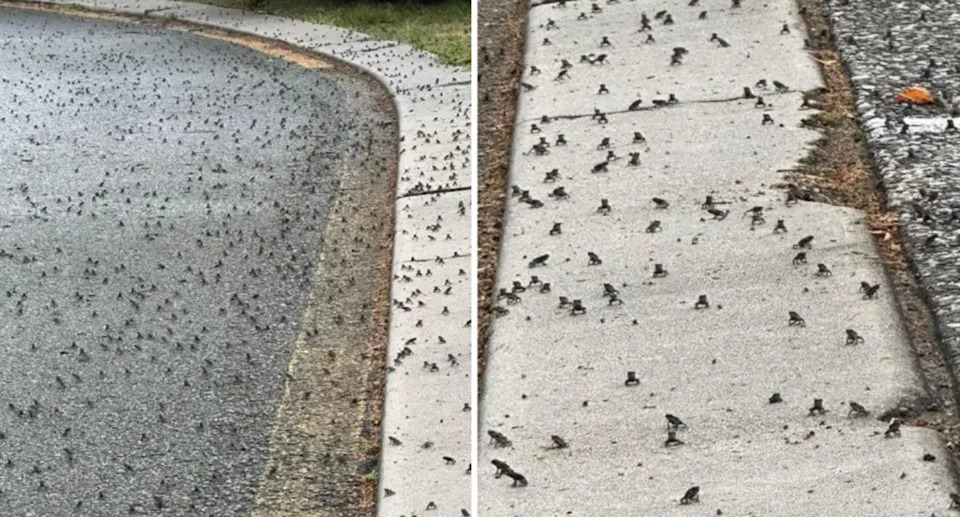
Cane toads continue to infest large parts of Queensland. Source: Supplied
The toads proved ineffective against the pests they were meant to stop, but adapted quickly to Australian conditions and began spreading rapidly.
They continue to expand their range westward and southward, aided by their high reproduction rate — a single female can lay up to 30,000 eggs at a time — and their ability to survive in harsh conditions.
Love Australia’s weird and wonderful environment? 🐊🦘😳 Get our new newsletter showcasing the week’s best stories.
