
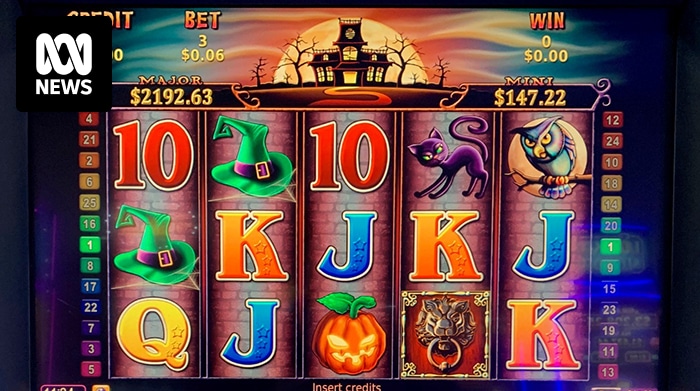
Free ice and WiFi for members, lavish renovations and free venue hire for members’ birthday bashes are among the causes the Northern Territory’s pokies clubs are claiming as “community contributions”.
Pubs and casinos in the NT are charged a 10 per cent levy on poker machine losses, which goes into the government’s Community Benefit Fund before being paid out through grants to community and sporting organisations, and for gambling research and harm minimisation.
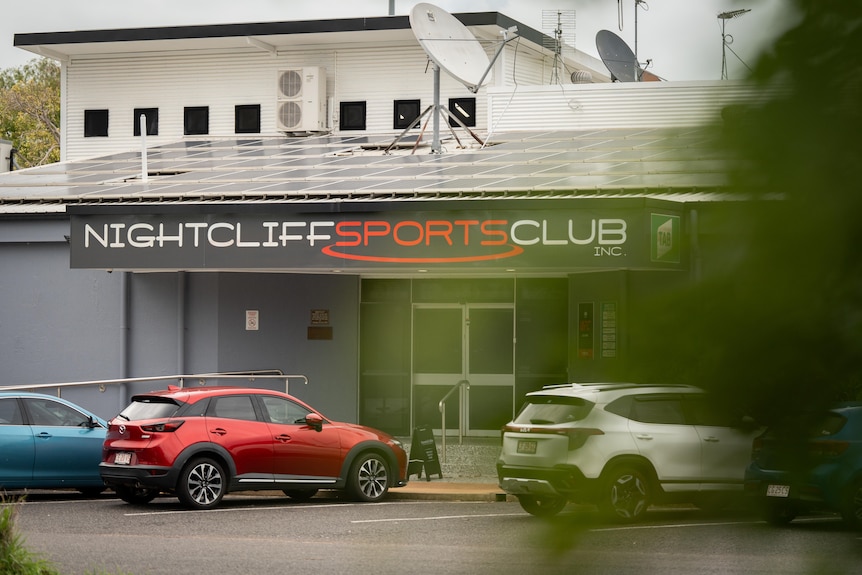
Nightcliff Sports Club reported more than $600,000 in in-house renovations and furniture as part of its contribution to the wider community. (ABC News: Pete Garnish)
Meanwhile, not-for-profit clubs that rake in millions in pokies revenue each year are required to publicly report their total Community Support Contributions (CSC) under a separate, voluntary scheme designed to redistribute gambling losses to the wider community.
The most recently published figures show the NT’s 20 clubs contributed almost $4 million in “cash” and another $1.6 million “in kind” from a total gaming machine revenue of more than $41 million in 2023-24.
But documents obtained by the ABC under Freedom of Information laws have revealed the majority of the clubs’ so-called “cash” contributions are actually being spent on themselves and their affiliated sports teams.
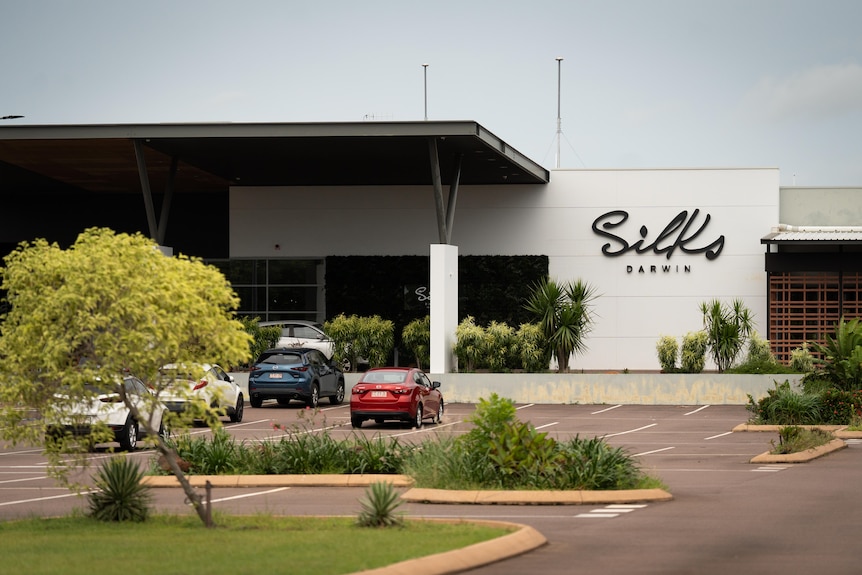
More than half of Silks Darwin’s “community contributions” came in the form of money collected from members of the public through raffles and meat trays rather than from pokies revenue. (ABC News: Pete Garnish)
Raffle takings, meat trays, big screen TV among so-called contributions
Despite a requirement at the top of each reporting statement that contributions “must be for the benefit of the general public or community”, clubs chalked up thousands in members’ perks, venue renovations and a “big screen digital TV” in the second half of 2024.
The Nightcliff Sports Club reported a $585,000 “cash” contribution in the form of an “upgrade of club infrastructure” and another $28,000 for “furniture” for the benefit of “members, affiliates, guests and community”.
Cazalys Palmerston’s community contributions included a $115,000 sponsorship deal with AFLNT alongside a $214 donation to Dolly’s Dream and a $263 donation to the Make-A-Wish Foundation.
In Alice Springs, the Gillen Club reported a new patio and outdoor furniture to the value of $48,535 for the benefit of “patrons of the club” as contributions to the wider community.
The documents also show in the last six months of 2024, multiple clubs reported donations to charity by members of the public as CSCs, boosting their totals without costing a cent in pokies revenue.

The Gillen Club in Alice Springs reported a new patio and outdoor furniture to the value of $48,535 for the benefit of “patrons of the club”. (ABC News: Xavier Martin)
Silks Racing Darwin reported $22,877 in donations that were actually made by club patrons through “raffle takings” and “meat trays”, in more than half the club’s total “cash” contribution.
NT clubs ‘whitewashing’ pokies revenue through ‘opaque’ benefit scheme
During the same period, the Nightcliff Sports Club reported $10,000 in donations to the RSPCA and CareFlight via money raised through “collection tins on the club bars”.
Other clubs reported $1,500 in expenditure on six months’ worth of complimentary ice for members and $200 for free venue hire for a member’s 50th as “in-kind” community contributions.
Those CSCs all appear to breach ministerial guidelines for what can be legitimately reported as a contribution.
Independent statistician and gambling researcher Matt Stevens said clubs spending pokies profits on maintaining their own sporting facilities could be considered a legitimate benefit for those who use them.
But he said the benefit to the community as a whole was “debatable given a lot of the community will not go to a club and will not play sport”.
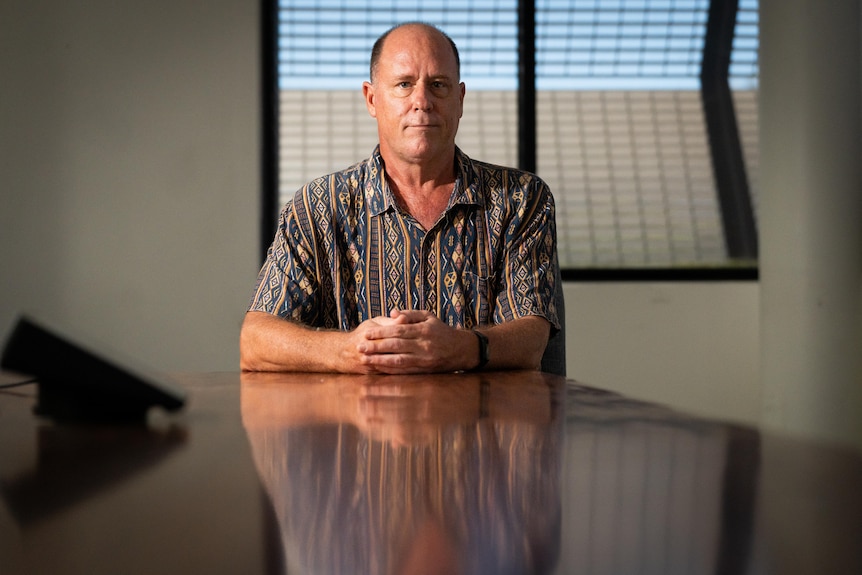
Matt Stevens says pokies clubs should be required to contribute to the Community Benefit Fund. (ABC News: Pete Garnish)
“It’s not really costing them any money, so I wouldn’t call that a community contribution, but it gets counted as an in-kind community contribution when they’re filling out their audits … so I think it’s very questionable,” he said.
“Certainly the current model of clubs not paying that 10 per cent is problematic and there should be some more checks and balances for sure.
“The Community Benefit Fund itself does fund some really important things in the NT, but I think the question’s more about should clubs be contributing towards it?
“My answer is yes, I think they should be.”
Problem gambling, tax revenue soars
Late last year, the territory government quietly released its 2023 Gambling Prevalence and Wellbeing Survey Report after sitting on the findings since June 2024.
The study found the territory had double the national average rate of problem gamblers, with almost one in every 10 punters classified as either problem or moderate risk.
Of the 44,982 NT pokies players who pumped $222 million into the machines in 2023, just 4,324 problem gamblers accounted for more than half that figure, at almost $122 million.
While the community clubs pay none of their poker machine revenue into the Community Benefit Fund, the NT government relies on them for millions in general revenue through the Community Gaming Machine Tax.
The survey report shows that in the 2024-25 financial year, pokies gamblers poured more than $51 million into territory coffers via the tax — making up 44 per cent of the NT’s total gambling tax revenue and more than 6 per cent of its total taxation revenue.
Dr Stevens, the survey report’s lead author, said the cost to society of the harms associated with gambling was up to $400 million a year in the NT, dwarfing the $115 million the territory generates across all forms of gambling tax.
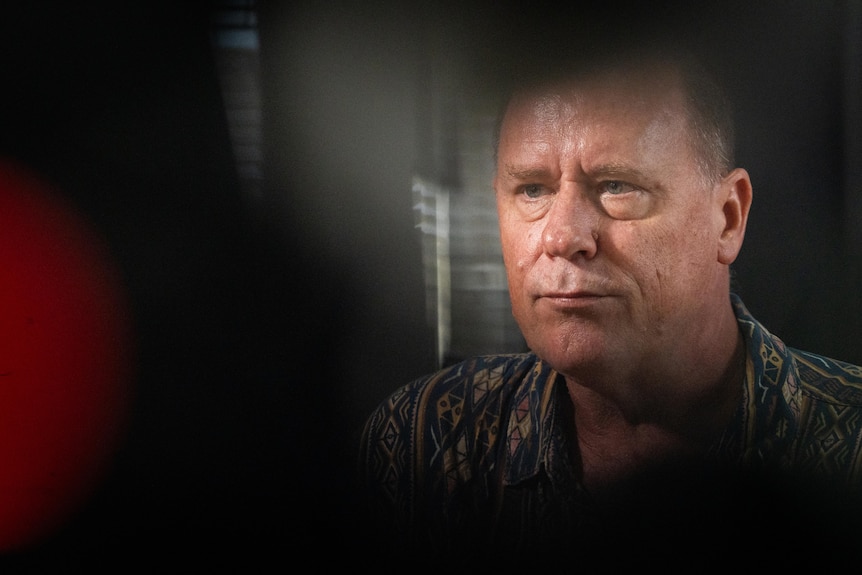
Matt Stevens says up to 80 per cent of pokies profits come from problem gamblers. (ABC News: Pete Garnish)
“People with problems with their gambling are contributing anywhere from 50 to 80 per cent of the profits that the industry makes, so if you actually want to reduce harm, they’ve got to be prepared to reduce the revenue as well,” he said.
The report also concluded the burden was even greater on Indigenous Territorians, who lost more than three times as much as the average non-Indigenous pokies gambler, forking out $8,473 each per year.
“Certainly if you’ve got overcrowded households and the head of the household loses the money, then that’s affecting more people, so I think that contributes to more people being harmed,” Dr Stevens said.
‘A silent crisis’
The absence of a requirement for community clubs to pay into the Community Benefit Fund also means they contribute nothing to gambling research or harm mitigation.
Darwin psychologist Nicola Coalter said for every Territorian directly affected by gambling harm, up to 15 others were caught in its “ripple effect”.
“I work with people across addictions, whether that be gambling, porn, doomscrolling, but when it comes to gambling there’s a real silence in our community about it, it’s like a silent crisis,” she said.

Nicola Coalter says gambling addiction is “like a silent crisis”. (ABC News: Michael Donnelly)
“It’s the mum who’s trying to make do and feed the kids and explain why they can’t go on that school trip, it’s the young apprentice who’s not getting smoko at morning tea because his pay’s already been spent.
“It’s the veteran who’s trying to just quiet those noises in their head and escape into the club but spending way more than they plan to, so that ripples out and we feel it in our families and our communities.”
Ms Coalter said research had shown that the closer poker machines were to people’s homes, the more likely they were to experience harm.
“Our clubs are in our suburbs, they’re down the street from where we live,” she said.
“So when you go to the club — a place meant for community and connection, but actually driven on the losses of gambling harm — that doesn’t sound like community benefit to me.”
Levy ‘could force clubs to close’
A spokesperson for NT Hospitality Minister Marie-Clare Boothby said clubs’ community contributions were “assessed against clear ministerial guidelines by the independent Director of Gaming Control”.
The minister did not answer questions about how many claims, if any, had been rejected for breaching those guidelines.
Despite NT clubs operating without pokies until the government funded their rollout in 1997, Ms Boothby’s spokesperson claimed requiring them to pay the 10 per cent levy would force some to close.
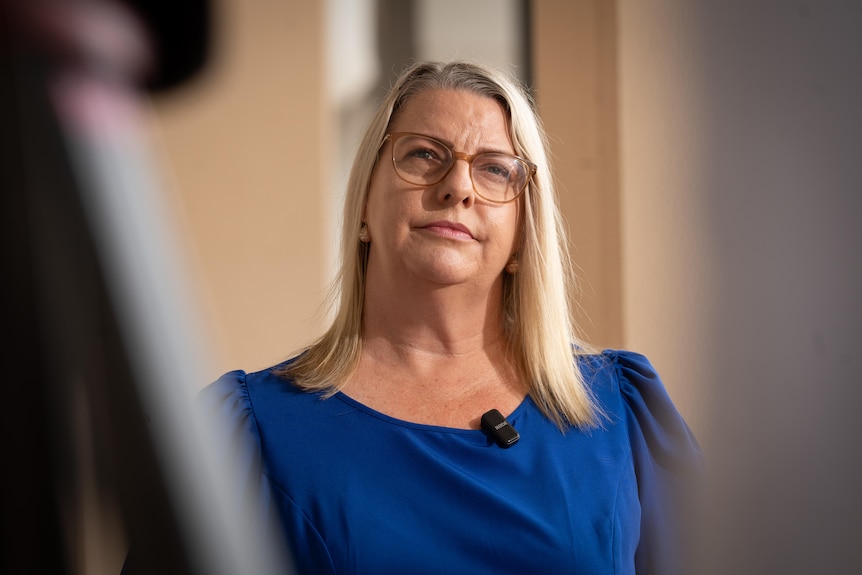
Marie-Clare Boothby claims some community clubs would be forced to close if they had to share 10 per cent of their pokies profits with the wider community. (ABC News: Pete Garnish)
“Clubs are not-for-profit, community organisations that reinvest surplus revenue into improving community outcomes,” the spokesperson said.
“A levy would remove a significant share of their operating surplus while fixed costs remain unchanged, making some clubs financially unviable.”
A spokesperson for the Nightcliff Sports Club said the venue was under new management and “has been working with the department since the middle of the year to correct previous reporting errors, and ensure our compliance with community benefit reporting obligations meets the department’s expectations”.
None of the other clubs named in this article responded to the ABC’s enquiries.