
There is a video on Facebook where teenager Teo Davidov is squatting weights in the gym. It briefly shows him lifting, before an adult trainer cuts in and speaks directly to camera.
“In the non-weightlifting word, the ability to squat double body weight – much less do it when you are 12 or 13-years-old – is insane,” he says.
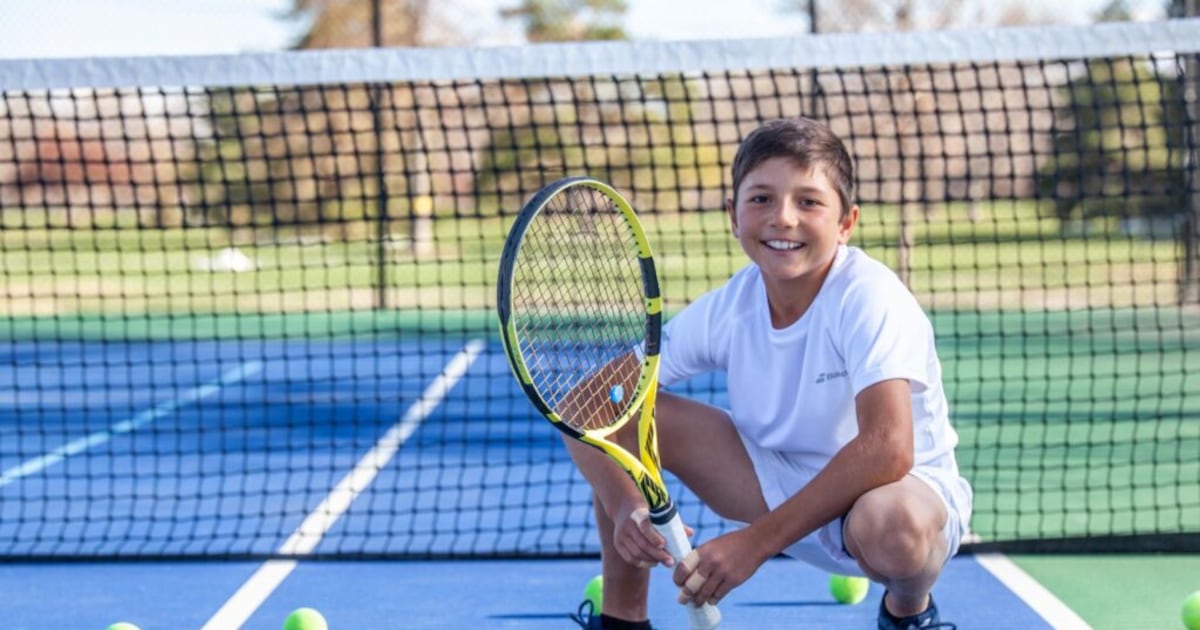
That same kid will be 16 in August, but already he is grabbing attention, not as a potential Olympic gold medal winner in weightlifting but as a tennis player who is bucking convention.
His spirit, mental strength, weightlifting training and a formidable work ethic are all part of what makes him special.
But Davidov’s point of difference from other players is that when he competes he uses no back hand but right and left-handed forehands.
Proficiently ambidextrous, he swaps his racquet between hands midrally thereby hitting forehands all the time.
The ‘P’ word has already been used. He is officially a tennis prodigy and with the Australian Open, the first Grand Slam of the year, due to start on Monday in Melbourne Park, although he is not in the draw, he is likely to be one of the subjects of interest between matches.
Davidov says he chooses the moment to switch hands by anticipating his opponent’s shot and where the return is going before the ball is struck. He also alternates with his service by hitting both right-handed and left-handed deliveries.
It was his father Kalin who first got his son, a natural right-hander, into the possibility of playing with both hands.
A former volleyball and tennis player, he holds a bachelor’s degree in physical education and tennis coaching as well as a master’s degree in sports performance. His wife Elena was a competitive diver and studied physical therapy.
In an interview given to the Guardian four years ago, when Teo was 10 years old, trained eight hours a day and was home schooled, Kalin explained how the conversion to ambidexterity came about.
“When Teo was about to turn eight years old, I decided he’s going to start playing left-handed, to affect his right hemisphere of the brain. He’s way too extroverted, too fiery, a little too imbalanced, so I just wanted to affect the right hemisphere of his brain, using the left part of his body,” he said.
“It’s driven by philosophy too. I’m into Chinese medicine, we do yin-and-yang balance all the time, I do balancing treatment with my needles. I’m into yoga, right and left nostril activity and all that, so balance between the left and right hemisphere is crucial.”
Got it. “Prodigy” has been attached to many players who have not broken through, having impressed at age grade.
But last May Davidov became the first player born in 2010 to pass the qualifying round of a professional M15 level ITF tournament in Orlando.
An ambidextrous style in tennis is rare, but are not unheard of. There is no top 50 tennis player in the Open era that regularly played in Grand Slam events who changed hands for shots. But the Bulgarian-born American teen, who lives in Colorado, has his eyes firmly set on becoming just that.
American Luke Jensen was ambidextrous and won the 1993 French Open Doubles title with his younger brother Murphy. Now working for ESPN and as a motivational speaker, he acquired the nickname of ‘Dual Hand Luke’ and could serve at 130mph (about 209km/h) off either wing.
Using ambidexterity for advantage is not uncommon across sport, with the naturally right-handed Ronnie O’Sullivan regularly wowing snooker fans with switches from right hand to left and back.
Switching hands can allow a snooker player to avoid using a rest or having to cue awkwardly when on the cushion or awkwardly positioned.
During the 1996 World Championships at The Crucible, O’Sullivan played left-handed for much of the 11th frame against Alain Robidoux, who accused the then 20-year-old of mocking him.
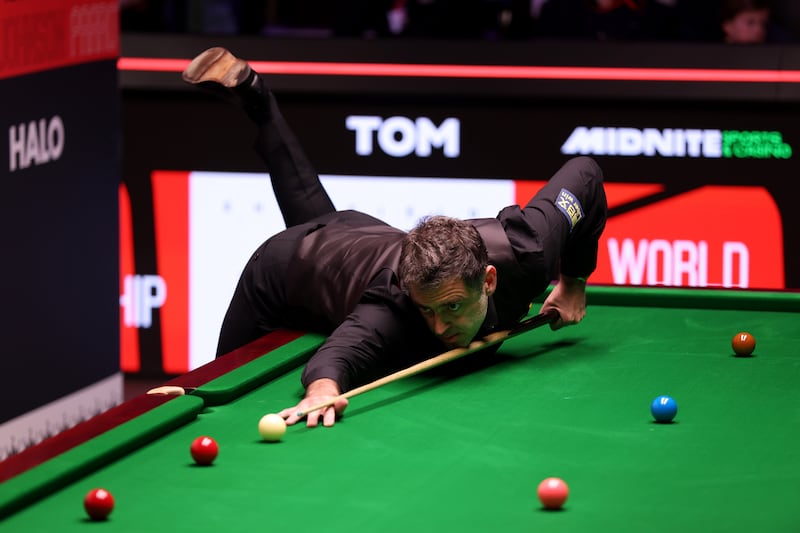 Ronnie O’Sullivan switches to playing left-handed during games if it makes cueing easier. Photograph: George Wood/Getty
O’Sullivan responded by declaring that his left hand was better than the Canadian’s right. He later proved it by winning three straight games using his weaker left hand against a world-ranked player.
There are a number of ambidextrous players in cricket including Kamindu Mendis, a professional Sri Lankan bowler who plays for the national team. He is known for bowling right-arm off-spin and left-arm orthodox spin.
Last year in his debut match for Sunrisers Hyderabad against Kolkata Knight Riders, he became the first player in Indian Premier League history to switch his bowling arm in a single over, dismissing Angkrish Raghuvanshi with his left-arm orthodox spin before switching to right-arm off-spin.
Davidov’s two-handed challenge to tennis norms has attracted some naysayers, who believe that when he gets a little older and comes up against elite professional players, who disguise shots and hit the ball harder and earlier, switching hands and grips may fail.
However, neither Davidov nor his father believes it will be a liability. They contest that the transition takes place faster than regular players, who change their grip for backhands, forehands and other shots such as volleys.
Even if it becomes problematic, his father says, Teo always has a strong backhand in his locker if the two forehands aren’t enough.