
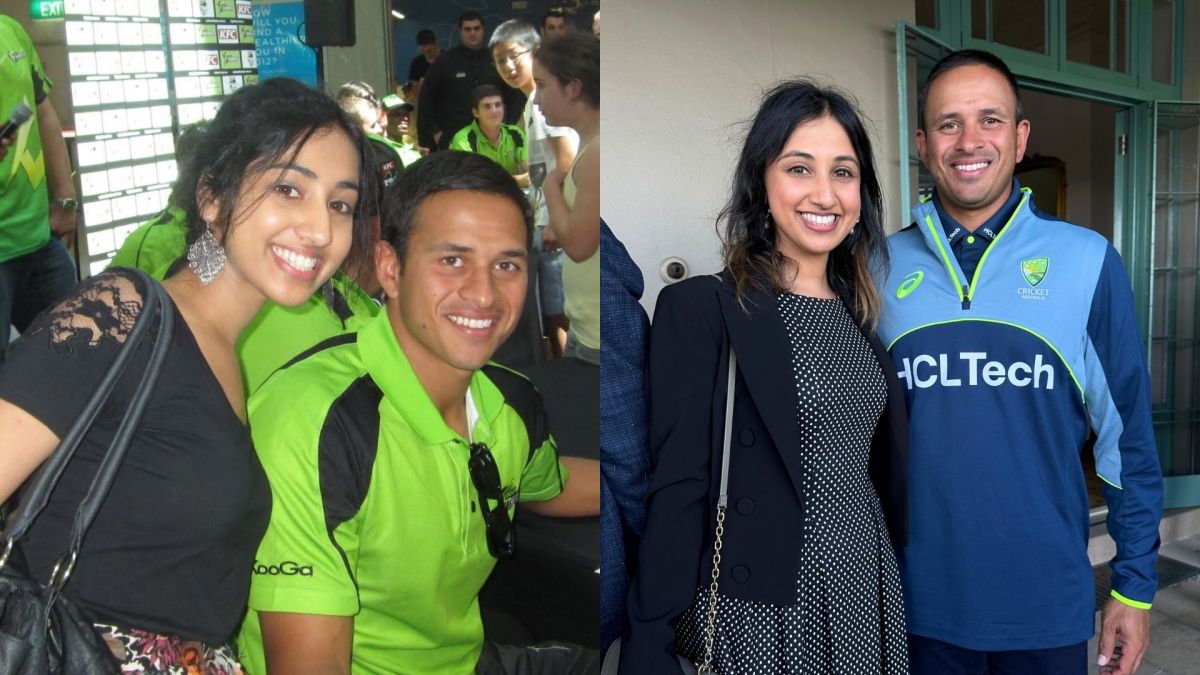
I’m of Indian heritage and I run a South Asian Australian media company. As far as brown stereotypes go, it’s easy to assume I’m a cricket fan. Yes, I am. But not because I grew up playing backyard cricket or watching it on TV with my dad (he’s more of a Rugby Sevens fan, and I think that makes sense if I consider his upbringing in Fiji).
I’ve attended cricket matches with friends, fangirled over Virat Kohli, and covered cricket as a journalist. But my appreciation for the sport didn’t begin with admiration for impressive bowling or batting. There was a time when the words wicket and innings would fly right over my head, and don’t get me wrong, I’m far more knowledgeable now, but I admittedly can’t be trusted to give you the most accurate rundown of cricket rules to this day.
What drew me to cricket (watching, not playing – because let’s not get ahead of ourselves, can you imagine me on a pitch?!), was the sense of community and connection that the sport champions. Usman Khawaja has played an immense part in that.
Yesterday marked the last day of the fifth Ashes Test and the end of Khawaja’s international Test cricketer career. As I began reflecting on the impact Khawaja has had on the sport, and myself, I decided to text two of my high school friends: “When was this photo of all of us with Usman Khawaja taken?”
Based on their haircuts and us all knowing we’d graduated high school by this point, they both confirmed it was either 2011 or 2012. As uni students, we had caught up at Westfield Burwood for a movie and lunch. I can’t tell you what movie we watched, but I can tell you about my first true interaction with cricket on that day. Khawaja and a few other Sydney Thunder players were signing autographs at the shopping centre. I do love a good celeb selfie, so I convinced the girls to join me in the queue and we took a group shot, and I got a solo with Khawaja as well.
It was the first time I’d learnt of a South Asian man playing professional cricket for Australia. On top of a cultural connection, it was Khawaja’s warmth and humility – especially given that we shamelessly asked him, “What’s your name?” – that left a lasting impression.
Over the years, we’ve all watched Khawaja’s star power grow. But it’s how he’s used his platform to advocate for himself, cultural diversity and even the sport, that’s made him the iconic cricketer he is today. It’s made people like me realise that cricket isn’t just about what happens on the field. It’s just as much about community, and finding a place where you can proudly take a stand for what you believe in and who you are.
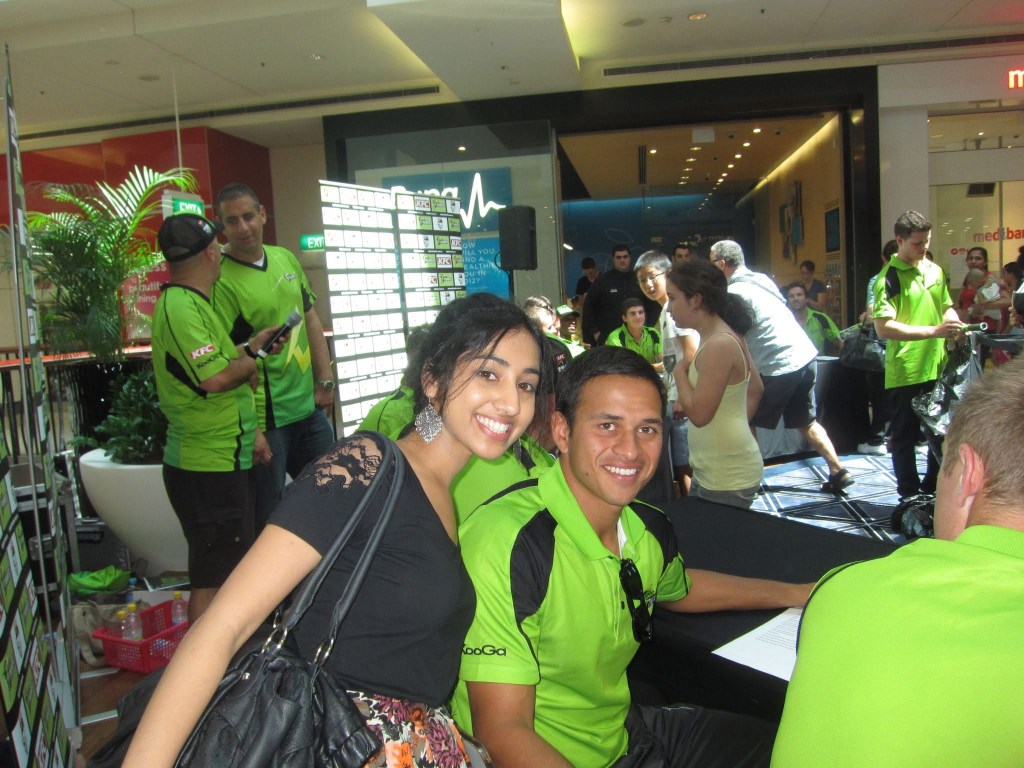 Meeting Usman Khawaja during my uni days (I’m showing my age). Image Source: Draw Your Box
In 2023, I covered the Kayo Sports Summer of Cricket Launch at Parramatta where I recorded a now-viral video (embedded below) of Khawaja candidly speaking up about his South Asian upbringing. This was a world-class cricketer, the only Pakistani-born player and Muslim to play Tests for Australia. He’d migrated from Pakistan to Australia as a child with his parents, and he was now telling us about his “Desi” family, his mum refusing to speak to him when he first dated a white girl, growing up in Westmead, and his boundless love for chicken kadai and biryani. It doesn’t get more second-gen South Asian than that! I’m generalising, but you get my point. By being as brown and proud as one could be, Uzzy was inviting the rest of us to do the same.
“I feel the same playing against Pakistan, India, Bangladesh, Sri Lanka,” he said. “My family is very Desi. Like I grew up eating chicken kadai and parathas and kheemas and biryani. My mum [was] old school and I brought my first girlfriend home and she didn’t talk to me for three months,” he laughed.
“I grew up in a very subcontinental family. So for me, playing against anyone from the subcontinent… I just feel like we have that connection. Also because I can speak the language, but also because that’s how I grew up.”
Later that year, he spoke at the launch of Cricket Australia’s Multicultural Action plan, reminding us of the common second-gen experience of feeling caught between two cultures.
“I’m very Australian, but I grew up very subcontinental,” Khawaja said during the press conference. “The things I had to deal with growing up were very different than things that other teammates in my era had to grow up with. I’ve always found it very hard to relate to my teammates in some respects, but also with my coaches.”
Speaking of some of the particular challenges during his career as a South Asian Australian cricketer, Khawaja explained: “All my coaches were white Australian, all the selectors were white Australian and they didn’t really understand me or my culture.
“For a long time Cricket Australia has been a very white-dominated sport,” he added. “Hopefully this will be a legacy that lasts long into the future where we can see greater representation, both male and female, in Australian cricket.”
@drawyourbox Just when you thought Usman Khawaja couldn’t be more of a legend! The Australian cricketer talks about growing up in a South Asian family 👏🏾 #usmankhawaja #cricket #cricketworldcup #australia #parramatta #southasian #desi #ausvspak #kayosports ♬ Hass Hass – Diljit Dosanjh & Sia & Greg Kurstin
Cricket hasn’t been immune to racism, and a year after Australian fans chanted, “Where’s your visa?” towards Indian fans at the MCG, Khawaja once again spoke last week (1 January 2026) about his own experiences of racism in the context of cricket and how sports media reported about him during his career. “These are the same racial stereotypes that I’ve grown up with my whole life,” he said in a press conference announcing his retirement from international Test cricket.
“I’m a proud Muslim coloured boy from Pakistan who was told that he would never play for Australia. Look at me now,” he added.
You can’t be what you can’t see, but this morning (January 9), Khawaja told reporters he never set out to be a role model.
“All I ever tried to do while playing cricket for Australia, particularly the last little bit, was be myself. I always said to people that, you know they said, ‘You’re a role model for so many people’ and all these other things. I never tried to be a role model. I was just trying to be true to myself and trying to show the real Uzzy,” he told reporters (video embedded below).
“Because the real Uzzy is flawed in a lot of ways, like everyone I see else is. I was pretty good at playing cricket, I hope I still am pretty good at playing cricket and doing all the right things,” he laughed. “And then, just like everyone else, I want to show them that I’m human, just like you. I’m Australian, just like you. And for me, that was the most important thing.
“So if people saw that, and then they see what I represent, which I’ve said for a long time is inclusivity, equality, everything that I stand for, then that was more important to me than anything that anyone else might say.”
If this is what Khawaja set out to do, he bloody well succeeded! His words beautifully capture the Uzzy I met more than a decade ago at a suburban shopping centre. The Uzzy who’s just like us – whose compassion, authenticity and relatability has transcended time, converting the most clueless of us (when it comes to cricket), into appreciators of the sport.
There’s no rules on how to be a cricket fan and Uzzy reminds us to be ourselves. It’s about blasting your hype song as you dress up in your favourite team’s colours. It’s about the conversations you have with strangers on the train and bus as you make your way to the SCG. It’s about the cricket memes you send your friends, and it’s about the personal gossip you can’t help exchanging in the stands with your girlfriends when you’ve been at the match for hours. “So, are you dating someone?… Oh oops, I just missed that – what happened?” Be flawed, be proud and be you.
Next time I pack a thermos of chai to sip on during a match, I know I’ll pause and recognise how someone like Uzzy showed me the powerful intersection between community, identity and sport.
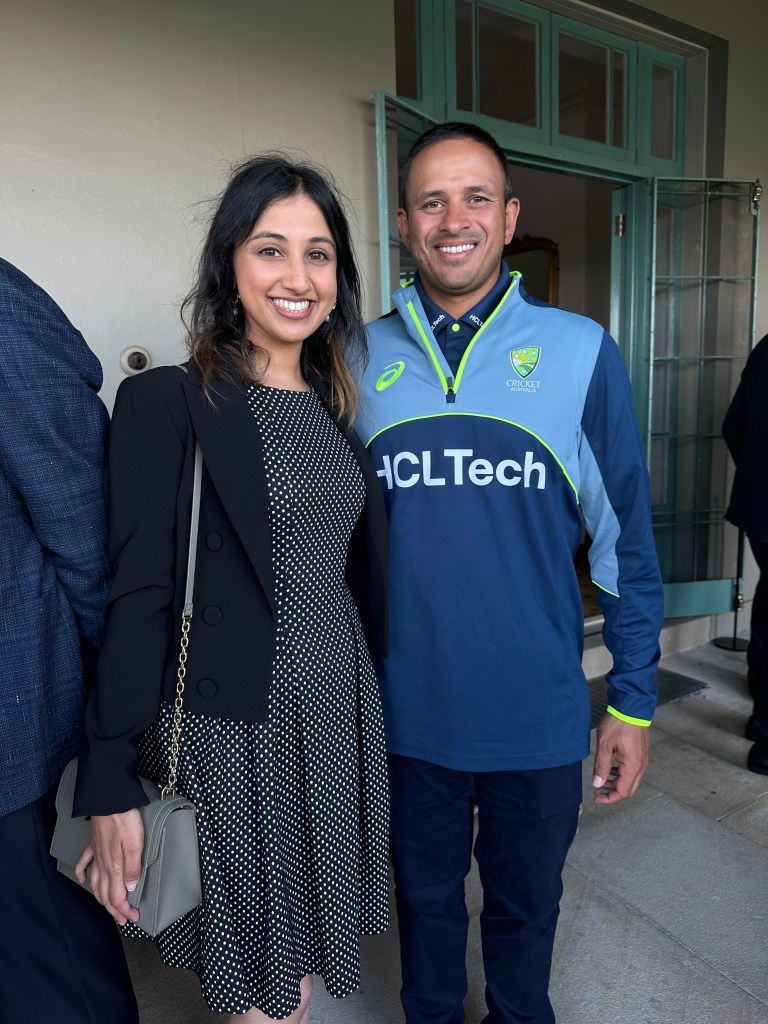 I met Usman Khawaja again in 2025. Photo: Draw Your Box
Like this:
Like Loading…