
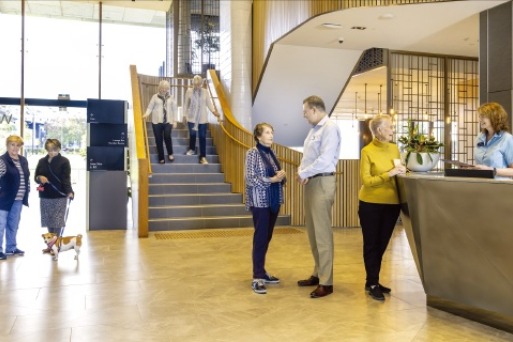
SYDNEY — At Bella Vista Haven, a senior residence at Bella Vista in Sydney’s northwest, the gentle bustle of daily life unfolds around a café, a lounge and shared gardens.
The average resident is 75 years old. Some rely on walking aids, but the atmosphere is defined less by stillness than by motion and conversation. This is not a place of convalescence, but one of continued living.
Senior living developments like Bella Vista Haven are emerging as a policy pillar in Australia’s efforts to ease urban housing shortages.
When older homeowners move into purpose-built residences, the large family homes they leave behind re-enter the market.
Aveo, the country’s largest senior living operator, separates “care” from housing in its business model.
Instead of selling units and exiting, the company focuses on long-term operations, maintaining asset values over decades, an approach that has drawn comparisons to the growing build-to-rent sector.
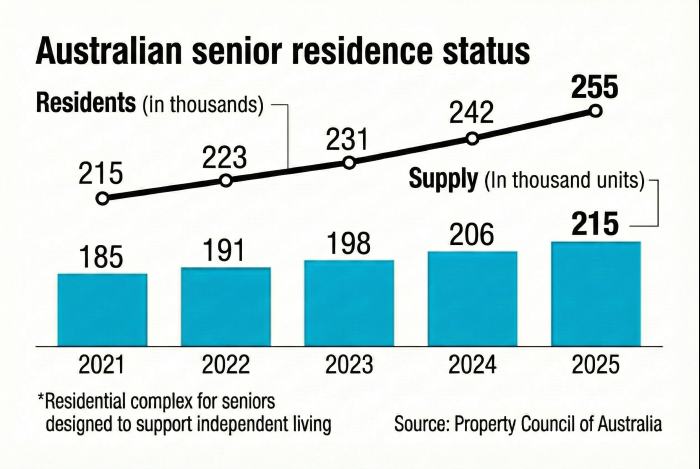
Image by Yeonhee Kim · Gemini (Nano Banana)
At Bella Vista Haven, residents have access to services tailored to their individual lifestyles, including a 24-hour emergency response system, household assistance, meal delivery and customized wellness programs.
They pay an upfront entry fee, typically funded by the sale of a previous home, along with ongoing management fees.
Aveo, Australia’s retirement living provider, operates about 90 senior residence complexes nationwide, encompassing more than 12,000 units.
The scale allows it to standardize construction and operations, reduce costs and sustain long-term profitability in a sector known for high upfront investment and slow capital recovery.
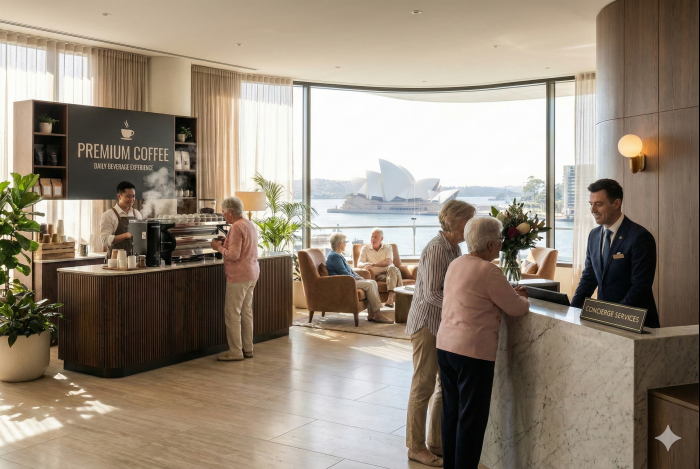
Image by Yeonhee Kim · Gemini (Nano Banana)
Senior housing begins to function as infrastructure that enables the circulation of assets.
According to CBRE, about 83% of Australians aged 75 and older fully own their homes, debt-free. The average value of those homes is estimated at 980,000 Australian dollars ($655,000).
About 70% of senior living residents are believed to move from three- or four-bedroom houses.
Each relocation effectively releases a family-sized home back into the urban housing supply without the need for new land development.
Government policy has reinforced the trend.
Under Australia’s “Downsizer Contribution” scheme, older homeowners can deposit up to 300,000 Australian dollars from the sale of a primary residence into their pension accounts, easing concerns about retirement income after downsizing.
About 13% of Australians aged 75 and older now live in senior residences, according to industry estimates, siglaing room for growth in the segment.