
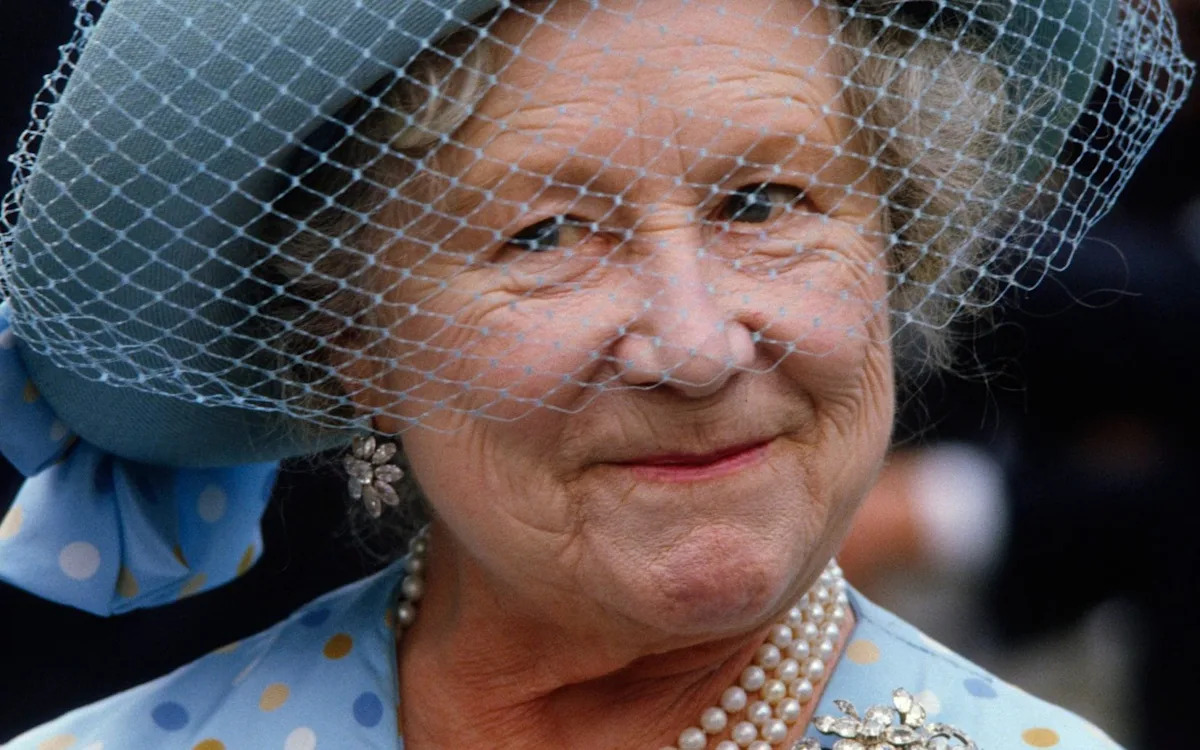
I appreciate it is difficult to come up with an original premise for a book, especially when it concerns the much written-about royals. But can it really be right to suggest that Princess Margaret was “left with foetal alcohol syndrome (FAS) from the Queen Mother’s drinking”?
The condition is caused by a developing baby’s exposure to alcohol in the womb, and can give the child distinctive facial features and cause difficulties with learning, impulse control and managing emotions.
For her new book, Princess Margaret and the Curse, Pulitzer Prize-nominated biographer Meryle Secrest has re-examined the royal’s personality and personal struggles and drawn the conclusion that she may have suffered from an “invisible disability” brought on by foetal alcohol syndrome.
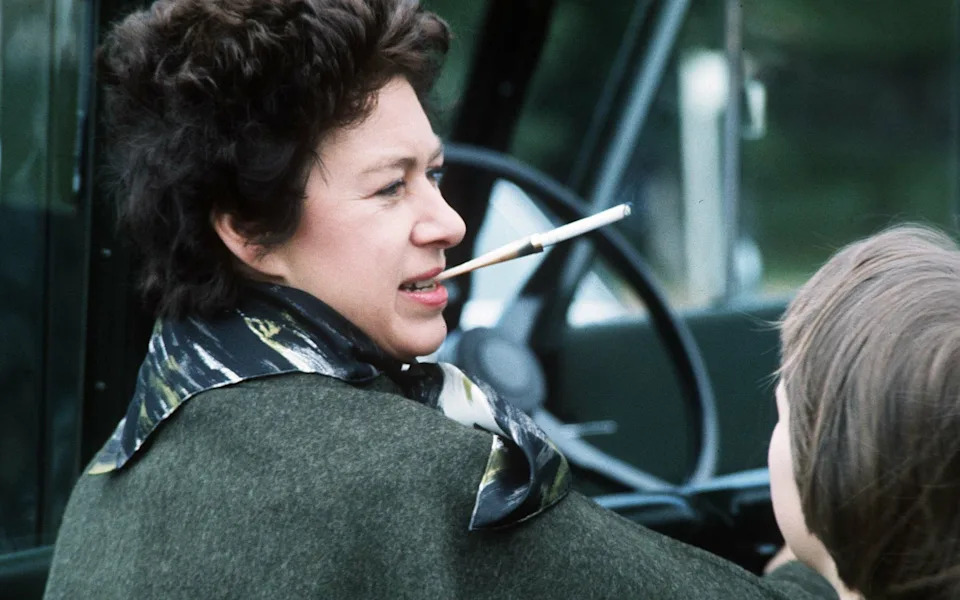
Princess Margaret smokes a cigarette as she attends the Windsor Horse Show in 1978 – Anwar Hussein/Getty Images
She points out that the late Queen’s sister, who died in 2002 aged 72, had stunted growth, struggled to learn how to write and suffered mood swings as well as painful migraines.
But isn’t this yet another case of trying to medicalise everyday problems? Margaret had none of the more obvious symptoms of FAS, such as smooth lip philtrum, small eyes, and a flattened mid face.Yes, she was small, at 5 ft 1, but her mother was only an inch taller.
FAS sufferers have difficulties with social skills, but the princess was the life and soul of any party. They also have difficulty with fine motor skills and yet Margaret was an accomplished pianist.
Sure, she was impulsive and would “blurt out the truth” – but the same can probably be said of most royals and aristocrats of her era!
While the Queen Mother did enjoy “a tipple” later in life, as attested by her official biographer William Shawcross, there is no evidence she was an alcoholic – least of all when she gave birth to her daughters in 1926 and 1930.
Indeed, in a 1925 letter to her husband, cited by Secrest, she reveals that she has lost her appetite for wine in pregnancy, joking: “It will be a tragedy if I never recover my drinking powers.” Despite enjoying gin and Dubonnet, wine, port and martinis, she lived to 101. Very heavy drinkers don’t tend to become centenarians!