
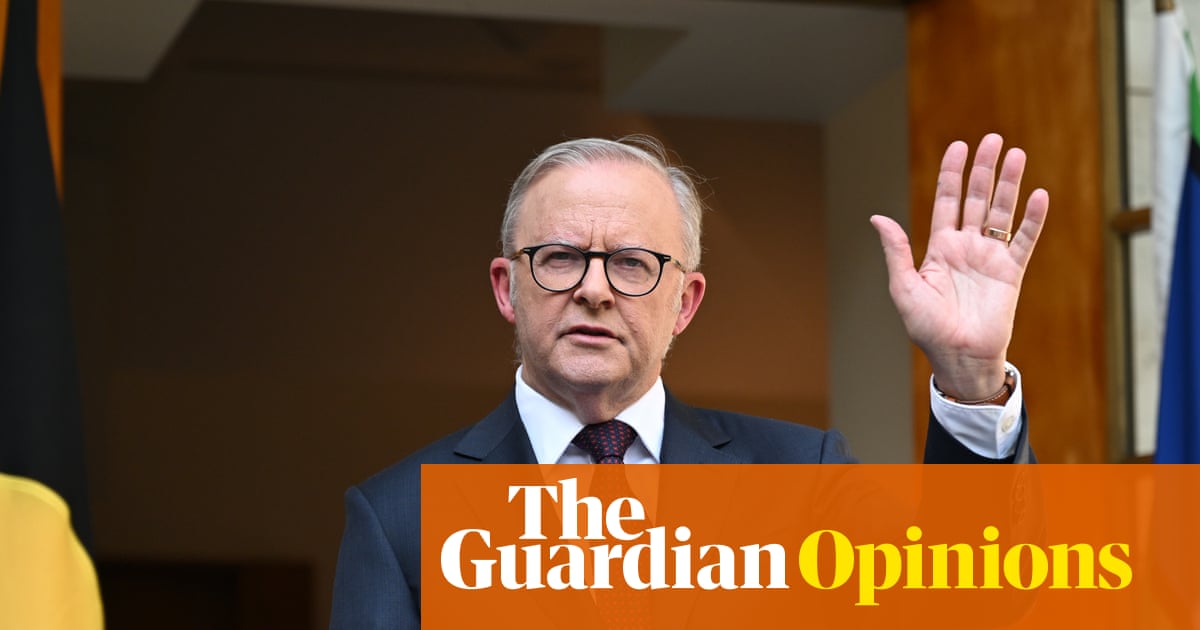
On the final parliamentary sitting day of 2025, Anthony Albanese walked to work, striding breezily into Parliament House past a huddle of television cameras that were pre-positioned to capture his arrival.
Inside the chamber, the prime minister was in full flight as he celebrated the passage of landmark environment protection laws with the support of the Greens.
This was Albanese in his element: a political deal-maker, fixing a problem, outflanking an opponent – in this case the Liberals and Nationals – to win the day, again.
If such a deal was proof positive of Albanese’s biggest strengths as a politician, his handling of the Bondi beach massacre has exposed some of his weaknesses as a national leader.
With no deal to make or opponent to outwit, Albanese was forced to rely on snap judgment and clear, firm and consistent communication in the face of a shocking, unprecedented event.
He struggled, if not for desperate want of trying and a sincere desire to console and unite a grieving nation.
The prime minister’s decision to announce a royal commission into antisemitism and social cohesion means that within 25 days of the shooting the federal government has committed to the highest form of national inquiry, a rewriting of hate speech laws and tougher gun controls.
It is, by any measure, a comprehensive package that reflects the scale of introspection warranted after the nation’s worst-ever terrorist attack. But the substance of the response has been overshadowed by the manner in which it was arrived at, specifically Albanese’s delay in agreeing to an inquiry he now insists is vital to “heal” a wounded nation.
Sign up: AU Breaking News email
The prime minister was on Friday again defending himself, maintaining he was right to focus on immediate measures while taking the time to listen to the community about further steps.
“I have listened to people. We’ve considered everyone’s position. Is it possible to build unity in this way? I think it very much is. I’m very pleased that it’s been welcomed across the political spectrum. At no stage have I engaged in political rhetoric during this period,” he told ABC News Breakfast.
There are many in the community who are sympathetic to Albanese and highly critical of what they consider a coordinated political pile-on fanned by the Coalition and rightwing media. This correspondent has received scores of emails from them in recent days.
It is impossible to overlook the context that prompted this about-face.
Albanese was bound to endure a tougher 2026 even before the Bondi tragedy
The opposition leader, Sussan Ley, might have succeeded in pressuring Albanese to call a royal commission but she shouldn’t assume voters will reflect fondly on her conduct.
Unlike Ley and fellow critics, who have cast Albanese’s shift on a royal commission as a humiliating capitulation, others will view it differently.
“I’ve always had the view that leaders who change their mind and say, ‘OK, I understand where people are coming from and I’m going to change my view,’ that is not a sign of weakness,” the independent MP Allegra Spender said before the prime minister confirmed the backdown late on Thursday afternoon.
It would, however, be naive to assume those 25 days have not damaged Albanese politically. Some of his own MPs freely admit it, although none are questioning the future of his leadership.
The open question is to what extent his authority over the Labor caucus and trust of the nation has been diminished, and how it might influence the remainder of the term and beyond.
While the mechanics of Virginia Bell’s 12-month royal commission are yet to be decided, including what parts will be conducted in secret to avoid prejudicing the criminal trial of the surviving alleged shooter, the inquiry will ensure ongoing scrutiny of the government’s handling of antisemitism.
There will be uncomfortable questions for the government.
After the highs of 2025, in which Labor won a landslide federal election and then watched as the Coalition descended into chaos, Albanese was bound to endure a tougher 2026 even before the Bondi tragedy.
This coming year is set to be more challenging for Labor as it confronts economic headwinds and budget constraints, the tricky rollout of new models for aged care and disability care, and rising expectations from its own base to pursue a more ambitious agenda, including on housing.
Will the damage suffered after Bondi dent Albanese’s confidence and increase his aversion to political risk, sending his government into the same sort of malaise it fell into after the failed voice to parliament referendum in October 2023?
It took a brave decision in January 2024 to reverse the stage-three tax cuts to shake Albanese out of that funk.
Two years on, Albanese faces the biggest political challenge of his nearly 30-year career in federal parliament.
There isn’t a deal to strike, or an opponent to outwit.
Just a nation to lead.
Dan Jervis-Bardy is Guardian Australia’s chief political correspondent