
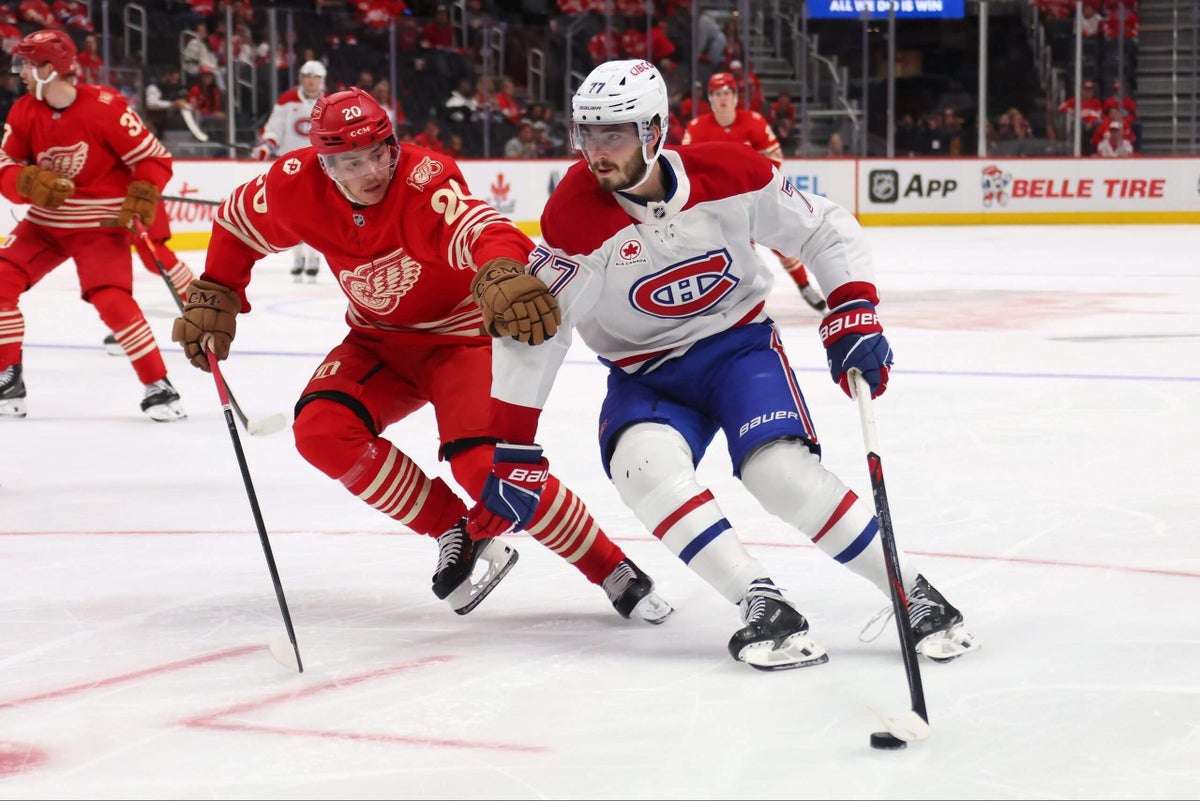
When the puck drops Saturday night in Montreal, the Canadiens and Detroit Red Wings will be squaring off for first place in the NHL’s Atlantic Division, with a caveat: The Tampa Bay Lightning are ahead of both teams in points percentage.
Still, this is the position Montreal and Detroit aimed for when they bottomed out and decided to rebuild. They are seeing the light at the end of that long tunnel.
However, though their rebuilds have led them to a similar position in January 2026, the Canadiens and Red Wings took very different routes to get here.
Of course, one aspect of a rebuild is universally non-negotiable: You have to draft well. Montreal doesn’t get back to this point so quickly without landing Juraj Slafkovský and Ivan Demidov in the top five or finding Lane Hutson in the second round. Detroit would be wandering the desert if not for beginning its rebuild by picking Moritz Seider, Lucas Raymond and Simon Edvinsson in the top six.
From there, the two paths diverged.
Montreal took the fast lane, going from the Stanley Cup Final in 2021 back to the playoffs last spring in half the time of the Red Wings’ rebuild — which, as of yet, still hasn’t seen them back in the postseason. The Canadiens’ tight timeline back to contention is what fans, and maybe even owners, want to imagine when initiating a rebuild.
Detroit, meanwhile, has taken the scenic route. And while that hasn’t always been by choice (the draft lottery didn’t do them any favors), the Red Wings’ patient, plodding rebuild has been a case study in just how long the process can take if just a couple of elements go wrong.
So, while a division lead will be the immediate stake on Saturday night, the more interesting subplot might be what we can learn from modern NHL rebuilds through these two teams.
We compared their paths (outside of drafting well, which, again, is a prerequisite for a successful rebuild) and what lessons can be gleaned from them.
The outset/teardown
Red Wings: Detroit’s rebuild began by necessity after its 25-year playoff streak finally ran out of gas. In the wake, the Red Wings were left to rebuild from the ground up — a process that technically started in 2017, when that playoff streak ended, but is probably best judged from the point Steve Yzerman took over as general manager in April 2019.
The Red Wings did land a first-round pick (plus a second- and third-rounder) in exchange for Tomas Tatar in 2018 and got decent draft capital back for Nick Jensen and Gustav Nyquist a year later. But the big moves in Yzerman’s teardown were trading Andreas Athanasiou (for two second-rounders), Anthony Mantha (for Jakub Vrána, Richard Pánik, 2021 first and 2022 second), Filip Hronek (2023 first, 2023 second) and Tyler Bertuzzi (2024 first, 2025 fourth).
The Red Wings picked LHD Albert Johansson with the second-rounder in the Nyquist deal and RHD Axel Sandin-Pellikka with the first-rounder from the Hronek trade. Both players are now in their nightly lineup on the blue line.
Top goalie prospect Sebastian Cossa was drafted when Detroit traded up with the pick from the Mantha deal. And Detroit used the first-rounder from the Bertuzzi trade to acquire Alex DeBrincat in the summer of 2023.
Vrána not panning out hurt the Mantha return some, and many of the second-rounders Detroit acquired didn’t materialize either. But it still looks like Detroit got legit value back for Bertuzzi, Mantha, Hronek and Nyquist, even if Cossa and Sandin-Pellikka still have more to prove.
Canadiens: Montreal’s rebuild began swiftly, just four months removed from appearing in the final, with the firing of general manager Marc Bergevin and the arrival of Jeff Gorton as vice president of hockey operations on Nov. 28, 2021. Losing franchise cornerstones Shea Weber and Carey Price to career-ending injuries made that decision more obvious, but Canadiens owner Geoff Molson deserves credit for his decisiveness.
On Valentine’s Day of 2022, with general manager Kent Hughes less than a month on the job and five days into the tenure of Martin St. Louis as head coach, the Canadiens traded Tyler Toffoli to the Calgary Flames for Emil Heineman, Tyler Pitlick, a conditional first-round pick in 2022 and a fifth-round pick in 2023. Toffoli was the first step in the teardown, and it is symbolic that the first step netted a player in Heineman who eventually helped land Noah Dobson a little more than three years later, signaling the beginning of the transition phase of the rebuild the Canadiens currently find themselves in.
At the 2022 trade deadline, the Canadiens landed a first-round pick from the Florida Panthers for current Red Wings defenceman Ben Chiarot, a pick that was used a year later in the trade to acquire Alex Newhook.
And in the summer of 2022, the Canadiens acquired another first-round pick from the Flames when they took on the contract of Sean Monahan, who thrived in Montreal to such an extent that the Canadiens were able to acquire another first-round pick from the Winnipeg Jets when they flipped Monahan ahead of the 2024 deadline. The pick they acquired from Calgary was used in the Dobson trade, and the pick they acquired from the Jets was used to move up in the 2024 draft to pick Michael Hage.
These are just three examples of how the Canadiens used the teardown to not only acquire future assets, like any other teardown, but also used those future assets as trade capital to move the overall rebuild along at a quicker pace.
What to learn: Moving decisively into a rebuild has its advantages.
Granted, most teams coming off a Cup Final appearance don’t need to consider rebuilding as soon as Montreal did. But when the writing is on the wall, it pays to pay attention. By moving quickly into the rebuild, Montreal was able to make a flurry of moves for futures in the first year, which made for a faster payoff.
Using their cap space as a way to double-up on assets for Monahan (both taking on his contract, and then trading him away) was a particularly savvy move that helped contribute to acquiring both Dobson and Hage. And in acquiring Mike Matheson for an older player in Jeff Petry, they added a player who could both bridge the rebuild gap and contribute on the other side of it.
Montreal could have waited to see whether some of the players they traded away could help get the team back on track (though some were unrestricted free agents who would have needed new contracts). But instead, they pulled the cord quickly and probably shortened the length of their rebuild as a result.
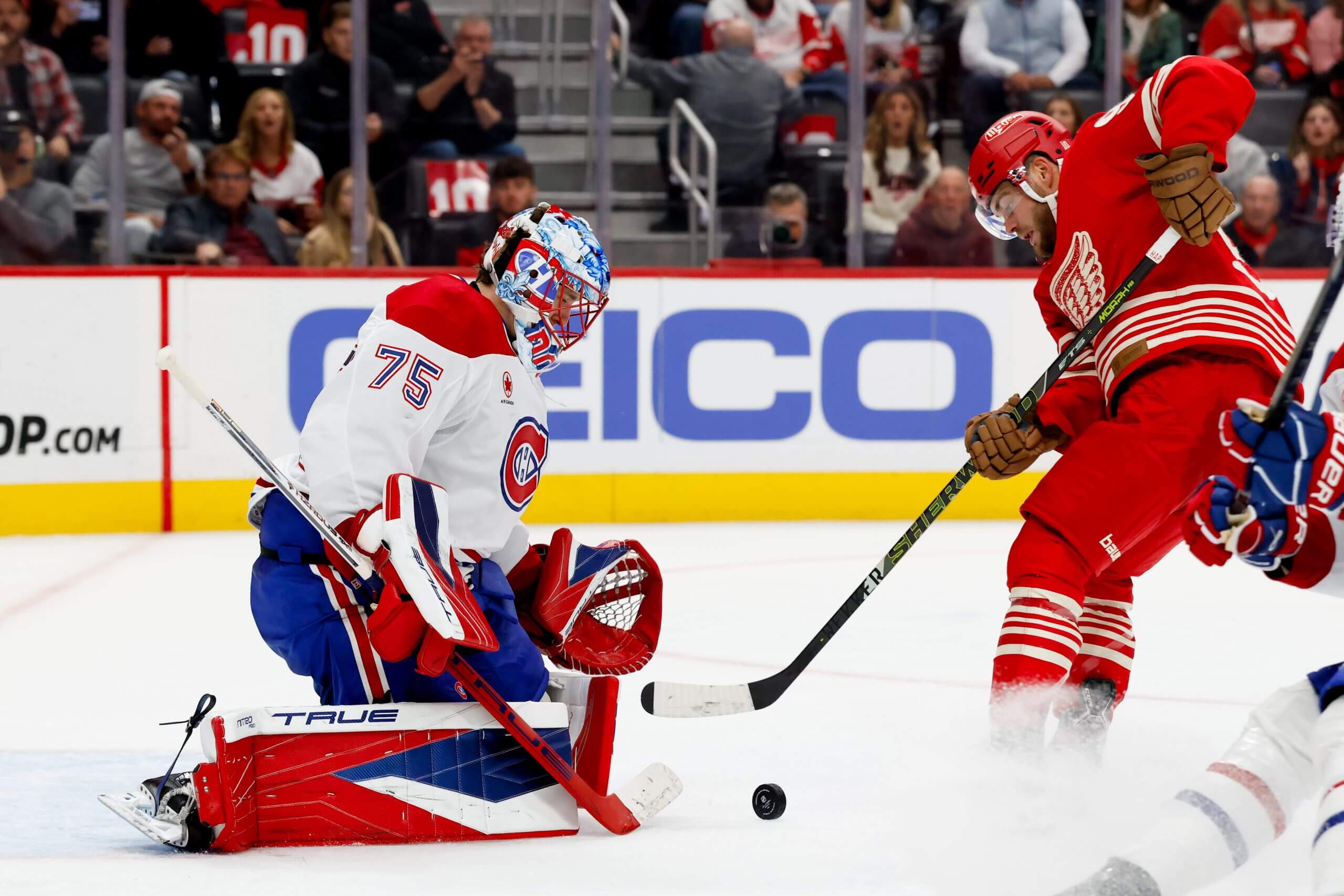
The Red Wings acquired Alex DeBrincat in July 2023. (Rick Osentoski / Imagn Images)
Trades
(Note: This refers to trades that built the teams up, not moving pieces out for assets.)
Red Wings: The big one is DeBrincat, whom Detroit acquired in July 2023, for the Bruins’ 2024 first-round pick (via the Bertuzzi trade), a 2024 fourth-round pick, Dominik Kubalík and defense prospect Donovan Sebrango. Detroit had needed a scorer, and DeBrincat quickly became one of their most important players.
The Red Wings’ other notable trade was this past summer, for goaltender John Gibson. Detroit had traded for a goalie twice before, too, but didn’t have much success with either Ville Husso or Alex Nedeljkovic. Gibson, though, was their biggest swing at the position under Yzerman. And while he got off to a rocky start over his first six weeks, he’s been one of the league’s best-performing netminders since the start of December.
Gibson’s reality probably lies somewhere in the middle of those two extremes. But for a Red Wings team that has spent the entirety of its rebuild looking for a reliable No. 1, Gibson’s recent run has made a difference.
Canadiens: It would not be accurate to say the Canadiens have hit a home run with every trade this administration has made, but they have a very high batting average.
In back-to-back years at the draft, the Canadiens made a splash by acquiring Kirby Dach from the Chicago Blackhawks in 2022 and Newhook from the Colorado Avalanche in 2023, and in between, they got Matheson from the Pittsburgh Penguins for Petry and Ryan Poehling, and also swung the deal with Calgary to take on Monahan’s contract.
And that was just in the first 18 months of the Gorton/Hughes regime.
Even the trades that didn’t work out as well still netted something valuable, such as the Artturi Lehkonen trade to Colorado for Justin Barron. When Barron struggled to find his footing in Montreal, they flipped him to the Nashville Predators for Alexandre Carrier last year, a turning point in the Canadiens’ season. And the Patrik Laine acquisition from the Columbus Blue Jackets — a calculated risk that has not panned out — came with a second-round pick the Canadiens just used to acquire Phillip Danault from the Los Angeles Kings.
This past summer was perhaps the most impactful, adding Dobson, but also adding young forward Zack Bolduc for defenseman Logan Mailloux from the St. Louis Blues
The Canadiens have leaned heavily on trades since Gorton and Hughes took over, and their winning percentage on those trades is a big reason why this rebuild is moving as quickly as it has.
What to learn: Trades come with risk, and hitting at the rate Gorton and Hughes have may not be repeatable. But when a team acquires players, and not just picks, it gives its rebuild a chance to accelerate because of how much less time is spent waiting for picks to develop.
Matheson, Carrier and Dobson represented 75 percent of the Canadiens’ top-four defense last game, with Kaiden Guhle out, and all three were acquired by trade. Eventually, you’d expect that ratio to flip, with Guhle and David Reinbacher bumping down Matheson and Carrier, but that’s part of the point: Teams don’t have to simply wait for prospects to develop to improve.
If a team is calculated — and perhaps more importantly, willing to take a risk — there are opportunities to find very useful pieces that can make quicker impacts than picks or prospects.
Free agency
Red Wings: Outside of landing Patrick Kane midseason in 2023-24, when he was coming off hip resurfacing surgery, Detroit’s free agent signings have predominantly been of the middle-tier variety and have accordingly delivered middling results.
Granted, you can debate whether some of the recent big fish on more expensive deals would have really been worth the cost — Steven Stamkos and Jonathan Marchessault haven’t necessarily worked out so well for Nashville. But in addition to short-term signings to fill out the roster (such as James van Riemsdyk and Mason Appleton), the longer-term adds under Yzerman contributing to the 2025-26 team are mainly Andrew Copp, J.T. Compher and Ben Chiarot.
Copp has been quite good centering the Red Wings’ second line over the last month-plus, and Compher had his career high with 19 goals in his first year in Detroit. The only issue is that both are similar players, and it has seldom felt like they have been at their best at the same time. When one is high in the lineup, it usually bumps the other down and diminishes their production.
Chiarot can be mistake-prone at times, but he’s been able to eat big minutes for Detroit all four seasons of his deal, and brings a physical element when clearing the net that the Red Wings sometimes lack.
Those players all have real roles for the Red Wings and are contributing. But it’s hard to say the Red Wings have moved the needle on their rebuild through free agency, either.
Canadiens: Aside from re-signing their own players and a few depth signings, the Canadiens have not signed a single unrestricted free agent of note since Gorton and Hughes took over.
What to learn: Some use of free agency is necessary to fill out a team, and there is certainly value to be had in short-term additions. But a team’s rebuild likely won’t be transformed by free agent signings, either — especially in the current landscape, where the rising cap means the market is increasingly dominated by more middle-tier players.
Re-tooling teams such as Washington have used it to great effect in finding underappreciated pieces such as Dylan Strome, and part of the appeal of free agency is that you’re not giving up assets to acquire a player. That matters.
But the trade-off is the players are usually older, and the open market often leads to contracts with little room for upside — at least on longer-term deals. While short-term bets such as Kane and van Riemsdyk can pay dividends to fill specific needs, getting par value out of a longer-term deal is exceedingly rare.
Free agency can still be a viable way to fill a hole. But it’s not a real avenue to building a core. And perhaps for a rebuilding team, less is more.
The transition
Red Wings: The Red Wings prioritized patience above virtually all else, and with the way Seider, Edvinsson and Raymond have developed, that’s finally paying dividends as the three enter their respective primes. They’ve become three of Detroit’s best players, which was the vision all along.
Still, it probably didn’t need to take this long. Detroit flirted with turning the corner two seasons ago, when DeBrincat and Kane’s arrival gave them a much more potent offense that put them within a tiebreaker of the playoffs. A March slump that year left them on the outside of the postseason bubble, though, and then a disastrous start to 2024-25 got Derek Lalonde fired at Christmas.
Some of that could be chalked up to the ebbs and flows of development. But when you consider just how improved the Red Wings have been under Todd McLellan, it’s fair to wonder if the group might have been ready for the next step even sooner — whether through coaching, or more aggressive moves from Yzerman to bolster his core for the last two home stretches.
Canadiens: The start of Montreal’s transition phase came as a bit of a surprise when they returned from the 4 Nations break last season and reeled off a five-game win streak, followed by a six-game win streak in early April that put them in the playoffs. None of it seemed like a sign of sustainable success at the time, but it was also gravy in the big picture — the Canadiens had no expectation of gaining playoff experience last season.
The real transition came in the offseason with the Dobson trade, adding a core piece who fit the age range of the existing core and using two picks in the middle of the first round to get it done. Gorton and Hughes had traded draft picks before, but nothing like this, a sign that the rebuild was entering a new, precarious phase, one where playoff participation is now an expectation and not a luxury.
What to learn: You must seize opportunities when they arise. The Canadiens did not find out Dobson was available in a trade until about a week before it ultimately happened. He was not part of their overall plan, but once Dobson became available, the Canadiens changed that plan and used their deep well of trade assets to get the deal done, reluctantly moving a player they liked in Heineman to add a very rare commodity.
Draft picks and young players are important parts of any rebuild, but at some point, you reach a saturation point and they become somewhat redundant, which is when monetizing them for more immediate help starts to make sense.
How they complete it
Red Wings: The key for Detroit will be timing.
Between Nate Danielson, Michael Brandsegg-Nygård, Carter Bear and continued development for Kasper, the Red Wings have some legit forward talent on the way. But will those players arrive (and contribute) in time to match up with Larkin and DeBrincat’s prime?
If not, then the Red Wings will really need Kasper or Danielson to become a No. 1 center to offset the aging curve for their captain. They’re not likely to pick high enough in the coming years to draft another one.
In the present, adding another top-six forward would give Detroit a more threatening mix, but a top-four defenseman feels like the true “must” — ideally a LHD to play with Sandin-Pellikka going forward. And while Gibson has been strong for the last six weeks, much of Detroit’s future still rests on whether Cossa, Trey Augustine or both can become a bona fide NHL No. 1 goalie.
In many ways, the Red Wings’ patience is being rewarded this season. But the downside is they have probably sacrificed a couple of years off the start of their contention window in service of that patience. Larkin is 29 now, which means their best chances to win (barring a major developmental breakthrough elsewhere) are likely in the next three to four years.
Detroit is entering a window of playoff expectations. But for as much improvement as the Red Wings have made, there’s plenty of work to do before it’s safe to call them a true contender.
Canadiens: One look at the Canadiens’ cap sheet makes it somewhat obvious that 2027-28 represents an opportunity to open a true contention window. They have several contracts coming off the books and the entirety of their young core will be at various stages of their prime; captain Nick Suzuki will be 28 entering that season, Ivan Demidov will turn 22 that December, and in between those two, they’ll have Dobson, Cole Caufield, Slafkovský, Hutson and Jacob Fowler.
Between now and then, the Canadiens need to ensure that group continues to gain playoff experience while also ensuring the right mix of veterans and young players surrounding the core on reasonable contracts. It is the trickiest part of any rebuilding process and the part where this often gets derailed. And Hughes recognizes that.
“Before it was easy; it was a very obvious path,” Hughes said in his midseason review Tuesday. “And hopefully you get to the other end of it, and the path becomes obvious again because we’ll be on the other side of it. In the interim, it’s a delicate balance, and there’s a lot of considerations.”
What to learn: A big part of opening a contention window is also managing the development windows of all the prospects you draft while tearing it down, to make sure multiple core players are in their prime at the same time. Detroit’s ticking clock with Larkin is a prime example of why that is critical, and it remains to be seen if the Canadiens will manage to make all those windows line up.