
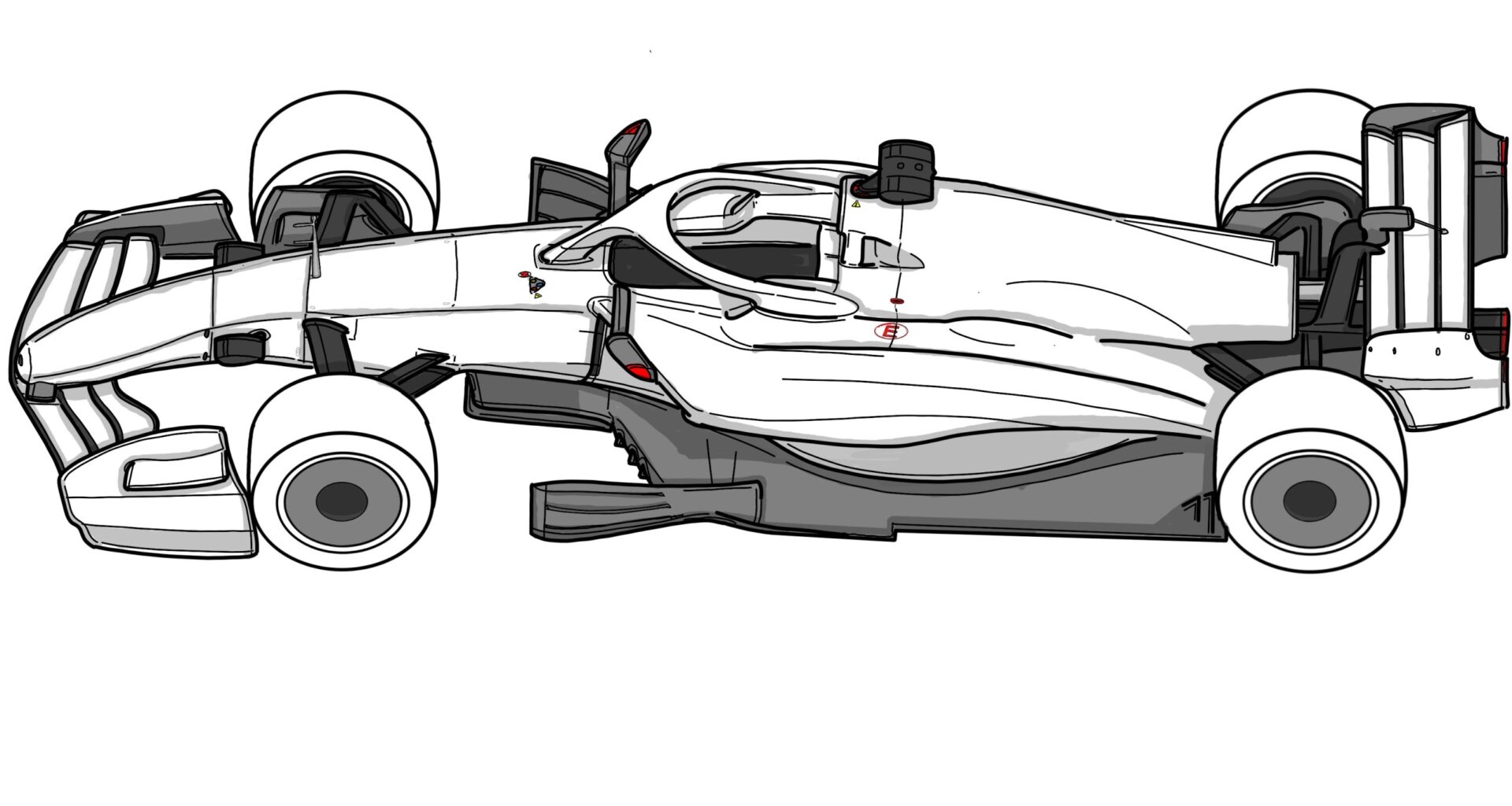
The 2026 season will bring a huge change to every aspect of the F1 car, with new aero and power units, new tyres, shorter wheelbase and the abandonment of the Drag Reduction System.
With barely enough time for Lando Norris and McLaren to digest a historic first driver and constructor double since 1991, not to mention their Christmas dinner, Formula One is preparing for a season like no other.
F1’s rules move in cycles and in the past 20 year the frequency and scale of these changes have increased.
The FIA along with F1 have introduced a series of aims to improve the racing, the cost, safety and the public perception of F1.
For this year will see cars with renewed agility and performance with efficiency.
In doing this the sport has enticed both Audi and General Motors into the sport with several other manufacturers waiting in the wings.
So, what’s changing?
 © Craig Scarborough
Shape and Size
Firstly, the cars will be smaller and lighter, something long requested by the fans.
With slimmer tyres and reduced track, the cars are 10cm narrower, then wheelbase is 20cm shorter. Weight wise the cars are not just 30kg lighter, but a reduced race fuel load means the cars will line up on the grid 70kg lighter!
Luckily the for the teams’ designers the reduction in the fuel tank size should account for the wheelbase reduction, creating less headaches in repackaging the gearbox case.
Also its good for the future, in that we still have these excessively long gearbox cases as a potential area to reduce wheelbase in subsequent rules changes.
Aero
Then the aero philosophy goes beyond what the 2022 rules attempted to do with a reduced wake to aid a following car set up for an overtake, there will now be a full inwash aero design that means the car sits in its own dirty air.
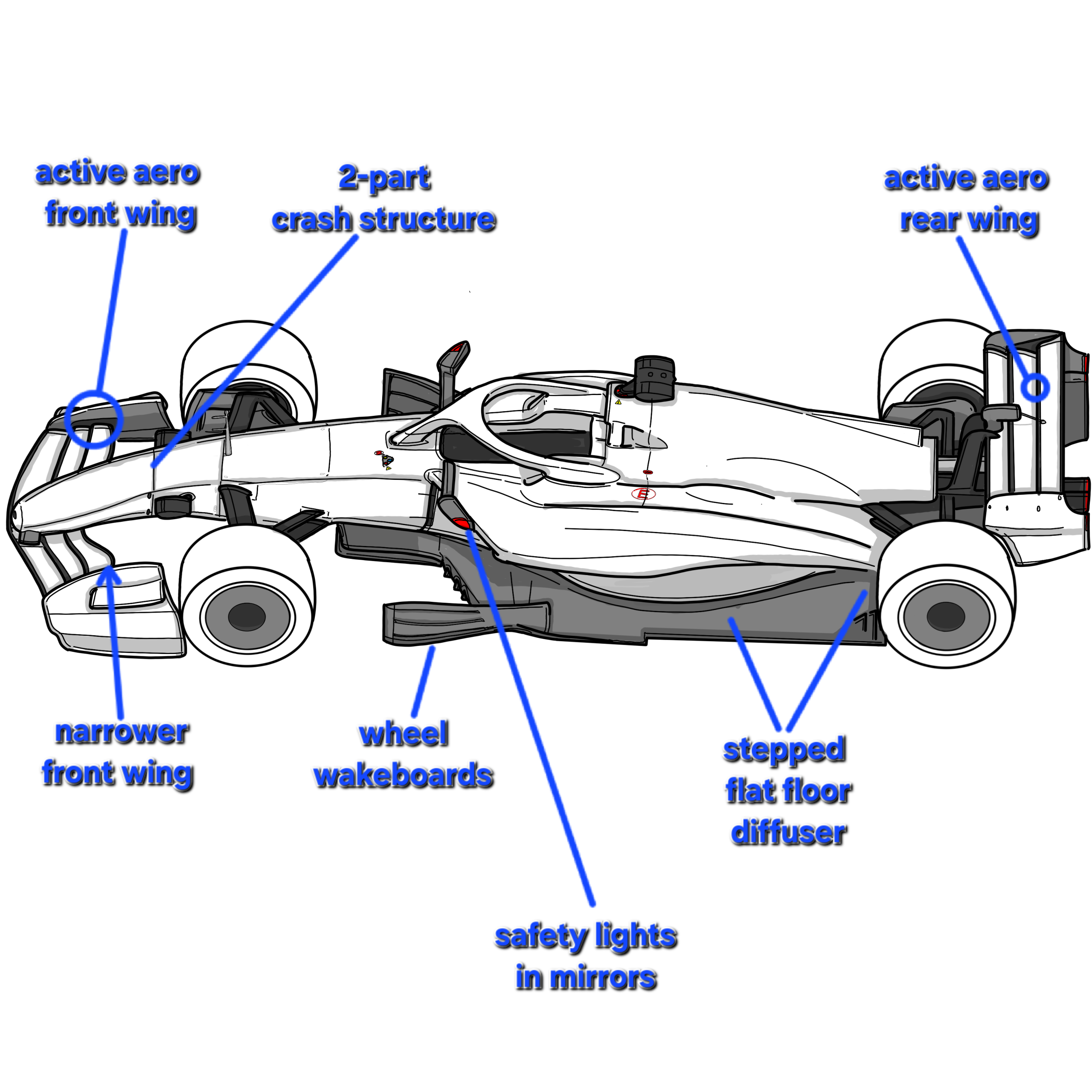
To achieve this the front wing is narrower with the vertical endplate sitting in line with the inner face of the front wheels.
 © Craig Scarborough
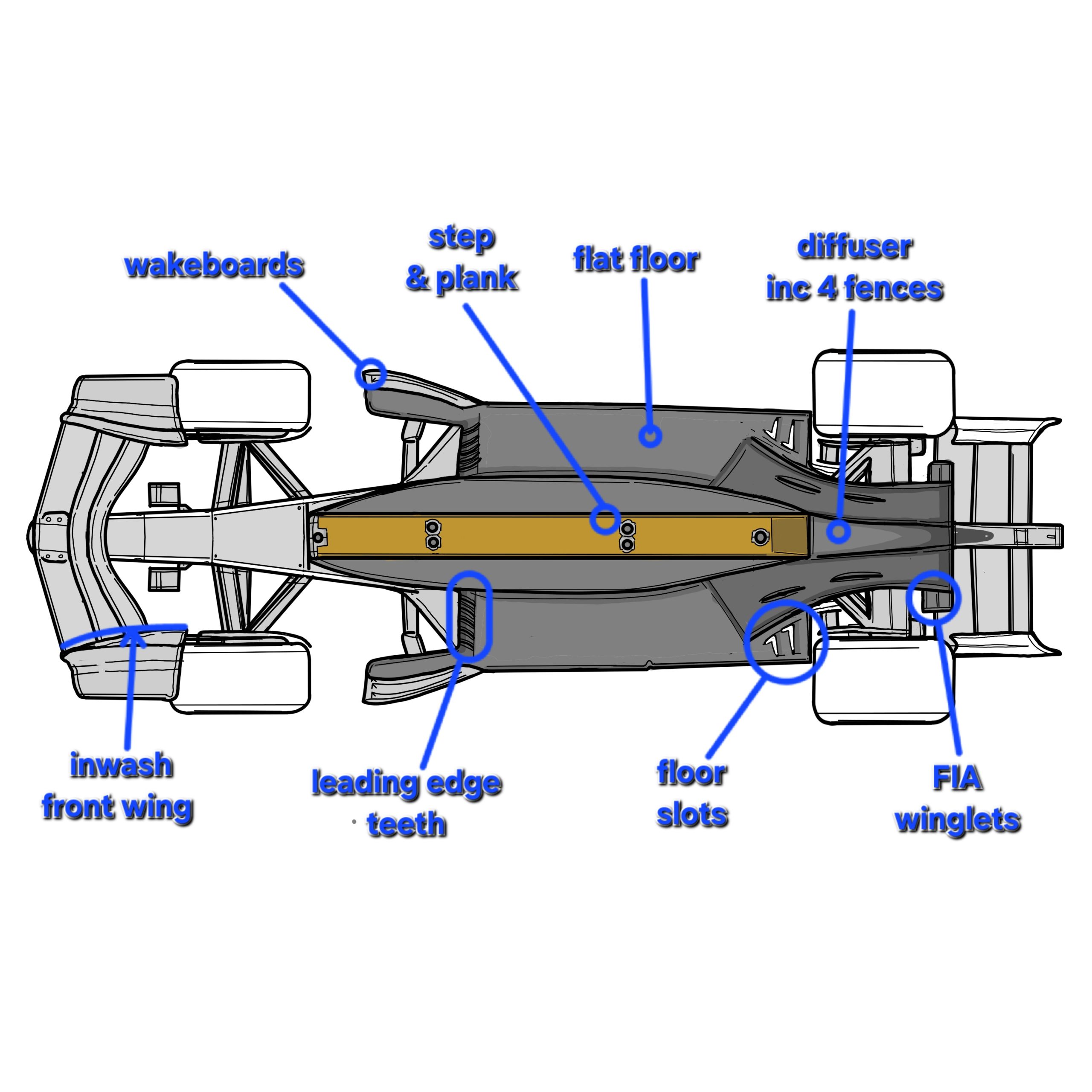
Additionally there is a new aero device, the front wheel wake board, likely to be truncated to wakeboards.
These bargeboard-like devices sit behind the front wheel and guide the wheel wake back inboard to flow in between the rear wheels.
Of course, teams will want to play with how the airflow over the cars bodywork and certainly will do everything to try push the front tyres wake away from the floor and rear wing.
I suspect in doing this we will see a wide variety of different approaches in the first few years of these rules, some of which will definitely be controversial interpretations of the rules in other team’s minds.
In creating this inwash philosophy there should be a smaller turbulent wake for a following car to endure.
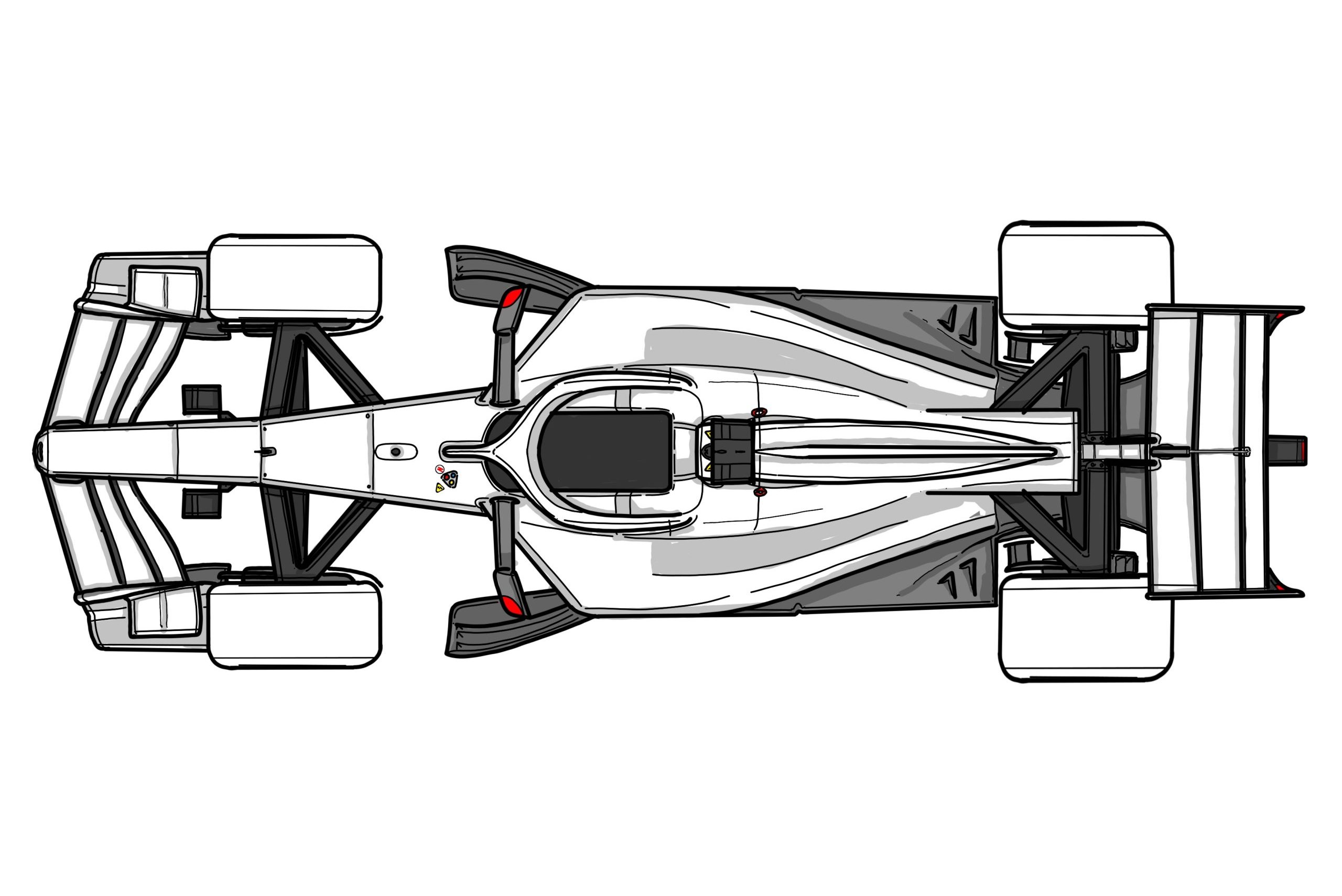
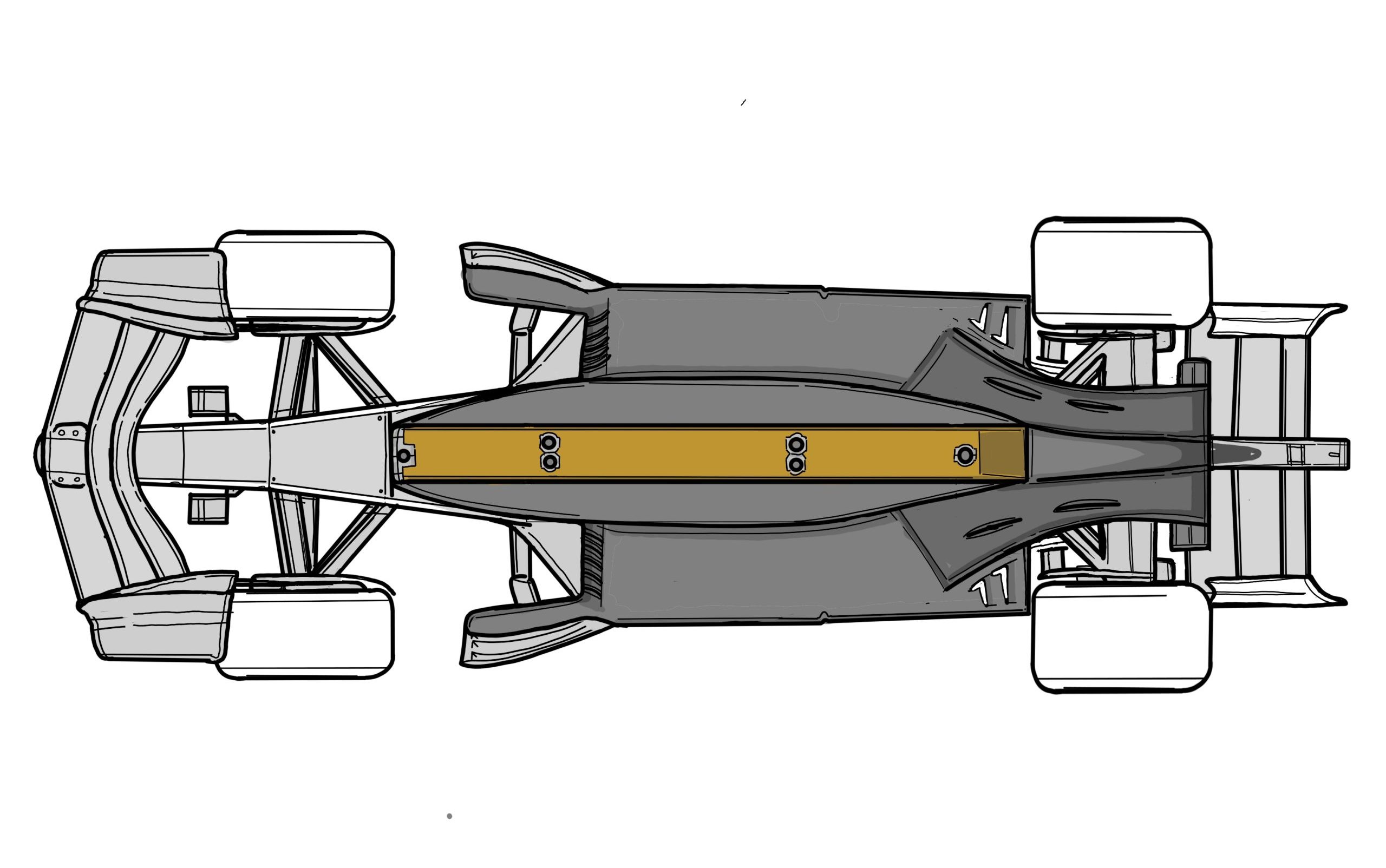
While speaking of endurance, the underfloor aero is changing, the so called ‘ground effect’ tunnels are going and we return to a stepped floor and diffuser set up. Similar but more powerful to those raced up to 2021.
 © Craig Scarborough
This creates less downforce than the fully shaped underfloor but crucially negates the need to run the car so low on stiff suspension, creating bouncing issues for the team and the driver inside the cockpit.
The new floor is much simpler; the floor is effectively flat from the leading edge to the diffuser.
There is an allowance to create more downforce at the front of the floor, with teeth at the floors leading edge and an axe head shape to the floor underneath the wake boards.
The rules have also aimed to simplify the floor edge, with the teams unable to create the large complex outwashing floor edge wings seen since 2022. But the teams can have slots in the floor ahead of the rear tyre, to help with flow management in that area,
Some new details will include a spoon shaped front wing returning for the first time since 2009, we will have now a swoopy shaped front wing, lowest at its centre, hanging from two pylons under the nose.
Explaining what’s changed with the front and rear wings! 🤓👀
There are plenty of aerodynamic talking points within our 2026 technical regulation changes, none more so than the wings… 🪽#F1 pic.twitter.com/1tkzPr1Zpu
— Formula 1 (@F1) January 9, 2026
Also, the front wing will be narrower, sitting in between the front tyres, to aid the inwash concept. At the rear the wing returns to a flat endplate design and not the blended arched design from 2022.
This was partly due to the active aero changes, which are detailed below.
We will lose the arched brake duct fairings over the front wheels, but the wheel covers remain, albeit now under the team’s design domain.
 © Craig Scarborough
Power Unit
For the first time the power unit performance and the aero have been designed in tandem. We will still have +1000hp power units, but running a third less fuel, while that fuel is also a certified sustainable formula.
This will be achieved with a near equal mix of combustion engine and hybrid power. With the change from just 120kw of electrical propulsion to 350kw, the car will have impressive torque to launch them form the corners.
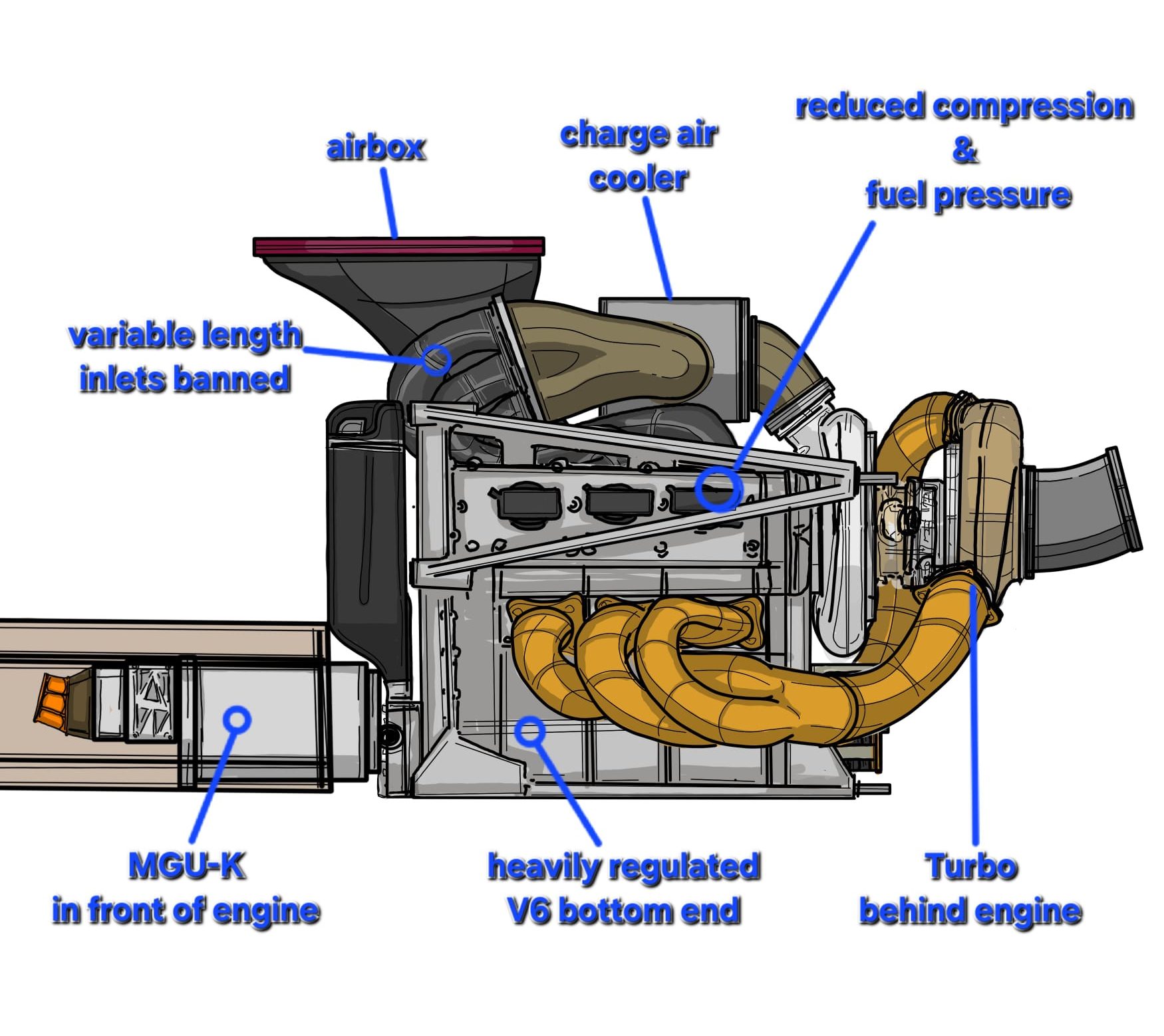
We will continue to run 1.6l V6 combustion engines, with a single turbo. Albeit, the turbo must not be split and has to sit behind the engine and the bottom end of the V6 engine itself is far more regulated in its design.
This was an intentional direction, which leads teams to focus on the more important aspect of combustion with cylinder head.
Already this area is creating controversy, with rumours of loopholes allowed by creative material design.
 © Craig Scarborough
In this area the development of the sustainable fuel will be critical in creating the most effective combustion.
On the hybrid side the ERS-H has been deleted, while the ERS-K has been enlarged along with the battery. Additionally, the MGU-K along with the Battery and Control electronics must sit inside the survival cell, not alongside the engine for safety reasons.
Only having an MGU-K to recover energy puts a lot of onus on the braking phase to charge the battery.
But, the rules have been changed to allow limited harvesting at full and part throttle. Meaning at tracks with limited braking events, the hybrid system can still charge, albeit at the cost of fuel consumption.
There will be a lot of new control procedures for the teams to understand, in order to get the best from the power unit at different tracks.
Us fans will need to learn about these as the new races unfold. At least we will see the increased use of a ‘boost’ and ‘recharge’ mode buttons, as the drivers use the systems tactically through the race.
Aiding the more complex control requirements of the power unit and the aero control modes, there is a new ECU. This is again from long time F1 spec ECU supplier Motion Applied.
The new ECU has more inputs, more performance and totally new shape, once again a rectangular box after being the triangular shape since 2008.
Also, new on the power unit electronics is a new fuel flow measurement (FFM) sensor. F1 has measured the instantaneous fuel flow to the engine since 2014 with an ultrasonic sensor.
This increased to 2 FFMs in 2020, giving the FIA exclusive encrypted access to one of them, to prevent any irregularities. In 2026 these is a now a single device from a new supplier, Allengra.
This neater solution has two internal ultrasonic sensors, again one for team use and one encrypted for the FIA to monitor.
It’s all change in 2026! 🔄
A new breed of F1 car will see both the chassis and power units updated, in the biggest overhaul of regulations in the sport’s history. Here’s everything you need to know as we race into a new generation 💨#F1 pic.twitter.com/PhOzDRxSzz
— Formula 1 (@F1) January 1, 2026
Modes
Do not be confused that these rules were designed in a disjointed way, that the aero ideas came after disappointment with the power unit performance.
The aim for increasing efficiency while maintaining the same level of performance, was always going to require the power unit and aero philosophies to compliment each other.
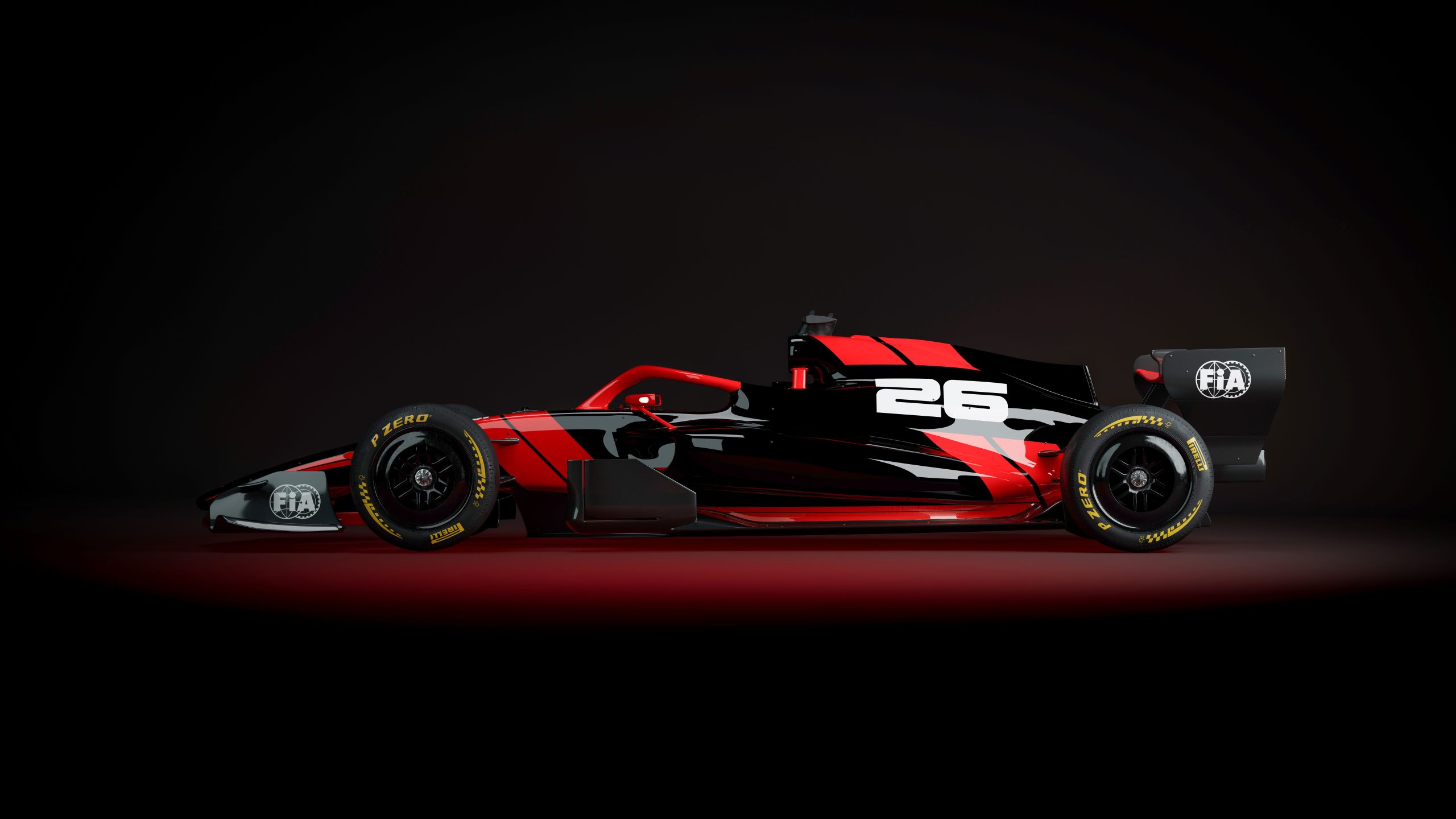
So, uniquely, the F1 cars will have adaptive aero. The driver can have high downforce wings for the corners and flat wings for speed on the straights.
These new modes will be available every lap and are a key part of allowing the power unit and aero to work together to maintain similar performance to the current cars.
To achieve this the front and rear wings will tilt DRS-style under driver control. The FIA will set out the areas around the track where the wings can open, which should be a lot more the track than a DRS zone, effectively anywhere where the car the is no longer traction limited.
For many, the loss of DRS will be a welcome change, creating ‘unlimited’ overtaking opportunities and at the same time DRS trains. The active aero modes of will not replace DRS per sé, instead that will be the new overtake mode.
This will be available to the driver when they are 1s behind at rival at the detection point. But rather than just having the push to pass mode available for the following the straight, they driver will have maximum power and additional energy allowance to use throughout the lap.
Safety
Safety in F1 never stops, it can never be ‘safe enough’. In 2026 the three big changes will be the nose, the chassis protection and the roll hoop.
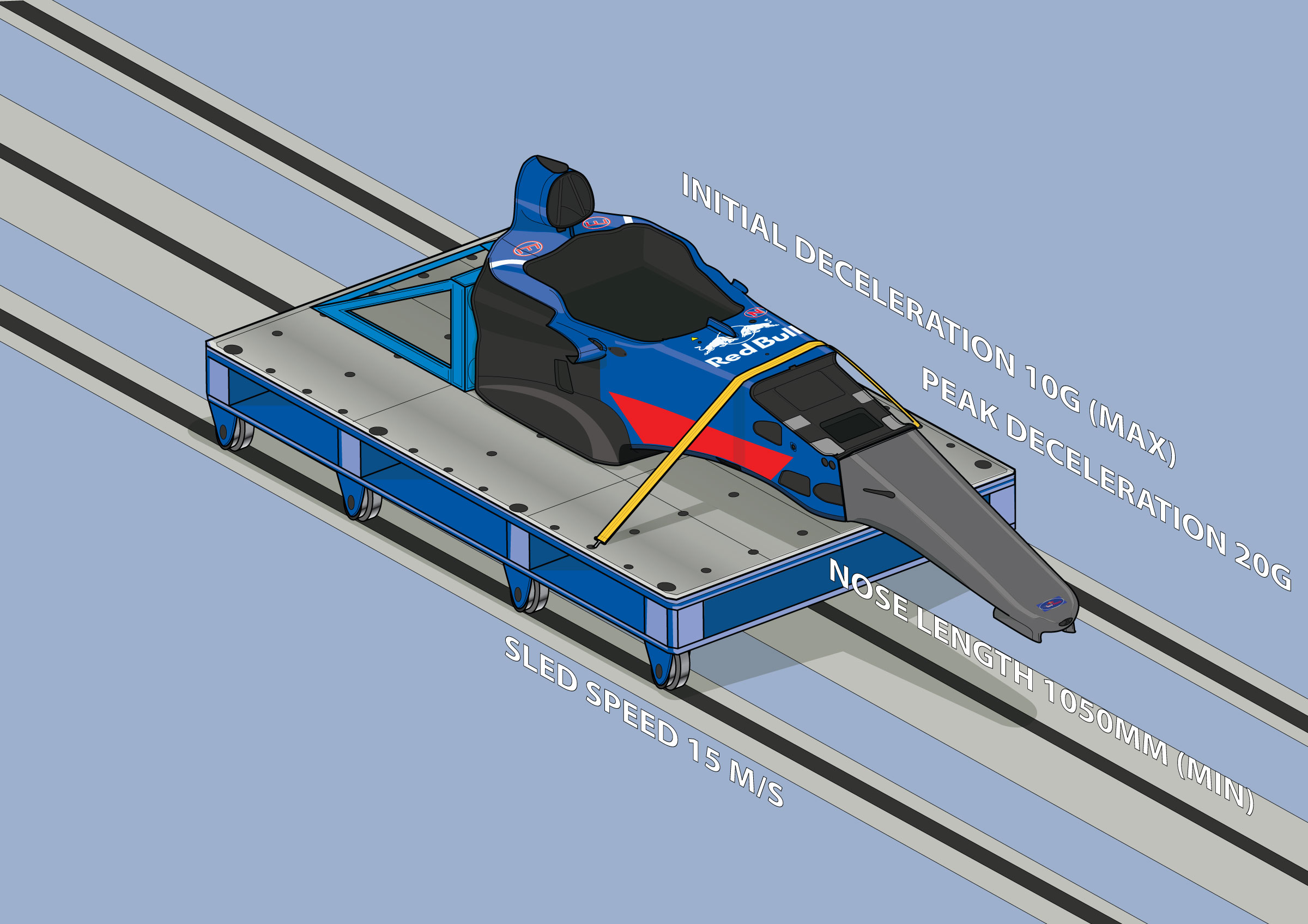
For the first time we will see a two-part nose, the impact structure now has two crash standards to meet. One for most of the nose length from the tip backwards.
And there’s another sturdier nose impact structure that typically meets the front of the chassis. This is to ensure that in crashes there is some crash structure still in place should the nose tip break off and there then be a secondary impact.
 Crash Sled front impact test ©Craig Scarborough
The sides of the monocoque will gain greater protection from intrusion, as the danger from a car being T-boned has been sadly demonstrated in recent F2 events.
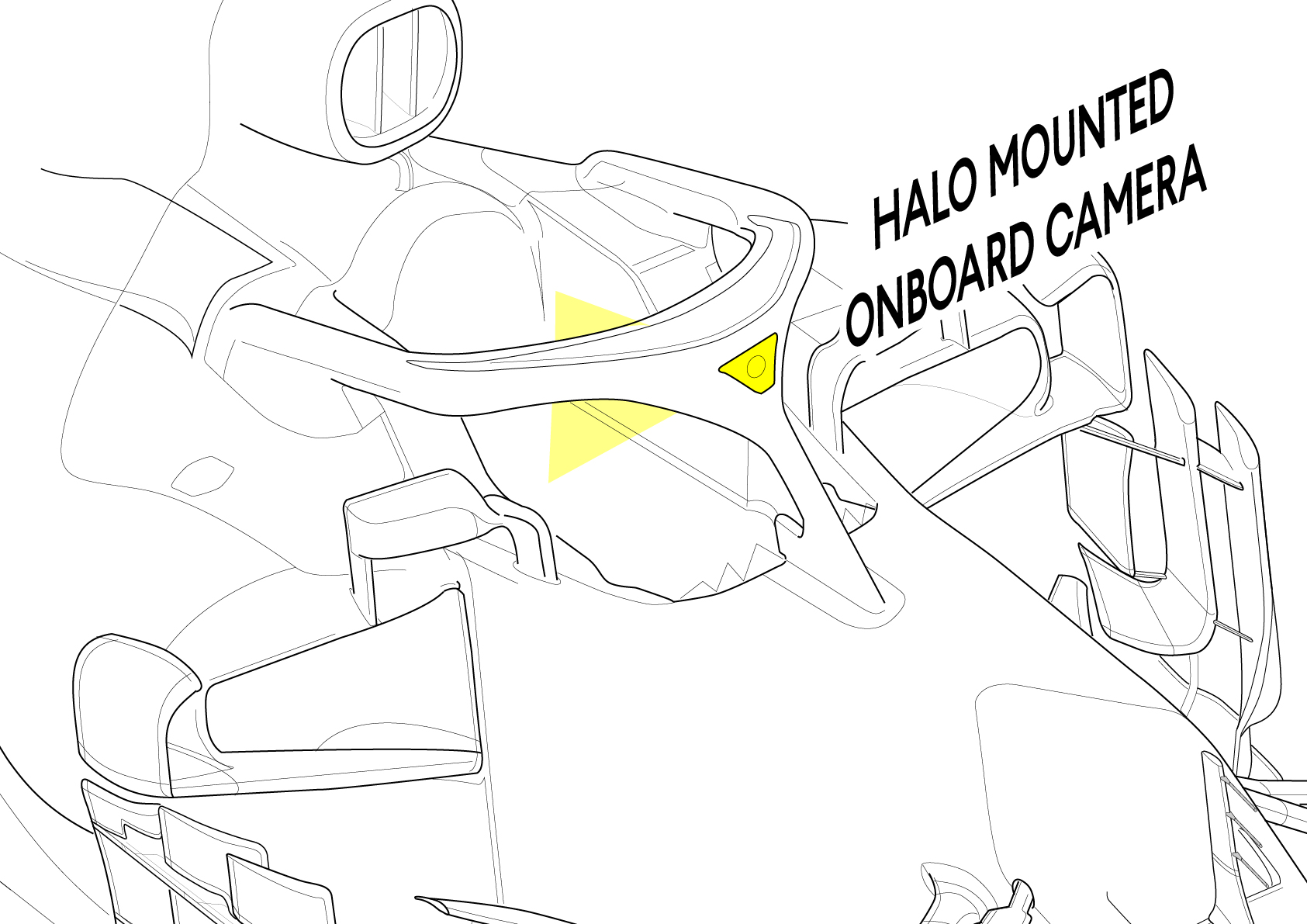
Continuing the theme of improving the roll hoop’s robustness after the Guang You Zhou accident, the roll structure now needs to withstand 23% greater loads.
 © Craig Scarborough
We will also see safety lights on the mirrors, to make the car more visible if the car has crashed or spun and is stranded sideways on the track.
A closer look at the new generation of Formula 1 cars 👀📸#FIA #F126 pic.twitter.com/PCBj11038G
— FIA (@fia) December 17, 2025
Stay tuned to Motorsport Technology during the build-up to the 2026 Formula One Season as we continue to bring the latest tech developments, race reaction and video tech insight.