
THE Supercars circus lived out a wild ride throughout the 2020-’21 seasons through COVID-19, however, it wasn’t the first time a coronavirus impacted the calendar of our premier category.
To find that initial delay, look no further than the sport’s first attempt to race in China, which was envisioned as one of the most significant moves in Australian sport.
Following 18 months of behind-the-scenes negotiations, V8 Supercars shocked the industry in February 2003 with the announcement of a five-year deal to take the Australasian series north to China from 2004 to ’08.
The deal was sealed with an eight-person delegation visiting Shanghai, including Tony Cochrane, Garry Rogers, Channel 10’s David White, and CAMS representatives.
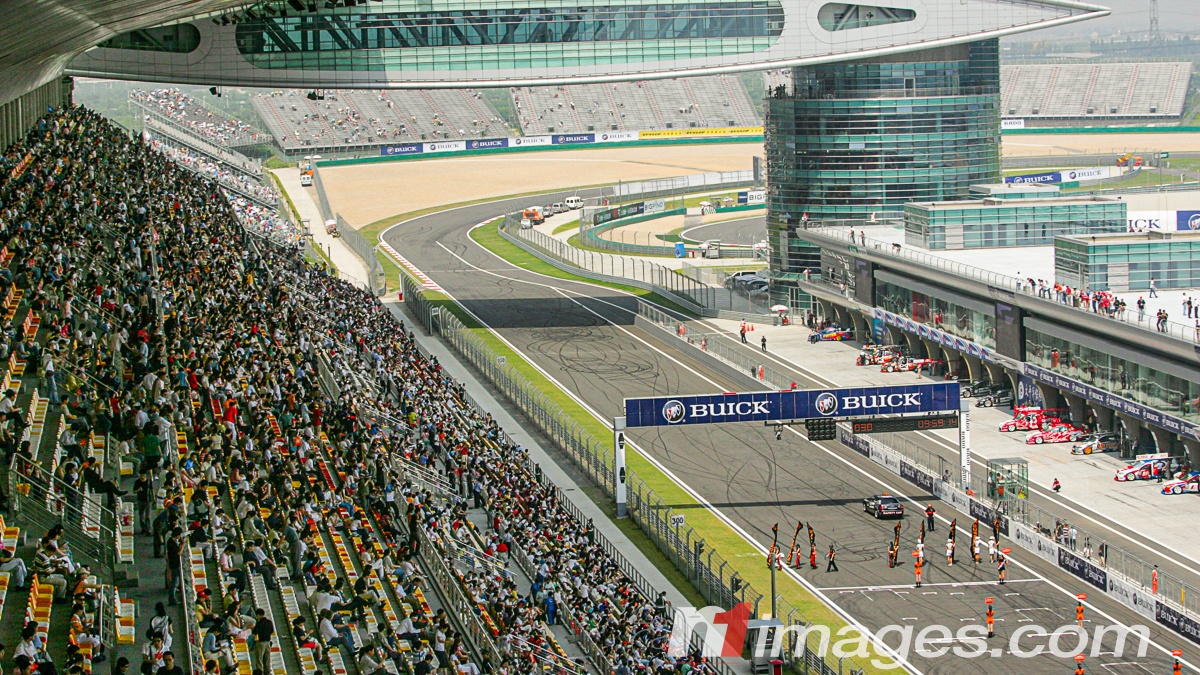
From the venue standpoint, at the time of the announcement, it was undecided whether the event would be held at the 2km-long, 14-turn Shanghai Tianma Circuit or the Formula One-grade Shanghai International Circuit, which was ultimately chosen.
Backed by the Chinese Development Group, a joint venture between the Shanghai Weice Business Company and the Chinese Government, the event was to be a standalone event, and not in support of the country’s F1 race.
The arrangement came somewhat out of the blue, with pundits expecting the category to visit the Middle East and South Africa, with the China deal to include a significant free-to-air TV package in the region.
Shanghai is the most populous city in China, with a 2003 population of 15 million, which subsequently grew to over 29 million.
However, in March 2003, the first concerns regarding Severe Acute Respiratory Syndrome (SARS) came to light, which, for a time, led to the final agreement being signed on either side of the equator.
SARS actually reached Australia, with six cases reported and zero fatalities.
Fortunately, public health measures such as face masks and simple personal hygiene practices, combined with clinical isolation and quarantining, helped contain the outbreak by the start of July 2003.
Sixteen and a half years later, another strain of SARS-CoV would cause COVID-19.
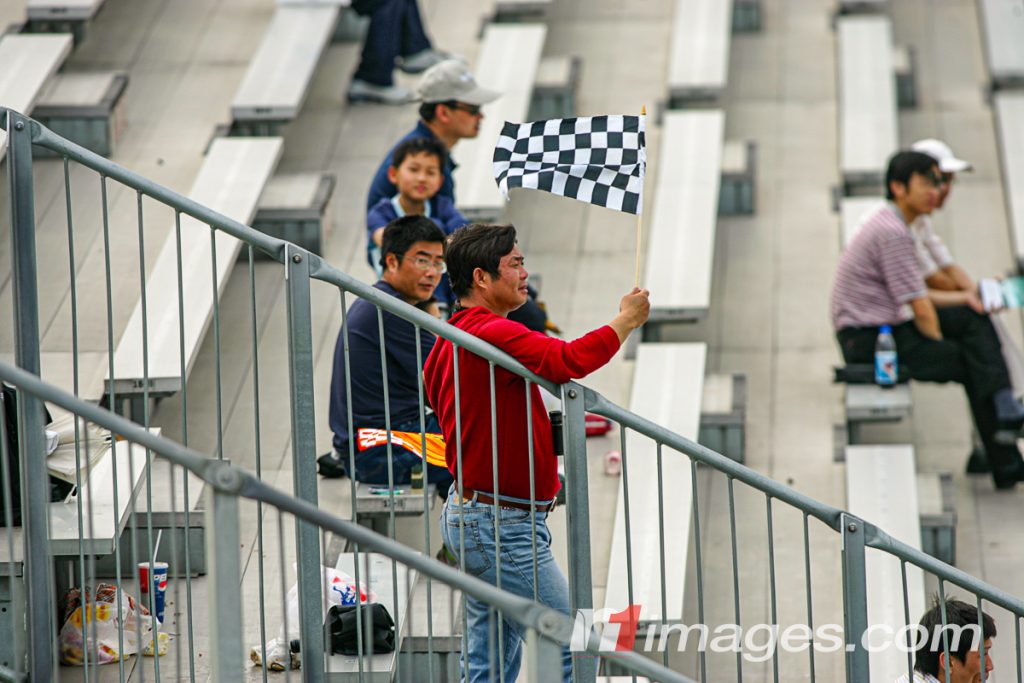
Race fans in China would ultimately have to wait. Pic: an1images.com / Dirk Klynsmith
The official signing of the promotion agreement was postponed again, from July to August, and the event was finally confirmed on September 22nd, 2003, to run from November 12-14, 2004, which saw the meet replace Phillip Island on the V8 calendar.
The November date was an interesting call on multiple fronts; firstly, the weather, with an average temperature range at that time of year of 8-16°C, and rain; and secondly, it clashed with Rally Australia, a key event for host broadcaster Network 10.
At the time, it was also mentioned that the 2005 race would likely be moved to June and would enjoy much warmer weather.
Also, of note in September ’03 was the replacement of the original promoters, who were refunded their deposit, with the Shanghai Greenland Sports & Culture Development Company Ltd, which paid a fresh deposit to secure the event.
The Greenfield Group wasn’t exactly in the business of promoting motorsport events; it was a building development company, with large, successful Chinese companies such as this setting up sporting and cultural arms to give something back to the community.
To guide them along the way, the Greenland Group engaged Octagon to look after the day-to-day operations of orchestrating the event.
There were plenty of rumblings about the venue’s readiness, with 3,000 workers on site transforming the former rice paddy into the latest Tilke-dome, while other questions were raised about the qualifications of the local team of officials, with one solution being to import experienced Malaysians for the event.
Come the start of April, the November ’04 version of the race was put on the back burner, with considerable logistical issues behind the postponement.
The closeness of the debut major event at the track, the Chinese Grand Prix in late September, was noted as a significant hurdle, ditto the import of Malaysian and Macau officials.
Cochrane also noted that a dozen similar small issues led to the decision.
In 2004, the Shanghai round was replaced by Symmons Plains, which returned to the calendar under a three-year deal sealed with $3 million from the Tasmanian government.
In late July 2004, it really seemed like all systems were go on the Chinese V8 dream, with a launch event at the Shanghai International Circuit featuring Mark Skaife, Garry Rogers, Alex Yoong, Peter Beattie, the Premier of Queensland, and Yang Xiaodu, the Vice Mayor of Shanghai, among 400 guests.
By December, the event was gaining momentum, with 28 Chinese dignitaries being treated to a trip to Eastern Creek for the V8 Supercars season finale, which also attracted various state premiers and federal MPs, keen to get a slice of the trade and economic pie.
A similar junket to the season-opening Clipsal 500 attracted comparable local political attention.
At the time, it was reported that 5,000 Aussies would likely make the journey north for the meeting, bringing the projected total to 100,000 on race day.
While on the surface things appeared cordial, behind the scenes a mad scramble was on in earnest, with V8 Supercars Operations Manager Kurt Sakzewski seconded to take over from Steve Bettes as leader of Octagon’s motorsport operations in Shanghai.
The most basic elements of the event had to be brought together, such as sourcing medical infrastructure, arranging accommodation for the 600 V8-affiliated folks travelling with the circus, acquiring all the flammable liquids you can’t pack in a jumbo jet, and so on.
And this was on top of an infuriating array of cultural and technical issues.
In the end, the whole show was nearly derailed at the last minute by a missing length of specialised fibre-optic cable to deliver the TV broadcast.
After a nine-hour search, a stack of the missing cable was found in a forgotten back room at the circuit…
The event essentially became the template for future flyaway rounds to Bahrain, the USA, Abu Dhabi, and New Zealand – $500,000 worth of transport infrastructure was produced, including the racks for the race cars and boxes for team kit, which are still in use to this day.
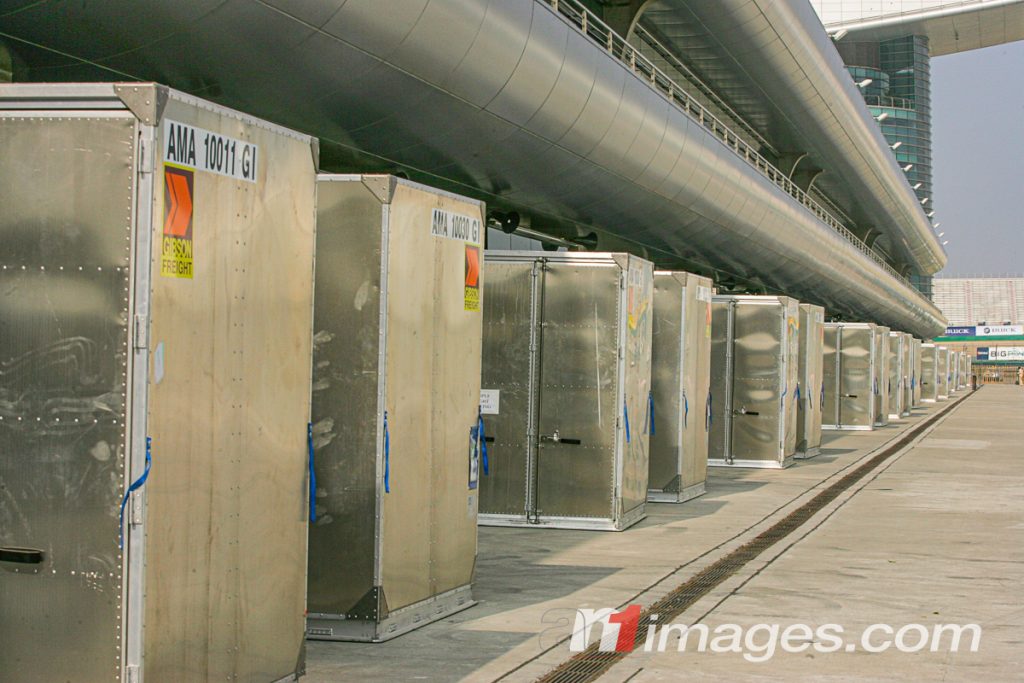
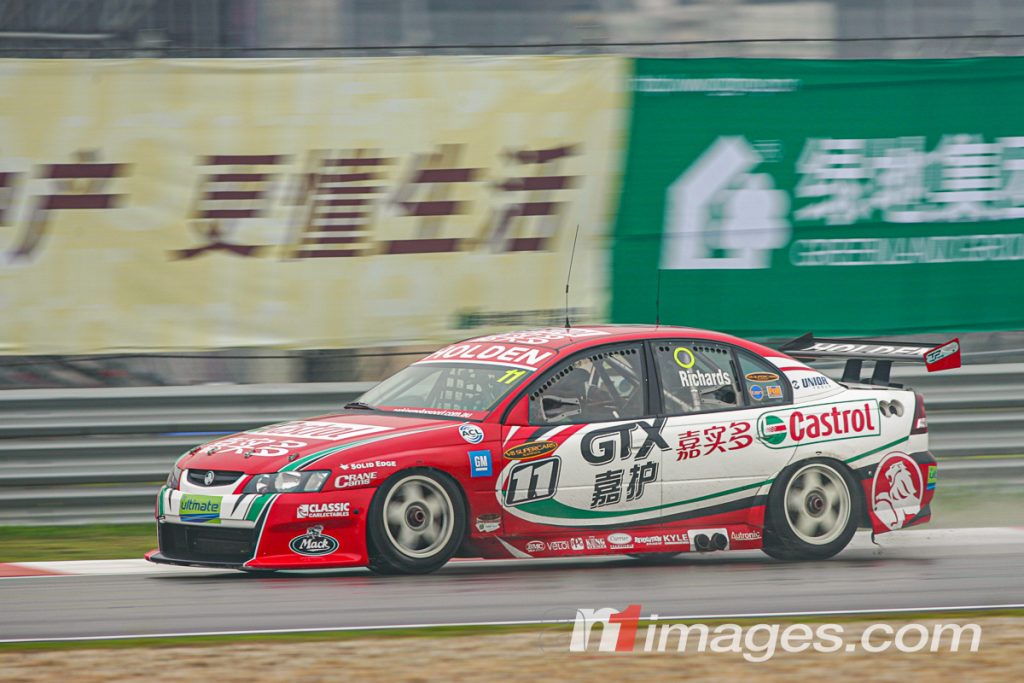
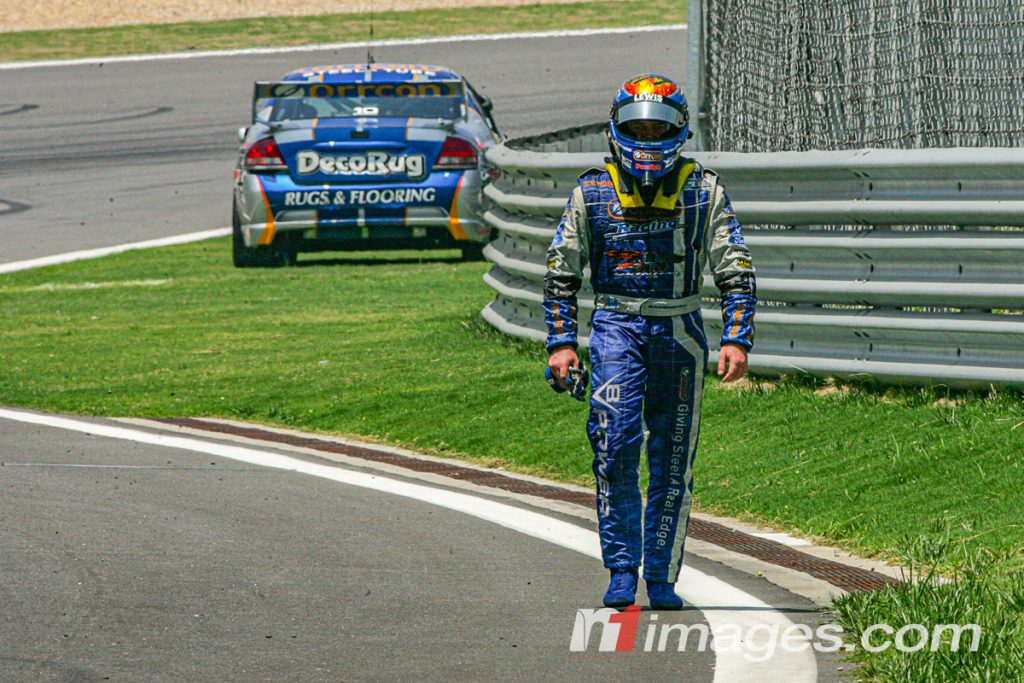
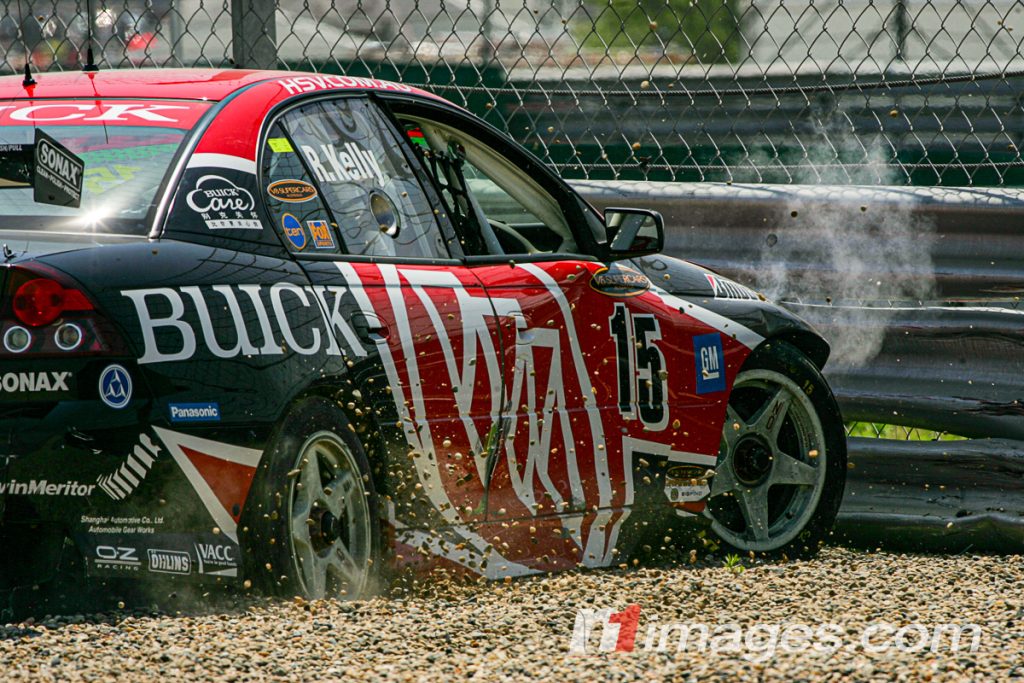
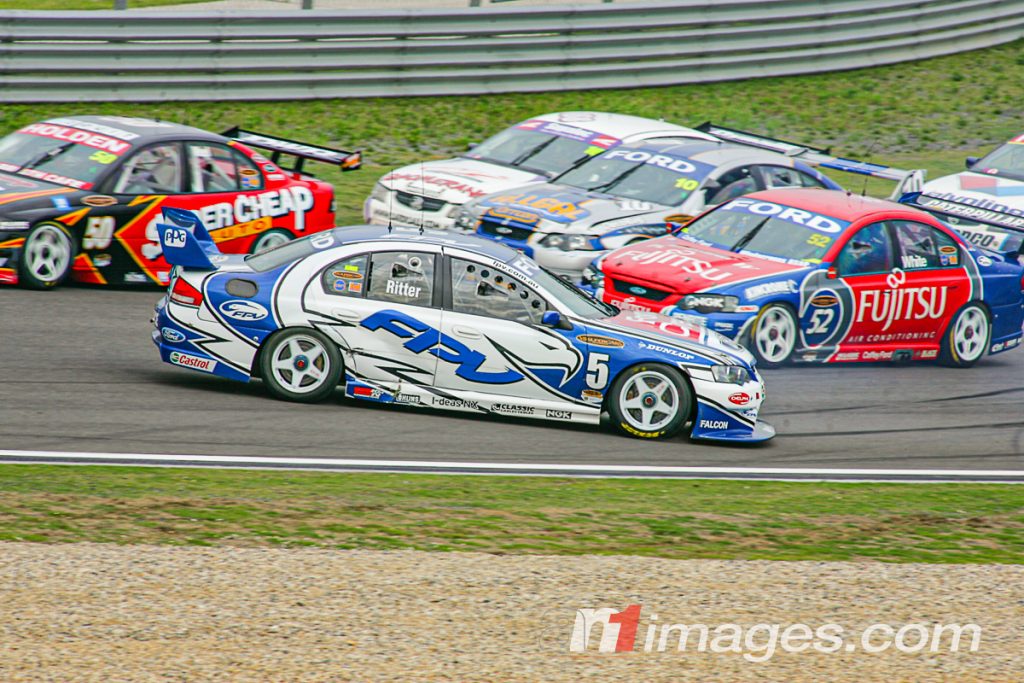
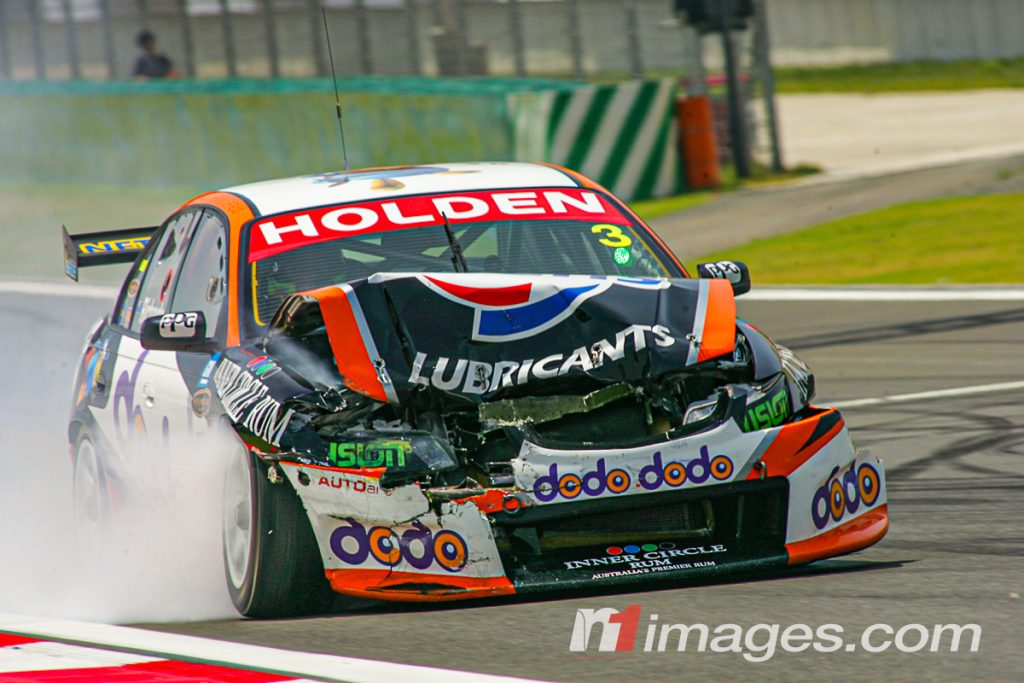
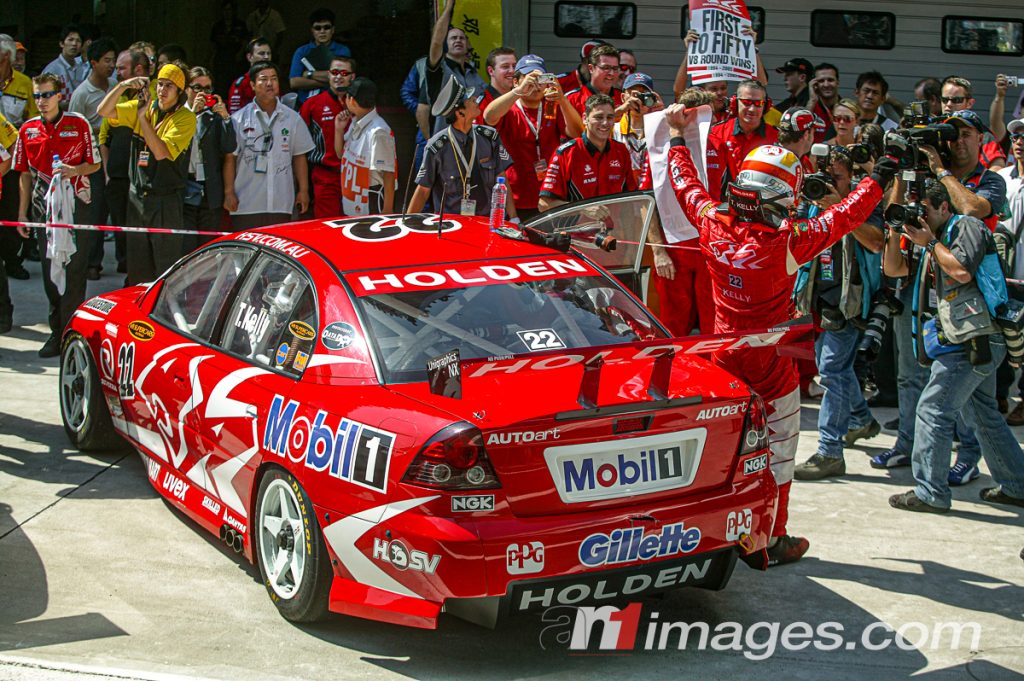
Shanghai ultimately turned on a memorable show. Pics: an1images.com / Dirk Klynsmith, Ross Gibb and Justin Deeley.
In April, it was revealed that a planned wildcard for Japanese GT ace James Courtney had been scuppered, with Team Buick branding instead appearing on the HSV Dealer Team car of Rick Kelly, which, for logistical reasons, he also campaigned at the preceding Eastern Creek event.
Other cars wore alternate warpaint too, including the Triple Eight Falcons with Betta Electrical swapped out for LG, while the Perkins Castrol cars featured some local Chinese branding.
Todd Kelly would win the weekend, Greg Murphy went for a fly, and Mark Winterbottom nearly wore a length of errant drain cover.
Ultimately, 2005 was the end of the line for the event, with V8 Supercars pointing the finger at the Federation of Automobile Sports of China (FASC), that country’s governing body, for the round’s cancellation.
In February 2006, Wayne Cattach flew to Shanghai for crisis talks, with the promoter looking to move the event to later in the year, a difficult task at the time for V8 Supercars.
By the Clipsal 500 in March, the event was in the can, with the slot on the calendar replaced with the very much more local Winton Motor Raceway.