
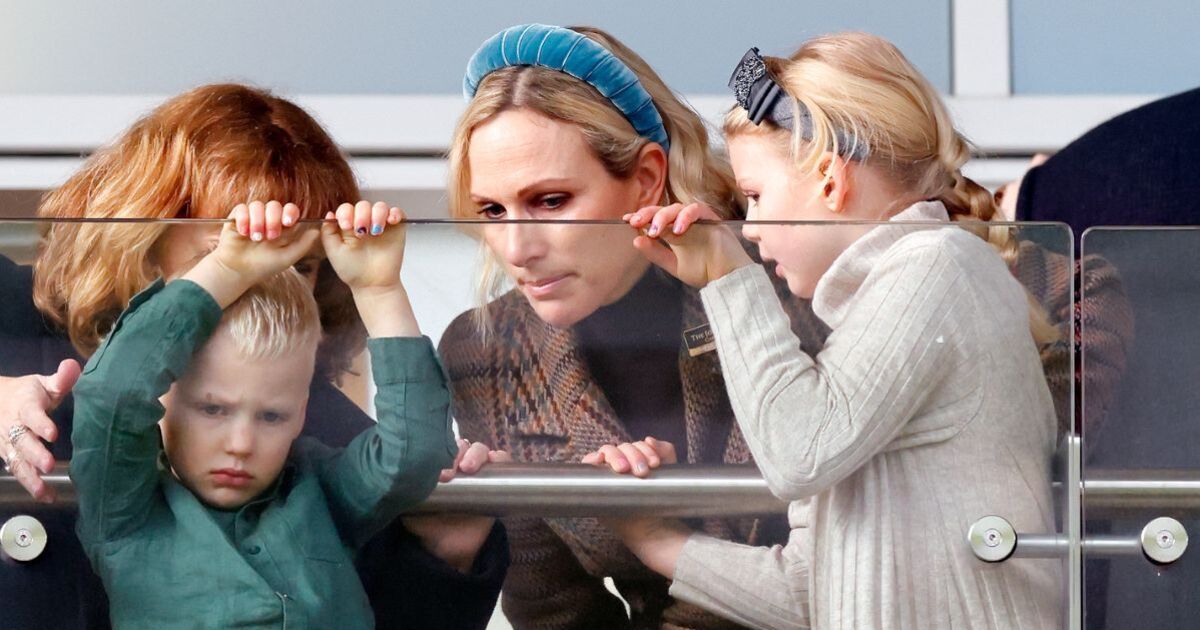
Underneath, Lena wore a Reiss cady knitted roll-neck dress in oatmeal, another well-chosen repeat that prioritised warmth and comfort over trend.
She finished the look with a Seed Heritage heart barrel bag, priced at around £30, which was the only new addition and felt like a child-friendly novelty rather than a deliberate fashion statement.
Together, the looks sent a subtle but powerful message about investment dressing for children. Zara appears to be building wardrobes designed to grow with her children, not be discarded after a single outing.
Her eldest, Mia Tindall, 11, wore a navy bow-print dress from high-street favourite Zara, a piece she has been seen in before. The choice was telling: familiar, wearable and intentionally not new. It reflected a family attitude that values repetition over novelty.
While Lena Tindall, seven, followed the same philosophy, stepping out in a grey wool Gucci coat that once belonged to her elder sister, Mia.
The coat, first worn in 2022, has clearly been carefully kept and passed down – a rare sight in royal dressing that quietly speaks volumes.
There is a sense that these pieces are chosen with longevity in mind – perhaps even to be passed down again in the future. It is a philosophy that feels increasingly rare in an era of fast fashion and constant consumption.
This approach mirrors the values long associated with Princess Anne, who has famously worn the same garments for decades. The Princess Royal’s influence is unmistakable, favouring clothes that earn their place through use rather than headlines.
Zara, raised with those principles, appears to be quietly passing them on. The result is royal dressing that feels human, relatable and deeply intentional.
The same sentiment was evident over Christmas, when Lena was spotted wrapped up in a navy Monsoon military-style coat previously worn by her sister Mia and both of her cousins Savannah and Isla Phillips.
The shared wardrobe moment was not just practical, but quietly sentimental. It showed a family that treats clothing as part of its history, not disposable fashion.
Ultimately, Zara’s choices offer a modern blueprint for royal style that feels grounded rather than performative. Her children’s outfits weren’t about making a statement, but about wearing clothes that make sense.