
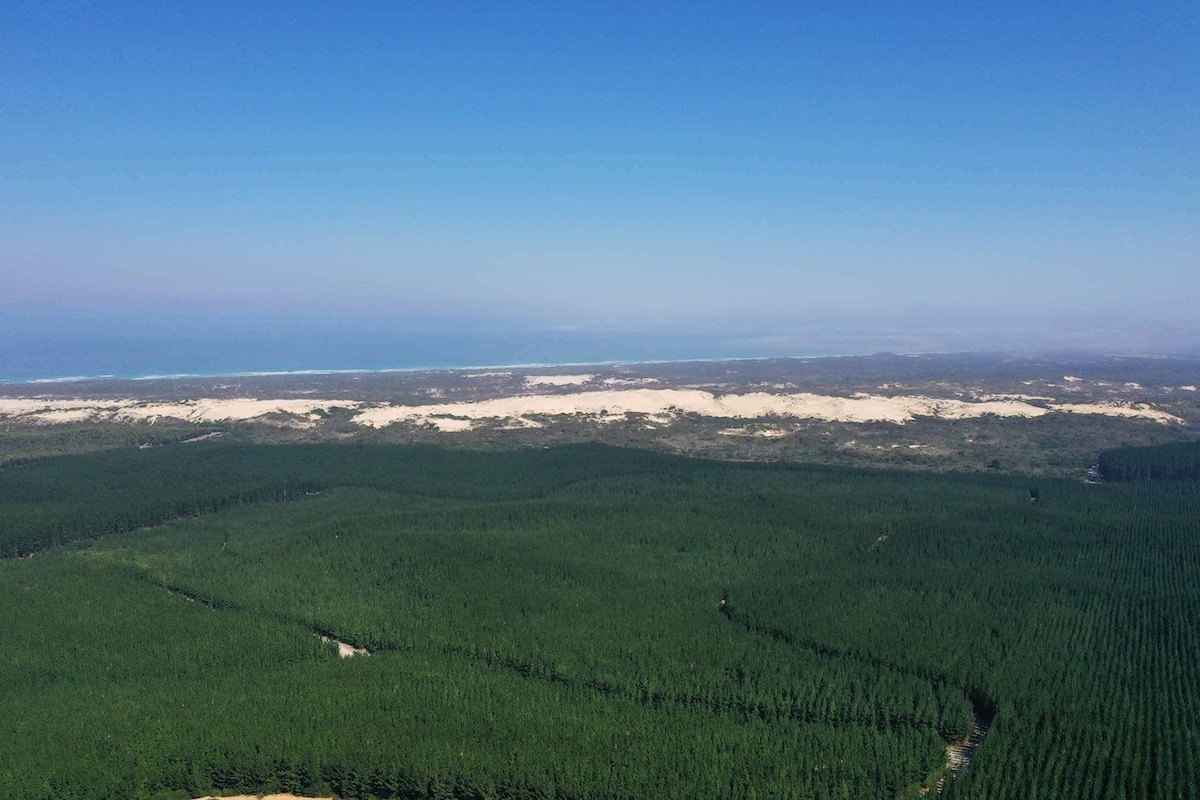
Victoria has provided a green-light for the highly contested, 105 turbine Kentbruck wind project on its western border, one of two approved right at the end of 2025, and just the fourth wind project approved in the state since 2019.
But the nod comes with conditions – including a reduction in the number of turbines and operating limits – along with an admission the 600 megawatt (MW) project comes with “significant environmental risks”.
The former Neoen project, now owned by ASX-listed HMC Capital, is proposed for a pine plantation west of Portland where Alcoa’s energy-hungry aluminium smelter is located.
The project, with its 270m tall turbines, was one of those selected in the first generation round of the Capacity Investment Scheme (CIS) in 2025.
The only other wind project in the state to have CIS backing so far is AGL’s 600 MW Hexham wind project, but that doesn’t yet have planning approval.
But the Kentbruck site has yet again exposed the fault line between Victoria’s increasingly desperate need for new electricity sources and those who say they are worried that such a fundamental change of landscape will spell doom for critically endangered creatures.
Energy versus animals
While the Kentbruck wind project is proposed for a commercial pine plantation, it’s ringed by conservation lands.
To the south is a coastal wetland that has been rehabilitated by locals over the course of decades, to the west is a Ramsar-listed lake and estuary, and there’s a national park to the north.
These are used by endangered Australasian Bitterns and Brolgas, and the critically endangered Southern Bent-Wing microbats which roost exclusively in the area.
It’s an issue that planning minister Sonya Kilkenny noted as creating that significant risk, but which she believes can be mitigated with the potential removal of five turbines and adaptive management approaches.
Those approaches include curtailing turbine movements during certain times of the day and night to protect bats, monitoring for carcasses to ensure that is working, and increasing the rotor height so the lowest rotor swept area is 60m above the ground. Construction will need to take place around the breeding seasons of the three animals.
HMC Capital has also promised $1 million a year for Southern Bent-Wing Bat recovery programs.
But some conservationists don’t believe that conditions such as turbine curtailment can or will be used after the $1 billion project is built.
“It looks like a great idea to put this type of infrastructure in a plantation, but unfortunately that plantation is tucked between three national and coastal parks which are home to some very endangered and vulnerable bats and birds,” Victorian National Parks Association campaigner Jordan Crook tells Renew Economy.
“Are the turbines going to be switched off and thrown out if they have too big of an impact on the animals, or will the animals have to cop it? Once the investments have been made, they’re not going to turn them off.”
More than 200 submissions were made on the environmental effects statement, with conservation groups worried about a lack of data on how birds and bats use the plantation area and the plans to monitor that after the wind turbines are built.
The conflict between development and conservation is starkly apparent when seen through the Australia Conservation Foundation-University of Melbourne Mapping Renewables for Nature tool, which scores most of the project’s footprint above 70 out of 100 for biodiversity importance.
“Australia needs new renewable energy projects as coal plants retire and major industrial energy users like the Portland Aluminium smelter switch off coal and gas,” ACF campaigner Jack Redpath told Renew Economy.
“ACF is eager to see a formal project-wide plan to measure and report progress on whether the steps taken result in a healthier population of bats and a stronger ecosystem to support them over time.
“ACF calls on all developers to go further than minimum compliance and adopt nature-positive, net-gain strategies across their businesses. That means planning projects to avoid the most sensitive areas, actively restore habitat and transparently measure and report on whether threatened species and ecosystems are improving.”
Clean Energy Council chief Jackie Trad says given renewables exist because of a need to protect the environment, it’s important that more are approved.
“But we must do it in a way that is streamlined and fit-for-purpose so that Victoria can deliver a timely energy rollout that both reduces environmental impacts and ensures we can keep the lights on for Victorians for the foreseeable future,” she says.
She pointed out that with last year’s Environment Protection and Biodiversity Conservation (EPBC) Act reforms, there will be more clarity and certainty for industry about how biodiversity impacts will be assessed.
“The central focus of these reforms must be to enable faster, more efficient and predictable assessments while improving nature protection and increasing community confidence in assessment processes. This will be key to supporting strong, sustainable outcomes,” she says.
Major planning milestone
From an energy generation perspective, the Kentbruck approval is a major milestone for Victoria, which has still struggled to get wind projects through its fast track process.
It’s the fourth wind project over 100 MW to be approved in Victoria since 2019, when Neoen started the planning process for Kentbruck, according to RenewMap data.
Rystad analyst Alokita Shukla says 78 per cent of clean energy capacity approved in the state last year were batteries, and wind made up just 8 per cent of approvals, with the planning process creating the biggest bottleneck for development.
“Approval timelines and rising costs are now shaping what gets built, not project ambition,” she wrote on LinkedIn.
“System planning is already adjusting, with less wind assumed by 2030 as approvals slow and costs rise. Kentbruck does not solve the problem, but it clearly exposes where the bottleneck sits.”
However, HMC Capital also still needs to lock in funding for the project, and others in its green energy fund.
Last week it said the “Energy Transition capital partnering process” is on track and it plans to have something to say before it unveils the half year results in February.
HMC said in July it would put $50 million of equity into the Victorian generation and storage portfolio it bought from Neoen for $950 million, a deal that only closed in August last year.
That extra cash was to keep the development of near term projects such as the Moorabool battery and Kentbruck moving ahead, and at the time said it was in talks to raise more development cash for those assets.
David Di Pilla’s ambitious goal of changing HMC Capital from a property fund to a manager of $50 billion worth of assets within five years had a rough year in 2025, as its shares dived partly in response to the problems at its tenant, struggling healthcare operator Healthscope.
If you would like to join more than 28,000 others and get the latest clean energy news delivered straight to your inbox, for free, please click here to subscribe to our free daily newsletter.

Rachel Williamson is a science and business journalist, who focuses on climate change-related health and environmental issues.