
Updated January 13, 2026 — 12:33pm,first published January 12, 2026 — 2:04pm
Save
You have reached your maximum number of saved items.
Remove items from your saved list to add more.
Save this article for later
Add articles to your saved list and come back to them anytime.
Got it
AAA
A proposed moment of national unity in the parliament after the Bondi massacre has descended into partisanship as politicians prepare to debate sweeping laws that would jail for up to 15 years Islamic extremists or neo-Nazis who collaborate with hate groups.
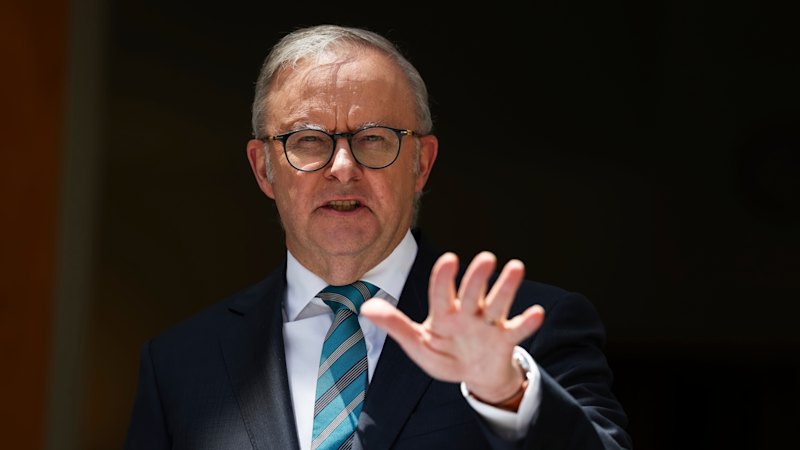
Prime Minister Anthony Albanese called MPs back to Canberra next week, two weeks earlier than scheduled, for condolence speeches on Monday before debate begins on Tuesday on a suite of reforms on hate speech, extremist groups and gun supply.
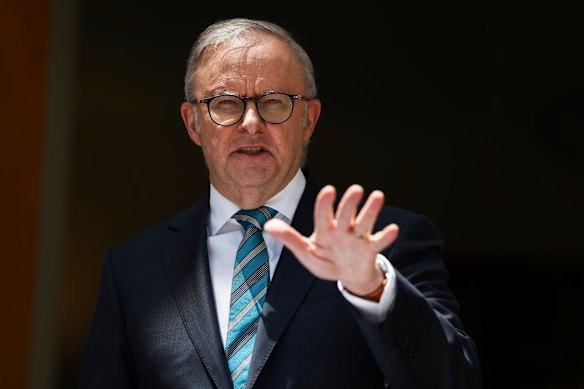 Prime Minister Anthony Albanese at Parliament House in Canberra on Monday. Alex Ellinghausen
Nearly a month on from the deadliest attack on a Jewish community since the Hamas massacre in southern Israel on October 7, 2023, Albanese and Opposition Leader Sussan Ley agreed on wording for a shared condolence motion.
But the future of the legislative response to the December attack is in limbo after Ley criticised Labor’s decision to incorporate weapons restrictions and hate speech reforms in the same bill.
The Nationals, which represents farmers and recreational shooters, have questioned the need to buy back guns and restrict owners to four guns each after the shooting allegedly inspired by ISIS. This raises the prospect of the opposition rejecting the proposed laws because Labor would not pass the hate speech changes on their own.
Related Article
“This isn’t about politics,” the prime minister said at a Canberra press conference, pushing back at the suggestion he was trying to wedge the opposition.
“We want to make it clear that conduct which is hateful, dangerous and divisive will also be illegal because just as antisemitism and racism are an offence against our Australian values, they should be an offence against Australian law.”
The legislation will be released on Tuesday, but this masthead saw excerpts of it late on Monday.
One key section says that it would be illegal to promote hatred of people on the basis of their race, colour or national or ethnic origin. It would not apply to conduct which consists only of directly quoting from religious texts for the purposes of teaching.
The opposition was briefed on the laws late on Monday, but in the afternoon Ley claimed it was unreasonable for a single bill to cover “multiple complex and unrelated policy areas”.
“As is so often the case with this prime minister, he is squarely focused on what he perceives to be his political interests, not the national interest. This is a political decision, aimed at fostering division, not creating unity,” she said.
The new Combatting Antisemitism, Hate and Extremism Bill, which the government drafted over summer, will introduce new anti-vilification provisions targeting Islamic preachers who spread hatred about Jews and other minorities; create offences for hate preachers and community leaders radicalising children; make it easier to cancel visas; and boost penalties for hate crimes.
Muslim groups said they had not been consulted on the laws. Australian Federation of Islamic Councils president Rateb Jneid said he was concerned that the proposed new serious vilification offence, which criminalises the promotion of hatred, only applied to race rather than religion.
“In a climate where Islamophobia is rising rapidly, as evidenced as recently as yesterday by the violent attack on an imam and his wife in Victoria, it is simply not tenable for laws designed to combat hate to exclude religion,” he said.
Related Article
“Hatred fuelled by religious bigotry can be just as dangerous and damaging as that based on race. Any serious attempt to address hate speech must recognise that.”
Asked whether any Islamic groups had been consulted during the drafting of the legislation, a spokesman for Attorney-General Michelle Rowland said: “Consultation on the new laws is ongoing and has involved a range of experts and stakeholders, including the Jewish community.”
Jewish people are considered an ethno-religious group, meaning they can be protected under racial vilification laws as well as religious discrimination rules.
A striking new element of the package of changes is a move to outlaw groups that spread hatred and foster division. This masthead has confirmed with government sources unable to speak publicly that the proposed laws will contain a maximum 15-year sentence for people who join or donate to these groups once the government has prohibited them.
Home Affairs Minister Tony Burke suggested that neo-Nazi groups and radical Islamist outfit Hizb ut-Tahrir could be in the firing line, after they had been identified by national security agencies for their role fomenting hatred.
Hizb ut-Tahrir, revealed by this masthead to be behind the Stand4Palestine protest group, has flagged a legal challenge to the laws, but Attorney-General Michelle Rowland said the government was prepared.
Burke said: “There have been organisations which have played a game for a long time in keeping themselves just below the legal threshold” by spewing hate but not crossing the line into directly advocating violence.
“We have had enough of organisations that hate Australia playing games with Australian law.”
Executive Council of Australian Jewry co-chief executive Peter Wertheim welcomed the announcement of the new laws, describing it as a “promising sign”.
“The country cannot risk another round of reforms that will fall short of providing the level of protection it is claimed they provide,” he said.
Independent MP Allegra Spender, who has championed the case for tougher hate speech laws, said the legislation should protect all minority groups, including on the basis of religion, gender, sexuality and disability as well as race.
“Neo-Nazis, for example, target Jews, Muslims, LGBTIQ+ Australians and people living with disability,” she said.
“And though Jewish Australians are rightly at the centre of concern right now, Jewish community leaders publicly support legislation that protects more than just race.”
Cut through the noise of federal politics with news, views and expert analysis. Subscribers can sign up to our weekly Inside Politics newsletter.
Save
You have reached your maximum number of saved items.
Remove items from your saved list to add more.
 Paul Sakkal is chief political correspondent. He previously covered Victorian politics and has won Walkley and Quill awards. Reach him securely on Signal @paulsakkal.14Connect via Twitter or email.
 Nick Newling is a federal politics reporter for The Sydney Morning Herald and The Age.Connect via email.
 Brittany Busch is a federal politics reporter for The Age and Sydney Morning Herald.Connect via email.From our partners