

January 13, 2026 — 7:30pm
Save
You have reached your maximum number of saved items.
Remove items from your saved list to add more.
Save this article for later
Add articles to your saved list and come back to them anytime.
Got it
AAA
Examine, a free weekly newsletter covering science with a sceptical, evidence-based eye, is sent every Tuesday. You’re reading an excerpt – sign up to get the whole newsletter in your inbox.
The federal government is considering implementing mandatory bushfire-resilience star ratings for houses in Australia’s fire-prone regions in an attempt to encourage owners to retrofit homes – and help buyers avoid increasingly unliveable areas.
Following requests from state governments, the Commonwealth has invested in home resilience funds in NSW and Queensland, which pay up to $150,000 to help disaster-harden at-risk homes.
Victoria does not have a similar scheme, but the federal government said on Tuesday that it was open to a request.
A 2025 research project centred on Harcourt in central Victoria found 90 per cent of homes scored only one bushfire-resilience star out of a possible five. At least 47 homes in Harcourt were lost to out-of-control bushfires on Thursday and Friday.
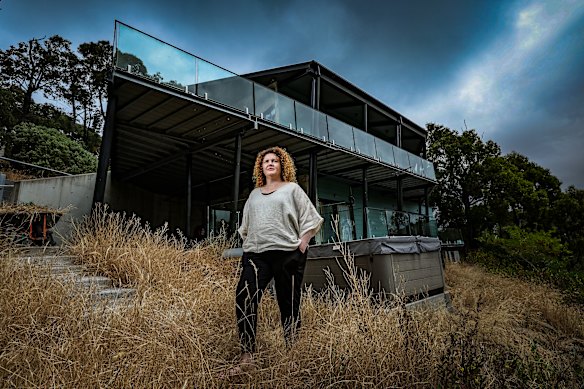 Resilient Building Council CEO Kate Cotter in front of a house built to bushfire standards.Justin McManus
Bushfires are a wicked problem for Victoria, the fastest-growing state in Australia. New arrivals are increasingly moving to the regions, and the government is under pressure to build large numbers of new homes.
At the same time, regional homes face dramatically escalating bushfire risks due to the climate crisis. The number of extreme fire weather days has increased by more than 50 per cent over the past four decades.
“We have large numbers of legacy [housing] stock built prior to the building code requiring bushfire treatments,” said Professor Alan March, an expert on urban planning and bushfires based at the University of Melbourne. “That is our greatest vulnerability.”
Retreating – that is, not rebuilding in burnt-out towns – is one option. But many of the homes lost last week weren’t in designated high-risk bushfire zones.
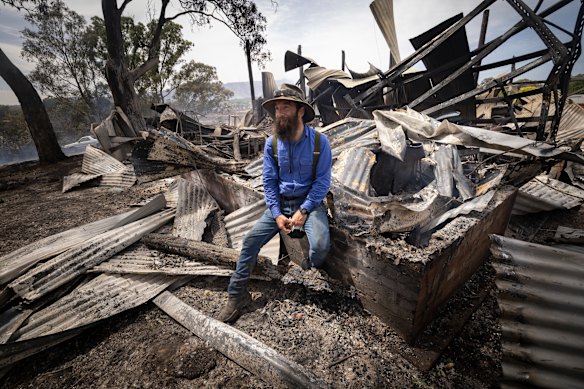 David Foley sits among the ruins of buildings in the tiny goldfields town of Harcourt. Fifty homes were lost in the town.Jason South
“If you say you’re not going to be there, where are you going to be? Are you just going to have buildings in the city and not in the country? That’s not going to be doable,” said Gary Morgan, Victoria’s former chief fire officer.
The option winning increased support from policy-makers and think tanks is incentivising home owners to upgrade existing houses to make them less likely to burn down.
In December, the Productivity Commission threw its weight behind the bushfire star-rating system and recommended mandatory disclosure of the rating when a house is rented or sold.
The commission also said the government should develop a database allowing home owners to look up their current and future climate crisis risk – information that is currently hard or impossible to get, said commissioner Martin Stokie.
“Home owners don’t currently have good and comprehensive information on the climate risks they face,” he said. “Hence investment in adaptation and mitigation for bushfires and other environment disasters is insufficient for the increasing risks we face due to climate change.”
A spokesperson for the National Emergency Management Agency said the government was considering the recommendation, and reiterated that it was open to requests for resilience funds in other states and territories.
“The Australian government is open to working with any jurisdiction that seeks to implement initiatives that improve resilience for households,” they said.
The bushfire star rating system – known as a “resilience rating” – is being spearheaded by the Resilient Building Council, a coalition of researchers, banks and insurers funded by the federal government.
Ratings are delivered by an app, where home owners in bushfire-risk areas provide data about their property and upload photos. A star rating of between one and five is provided free, or you can have an independent expert certify the result for $220 (certification is valid for three years). A five-star rating means the house has about a 1.5 per cent chance of burning down in a bushfire.
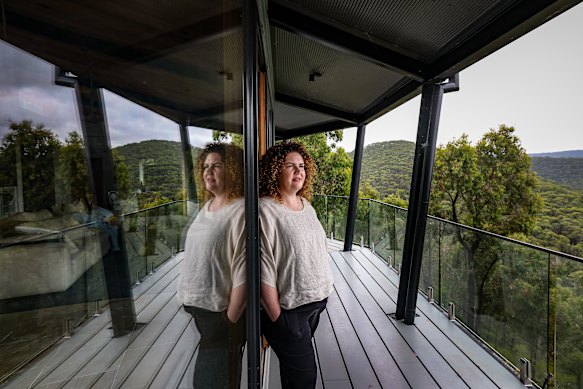 Kate Cotter: “Most people have not got a resilient home – we expect that.”Justin McManus
A 2025 pilot of 140 homes in Mount Alexander Shire, which covers Harcourt, found 90 per cent of homes received only a single star.
“Most people have not got a resilient home – we expect that,” said Resilient Building Council chief executive Kate Cotter.
The app also generates a report with a mix of low-cost and more expensive recommendations on how to raise the star rating.
Most changes are small: installing mesh to stop embers getting into the gutters or roof, cutting down vegetation near the home, and installing fire-rated door seals.
“With bushfire, it’s often a lot of little things,” said Cotter.
The average cost to lift an older home in a high-risk area by two stars is about $30,000, but that can be offset by savings on home insurance.
Related Article
Several insurers now offer substantial premium discounts if a home owner can improve their bushfire resilience, and the NAB now offers discounted mortgage rates and low-interest loans to fund the renovations.
But Cotter says that in Victoria, the missing piece of the puzzle is government subsidies.
“If you do put some government support in, regional Australia are really taking up those programs.”
A spokesperson for the Victorian government said it would consider changes to star ratings.
“We know that our homes are the most important investment many of us will make in our entire lives. Any changes to bushfire resilience star ratings would be carefully considered,” they said.
“When deciding how to best prepare Victorians for natural disasters, we carefully balance the benefits of mitigation with other factors, such as encouraging people to evacuate instead of staying behind and being put in serious danger,” they said.
The Examine newsletter explains and analyses science with a rigorous focus on the evidence. Sign up to get it each week.
Save
You have reached your maximum number of saved items.
Remove items from your saved list to add more.
From our partners