
CLEVELAND, Ohio — The Cavs keep searching for answers in familiar places.
Coaches meetings. Player-led meetings. Film sessions. And in the public eye, postgame explanations that circle the issue without naming it.
They talk often about mental edge, about connectivity, about focus. But the longer the season goes, the clearer it becomes that Cleveland’s problem is not a lack of awareness. It is a lack of public accountability, the kind that tests a team’s honesty before the playoffs do it for them.
Accountability is uncomfortable. It risks bruised egos and disconnection.
But in the NBA, where talent gaps shrink and margins thin — particularly in the playoffs — truth is often the fastest path to clarity.
The Cavaliers keep stopping just short of it.
This team has held player-led film sessions. They have talked things out behind closed doors. And yet, the same issues keep resurfacing in real time. Slow starts, lapses in urgency, defensive breakdowns that feel more mental than schematic.
As Albert Einstein said, “Insanity is doing the same thing over and over again and expecting different results.”
Change is required. And if the Cavs are unwilling to make a roster move, then it has to be an internal change in messaging.
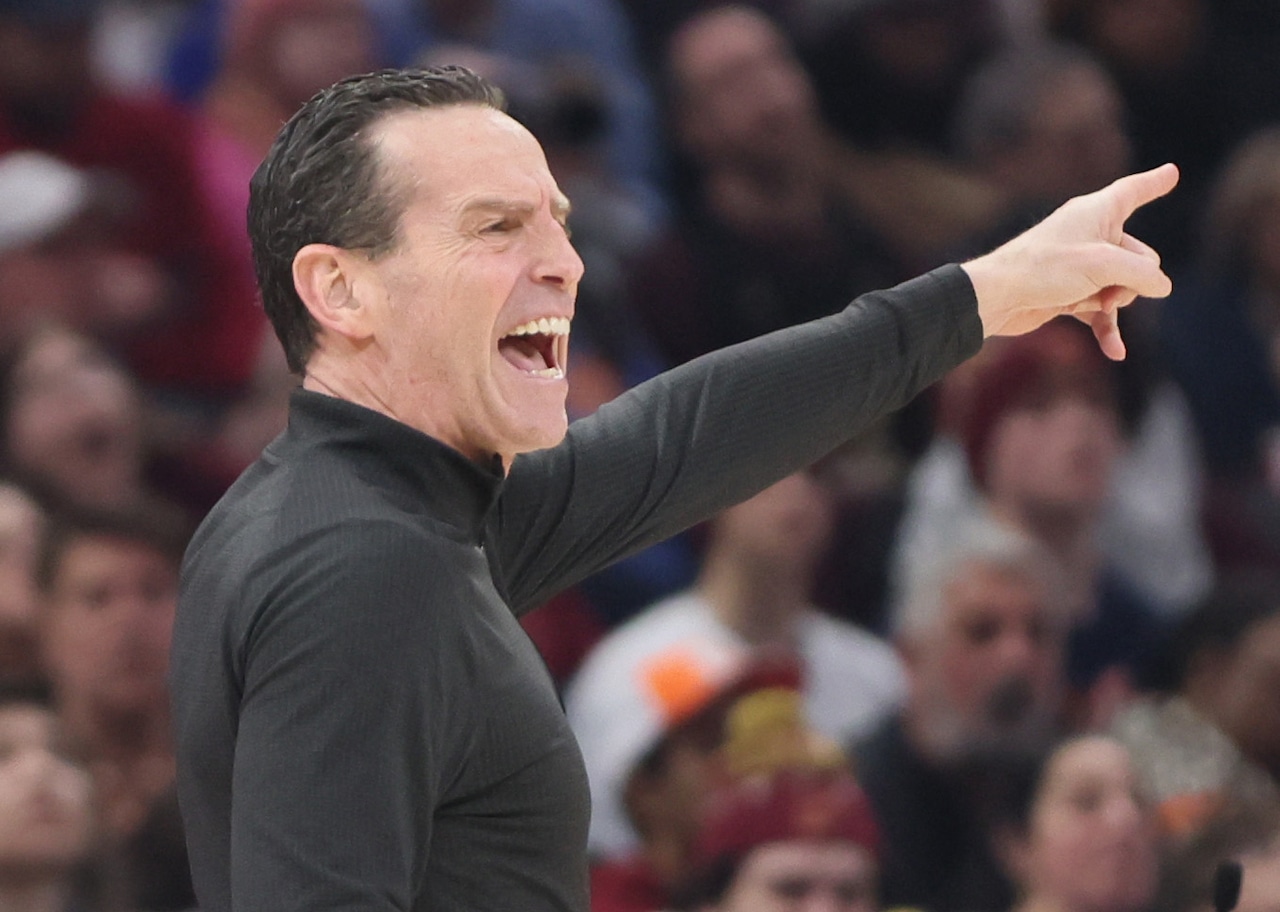
Atkinson’s postgame press conferences have increasingly reflected that disconnect. Asked about recurring issues, he often defaults to vague uncertainty rather than specificity. “I don’t know,” followed by a generic answer that dances around the truth. But his expression often reveals what his words don’t. And over time, it has become symbolic of a coach trying to balance belief with diplomacy.
The league has shown there is another way.
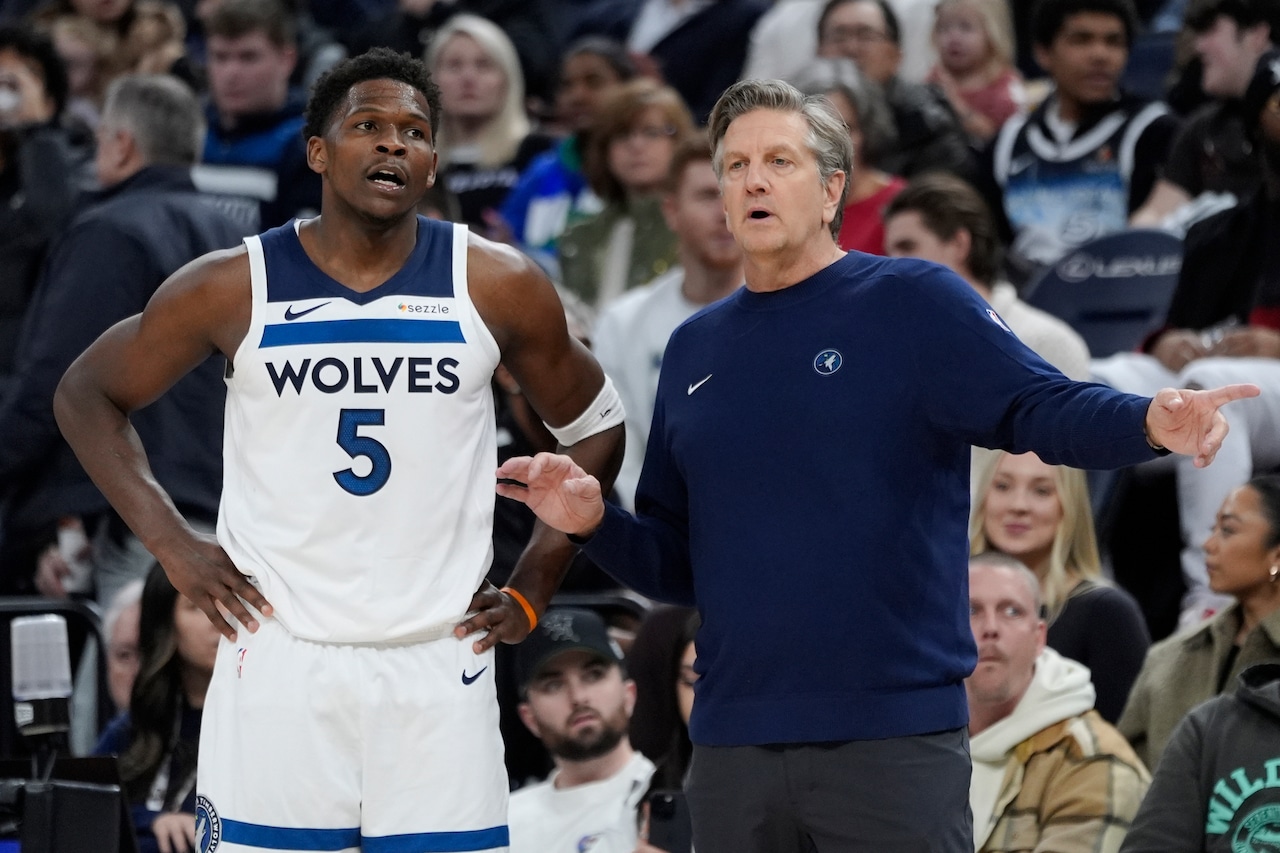 Minnesota Timberwolves guard Anthony Edwards (5) and head coach Chris Finch, right, talk during the second half of an NBA basketball game against the Cleveland Cavaliers, Saturday, Jan. 18, 2025, in Minneapolis. (AP Photo/Abbie Parr) APAP
In Minnesota, Chris Finch has made blunt accountability a feature of his coaching style. His postgame comments can sting. They are direct, unfiltered and pointed at the work. And crucially, they are backed by a player who does not hide from the moment.
Anthony Edwards speaks with authenticity. Not polish. Not calculation. He absorbs criticism publicly and reflects it back with his own voice. The result is alignment. Coach and star telling the same truth, out loud.
Finch sees that dynamic as foundational.
“I think that’s really kind of the heart of what we do. I think it allows us to course-correct quickly,” Finch, in his sixth season coaching the Timberwolves, said. “We know there are going to be ups and downs in an 82-game season. We realize that. I’m very fortunate to have players who are highly coachable, who allow you to coach them, don’t bristle when they’re held accountable in front of the group. It starts with them. And that’s in my mind, one of their biggest attributes to being a leader. And the way that that happens evolves over time, the longer you’re together. But now, hopefully, they’re holding each other a little bit more accountable through that process too.”
Over years of coaching in the NBA, Finch has learned that accountability is not just corrective, it is diagnostic. It tells a coach whether his standards and his players’ ambitions are actually aligned, or simply coexisting.
Every locker room talks about goals. Very few stress-test them. The only way to do that is to introduce discomfort early, before circumstances force it later. When honesty is avoided, assumptions fill the space. When it is embraced, it becomes a filter. Who leans in. Who resists. Who internalizes it and who merely nods along.
Those moments are revealing.
Finch uses them to learn how his players are wired, how they absorb criticism and what kind of approach actually reaches them. Some need directness. Some need context. Some need to feel challenged before they feel supported. Accountability isn’t a one-size-fits-all tool. It is a way to connect.
But it is also a way to unify. Even as messaging adjusts player to player, the standard never changes. Everyone is being pushed toward the same place, the same level of honesty and mental toughness, because later in the season there will be no room for individual thresholds.
“I think it’s needed in any environment where you’re relying on each other, whether it be a locker room or a boardroom, you gotta be able to have honest conversations without hurt feelings,” Finch said. “We all have the common goal. We all say we have a common goal. When you speak the truth to each other, that’s when that common goal gets tested. And the great thing about that is that oftentimes it’s a good bulls— detector.”
Utah provides another example.
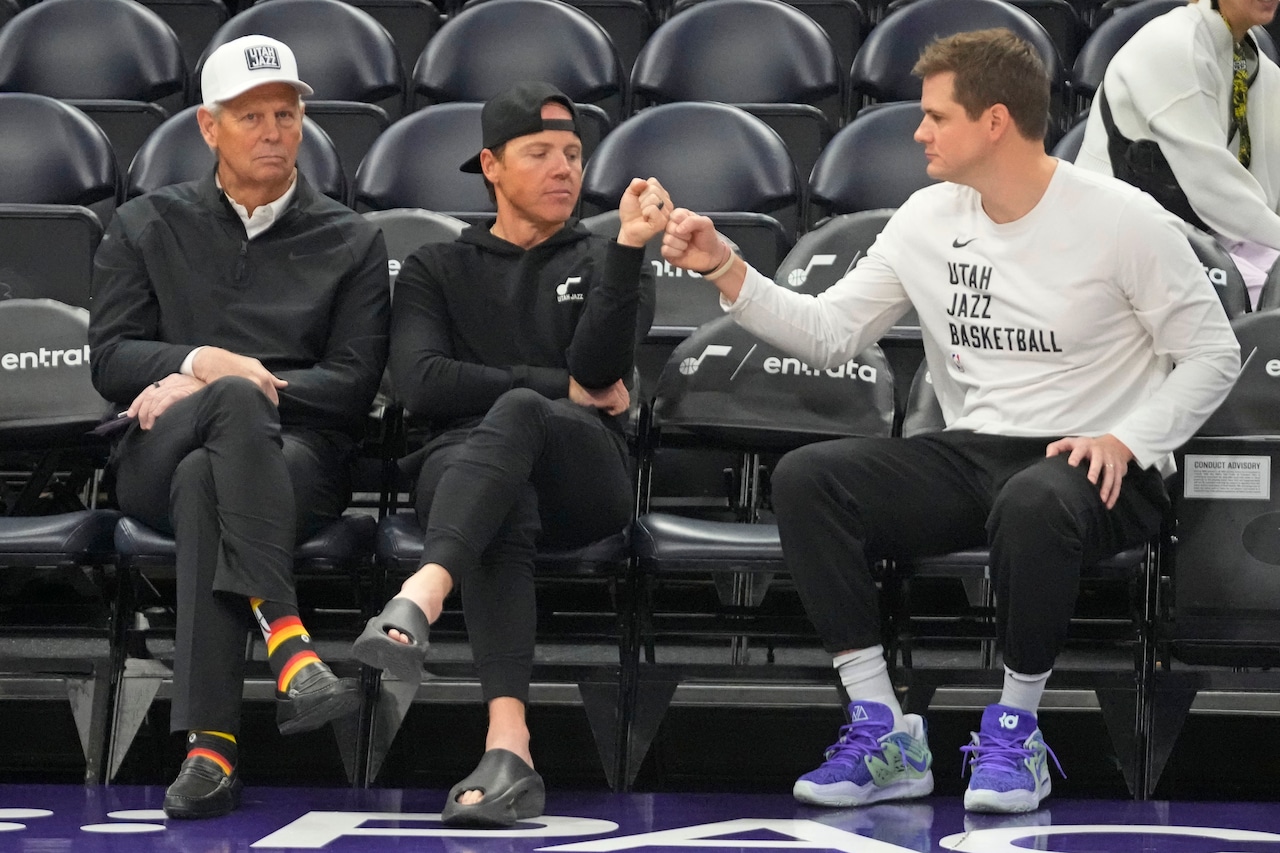 Utah coach Will Hardy and Jazz owner Danny Ainge share a courtside fist bump, signaling a rare harmony between coaching and management. That alignment on accountability and standards could pay dividends as the Jazz plan for the future.AP
The Jazz are struggling. They are also actively tanking. And yet, Will Hardy coaches them with visible fire and zero concern for optics. His frustration shows on the bench. His standards do not bend with the standings.
And Hardy also has help. Veterans who are unapologetic about what the job demands.
“They are very honest with their opinion,” Hardy said of Georges Niang and Kevin Love’s presence in the locker room. “They’ve obviously both had a little bit, you know, different journeys in their NBA careers, but these are two guys who have been relentless in their pursuit of kind of maximizing who they are. They’re both very intelligent people on and off the court. It gives them a really humble perspective in terms of, like, how small all of us are in this ecosystem. I think they’ve both really pushed the messaging to our young players of how valuable opportunity is in this league.
“As a coach, I can say things until I’m blue in the face, but I think hearing messages from people who have what our young players want, which is longevity in the NBA, it’s going to carry more weight than anything that I say. … And so those two guys have added so much to our culture already.”
Those veteran voices become more than just examples — they are bridges.
For a young coach like Hardy, players such as former Cavaliers Love and Niang offer a way to reach the locker room that no playbook or meeting agenda can replicate. They have lived through moments of friction, experienced different coaching styles and navigated the challenges of guiding teammates without fracturing a group.
Their presence and communication can help a coach better understand what resonates and what falls flat, and to test approaches that might otherwise go untried. When to push, when to explain, when to let accountability hit naturally versus when it needs to be reinforced.
By observing and listening, coaches refine their approach and potentially extend their influence in ways that keep the group aligned.
Vocal veterans are a connective line, a lens into both the young players’ needs and the collective expectations of the team, helping cultivate a culture that can endure challenges over the long arc of a season.
“I lean on those two,” Hardy said of Love and Niang. “I’m trying to learn from them as well. What are things that you’ve seen elsewhere that you’ve really liked? What are things that you really don’t like? We’re still trying to cultivate our environment. I don’t think we have it perfected yet. It’s something that we spend a lot of time and energy on, but they’ve been a great resource for not just the young players, but for me as well.”
Cleveland used to have that voice.
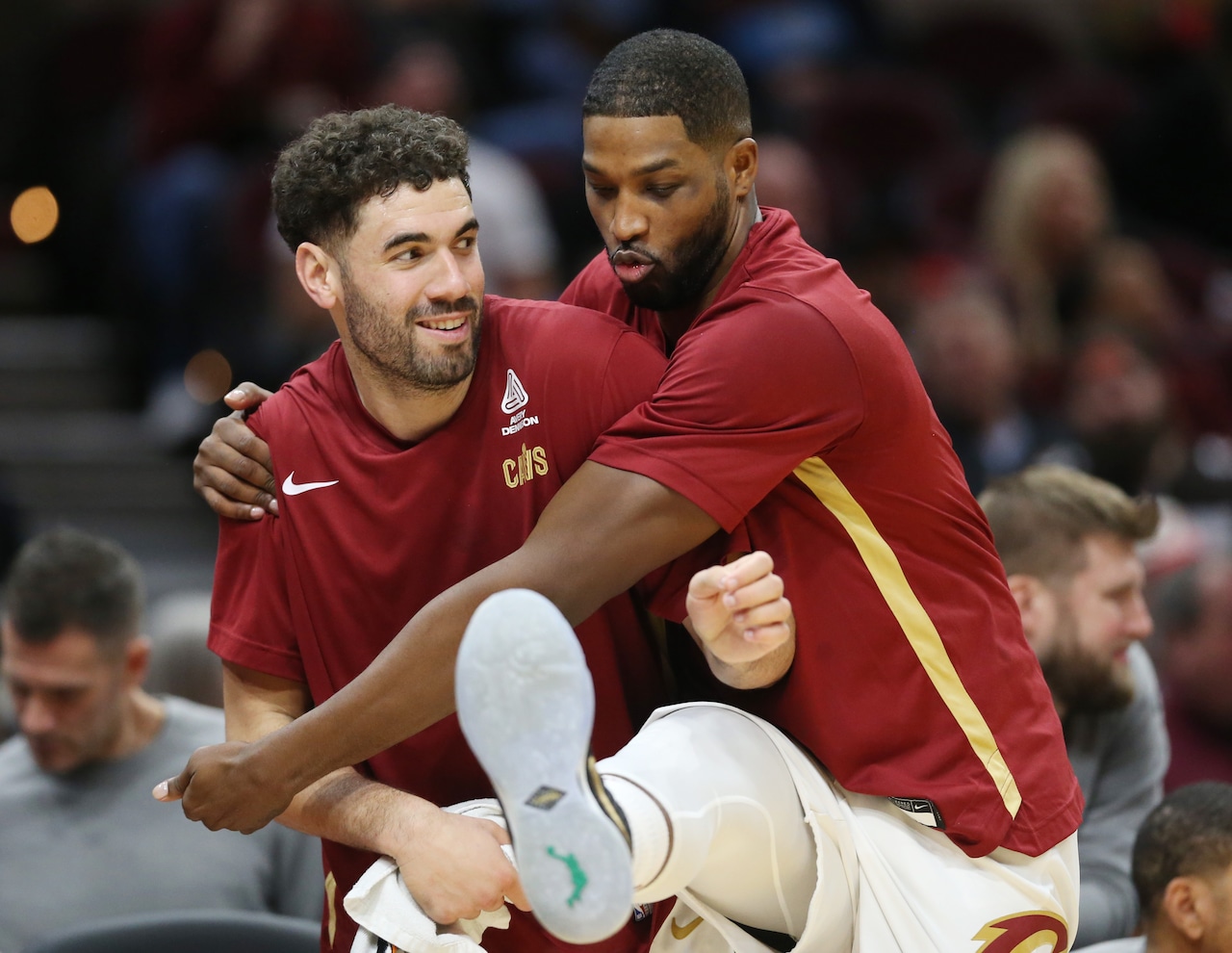 Georges Niang and Tristan Thompson share a hug on the Cavaliers’ bench last season, a reminder of how veteran voices can blend camaraderie with accountability. Their presence helped set standards, keep players honest, and ensure their guidance carried weight both with teammates and coaches. That presence is severely missed on this year’s Cavs, leaving a leadership void.John Kuntz, cleveland.com
Niang is gone. Tristan Thompson is gone.
Max Strus, one of the Cavs’ most vocal personalities, has not spoken with the media all season due to injury. His voice still matters internally, particularly in film sessions, but leadership without the ability to reinforce words on the floor loses volume.
That leaves a void.
Donovan Mitchell is Cleveland’s leader. He shows up. He takes responsibility. He sets the tone with his work. But he is also the poster child for the politically correct answer. He chooses intentionality over ignition. And that is not a criticism. It is a reality.
The closest Cleveland has come to raw honesty this season came from second-year Jaylon Tyson after an embarrassing early loss to the Boston Celtics. That alone should feel telling.
A young player should not be the one carrying that weight.
Kenny Atkinson has preached throughout the season that the Cavs have great leadership from the top of the organization to the players. But he needs more.
“I think it’s Donovan always, but I’m really encouraging the other guys,” Atkinson said when asked about who calls things out behind the scenes. “I think Evan’s really taking a step up. Sam talks more. [Darius Garland]. Mostly our leaders, but we try to engage the young guys to ask a lot of questions. We just don’t want it to be one or two guys. But Max is a big voice in there.”
The intention is sound. The execution has not translated.
The NBA is a player-led league. It works best when a coach’s message is echoed by a player willing to speak plainly, without fear of how it lands. Finch has Edwards. Hardy has Love and Niang. Cleveland is still searching, and it might need to look to the trade market to find what it’s looking for.
And when that player does not exist, or cannot step into the role, the responsibility shifts to the head coach.
This is where Atkinson must be better.
Not by embarrassing his players. But by ripping the bandage off the vague language and naming what is happening while it is happening.
Public accountability creates permission. It signals seriousness. It tells a locker room that standards are not situational. It also forces response. Players either lean into it or they reveal where the limits are.
There is risk in that approach. Feelings can get hurt. Chemistry can strain. But the alternative is far more dangerous. The playoffs do not care about intent. They expose habits. They punish avoidance. Teams that know who they are thrive against teams reluctant to take a leap.
Every team chasing contention eventually gets told the truth. The only real question is whether that truth comes from within or from an opponent in April.
Right now, the Cavaliers are choosing comfort. If they want clarity, they will have to choose honesty first.