
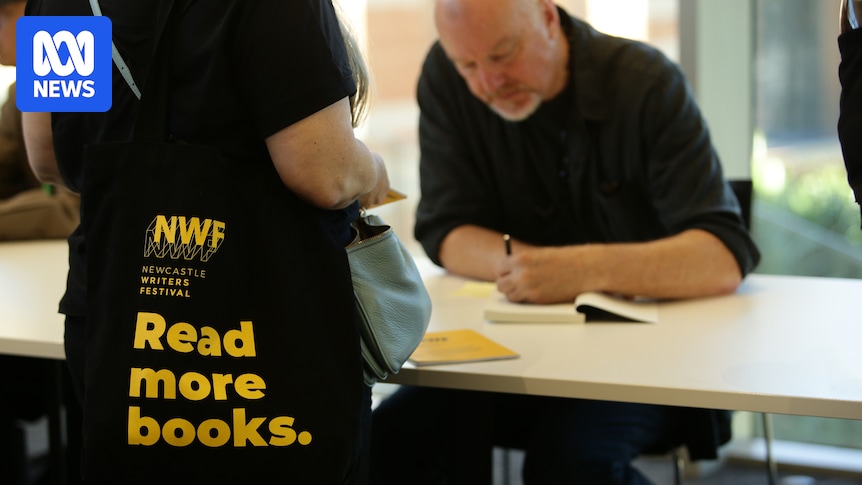
Rosemarie Milsom, the founding director of Newcastle Writers Festival (NWF), is always apprehensive before launching their program.
“You’re always nervous about what people will think,” she tells ABC Arts.
“Will they be as excited as you about that particular writer or that particular topic? Or you put something in a really big venue, but what if you don’t sell that many tickets?”
In 2026, however, she has reason to be more nervous than usual.
As political tensions around Israel’s invasion of Gaza have deepened, writers’ festivals have faced increased scrutiny over their programs.
Adelaide Writers’ Week (AWW), the nation’s oldest — and largest — literary festival set to begin on February 28, was cancelled this week due to a crisis triggered when the Adelaide Festival board axed Palestinian Australian author Randa Abdel-Fattah’s event, citing concerns about “cultural sensitivity” in the wake of the Bondi massacre.
The decision led to the withdrawal of more than 180 authors from the festival and the resignation of three board members, the board chair and festival director Louise Adler.
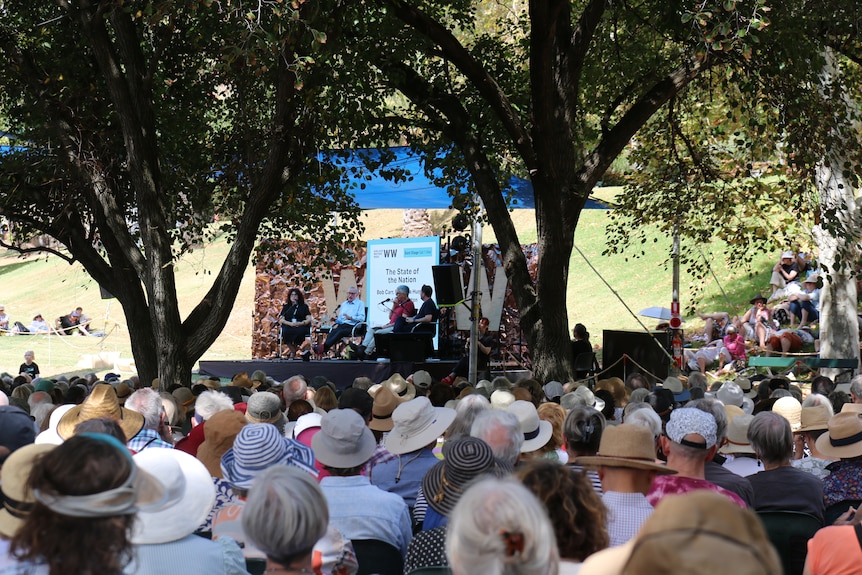
More than 160,000 people and 220 authors attended AWW in 2025. (Lisa Needham, ABC)
In August last year, Bendigo Writers Festival faced a similar controversy after a complaint from a lobby group about Abdel-Fattah’s inclusion in the program.
While that festival proceeded in a reduced format, it is on hold this year, with its future beyond 2026 under a cloud.
In 2025, the chair of Sydney Writers’ Festival, Kathy Shand, resigned over her concerns about the programming of Palestinian authors, a year after deputy chair of Melbourne Writers Festival, Leslie Reti, did the same.
Writers’ festivals have long been the province of book lovers and a forum for the free exchange of ideas.
Now, however, as the crises in Adelaide and Bendigo show, these events have become the frontline of the latest iteration of the culture wars — and authors are paying the price.
Shutting down political debate
Speaking on ABC’s 7.30 earlier this week, Adler described the cancellation of AWW as “a masterclass in poor governance [and] an act of cultural vandalism”.
However, she said, it was not an isolated incident.
“It is of a piece with all the other issues that we’ve seen unfold in the last few years in the arts community, whether they were talking about Khaled Sabsabi and Creative Australia, whether we’re talking about the MSO and Jason Gillham, whether we’re talking about Bendigo writers’ week, we’ve had a succession of dramas of this sort where political interference and donors and lobby groups have been able to come in and have an influence and an effect on what is programmed and what is not programmed,” she said.
‘Trashed’ Writers’ Week a ‘watershed moment’
Clare Wright — Professor of History and Professor of Public Engagement at La Trobe University and author of The Forgotten Rebels of the Eureka Stockade, which won the 2014 Stella Prize, and Näku Dhäruk: The Bark Petitions — is one of the authors who withdrew from AWW due to Abdel-Fattah’s removal from the program.
“It’s a form of censorship and a form of intellectual cowardice that we can’t encourage in this country,” she says.
As co-curator of Bendigo Writers Festival in 2025, Wright invited Abdel-Fattah to take part in the event to discuss her novel Discipline.
She received no internal objections about Abdel-Fattah’s inclusion and there was no discussion about how to deal with any community pushback about the program.
“I had no qualms in programming Randa,” she says.
Abdel-Fattah was scheduled to appear on a panel called On Reckoning, alongside fellow authors Paul Daley and Katherine Biber.
“It was about responding to the legacies of colonial violence through literature,” Wright says.
“It was the opportunity to have a really good discussion and nobody at La Trobe [the festival sponsor] or at the festival batted an eyelid about Randa being included on the program.”
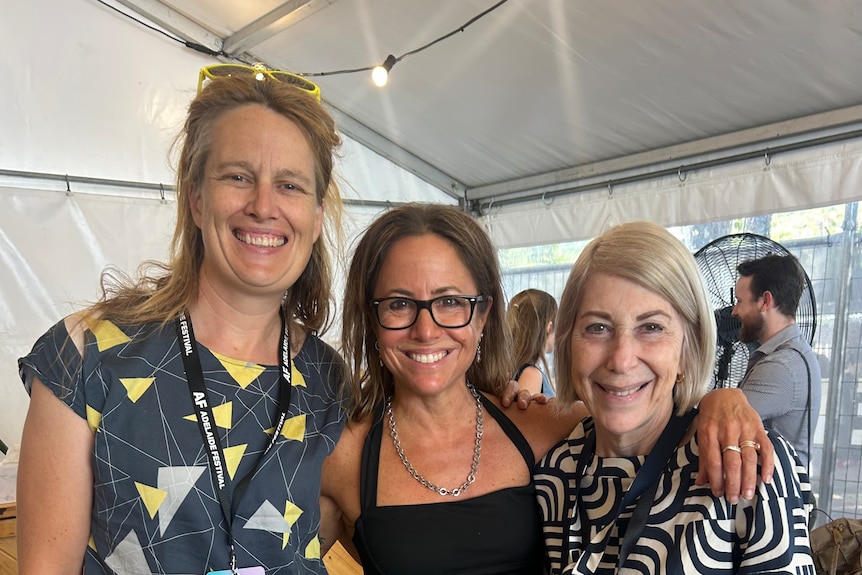
Anna Clark, Louise Adler and Clare Wright at Pioneer Women’s Memorial Garden for Adelaide Writers’ Week 2025. (Supplied)
After the festival received a complaint concerning Abdel-Fattah’s inclusion, however, the festival issued a code of conduct to participants designed to curtail discussion about the war in Gaza.
“Unfortunately, the way the terms of that code of conduct were written and its timing, coming out two days before the start of the festival, meant that any writer who respected their artistic freedom and freedom of speech could not in good conscience attend the festival, no matter whether they were pro-Palestinian advocates or not,” Wright says.
In response, more than 50 authors withdrew from the festival, including Wright and Abdel-Fattah, and the co-curator stepped down from her role.
Bendigo Writers festival debacle
Wright, who is Jewish, says the controversy is an example of the targeting of writers’ festivals by pro-Israel lobbyists in an attempt to shut down debate around Israel’s actions in Gaza.
“It acts as a warning … against future festivals in programming such artists because they are seen as being in some way troublesome. [Festival organisers] don’t want to bring these kinds of problems down upon their heads and incur the reputational, financial and administrative damage [suffered by writers’ festivals in Bendigo and Adelaide],” she says.
“And so, these people just will not be programmed, whether that is Palestinian artists like Randa who are being racially profiled or other people who have been outspoken opponents of the military policies of Israel.”
An attack on freedom of speech
Adler argued the cancellation of Abdel-Fattah “weakens freedom of speech and is the harbinger of a less free nation” in a piece published in The Guardian announcing her resignation.
“The point of a writers’ festival was to discuss ideas that are challenging,” she then told 7.30.
“There are 180 writers that have withdrawn in three days … some of them because they support Dr Abdel-Fattah’s viewpoint, and some of them overwhelmingly, I think, have recognised that this is a moment of censorship. This is a moment where freedom of expression matters, and that’s what’s at stake here.”
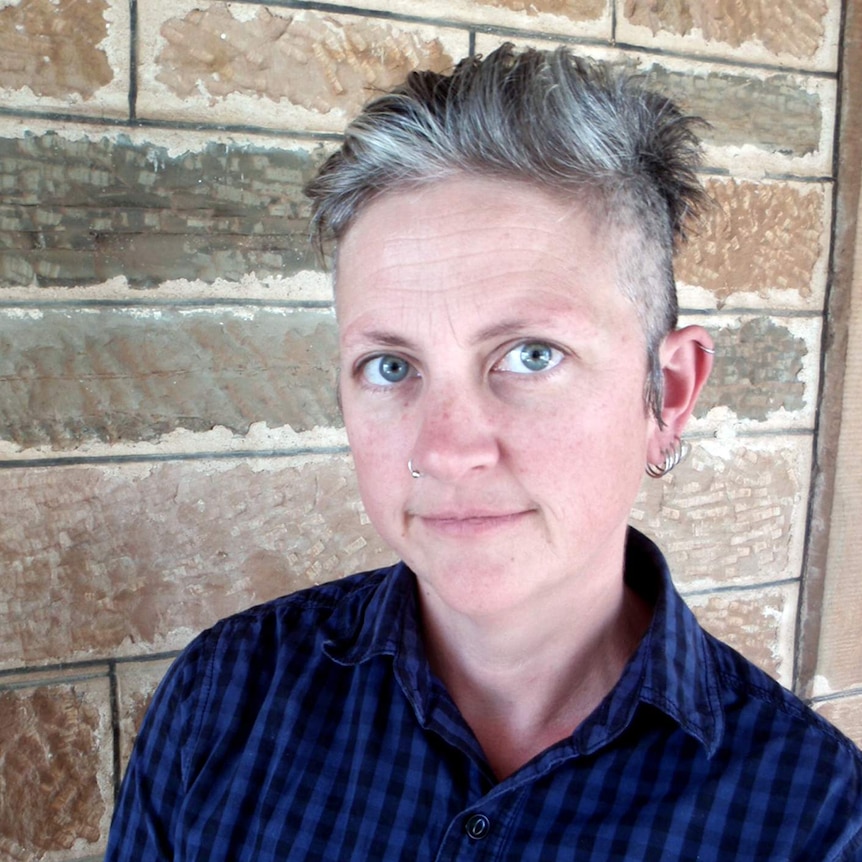
Mills says she feels for debut writers who are missing out on the opportunity to attend Adelaide Writers’ Week. (Supplied)
Author Jennifer Mills, who is also chair of the Australian Society of Authors (ASA), says she withdrew from AWW for two reasons: the silencing of Palestinian voices and the attack on free speech.
She says ASA considers freedom of expression a fundamental right.
“Since we formed in 1963, we’ve had to stand up again and again against censorship of various forms, and in recent years we’ve been facing a fresh wave of attacks on freedom of expression of authors, artists and cultural workers in Australia, and we take a very strong stance against it,” she says.
Milsom says increasingly, writers’ festivals are outliers in the current climate of political polarisation.
“The world around us has become so divided that it makes the concept of sitting together in a room and respectfully listening to different people’s perspectives a radical concept, and that is sad.”A high price for authors
For authors — whose average annual wage is $18,200 — literary festivals are a valuable source of income.
“Writers’ festivals are absolutely central to the economic ecosystem that keeps the literary community alive,” Wright says.
Adelaide, a free festival, was known for its high book sales.
“I have been there where I have seen queues of people queuing for hours to get books signed,” says Wright, who sold out of books at her last AWW appearance.
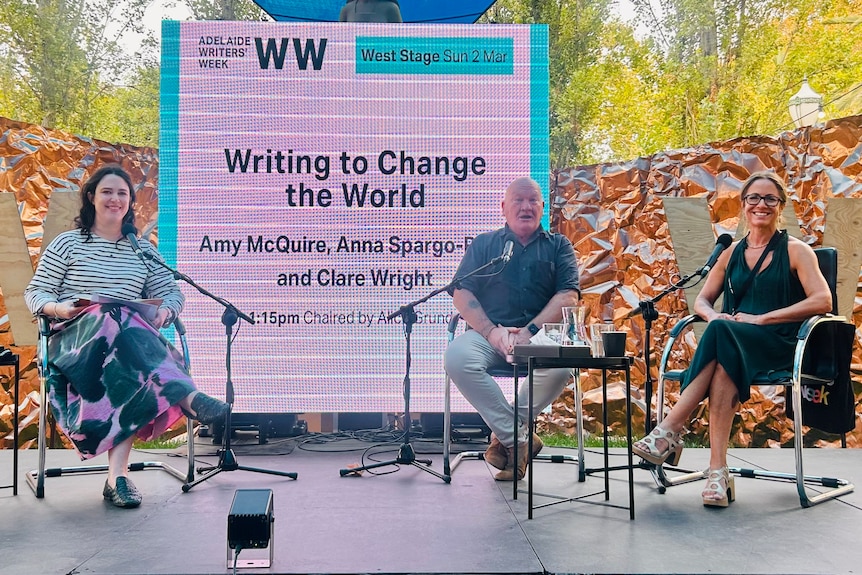
Wright, pictured with Alice Grundy and Jonathan Green at AWW in 2025, says writers’ festivals are important drivers of tourism. (Supplied)
Mills says the cancellation of the festival will hit writers hard.
“It’s authors that are bearing the cost of this disaster,” she says.
“There’s the direct costs that authors will bear of lost income from appearance fees. There’s indirect financial loss from book sales, which are significant at Adelaide Writers’ Week, and there’s also the loss of connection to readers, connection to other writers, community, the publicity and marketing that happens around the festival. It’s massive.”
Mills, who has attended AWW both as a guest and a punter, says the festival was well-regarded among readers and authors alike.
“I love the festival dearly, I think it’s a fantastic event. The fact that it’s free and outdoors and you can wander into sessions means that you hear from writers that you wouldn’t necessarily pay to see, and so you are exposed to different points of view.”
In 2026, Mills was on the program to discuss two books: her latest novel, Salvage, and a collection of fairytales featuring one of her short stories published by new independent publisher Pink Shorts Press.
“It’s a huge loss for that publication in particular because … it’s a local publishing company and we’ve lost an opportunity to reach young readers.”
Wright says the decision to withdraw from a festival is not one authors take lightly.
“This is not performative. This is not grandstanding. This is hurting writers at their hip pocket,” she says.
“I know novelists and memoirists who are cleaning Airbnb houses because they can’t make ends meet and these are the people who boycotted these festivals.”
The path forward
The Adelaide Festival board’s decision to axe Abdel-Fattah in the spirit of social cohesion had the opposite effect, says Melbourne University academic Denis Muller, who tells the ABC it created far more division than it prevented.
“A lot of these festivals are run by well-intentioned people … [who] want to limit the risk that they’ll upset anybody, and that is not the way to proceed,” he says.
“It’s in that attempt to not upset anybody, to not take risks, that they get themselves into this sort of hot water.”
Muller says the composition of boards must change to prevent similar crises affecting other festivals.
“You’ve got to have people with good experience in the arts and in media who understand the philosophical underpinnings of these things; particularly they need to understand the principle of free speech and its limitations.”
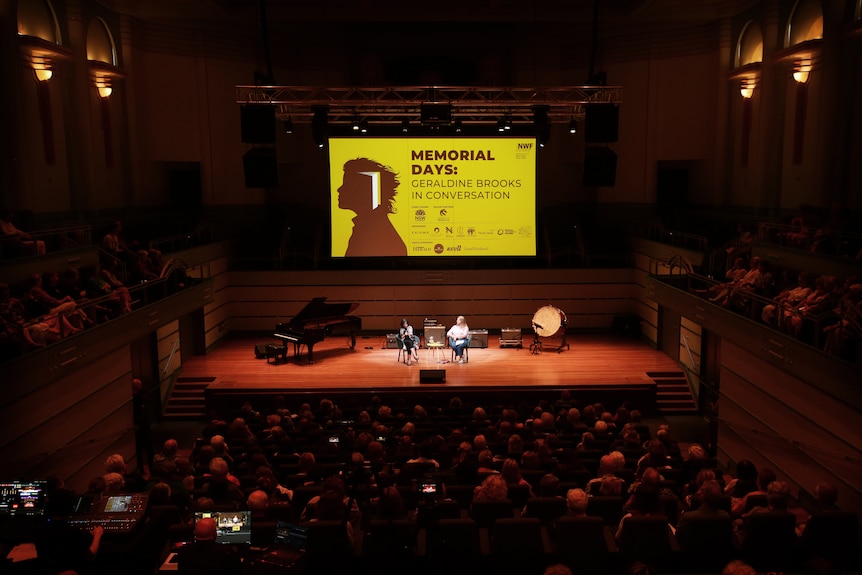
Milsom says the uncertainty of the COVID years has made festivals more vulnerable to external interference. (Supplied: Simone de Peak)
Adler called out the lack of arts practitioners on boards in her piece in the Guardian.
The Adelaide Festival board — which has since been replaced — included no artists following the departure of Stephen Page in 2024 and no arts administrators since Alison Beare left last year.
Mills agrees there must be arts representation on boards if political interference in cultural events is to be resisted.
“There’s a governance crisis in the arts where boards are subject to intense lobbying and then they make poor decisions, and if there’s no artists or writers on those boards, as was the case with the Adelaide Festival board, then they don’t make sensible decisions. They don’t understand how culture works,” she says.
Mills says for many, the AWW crisis has drawn a line in the sand.
“The response in this case has been incredibly strong — 180 writers withdrew in three days. That’s a very united response, and I think that with Adelaide Writers’ Week the line is becoming very clear, that we will not accept censorship of this sort.”
Wright says she hopes the principle of free speech — one of the critical pillars of any functioning democracy — wins out.
“One would hope that other directors of upcoming festivals will continue to program the writers who they believe will contribute to the most intellectually and artistically vibrant, rich and diverse program, and will not be cherry-picking writers on the basis of whether they are seen to be problematic or not.
“Hopefully those directors have the support of their boards and hopefully state governments will stay out of the mix … but it is going to be an uphill battle for those festivals remaining in 2026 to hold to those principles of freedom of expression.”
The reality of programming a festival
Programming a writers’ festival is not an easy task, Milsom says.
“There’s a huge lack of understanding about what it takes to put a writers’ festival together. Most people, the majority of people, have no idea about the complexity of it.”
While recent controversies have focused on the political allegiances of specific authors, Milsom says politics aren’t a factor in her programming decisions.
“We respond to the books. I think this needs to be emphasised — writers’ festivals aren’t just a whole lot of people getting together and being handed a microphone and talking off the cuff about whatever they want to talk about.
“At the centre of writers’ festival programs are books. It’s the books that give us the themes.”
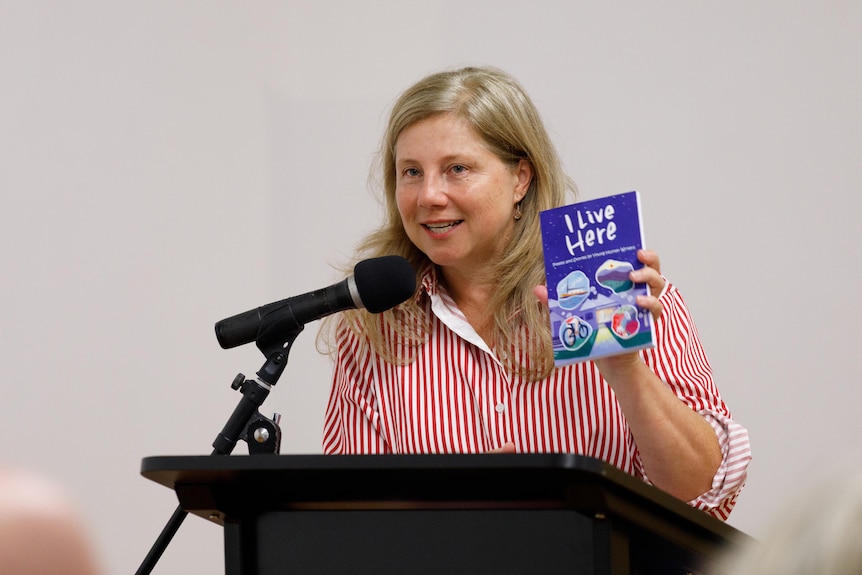
“People’s political beliefs aren’t why they’re selected to be in the program,” Milsom says. (Supplied: Max Mason-Hubers)
In 2024, NWF faced “significant pressure” to remove two authors from the program, Milsom says.
The decision to leave the program unchanged was helped by the fact that Milsom, as the festival’s founder, has a position on the board, a situation she acknowledges is “unique”.
“Lots of other arts organisations aren’t necessarily going to have their artistic director sitting on the board,” she says.
She says it is possible to resist external pressure to cancel authors or change programs — but it requires a degree of bravery.
“You look at what you stand for, you go back to your strategic plan, you look at the values of your organisation and why you exist, and you hold firm to that.”
Milsom says the job of the festival director is made harder when curatorial independence is threatened.
“If you have a lot of people interfering in your program … if you have sponsors intervening, if you have board members intervening, if you have other stakeholders intervening, it’s really hard to program by committee.”
She says the literary festival community is devastated by the cancellation of AWW.
“Many of us are reeling after what’s happened in Adelaide and feel very, very sad about it and also incredibly … distressed about the situation Louise Adler’s been put in because we can understand what she’s going through.”
Milsom is in the process of finalising the festival program before its release in February.
“You have to be thick-skinned; you have to take some risks. I’d like to think that’s how we operate at Newcastle Writers Festival.”